Malnourished Children: How UNICEF Fights Child Hunger
Hundreds of millions of children suffer from malnutrition — a global crisis fueled by conflicts and other factors — harming their ability to survive, thrive and reach their full potential. UNICEF works with partners to deliver lifesaving aid and improve child nutrition globally.
Sustainable Development Goal 2: zero hunger
UNICEF works with partners around the world to support child nutrition — and to end child malnutrition — to give every child a chance to grow up healthy and strong.
Ending child malnutrition is critical to achieving one of the key Sustainable Development Goals for 2030, SDG 2, a shared commitment by the international community to end hunger and malnutrition in all forms. For a number of economic, political and social reasons — and multiple food crises linked to conflicts and climate impacts — the world is not on track to meet this goal.
UNICEF works with partners worldwide to address malnutrition in all forms and to improve child nutrition. Read on to learn more about this global issue and UNICEF's response.
Learn more about UNICEF's commitment to ensure every child is nourished
673 million people experienced hunger in 2024
According to the UN's State of Food Security and Nutrition in the World 2025 report*, an estimated 8.2 percent of the global population, or about 673 million people, experienced hunger in 2024, down from 8.5 percent in 2023, a decrease of about 15 million people, and 8.7 percent in 2022, a decrease of around 22 million.
However, progress was not consistent across the globe: hunger continued to rise in most subregions of Africa and western Asia, with the proportion of the population facing hunger in Africa surpassing 20 percent, affecting 307 million people, and in western Asia, 12,7 percent, or more than 39 million people.
The latest estimates remain above pre-pandemic levels, with high inflation a major contributor to the slow recovery. In low-income countries, the cost of a healthy diet rose more sharply than in higher-income countries. An estimated 2.6 billion people in the world still can’t afford a healthy diet.
The economic costs of undernutrition are significant — estimated at $3 trillion in lost productivity annually.
UNICEF partners at the global, regional and country levels to promote and strengthen nutrition policies, strategies and programs needed to achieve SDG 2. UNICEF leads in some capacity 10 separate global nutrition initiatives.
What is malnutrition?
Malnutrition in children manifests in a few different ways. There is undernutrition, sometimes called hidden hunger, a matter of poor diet that can delay growth, weaken a child's immune system and impair brain development. Over 190 million children under age 5 worldwide are affected by undernutrition.
There is child stunting, when a child is short for his or her age. These children risk lasting effects on their cognitive development, hindering their ability to learn and contribute fully to society.
There is child wasting, when a child is significantly underweight. Wasting disease is life-threatening, and children suffering from it require immediate treatment and care to survive.
Children who are overweight are also considered malnourished. The number of overweight children is increasing around the world, but particularly in middle-income countries, largely due to increased consumption of processed foods that are high in fat, sugar and salt.
All forms of malnutrition threaten a child's ability to survive and thrive. Well-nourished children do better in school, are better able to participate in their communities and are more resilient against disease, disasters and other emergencies.
The difference between malnutrition and hunger
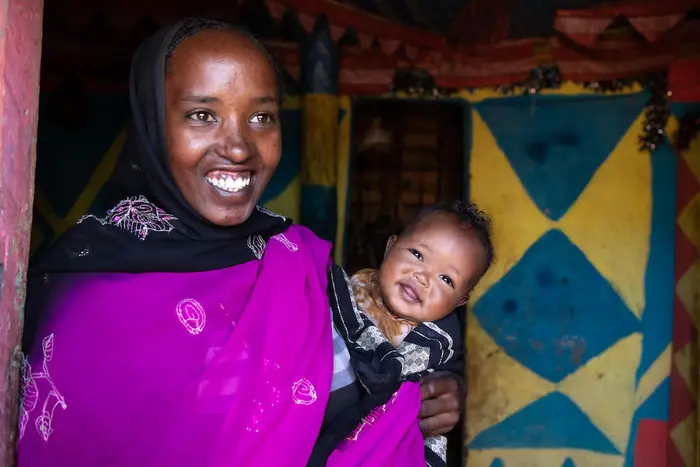
Malnutrition often stems from lack of food, but not always. Often it has to do with a poor diet.
UNICEF works in tandem with WFP and other partners to meet the needs of hungry kids as well as those who have food to eat but are not getting enough vitamins and minerals and other nutrients that are essential for healthy growth.
UNICEF also spearheads nutrition programs for adolescent girls and women that help ensure their own as well as their future children's good health and well-being.
What causes malnutrition in kids?
Children’s diets are shaped by multiple forces, such as poverty, which limits a family's ability to purchase affordable, nutritious foods. Lack of education or awareness of what constitutes adequate nutrition for a growing child is another factor.
Risks of malnutrition are also magnified in times of crisis — natural disasters such as earthquakes, climate-driven catastrophes such as a major flood or severe drought, and conflict and displacement are all factors that create or exacerbate food insecurity.
Public health emergencies can also affect child nutrition, especially when they lead to school closures; for millions of children, the daily school meals is their one nutritious meal of the day. When an emergency impacts a family's livelihood, the economic fallout leaves children vulnerable.
Learn about UNICEF's emergency response to food crises
How UNICEF fights malnutrition
UNICEF works with partners in 130 countries to address global malnutrition, providing nutrition counseling, nutrition care and other support to improve the nutritional status of children and women who are facing hunger or who lack access to nutritious foods.
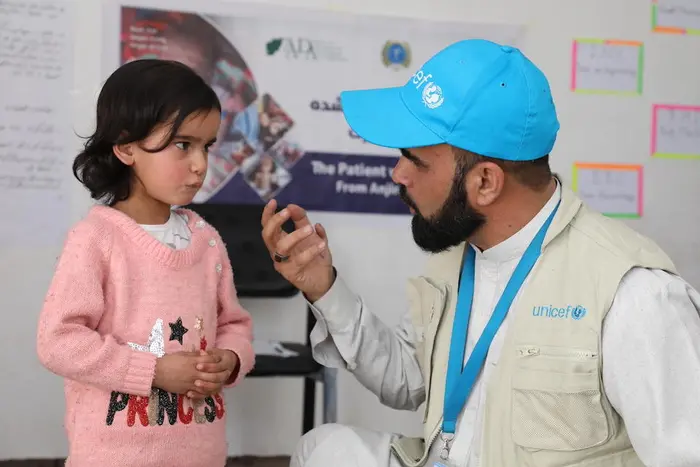
UNICEF also supports early detection and treatment for malnourished children. Early detection — teaching mothers, health workers and other community members to identify a child who is malnourished — is a top priority, and key to that child's successful recovery and avoiding permanent harm.
A child who is severely acutely malnourished, or suffering from wasting disease, needs immediate treatment and faces a serious risk of death. Left untreated, child wasting can be fatal.
Learn more about UNICEF's health and nutrition programs for children
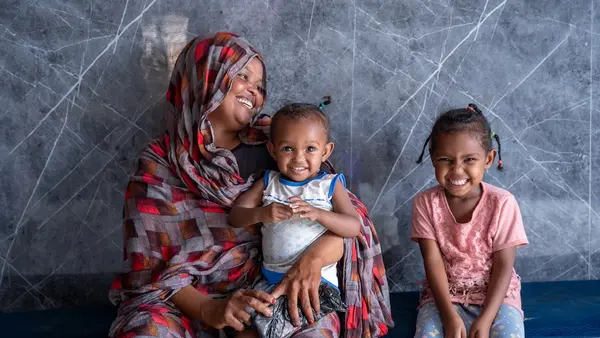
Related: How UNICEF helps malnourished mothers and babies in Sudan
Nutrition counseling and support
UNICEF encourages best practices for newborn, infant and child feeding, working with partners at the community and local level to provide information and training, while also supporting early detection and timely treatment of child malnutrition. Specific efforts include:
Supporting breastfeeding
Promoting the benefits of breastfeeding has long been an integral part of UNICEF's mission in child nutrition. Breastfeeding is free, builds a baby's immunity, gives them everything they need to grow and thrive, and reduces future health risks.
UNICEF also helps women access the support they need to breastfeed — from peers, health care professionals, lactation consultants or other specialists.
Thanks in part to UNICEF's ongoing efforts, exclusive breastfeeding is up 50 percent worldwide since the early 1980s. In 2024, the percentage of infants under six months exclusively breastfed increased significantly, from 37 percent in 2012 to almost 48 percent, reflecting growing recognition of its health benefits.
Learn more about the benefits of breastfeeding
Supplying micronutrient supplements
UNICEF supplies different types of supplements, including micronutrient powders that can be sprinkled on top of a child's meal and multivitamin tablets containing the iron and folic acid that adolescent girls and women need to prevent anemia and otherwise ensure good health. This protects them and also their future children.
Half of all stunting in children under 2 years originates during pregnancy or in the first six months of life — when the child is dependent on the mother for nutrition. "Unless we improve the nutrition of adolescent girls and women, we are unlikely to end child undernutrition," Harriet Torlesse, UNICEF Nutrition Specialist, explains. Globally, nearly one-third of women aged 15 to 49 are anemic.
Learn more about how UNICEF is tackling the global nutrition crisis for women and girls
Facilitating nutrition screenings
Screening children and pregnant women who are at risk of malnutrition is an important preventative measure that helps catch cases early and ensure timely treatment and full recovery.
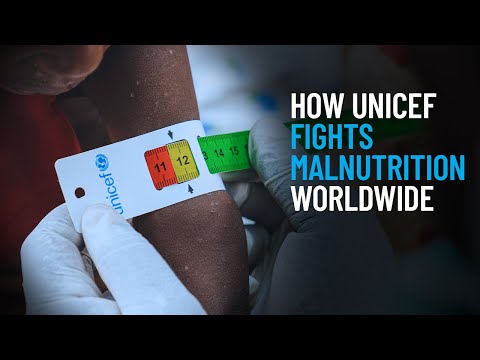
UNICEF supplies MUAC measuring tapes — short for mid-upper arm circumference — to caregivers, health care providers and other frontline workers along with guidance on the importance of early detection and response.
Expanding social protection programs (humanitarian cash transfers)
Many UNICEF assistance programs provide cash payments to families so they can meet urgent needs for food and other basics. These programs have bee found to improve child nutrition.
Learn more about UNICEF humanitarian cash transfer programs
Supplying ready-to-use therapeutic food
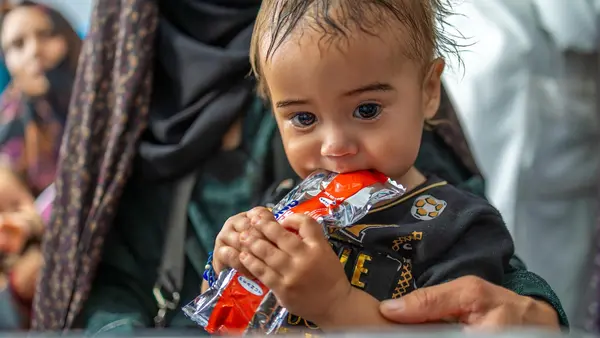
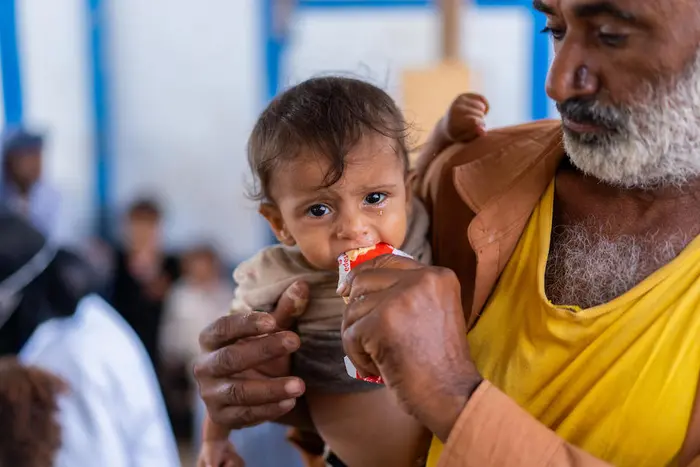
UNICEF purchases and distributes approximately 80 percent of the world's supply of RUTF — a lifesaving treatment for children suffering from severe acute malnutrition, also known as severe wasting disease.
RUTF is a shelf-stable, nutrient-rich peanut paste. Each pack combines 500 calories and micronutrients. Children are able to digest the paste easily, and kids who consume it gain weight quickly.
The recovery rate for children who follow a regimen of three packets of RUTF per day is 90 percent after about six weeks.
Learn more about ready-to-use therapeutic food
Child Nutrition Fund: a mission to reshape global financial support for malnutrition prevention and treatment
With food crises and food insecurity rates worsening in many parts of the world due to prolonged conflicts and forced displacements, the impacts of climate change and other factors, UNICEF projects that between 512 million and 587 million people could be chronically undernourished by 2030 — more than half of them in Africa.
Reversing this trend requires accelerate action to reach more children in need of malnutrition treatment and prevention and other forms of nutrition support.
To expand global reach and increase impact for children who are at risk or already suffering from malnutrition, UNICEF created the Child Nutrition Fund. The CNF is a joint effort backed by many partners committed to scaling up sustainable nutrition policies, programs and supplies, including RUTF.
Aligned with the Global Action Plan on Child Wasting, the CNF aims to forge collaborations among countries, donors, partners and civil society organizations that empower national governments to lead the charge.
How you can help end child hunger
Supporting UNICEF's work helps improve child nutrition worldwide and to reach more malnourished children with timely, lifesaving treatment.
You can help end child malnutrition. Donate today.
*The State of Food Security and Nutrition in the World in 2025 is a joint report by UN partner agencies the Food and Agriculture Organization (FAO), the International Fund for Agricultural Development (IFAD), UNICEF, the World Food Program (WFP) and the World Health Organization (WHO).