International Day of Zero Tolerance for Female Genital Mutilation
On February 6, the world unites to bring attention to a harmful practice that still endangers girls and women across Africa, the Middle East and Asia.
A day to join a global movement to protect girls from FGM: February 6
Feb. 6 marks the International Day of Zero Tolerance for Female Genital Mutilation — a chance to join UNICEF in helping to raise awareness about a dangerous health threat to girls around the world.
Female genital mutilation (FGM) is a violation of human rights and an invasive, medically unnecessary practice that can be life-threatening. For the estimated 230 million survivors worldwide, FGM leaves lifelong physical, emotional and psychological scars.
There has been progress made in recent years, particularly since the launch of a UNICEF-supported elimination program in 2008, but there is still much work to be done to end the destructive practice completely, one of the shared aims under the UN Sustainable Development Goals. An estimated 4.5 million girls — many of them under 5 — are at risk of FGM in 2026 alone.
This year’s theme — "Towards 2030: No End to FGM Without Sustained Commitment and Investment” — marks 2026 as a decisive moment. The message: galvanizing political momentum, community action and financial resources can put elimination within reach.
Understanding female genital mutilation: What Is FGM?
Why the International Day of Zero Tolerance
for Female Genital Mutilation matters
With cuts to international aid and pushbacks against women’s rights in recent years, progress made in eliminating FGM is in jeopardy in many parts of the world. That puts more responsibility on UNICEF and other organizations to bridge that gap.
By marking February 6 as an International Day of Zero Tolerance, UNICEF and its partners are highlighting the need to work with governments on legal protections at the national level; with philanthropic foundations to help fund important initiatives; with community groups to improve education at the local level and to better monitor cases.
By sharing information and supporting awareness efforts — on this day and throughout the year — supporters can both help bring attention to the issue and build global solidarity for change.
Learn more: Stepping Up the Pace to End FGM
How FGM affects girls and communities worldwide
Female Genital Mutilation can cause life-threatening health risks and complications that traumatize its young victims, many just infants, physically and emotionally.
The practices of female genital mutilation have been historically considered a social norm in parts of the world — a rite of passage for girls in some cultures, a means of controlling future marriage prospects in others.
The procedure offers no health benefits. During the procedure and its immediate aftermath, victims can suffer severe pain, hemorrhaging, recurring infection and in some cases, death. Effects can reverberate into adulthood, raising risks such as HIV transmission, recurring pain and childbirth complications.
The psychological toll of female genital mutation can result in increased anxiety, depression, post-traumatic stress disorder, and lower self-confidence.
On a more macro level, FGM is recognized internationally as a human rights violation and an antiquated form of discrimination against girls and women.
Learn more about children's rights
How UNICEF is helping end FGM
A UNICEF-supported global initiative focused on the elimination of female genital mutilation, launched in 2008, remains active in 18 countries throughout Africa, the Middle East and Asia. Programs lean into evidence-based approaches implemented in collaboration with grassroots organizations, community groups, international NGOs, and local, national and regional governments.
Strategies for eliminating FGM include:
- engaging community and religious leaders with informational campaigns
- improving education for girls, including more classes on reproductive health
- using mass media to improve the reach of awareness
- partnering with community workers to track cases on a local level
The impact so far is encouraging. Since launch, it is estimated that more than 1.1 million girls aged 14 and younger have been protected from undergoing FGM; 50 million people have made public declarations to abandon FGM; close to 7 million girls and women have received protection and prevention services; and some 112,000 frontline workers have been mobilized in support of the cause.
Donor support helps sustain these and other UNICEF efforts to protect girls and women from the cruel practice. And every dollar invested yields a tenfold return.
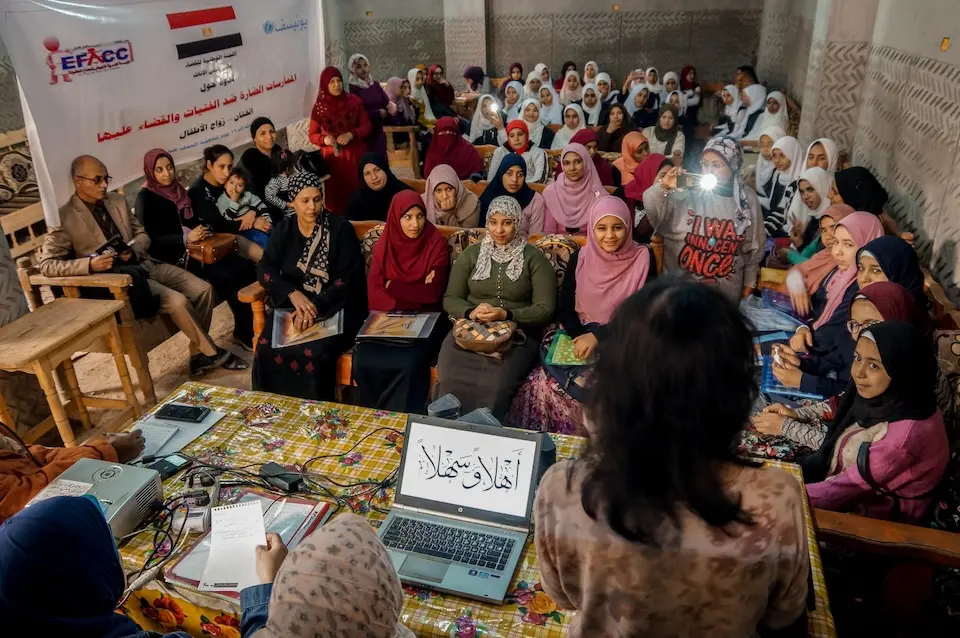
Strengthening global action to end female genital mutilation
UNICEF has also helped effect policy change at national and regional levels. Advocating with national governments for legal solutions has resulted in improved regulations, education curriculum for health care workers and law enforcement in several countries.
Alongside partners, UNICEF has helped facilitate regional webinars and conferences such as the African Union’s groundbreaking 2025 Convention on Ending Violence Against Women and Girls, which incorporated the elimination of FGM.
In 2024, a new data management platform was launched to track cases in order to use that information to allocate resources and efforts.
Support UNICEF’s work to end female genital mutilation
Ending female genital mutilation requires a long-term commitment and global solidarity. The International Day of Zero Tolerance for Female Genital Mutilation on February 6 is an opportunity to stand with girls who remain at risk across the world.
UNICEF reaffirms its commitment to end female genital mutilation for every girl and every woman at risk, and to continue working to ensure that those subjected to the harmful practice have access to quality support services.
Frequently Asked Questions about female genital mutilation
Is female genital mutilation practiced everywhere in the world?
While FGM is not practiced universally, the practice is documented in at least 31 countries, where it is considered a social norm among certain cultures.
Does female genital mutilation still happen today?
While much progress to end the practice of FGM has been made in recent years, the practice remains in use in some countries in across Africa, Asia and the Middle East.
How can people help support efforts to end female genital mutilation?
Supporters can make a difference by learning more about the issue, sharing information to help raise awareness of the practice of FGM and by donating to UNICEF as an organization actively working to stop it. On Feb. 6, post and share on social media using hashtags #EndFGM and #Invest2EndFGM
Learn more about where UNICEF works and how to help UNICEF reach more children in need.
HOW TO HELP
There are many ways to make a difference
War, famine, poverty, natural disasters — threats to the world's children keep coming. But UNICEF won't stop working to keep children healthy and safe.
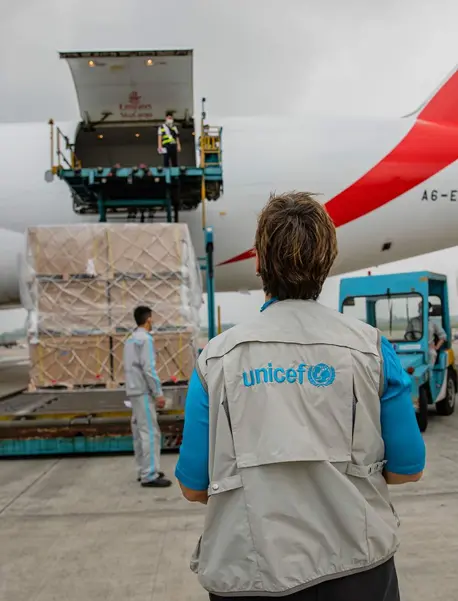
UNICEF works in over 190 countries and territories — more places than any other children's organization. UNICEF has the world's largest humanitarian warehouse and, when disaster strikes, can get supplies almost anywhere within 72 hours. Constantly innovating, always advocating for a better world for children, UNICEF works to ensure that every child can grow up healthy, educated, protected and respected.
Would you like to help give all children the opportunity to reach their full potential? There are many ways to get involved.