Water Changes Everything: UNICEF and the Baxter Foundation in Colombia
Highlights
- UNICEF and the Baxter Foundation are expanding access to safe, reliable water in remote regions of Colombia.
- Safe water protects children from disease, supports nutrition and improves overall health.
- Community ownership keeps water systems working and sustainable for years to come.
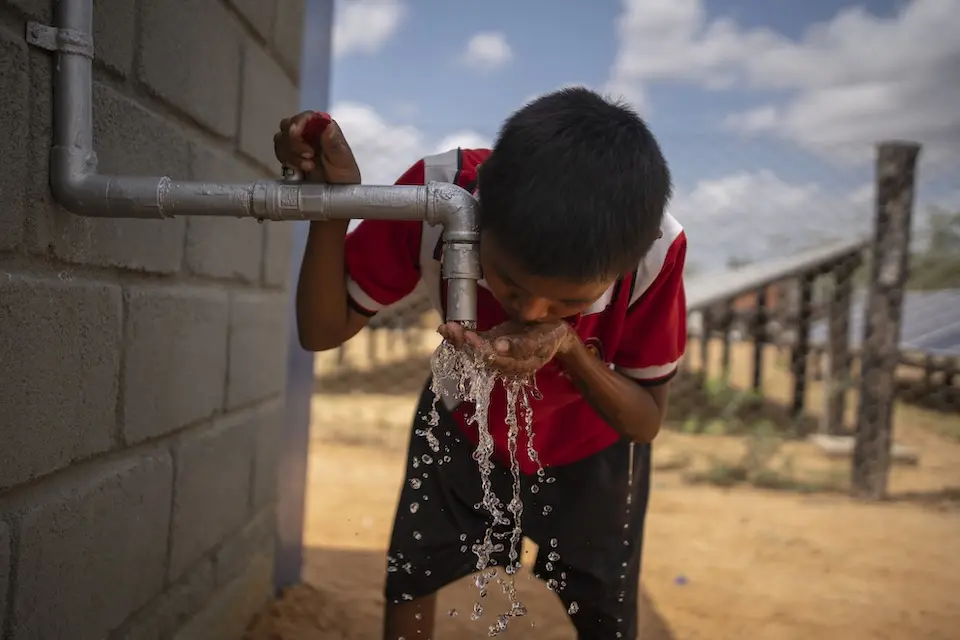
Expanding access to clean water, sanitation and hygiene services helps children and their families in rural Colombia.
The Baxter Foundation, the philanthropic arm of Baxter International Inc., has partnered with UNICEF since 2020, investing more than $7 million to support global disaster relief and increase access to health care through clean water, sanitation and climate-resilient initiatives. In Colombia, the partnership is helping improve access to safe water, sanitation and hygiene (WASH) services for children and families in remote regions. To date, more than 23,000 people have benefitted, including through 18 new community water systems, access to clean water for 4,500 families and 55 communities certified as free of open defecation.
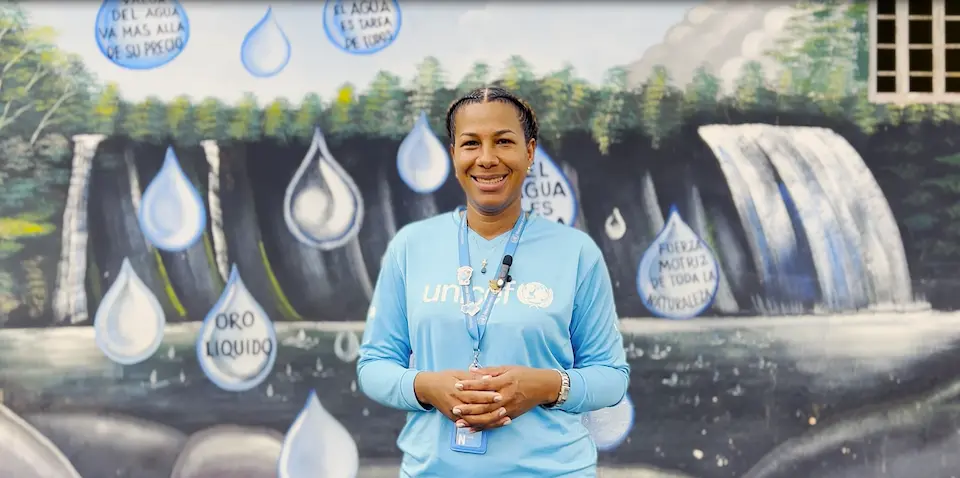
Verónica Arroyave, executive director of the Baxter Foundation, recently spoke with Dayana Deluque, UNICEF Colombia WASH program officer, about why expanding access to safe water in the country’s rural areas requires more than building infrastructure. Sustainable WASH systems transform nearly every aspect of life for communities reached by the partnership. The conversation has been edited and condensed.
Water improves health outcomes for children
VERÓNICA ARROYAVE: The Baxter Foundation focuses its investments on communities around the world where the need is greatest and where Baxter employees live, work and operate. Clean, safe water is fundamental to public health, disease prevention and child mortality. Can you describe the health risks faced by children in Colombia who lack access to safe water?
DAYANA DELUQUE: Contaminated water is one of the leading preventable causes of death worldwide.
Having water in or near the home almost immediately strengthens public health, especially for children whose health, development and overall quality of life benefit. Clean water is critical to preventing waterborne diseases like diarrhea and cholera, to which children under 5 are particularly at risk. Handwashing is one of the most effective ways to halt the spread of infectious diseases, yet millions of people in Colombia lack access to a safe water supply. Unfortunately, the nearest health care facilities often lack safe water and are frequently out of reach for remote communities in these departments.
Also, safe drinking water supports better nutrition. Malnutrition is pervasive in Colombia’s remote departments like La Guajira and Chocó, where I have worked extensively as a member of the UNICEF Colombia WASH team.
Water protects vulnerable children and opens education and economic opportunities for families
VERÓNICA ARROYAVE: We have seen firsthand the profound impact this UNICEF initiative has had on children’s health and community well-being. What are some of the less visible but equally transformative ways access to safe water helps children and communities lead healthier lives?
DAYANA DELUQUE: There is a direct impact on daily life. Across our projects, I've seen how safe, reliable water brings peace of mind. It is not just that water is close by but that it is clean enough to drink, prepare food and meet household needs. This lifts a tremendous emotional burden off households.
In places like La Guajira, Colombia, family members, most commonly women and children, can spend hours each day walking in extreme heat, rain or strong winds to collect water. Beyond adverse health effects of this punishing work, family members in the remote, conflict-affected areas where UNICEF Colombia often works face additional risks. These include harassment, abuse and armed group recruitment, among other risks.
When you remove the necessity of traveling long distances to fetch water, children are more likely to stay in school, and families have more time for other productive household activities or to pursue external economic opportunities.
VERÓNICA ARROYAVE: Yes, in working with UNICEF, we’ve seen that these intersecting risks can be reduced through well-run, resilient programs that address multiple environmental and social determinants of health.
Community participation is even more important than the infrastructure itself.
Water places control and ownership into the hands of disadvantaged people
VERÓNICA ARROYAVE: In my experience, those closest to the problem are closest to the solution. Beyond the risks of collecting water, only a small fraction of people can afford to have water trucked in. Could you explain how the Baxter Foundation helps UNICEF implement systems that can be locally sustained?
DAYANA DELUQUE: Of course. With the support of partners like Baxter, UNICEF works with local governments and groups to drill groundwater wells, install solar-powered or hand pumps, build pipe networks and set up local water treatment and testing. Most importantly, UNICEF trains community members and technicians to operate and repair this equipment.
VERÓNICA ARROYAVE: Why are community ownership and management so important to the success of this WASH project?
DAYANA DELUQUE: Community participation is even more important than the infrastructure itself. Building the infrastructure takes just a few months. Earning community trust and engagement ensures those investments continue delivering safe water for years.
From the very beginning, we bring communities into the process. We form community water management committees that include local leaders, mainly women and children, creating a foundation for generational and operational continuity of water and sanitation systems.
In Colombia’s dispersed regions, not all groups view water the same way. We always work to understand the local uses, customs, beliefs, traditions and relationship with water.
The real work is staying with communities and building trust that this water — which may look, smell and taste different from what they’re used to — is safe and essential to their health and well-being. That ongoing partnership is what makes the solution truly sustainable.
VERÓNICA ARROYAVE: It’s true that sustainability involves everyone.
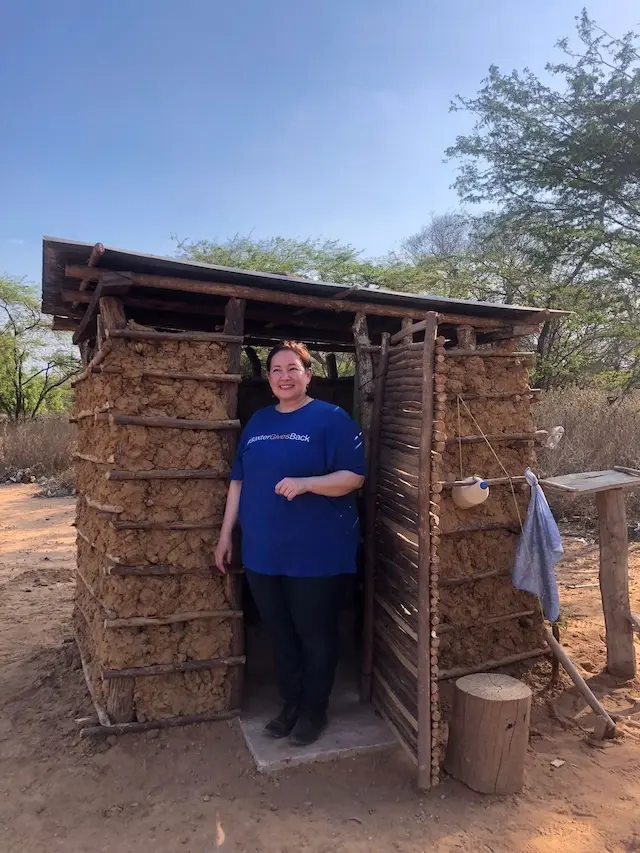
Water empowers community leaders
VERÓNICA ARROYAVE: Many of these strategies, which initially seem like interventions, become normalized. What does successful community participation look like in practice? Can you share an example?
DAYANA DELUQUE: Thanks to Baxter and other partners, UNICEF Colombia has worked with many community members, particularly women and adolescents, who voluntarily join the community water management committees. They attend training and capacity-building workshops that UNICEF provides in each project to develop technical skills to maintain WASH systems.
There’s a very particular case of a young woman, a teenager, from Manaure, La Guajira, Colombia, who chose to participate and has become a role model. Beyond knowing the system inside and out, she acts as a leader. She now speaks up for not only her community’s needs, but to the wider municipality government. She even takes part in national events, sharing her experiences and encouraging other Indigenous women to pursue these leadership roles in their communities.
Water flows beyond regional borders
VERÓNICA ARROYAVE: At the Baxter Foundation, we trust our partners’ community relationships and expertise, giving them the freedom to test, adapt, innovate and respond to communities’ real needs. Throughout our UNICEF partnership, we’ve seen how programs rooted in specific local contexts can evolve to shape national systems and policies. Can you provide an example of how this work might reach the national level?
DAYANA DELUQUE: Our UNICEF Colombia water projects in La Guajira helped catalyze the establishment of the country’s first Association of Community Water Managers. Several members of water committees supported by the Baxter Foundation are part of the Association, which will work with the national government on a pilot program to advance community-led water management.
These projects have shown the government that effective development starts with the community, not a pre-designed solution. Recognizing the value of locally-managed infrastructure, particularly water and sanitation, this approach has driven local transformation, informed national policy and strengthened the regulatory framework.
UNICEF Colombia will continue collaborating with authorities, partners and communities to ensure that, 10 years from now, these solutions are still working and have transformed the health and living conditions of families for generations to come.
Water brings our planet together
VERÓNICA ARROYAVE: The Baxter Foundation also supports water conservation and environmental health efforts. UNICEF’s integrated approach to environmental health, from sanitation to housing, can lead to effective strategies to address climate threats. That’s why this partnership is so important to us: UNICEF brings years of experience, strong community trust and the technical expertise to work together to address these challenges successfully.
DAYANA DELUQUE: As a Colombian saying goes, "Experience is not improvised." UNICEF’s experience in the region gives us the knowledge and data to understand territorial realities and dynamics. This strengthens our credibility and engagement with government at all levels. Almost nothing takes us by surprise.
VERÓNICA ARROYAVE: The vision is efficient, effective governance that sustainably integrates health into the water, sanitation, housing, culture and education sectors and ensures children have access to these essential services. What challenges lie ahead before we realize this vision?
DAYANA DELUQUE: The biggest challenge is reaching remote, dispersed parts of Colombia where governments and other organizations don’t go because of geography or armed conflict. We need solutions tailored to local conditions and a commitment to stay through every phase. Too often, projects are launched but never become operational.
Finally, reliable, safe water requires innovation. We must move beyond generic, pre-designed solutions and innovate based on each community’s needs.
On behalf of UNICEF, thank you for your trust and partnership, Verónica. Delivering sustainable, climate-resilient water and sanitation systems to these underserved communities has only been possible through the support of the Baxter Foundation and other organizations. Without strong partnerships, this life-changing access to water would be an unrealized dream.
UNICEF does not endorse any company, brand, organization, product or service.
August 2026 Colombia earthquake response
UNICEF continues to scale its emergency earthquake response in Colombia to support affected children and families in the department of Chocó and the city of Buenaventura, following a 7.4 magnitude earthquake on Aug 10, 2026.
The earthquake hit Colombia's Pacific Coast, disrupting access to water and other essential services, and damaging at least 26,392 homes and 3,200 schools, according to the Colombia National Unit for Disaster Risk Management.
UNICEF's initial support includes the provision of WASH supplies for 22,000 people, including family WASH kits, maternal care kits, menstrual hygiene kits and water storage tanks.
As Baxter marks 70 years in Colombia, the company's immediate response prioritized employee safety and connecting those impacted to support resources, including an Employee Disaster Relief Fund. The Baxter Foundation is also supporting broader relief and recovery efforts in communities affected by the earthquake.
Even before the earthquake struck, an estimated 10.3 million people in Colombia — including 3.7 million children — were in need of humanitarian support.
Learn about UNICEF's ongoing programs for children in Colombia — and how to help
HOW TO HELP
There are many ways to make a difference
War, famine, poverty, natural disasters — threats to the world's children keep coming. But UNICEF won't stop working to keep children healthy and safe.
UNICEF works in over 190 countries and territories — more places than any other children's organization. UNICEF has the world's largest humanitarian warehouse and, when disaster strikes, can get supplies almost anywhere within 72 hours. Constantly innovating, always advocating for a better world for children, UNICEF works to ensure that every child can grow up healthy, educated, protected and respected.
Would you like to help give all children the opportunity to reach their full potential? There are many ways to get involved.