UNICEF in Syria: Responding to Emergencies, Supporting Recovery
Their nation still caught in a complicated humanitarian crisis, children, adolescents and parents in Syria are finding hope for the future through an array of UNICEF-supported services. An update on the impact of these efforts and the ongoing emergency response.
UNICEF Syria: On the front lines of crisis and recovery, turning challenges into hope — one child at a time
Syria’s remains one of the world’s most complex humanitarian crises. After over a decade of conflict, natural disasters, and economic hardship, 7.5 million children in Syria remain in need of humanitarian assistance.
With 260 in country staff stationed across six field offices and a main office in Damascus, UNICEF remains on the ground inside Syria, working with partners to deliver emergency support and protection while also scaling essential social services and helping to rebuild and strengthen critical systems.
The nation is at a turning point, with the return of over 500,000 refugees, the lifting of sanctions and growing humanitarian access signaling new opportunities for recovery.
Here are three stories of UNICEF's impact in Syria, and an update on the ongoing emergency response in the south.
Author's note: the stories are based on articles originally published by unicef.org
Helping families find safety, care and a path forward
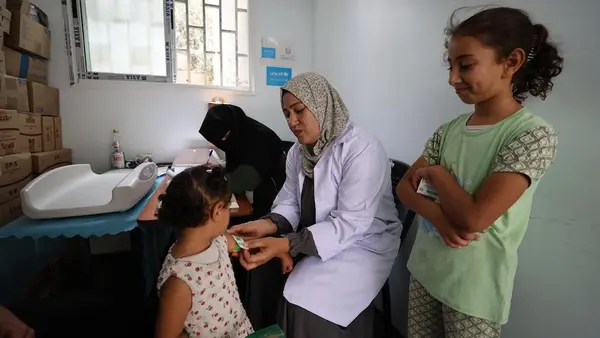
At UNICEF-supported integrated centers in Damascus city and across Damascus and Rural Damascus governorates, children and their caregivers are receiving a wide range of essential services.
Children benefit from regular medical check-ups, growth monitoring and nutrition support, while pregnant and lactating women receive vital antenatal and postnatal care to protect their health and the health of their babies.
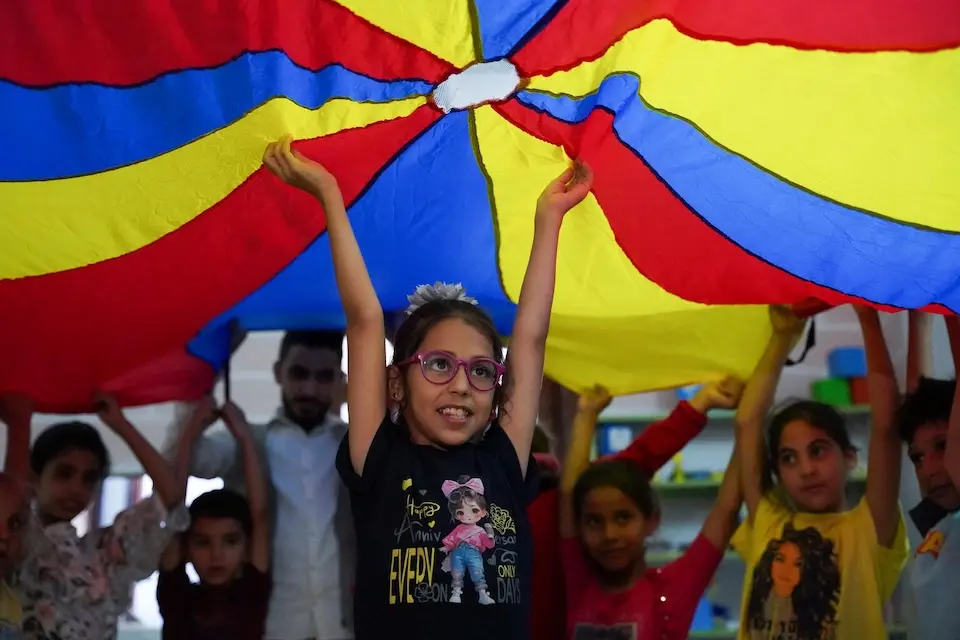
Mental health and psychosocial support are key components, helping children manage stress, anxiety and the lasting impacts of conflict and displacement. Through recreational activities, group sessions and individual counseling, they are able ot regain a sense of normality, rebuild confidence and develop healthy coping skills.
Caregivers also receive psychological support, parenting guidance and awareness sessions, all within a safe, child-friendly environment.
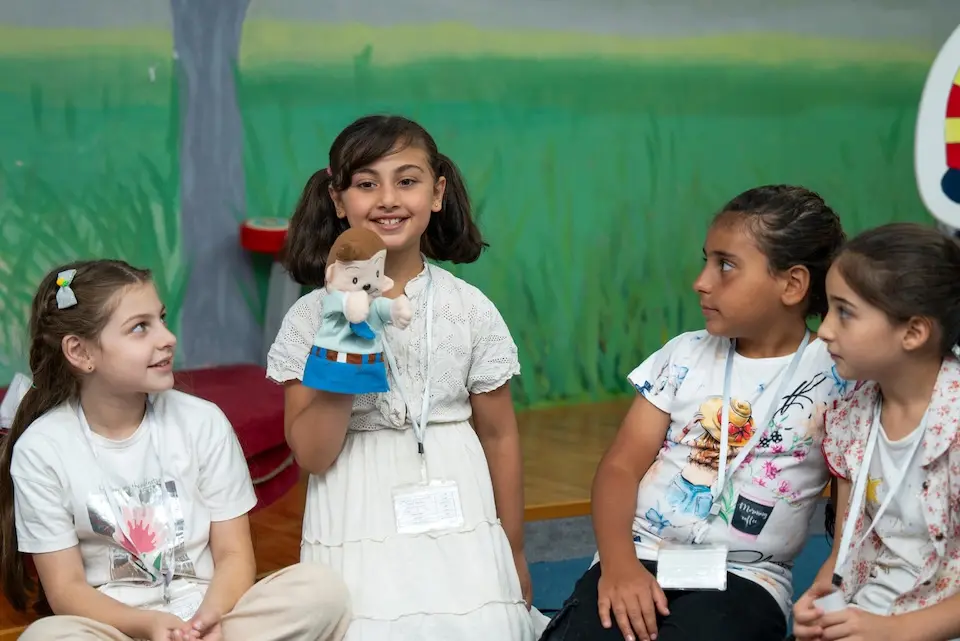
Integrated centers like this are playing a vital role in helping families navigate daily challenges, offering a stable, supportive space where they can access care, heal, and find hope.
Since the beginning of 2025, UNICEF has reached over 50,000 children across Syria with mental health psychosocial support services, and some 900,000 children and 300,000 women have accessed primary health care services through 106 fixed clinics and 177 mobile teams supported by UNICEF and partners.
Learn more about UNICEF child-friendly spaces
Creating community spaces that forge connections and strengthen child protection
Khadijeh, 47, is no stranger to loss. A mother and wife, she fled war-torn Deir-ez-Zor, Syria in 2014 with her husband Mahmoud, 47, in search of safety in Lebanon.
“At first, we had hope,” Khadijeh recalls. “Mahmoud found work at a factory. We had a roof over our heads. We started to breathe again.”
In Lebanon, Khadijeh gave birth to her daughter, Ghuson, a ray of hope that brought joy and purpose to their difficult journey. But that hope was short-lived. Three years ago, her husband lost his job. With no income and rising hardship, the family had no choice but to return to Syria and to a city still scarred by conflict and destruction.
“We came back with nothing but the clothes we wore,” Khadijeh says. “Our house was rubble. I stood in front of it, heartbroken and lost.”
Her husband, who cannot read or write, struggled to find work in a country where more than 90 percent of people now live in poverty. Days turned into weeks of despair. They couldn’t afford a place to live. Food was scarce. And their daughter, now 10, was growing up in the shadow of conflict.
Her husband scraped together enough money to buy a motorbike and began working as a delivery driver. It helped, but their needs kept growing.
That's when Khadijeh discovered the UNICEF-supported Li’ajliha community center. "Walking into that center was the turning point," Khadijeh says.
Through centers like Li’ajliha, UNICEF is providing psychosocial support for children and their mothers, helping them heal, regain strength and cope with the daily challenges of their harsh reality.
At Li'ajliha, Khadijeh found more than support — she found sisterhood. She met other women who had also fled, also lost, and were slowly learning to live again. “At the center, I learned how to manage my stress, how to support my family, and how to care for my daughter through all this,” she says, smiling.
Khadijeh started bringing Ghuson with her, and it became a safe space for them both; a place to heal, learn and dream again.
“I draw, I play and I learn things I never knew,” says Ghuson, now 10.
One session especially stuck with her: the one where she and her friends sat around a table coloring and learning how to identify deadly remnants of war. “They showed us how to spot explosive ordnance and how to stay safe."
They showed us how to spot explosive ordnance and how to stay safe. — Ghuson, 10, in Deir-ez-Zor, Syria
Syria remains one of the most heavily contaminated countries in the world, with an estimated 300,000 explosive devices hidden in towns, fields, even playgrounds — silent killers that pose a deadly threat to civilians, especially children.
Since January 2025, UNICEF and partner-supported programs have reached more than 400,000 children and more than 65,000 caregivers through awareness-raising sessions on explosive ordnance and provided psychosocial support to more than 51,000 children.
Learn more about how UNICEF protects children from unexploded ordnance and landmines
Empowering young people with vocational training
Elia, 17, learned mobile phone maintenance at a UNICEF-supported youth center in Jaramana, Rural Damascus. “I already knew the basics, but during the training, everything came together,” he said. “The best part was the hands-on practice. We didn’t just listen, we opened devices, diagnosed problems, and fixed them step by step.”
After completing the course, Elia proudly showed his certificate to the shop owner, who gave him a trial run to repair phones. “Since then, my income has gone up, and I’ve started saving," he says. He calls his course trainer often, and credits that mentorship with helping him stay confident and continue improving. “I was hopeless, just living day to day to survive," Elia says, "but now, I’m dreaming again."
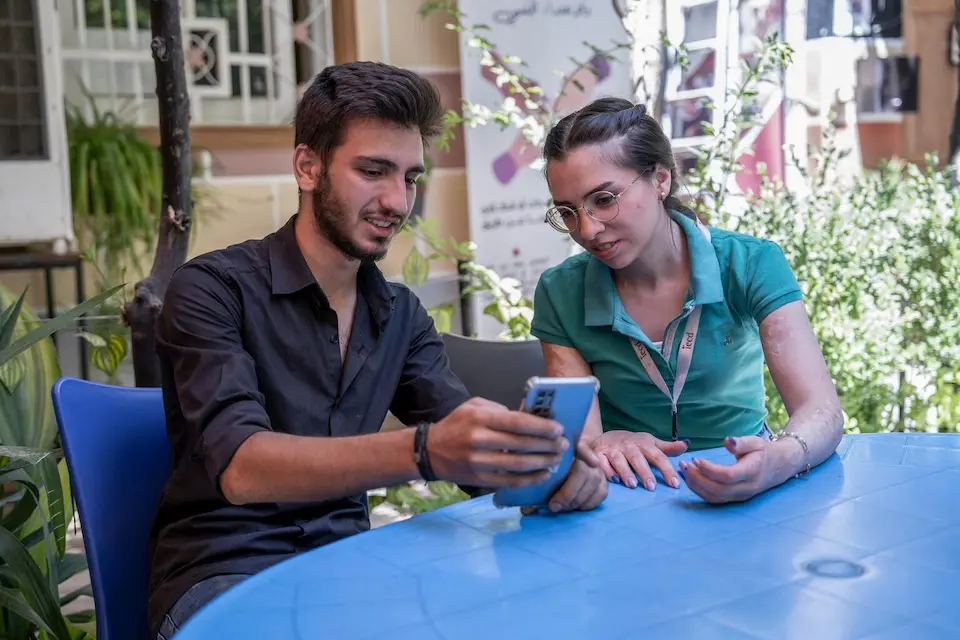
One day Elia says he hopes to launch his own mobile phone shop, even open an academy to train other young people in high-demand tech skills. “My message to the young generation in Syria is, if you had to leave school, it’s not the end. There’s always an opportunity waiting, you just have to find it.”
My message to the young generation in Syria is, if you had to leave school, it’s not the end. There’s always an opportunity waiting, you just have to find it. — Elia, 17, in Jaramana, Rural Damascus, Syria
Since 2024, UNICEF has reached more than 245,500 young people aged 10 to 24, in Syria through skills development and vocational training through 43 youth-friendly spaces across all Syrian governorates. These spaces continue to provide thousands of adolescents and young adults with vital opportunities to build skills, develop resilience, and re-engage with their communities after years of conflict and displacement.
Learn more about UNICEF's youth skills building programs
Responding to the escalation of hostilities in As-Sweida
Despite a ceasefire agreement at the end of July 2025, hostilities have continued in Syrian's southern As-Sweida governorate, both in rural and urban areas. The volatile security environment continues to impact civilian safety and access to health care, safe water and other essential services. Humanitarian access remains constrained.
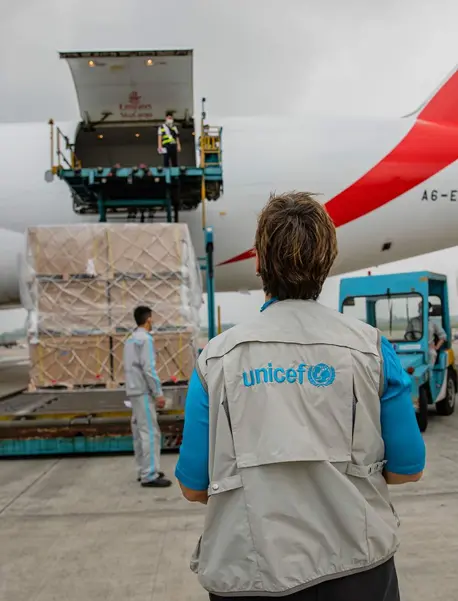
Since fighting started in July 2025, UNICEF has been delivering emergency services and supplies through its implementing partners and will continue to do so in the coming months in As-Sweida, Dar’a, and Rural Damascus governorates as access allows.
Related: UNICEF Ramps Up Emergency Support for Children, Families Fleeing Violence in Southern Syria
Priorities include:
Children's health
- supplying safe water, fuel for water infrastructure and hygiene kits and rehabilitating wells to restore access to safe drinking water
- providing essential medicines and pediatric supplies and deploying mobile health teams
- supporting preventive nutrition services, with early detection and treatment of children with severe acute malnutrition
Children's education and mental health support
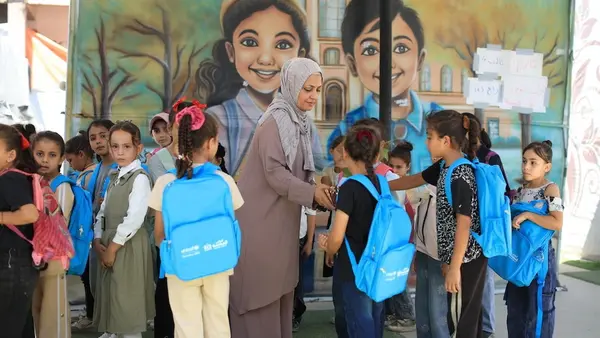
- setting up temporary learning spaces, providing learning supplies and support for remedial classes
- providing psychological first aid and mental health and psychosocial support services for students and teachers and parenting support
Child protection services
- strengthening gender-based violence prevention, explosive ordnance risk education, case management, and outreach via mobile teams
- supporting emergency cash assistance for vulnerable families
- conducting youth-led needs assessments and life skills activities in affected districts
- fostering community engagement to promote cohesion and to prevent disease
- supporting access to safe sexual exploitation and abuse reporting mechanisms and accountability
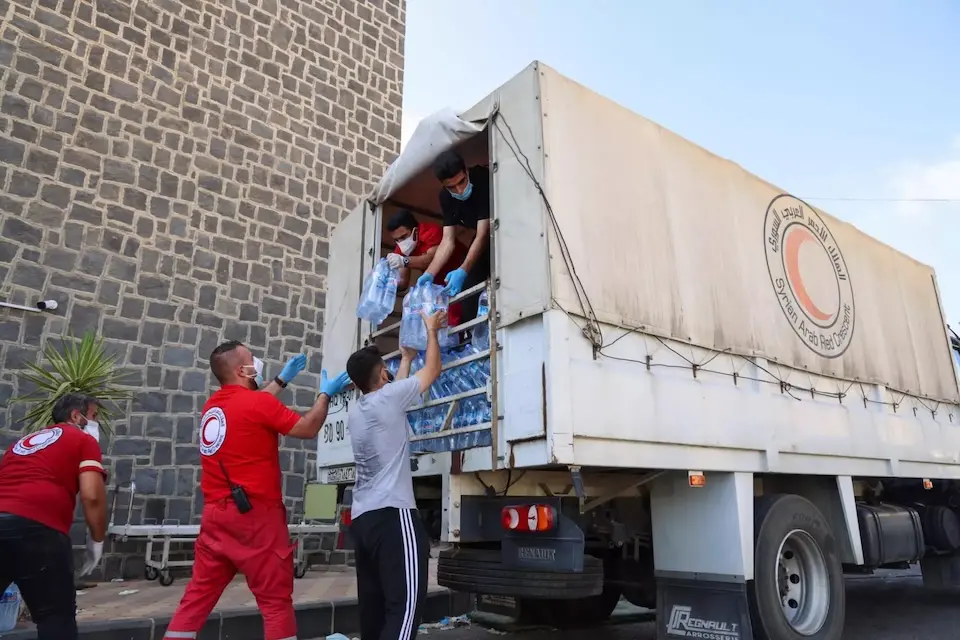
UNICEF Syria's appeal for funding to rapidly scale-up lifesaving and protection services for children in these areas remains 75 percent underfunded.
For more information about the situation and needs on the ground, read UNICEF's latest flash update.
HOW TO HELP
There are many ways to make a difference
War, famine, poverty, natural disasters — threats to the world's children keep coming. But UNICEF won't stop working to keep children healthy and safe.
UNICEF works in over 190 countries and territories — more places than any other children's organization. UNICEF has the world's largest humanitarian warehouse and, when disaster strikes, can get supplies almost anywhere within 72 hours. Constantly innovating, always advocating for a better world for children, UNICEF works to ensure that every child can grow up healthy, educated, protected and respected.
Would you like to help give all children the opportunity to reach their full potential? There are many ways to get involved.