UNICEF Aids Children in Lebanon as Conflict Intensifies
UNICEF is rapidly scaling support for children caught in a brutal conflict. More help is urgently needed.
Support children caught in conflict
Children bear the brunt of rising violence in the Middle East
Air strikes. Displacement. Fear. As conflict in the Middle East continues to escalate, the situation is becoming catastrophic for millions of children across the region. Since Feb. 28, more than 1,100 children have been reported injured or killed in the violence. This includes 200 children reportedly killed in Iran, 91 in Lebanon, four in Israel and one in Kuwait. These numbers will likely climb as the violence intensifies and spreads.
Mass displacement across Lebanon has forced more than 816,000 people — including over 285,000 children — from their homes, adding to the tens of thousands already uprooted from previous escalations. As of March 12, 1,586 people have been wounded in Lebanon; 275 of the wounded are children.
"These figures are staggering. They are a stark testament to the toll that conflict is taking on children," said Marcoluigi Corsi, UNICEF Representative in Lebanon. "As military strikes continue across the country, children are being killed and injured at a horrifying rate, families are fleeing their homes in fear and thousands of children are now sleeping in cold and overcrowded shelters."
Related: 5 Ways Conflict in the Middle East Impacts Children
Video: 'These are children whose lives have been torn apart'
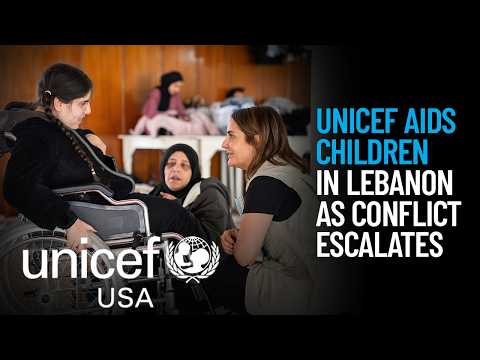
As displacement continues to expand across multiple governorates and needs surge, UNICEF has rapidly scaled up its emergency response to reach children and their families, including delivery of lifesaving services and supplies to displacement shelters and hospitals.
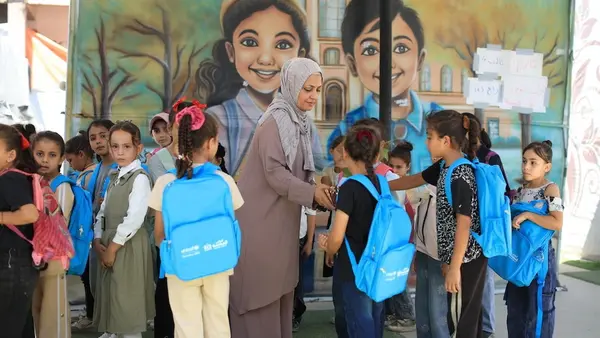
Preliminary figures indicate 125,800 people are sheltering in 590 displacement sites across the country. As of March 11, 344 public schools have been converted into shelters, with 92 percent at full capacity and hosting more than 58,000 people, including approximately 23,000 children. Many displaced households are sheltering with host communities or in informal settings — families are sleeping in cars and on the streets.
Learn more about UNICEF's emergency response in Lebanon: Humanitarian Flash Update No. 3
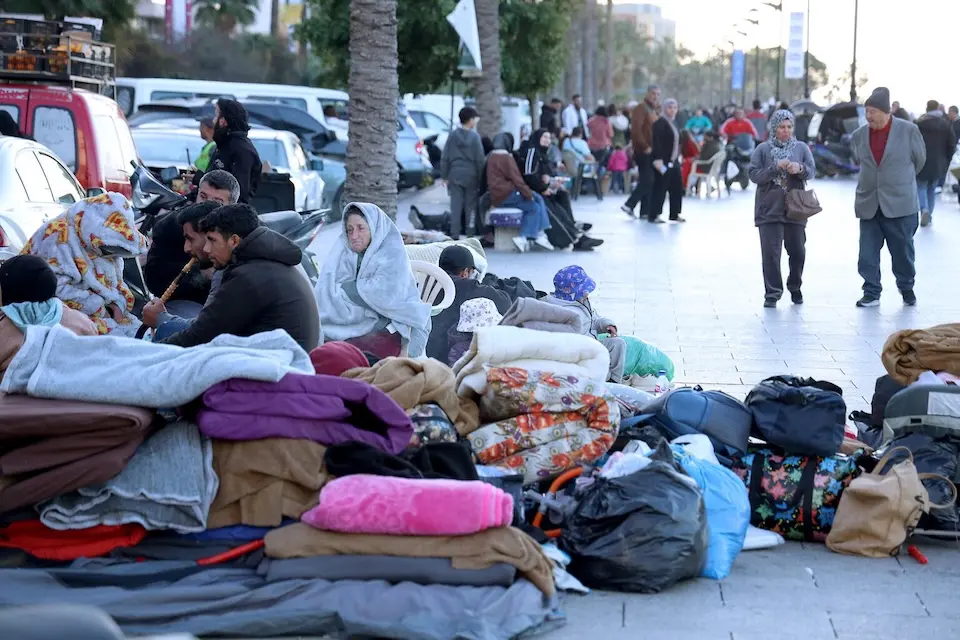
UNICEF delivers emergency WASH support in shelters across Lebanon
UNICEF partners are delivering emergency WASH (water, sanitation and hygiene) support in 188 shelters across Lebanon, reaching an estimated 11,200 families (approximately 46,000 people).
UNICEF's emergency WASH response includes:
- supporting WASH services at the Sports City shelter in Beirut, including repairs to existing facilities and installation of new showers and latrines, including disability-friendly units
- distributing 66 center-cleaning kits to support safe shelter operations
- supplying 560 cubic meters of water through trucking
- removing 68 cubic meters of sludge from displacement sites
- conducting WASH behavior change sessions for more than 11,650 displaced people
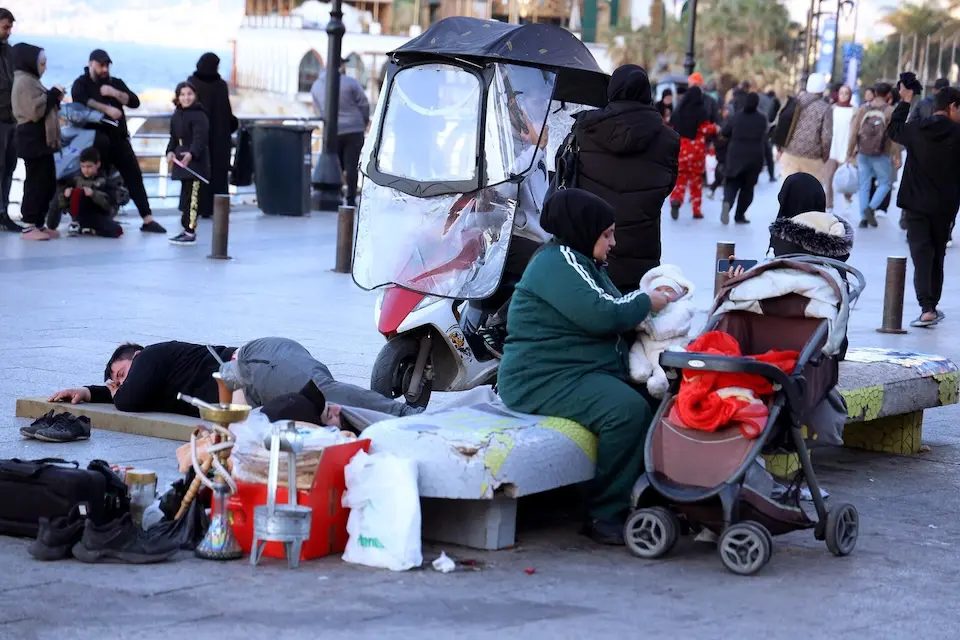
UNICEF supports health care for displaced children in Lebanon
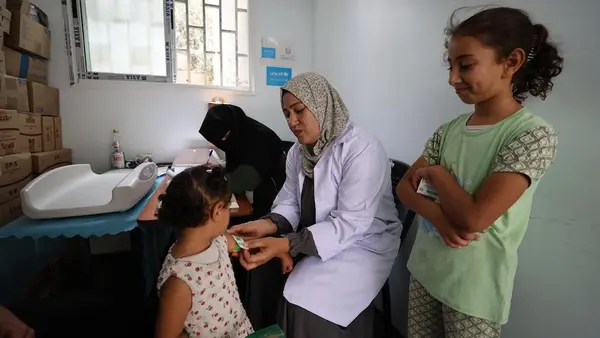
Thirty-eight UNICEF-supported mobile clinics are providing basic health care for the newly displaced and host communities, including child vaccinations, follow-up care for pregnant women and essential medicines.
Over the past week, UNICEF delivered 310 cubic meters of medications and medical supplies to Lebanon's Ministry of Public Health, mobile clinics and government hospitals. To date, more than 2,200 people have received essential services with more than 2,000 receiving medications and 30 receiving wound management care.
Since the beginning of the escalation, 122 newborns and children have been admitted to intensive care units across 11 governmental hospitals supported by UNICEF.
Learn more about UNICEF's ongoing support for children in Lebanon
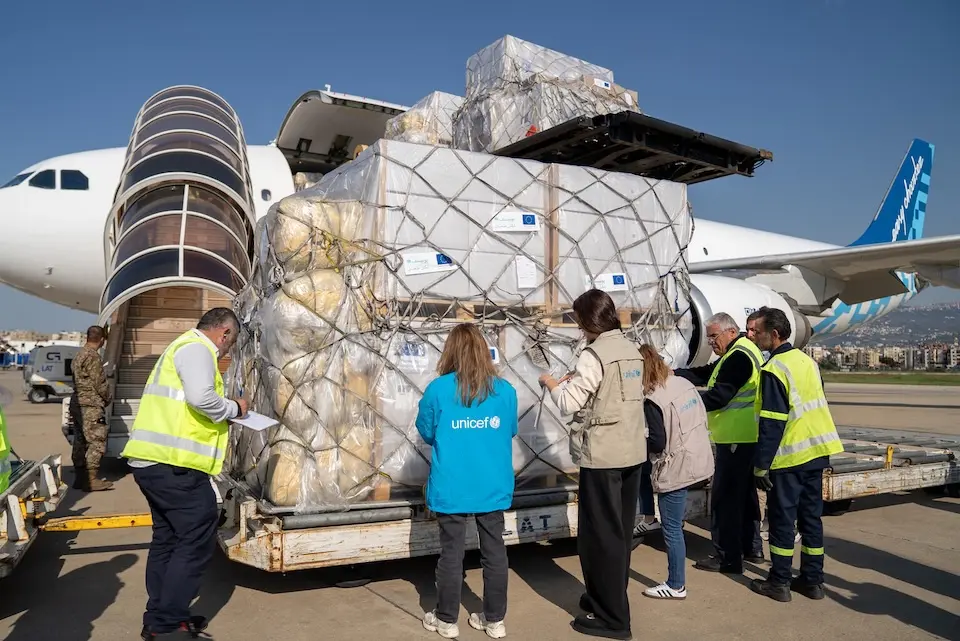
UNICEF distributes emergency supplies for children in Lebanon
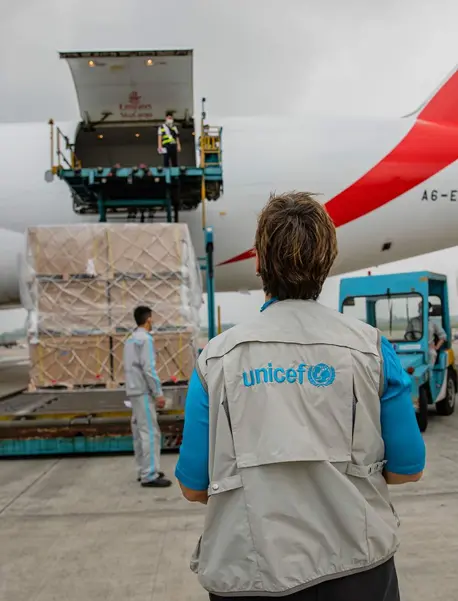
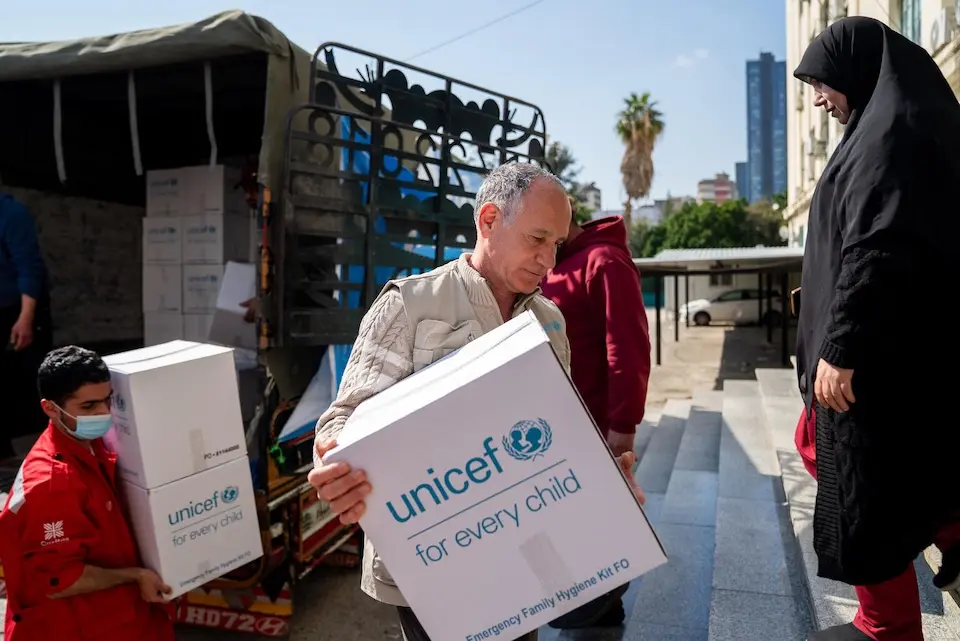
A shipment of 45 tons of emergency supplies sent from UNICEF's humanitarian supply hub in Copenhagen arrived at Beirut International Airport on March 10, 2025. Procured through the funding support of the European Union, the shipment included essential emergency health supplies, first aid kits, blankets, winter clothing, plastic mats, water tanks, adolescent kits, early childhood development kits, recreation kits and other emergency supplies. The supplies will be able to serve up to 400,000 people across Lebanon for a period of three months.
To date, 167,800 high-energy biscuit packages, 130,030 ready-to-use complementary food jars, and additional energy-protein nutrition supplements to prevent and treat child malnutrition have been prepositioned with partners, including the Ministry of Public Health.
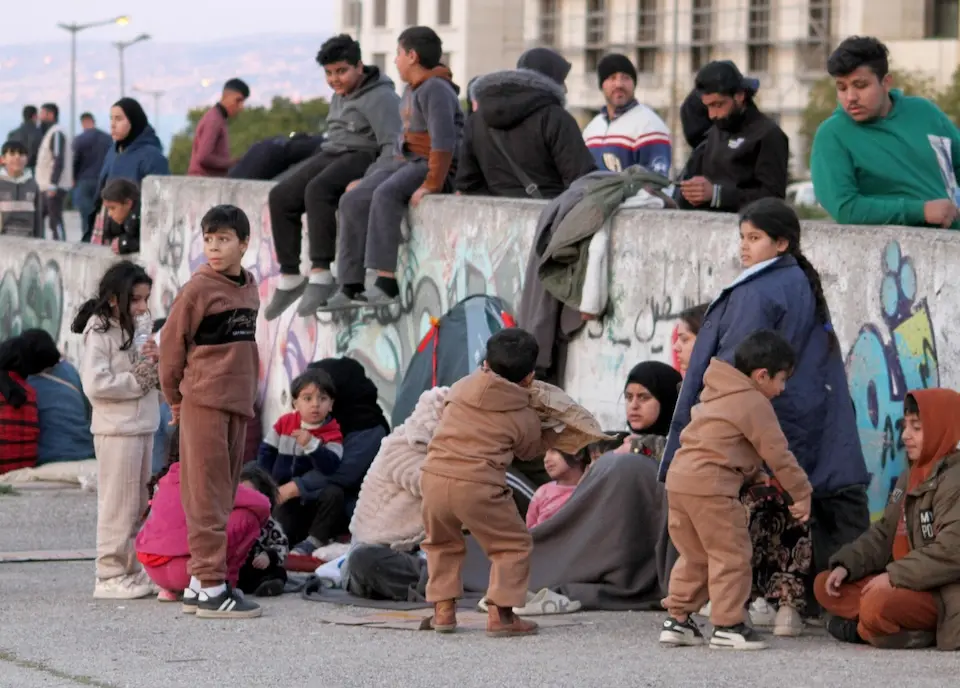
UNICEF strengthens systems to protect children with disabilities in Lebanon
UNICEF and the International Labor Organization (ILO) are supporting Lebanon’s Ministry of Social Affairs to provide one-time cash payments of $100 for families with children with disabilities affected by the escalating conflict.
The emergency financial assistance will reach approximately 6,000 families with children with disabilities between the ages of 0 and 19 who are already enrolled in the National Disability Allowance program benefitting around 24,000 people.
“In times of crisis, children and persons with disabilities are often among the most vulnerable, as families face displacement, loss of income and the additional costs associated with disability,” said Corsi.
“Through the activation of the National Disability Allowance emergency assistance with the Ministry of Social Affairs and the ILO, UNICEF is supporting national systems that can rapidly scale up assistance in difficult times," Corsi explained. "Strengthening these systems is essential to ensure that vulnerable families can receive timely and reliable support when they need it most."
Children caught in crises can't wait
UNICEF’s response and preparedness plan in Lebanon requires $48 million to reach 1 million people in need; only 16 percent of funding has been received to date. Help UNICEF reach more children in need
* UNICEF USA complies with U.S. sanctions restrictions, and, as such, we do not accept funds specifically designated for programs in Iran. We do, however, raise funds for UNICEF programming in the Middle East and North Africa region.
For parents and caregivers: How to Talk to Your Children About Conflict and War
HOW TO HELP
There are many ways to make a difference
War, famine, poverty, natural disasters — threats to the world's children keep coming. But UNICEF won't stop working to keep children healthy and safe.
UNICEF works in over 190 countries and territories — more places than any other children's organization. UNICEF has the world's largest humanitarian warehouse and, when disaster strikes, can get supplies almost anywhere within 72 hours. Constantly innovating, always advocating for a better world for children, UNICEF works to ensure that every child can grow up healthy, educated, protected and respected.
Would you like to help give all children the opportunity to reach their full potential? There are many ways to get involved.