Skills Training Program Builds Futures in Haiti
A UNICEF-supported job skills training program is expanding education in Haiti for young people forced out of school by armed violence during the Haiti crisis.
Vocational training offers displaced youth a path forward
Crouched on an unfinished slab, his hands covered in cement, Kevin carefully adjusts a ceramic tile. For more than an hour, he has repeated the gesture with patience. One of many youth affected by the Haiti crisis, he's not simply learning a trade, he's getting back on his feet.
At 16, Kevin fled Port-au-Prince with his mother and sister. Their once lively neighborhood had been taken over by armed groups. The morning they left, they ran out of their house carrying little more than a single bag. Since then, they’ve been living in Les Cayes, far from the capital. For Kevin, everything felt lost: his school, his friends and his dream of becoming an engineer.
Learn more: Crisis Deepens for Haiti's Children
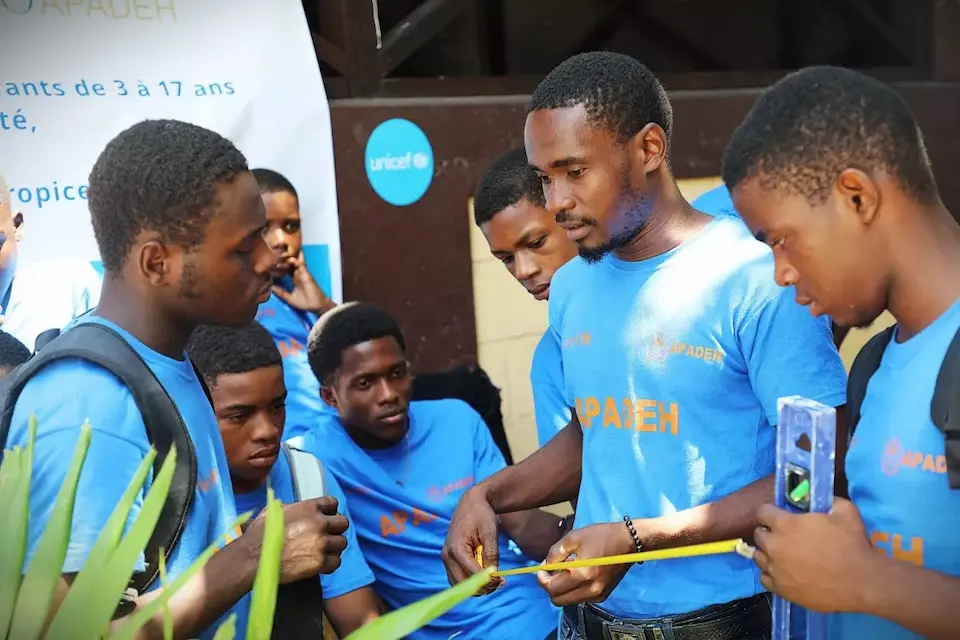
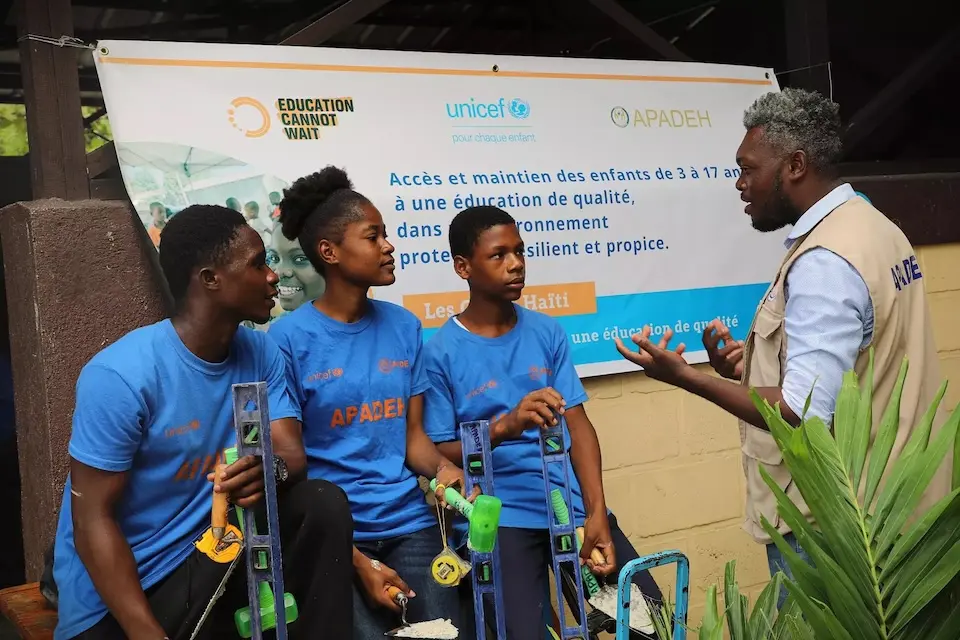
That’s when Kevin discovered the non-formal education sessions run by UNICEF in Haiti with its partner APADEH with funding from Education Cannot Wait (ECW). At the center, displaced youth like him take courses in tiling, screen printing and modern cosmetology. The goal of these sessions is to offer a real alternative to young people forced to drop out of the formal school system because of violence and displacement.
"I fled Port-au-Prince with nothing but my courage. Here, I’m learning tiling, a trade I’ve loved for a long time. It’s not just about placing tiles but about rebuilding my life,” Kevin says.
Even if we can’t change the past, I know that here we are building a future even in the middle of chaos. — Domingue, a job skills trainer in Les Cayes, Haiti
For Domingue, the trainer, every student carries the promise of a better future. He teaches with rigor and humanity, knowing that behind every skill learned lies a story of loss, and pain. “Even if we can’t change the past, I know that here we are building a future even in the middle of chaos,” he says.
Learn more about UNICEF's response to the Haiti crisis
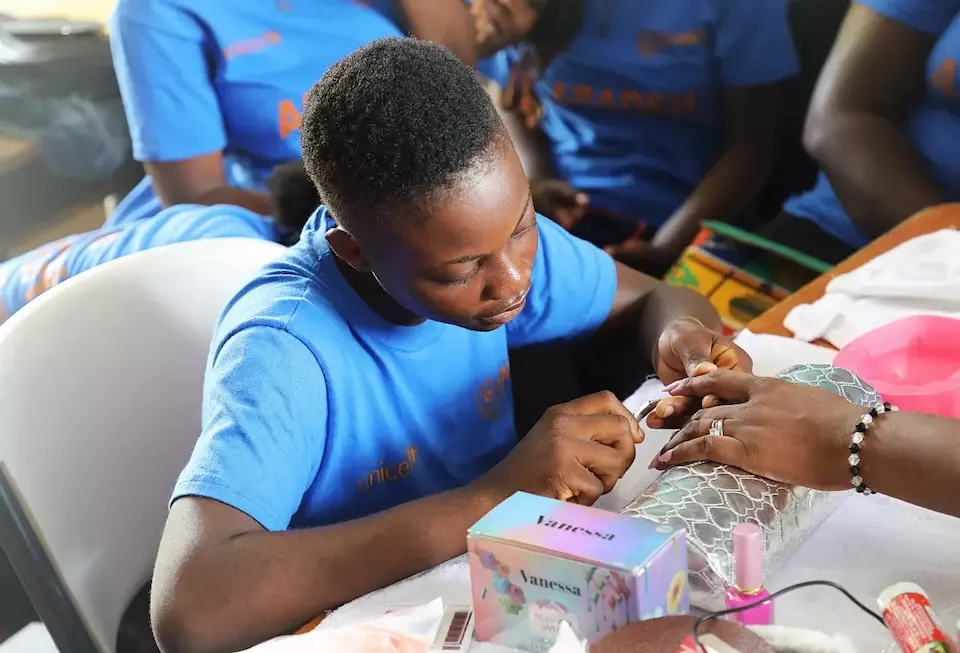
Non-formal education in Haiti helps young people learn new skills and rebuild their lives
Just a few steps from the workshop, in a bright classroom, young girls are practicing hairstyling, braiding and makeup. This is the space dedicated to modern cosmetology. Among them is 16-year-old Miselene, one of the most dedicated. She knew nothing about hairdressing before joining the sessions but today, she has found a new path and a new sense of pride.
“When the road to school closed, I opened the door to a trade. Now I dream of owning my own salon and training other girls,” says Miselene.
When the road to school closed, I opened the door to a trade. Now I dream of owning my own salon and training other girls. — Miselene, 16
The sessions last a little over three months and at the end, each participant receives a certificate from the National Institute for Vocational Training. For displaced youth, this document is a key for opening the door to a job or to starting a business. But beyond the certificate, the most powerful change is the personal transformation.
“Today I can create, dream and exist. I feel like more than just a student and I am no longer lost; I’ve become a professional,” says Awinsize, a 15-year-old taking part in the screen-printing sessions.
Learn more about UNICEF-supported youth skills building programs
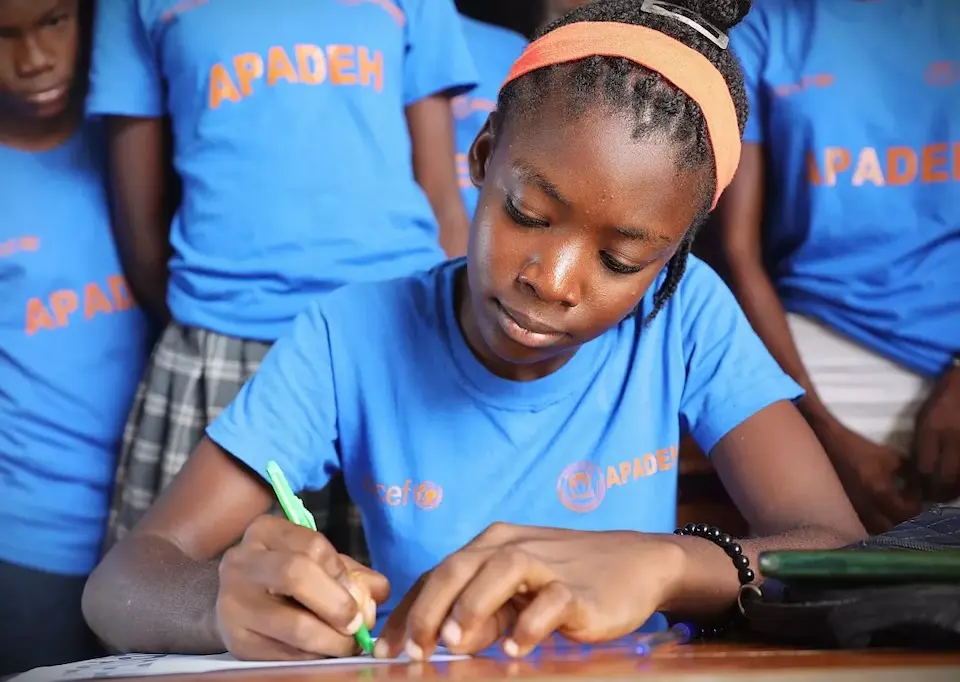
UNICEF and partners expand education in Haiti through training programs
Hundreds of young people, whether originally from Les Cayes or displaced from Port-au-Prince by violence, are now part of this initiative in southern Haiti. Despite security and logistical challenges, UNICEF and its partners continue to expand these skills training sessions into relatively stable areas.
These courses do not replace school. But in a country where more than 1,600 schools are closed, they provide a vital lifeline. With support from Education Cannot Wait, UNICEF is helping young people regain confidence and hope for the future.
Right now, the lives of the most vulnerable children hang in the balance as conflicts and crises jeopardize the care and protection that they deserve. Dependable, uninterrupted and effective foreign aid is critical to the well-being of millions of children. Please contact your members of Congress and urge them to support ongoing U.S. investments in foreign assistance.
This story was originally published on unicef.org
HOW TO HELP
There are many ways to make a difference
War, famine, poverty, natural disasters — threats to the world's children keep coming. But UNICEF won't stop working to keep children healthy and safe.
UNICEF works in over 190 countries and territories — more places than any other children's organization. UNICEF has the world's largest humanitarian warehouse and, when disaster strikes, can get supplies almost anywhere within 72 hours. Constantly innovating, always advocating for a better world for children, UNICEF works to ensure that every child can grow up healthy, educated, protected and respected.
Would you like to help give all children the opportunity to reach their full potential? There are many ways to get involved.