By Restricting Girls' Education, Afghanistan Faces Future With Fewer Teachers, Health Workers — UNICEF
Highlights
- Afghanistan remains the only country where girls and women are effectively barred from secondary and higher education. Since the September 2021 ban, more than 2.6 million girls have been denied secondary education, leaving girls like 14-year-old Wahida isolated at home and unable to pursue their ambitions.
- The education ban carries serious social and economic consequences. Afghanistan could lose 20,000 women teachers and 5,400 female health workers by 2030, according to UNICEF.
- UNICEF and partners provide alternative education and skills building opportunities for girls in Afghanistan.
Continued restrictions on girls’ education and women’s labor force participation are violating their rights and weakening the country’s human capital base — with serious consequences for future growth, public services and social stability, according to an analysis from UNICEF Innocenti's Office of Strategy and Evidence.
Updated Aug. 14, 2026
'I miss school very much'
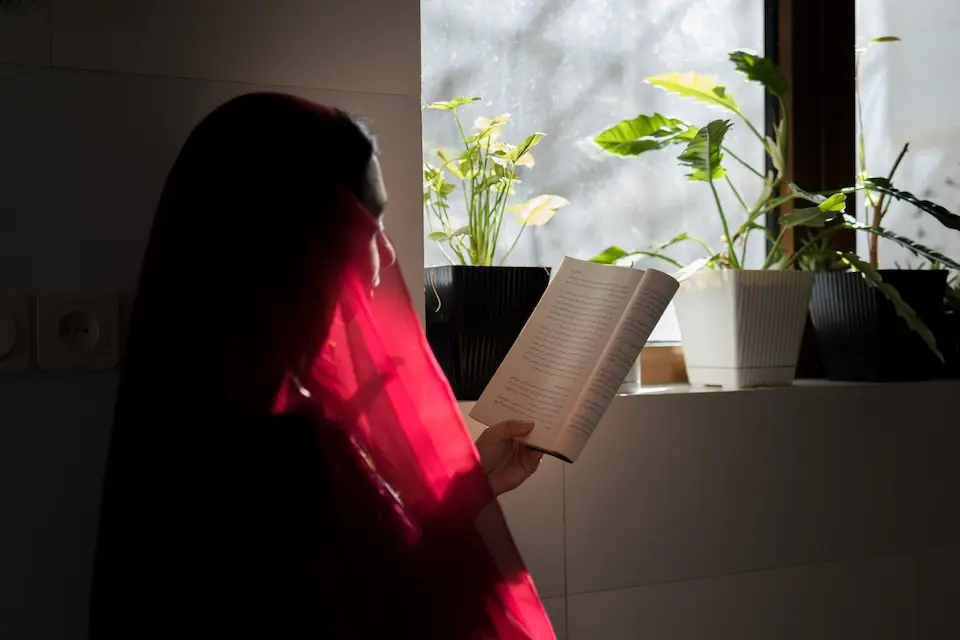
Wahida (name changed), 14, had to stop going to school upon reaching sixth grade — unable to continue due to a ban on girls’ secondary education in Afghanistan, implemented by the country's de facto authorities in September 2021.
"This is what it feels like to be left behind," she said.
"It has been a year since I was stopped from going to school, and I have been staying at home," she added. "Ever since I had to stop, I have felt very sad and heartbroken ... I miss school very much. I miss my classmates and my friends."
Afghanistan remains the only country in the world where secondary and higher education are effectively closed to girls and women. More than 2.6 million girls in Afghanistan have been denied secondary education since 2021, according to UNICEF — heightening risks of child labor, early marriage, abuse and gender-based violence.
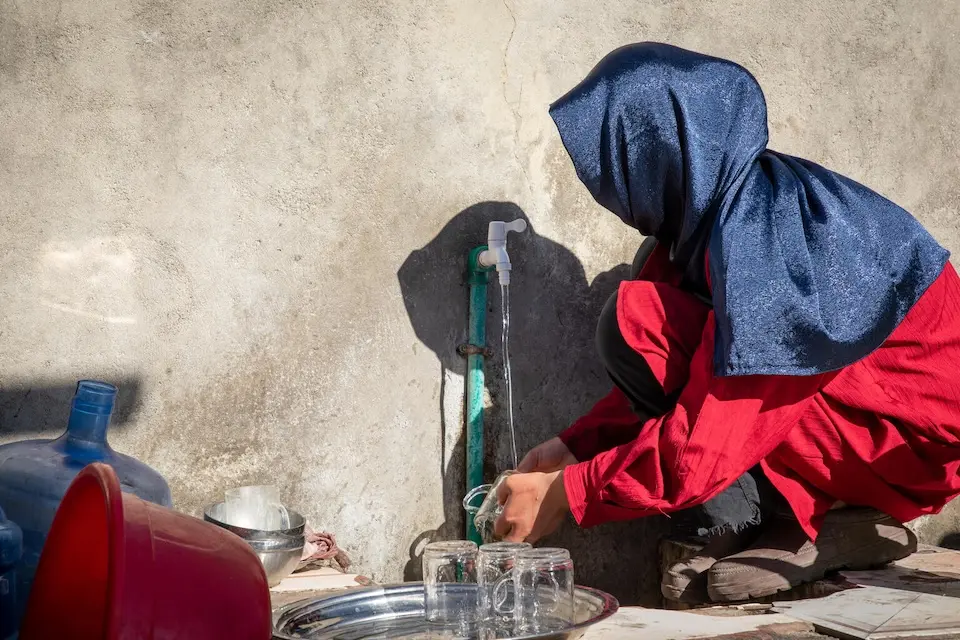
When she was a student, Wahida would wake up early, get ready and go to class. Now, she says, "there is not much to do. I help my mother with the housework. Sometimes I try to study at home, but it is hard without a classroom, teachers and friends around me."
Wahida's mother works as a cleaner at a hospital at night and at a school during the day. Because she herself did not have the chance to study, she says, "I wanted my daughter to succeed and not remain without education like me. We always dreamed that our daughter would become a teacher or a doctor. Now, when I think that she cannot finish her education, it is painful. These girls, their time is being wasted."
Wahida has a strong desire to study, her mother adds, "but our financial situation is very difficult. I cannot buy her a mobile phone or pay for the internet."
Cost of inaction: long-term economic and social collapse
Every year that Afghanistan restricts girls' and women's participation in secondary education will lock in another cohort of girls who will never enter the skilled labor force — with significant social and economic consequences, UNICEF warned in an April 2026 report by UNICEF Innocenti's Office of Strategy and Evidence. Banning education for girls and women past sixth grade in Afghanistan — and restricting their access to training and employment — has already caused an estimated 0.5 percent drop in the country's gross domestic product, the report stated.
In "The Cost of Inaction on Girls' Education and Women's Labor Force Participation in Afghanistan", UNICEF recommended that the de facto authorities (DFA) lift the ban on girls’ secondary and higher education to avoid further lost economic growth. Noting evidence of a close link between mothers' education and child health outcomes, the report also warned the ban could lead to an increase in child stunting and declines in vaccination coverage and antenatal care.
UNICEF has long advocated for girls' right to education on the grounds that depriving them of this right increases their risks of child marriage while threatening their mental health. "The DFA should safeguard skills training and allow women to participate in the labor market," the report stated. "This action could add 0.5 percentage points to growth annually, with further gains if education and employment opportunities for women expand."
Afghanistan since the 2021 Taliban takeover
Afghanistan has suffered a string of disasters in recent years. Prolonged droughts have disrupted agriculture and threatened food security for many families. Multiple earthquakes in 2022 and 2025 resulted in deaths, injuries and displacements.
Another stressor has been the return of migrants from Iran and Pakistan. As of December 2025, there were close to 3 million returnees — many of them school-aged, adding pressure on already stretched social services.
An estimated 45 percent of Afghanistan's population — some 21.9 million people, including 8 million children — are projected to need humanitarian assistance in 2026. Acute malnutrition among children is widespread.
No girl is enrolled in school past sixth grade since the ban on girls' secondary school education took effect in September 2021. Meanwhile, an estimated 600,000 skilled women are expected to exit the workforce over the next 35 years.
"The large share of girls not in education, employment or training is an economic drain with potential negative effects on resilience," UNICEF's report stated. "While part of this gap may be offset by recent skilled returnees from Iran and Pakistan, the overall trend does not bode well in the long term."
A significant number of Afghanistan's universities — 40 out of 129 — are at risk of closure due to declines in revenue and reductions in student and teacher numbers, particularly among female students and teachers, the study showed.
Two critical employment sectors in which educated women are needed — and in which they are allowed to participate — are teaching and health care services. With no new candidates being educated and trained, both sectors face potentially severe workforce shortages.
UNICEF projects that Afghanistan could lose 20,000 women teachers and 5,400 female health workers by 2030, while current restrictions are estimated to cost $84 million annually in lost economic output.
"I dream of becoming a doctor and helping people," Wahida said. "When I see other women working, it gives me hope that maybe one day schools will reopen for girls, and I will be able to continue my education and build my future."
Related: Education Lost for Afghanistan's Girls
How UNICEF supports adolescent girls in Afghanistan
Despite the restrictions, UNICEF continues to support learning in Afghanistan.
UNICEF supports community-based education in Afghanistan, an approach that provides alternative learning pathways for those excluded from formal education — including adolescent girls. These initiatives were in place before the ban, helping to address under-enrollment among students (especially girls) who couldn't otherwise attend school because it was not safe or they lived too far away.
In March 2025, UNICEF reported it was providing education to 445,000 children, roughly two-thirds of them girls.
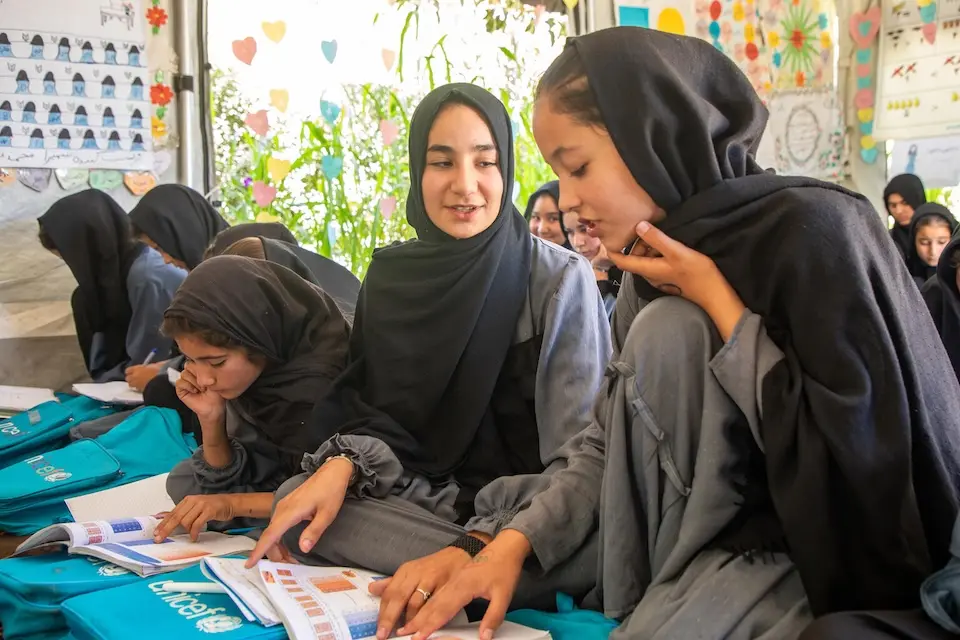
Adolescent girls up to age 15 who missed out on primary education can attend classes at UNICEF-supported accelerated learning centers. There are 3,500 ALCs in the country supported by donor partners like the German Committee for UNICEF "Let Us Learn" initiative and the Asian Development Bank.
In 2024, there were 85,000 girls enrolled in studies at ALCs, with UNICEF providing backpacks, notebooks, pens, pencils and other essential learning materials.
"This class is a second chance for me not to give up on my dreams," says Maryam, who attends an ALC near her home in western Afghanistan.
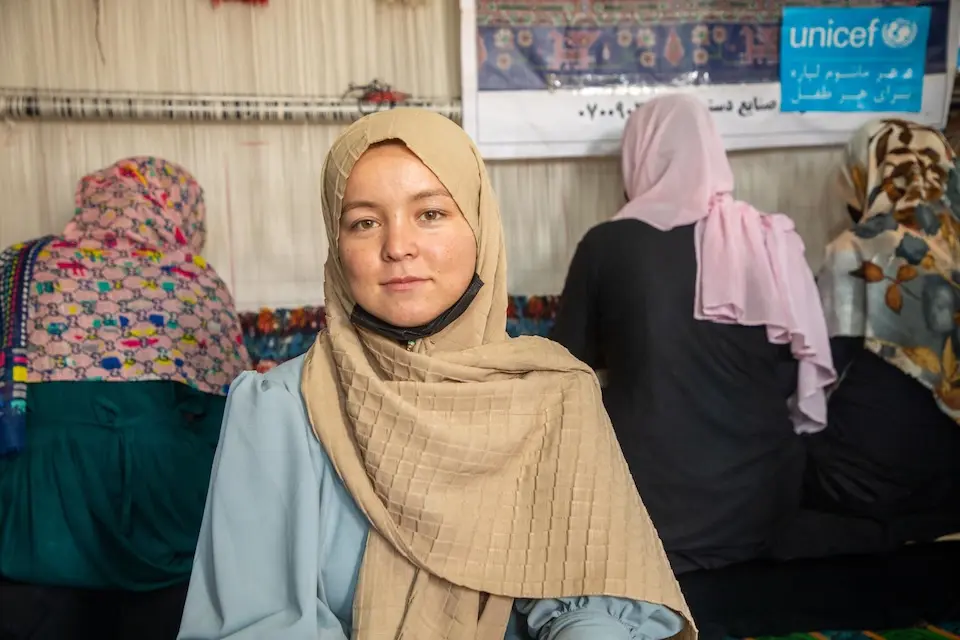
UNICEF also supports skills-development programs, and has been working to expand non-formal vocational and skills training opportunities for adolescents, especially girls.
The courses target boys, girls and young women across Afghanistan who face extreme poverty or are at risk of harmful coping mechanisms, such as early marriage or dangerous unaccompanied migration. They aim to equip participants with practical skills, empowering them to earn an income, support their families and achieve financial independence.
"This training means a second chance and a comeback from a distressed and frustrated life," says Ruqia, who learned carpet weaving through a UNICEF-supported program in Herat province for young women aged 15 to 25.
Learn more about UNICEF-supported programs focused on youth skills building — and how these programs fit into the broader mission of ensuring children are educated, respected and protected.
HOW TO HELP
There are many ways to make a difference
War, famine, poverty, natural disasters — threats to the world's children keep coming. But UNICEF won't stop working to keep children healthy and safe.
UNICEF works in over 190 countries and territories — more places than any other children's organization. UNICEF has the world's largest humanitarian warehouse and, when disaster strikes, can get supplies almost anywhere within 72 hours. Constantly innovating, always advocating for a better world for children, UNICEF works to ensure that every child can grow up healthy, educated, protected and respected.
Would you like to help give all children the opportunity to reach their full potential? There are many ways to get involved.