Renewed Hostilities Push Children in Yemen Deeper into Crisis
A severe humanitarian crisis intensifies
Across western Yemen, intensifying conflict between Houthi opposition fighters and Government forces have deepened an already devastating humanitarian crisis, driving families from their homes, killing and injuring children and disrupting access to the essential services they rely on.
More than 200,000 people, including an estimated 110,000 children, fled their homes between Sept. 6 and Oct. 10, 2026. By Nov. 1, the number of people displaced had reached 300,000, according to the UN's International Organization for Migration. Families are struggling to find shelter and afford basic necessities.
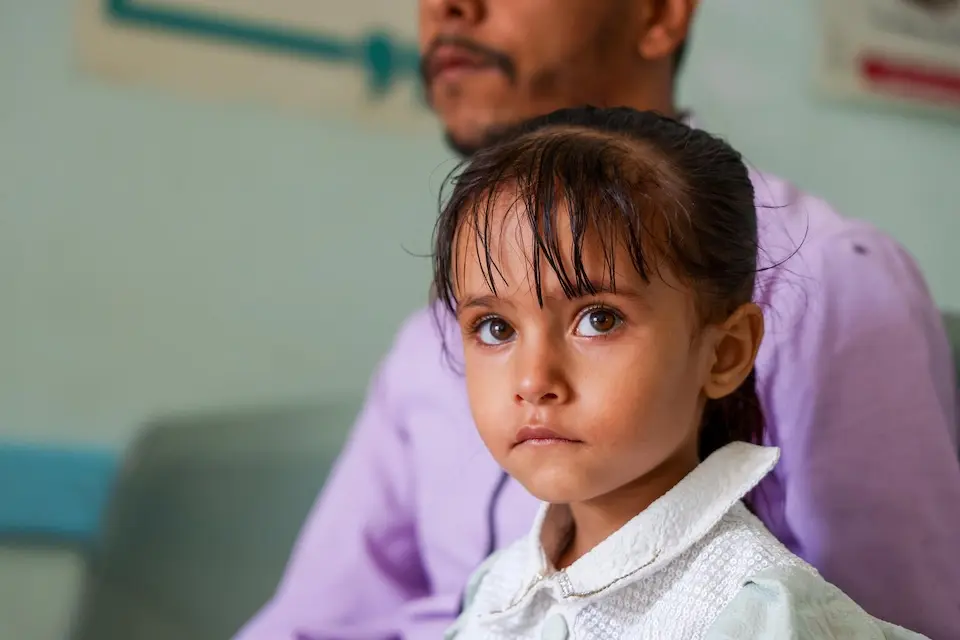
I miss my home, I miss my friends and I miss my school where I used to study. This war came and changed everything. — Mazen, 8
In their search for safety, children are being separated from loved ones and schools. "I miss my home, I miss my friends and I miss my school where I used to study," says Mazen, 8. "This war came and changed everything."
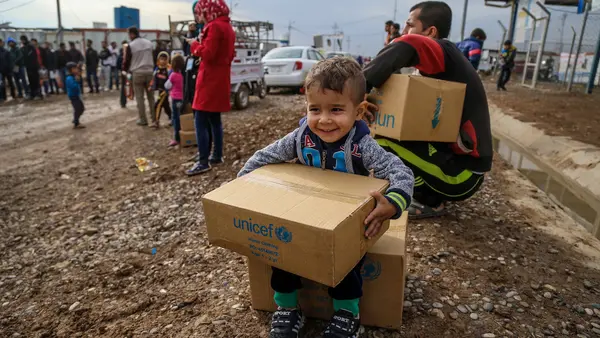
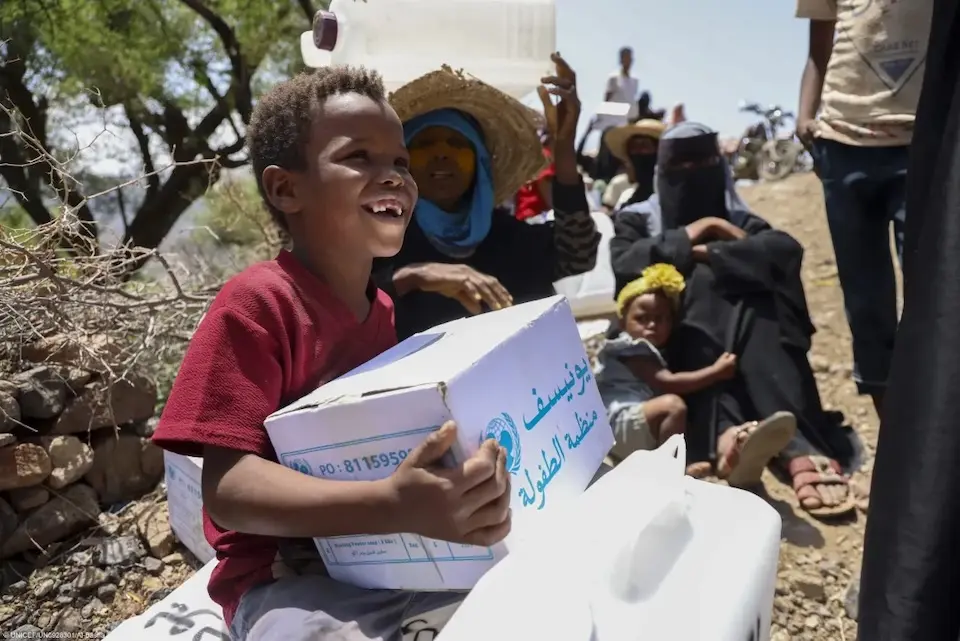
To support newly displaced families, UNICEF and humanitarian partners are providing hygiene kits, jerrycans and water tanks. Helping families access safe, clean water and maintain basic hygiene is essential to prevent cholera outbreaks. UNICEF-supported mobile clinics are also delivering emergency health and nutrition services to children and caregivers who have fled the violence.
Learn more about how UNICEF helps children in Yemen
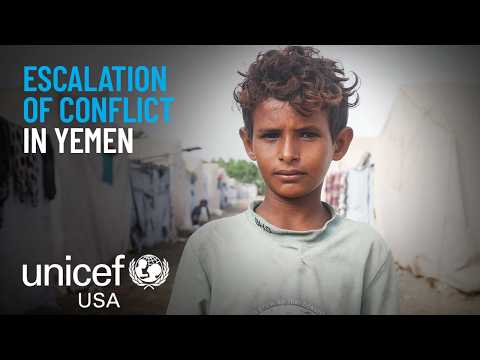
Video: Yemen's children call for peace
More than 12 million children in Yemen require lifesaving assistance
Escalating hostilities around Taiz governorate, Yemen's most populous region, and disruption of the main southern supply route are restricting civilian movement and deliveries of essential supplies. The latest escalation is unfolding in a country where humanitarian needs are already among the highest in the world. More than 12 million children in Yemen require humanitarian assistance.
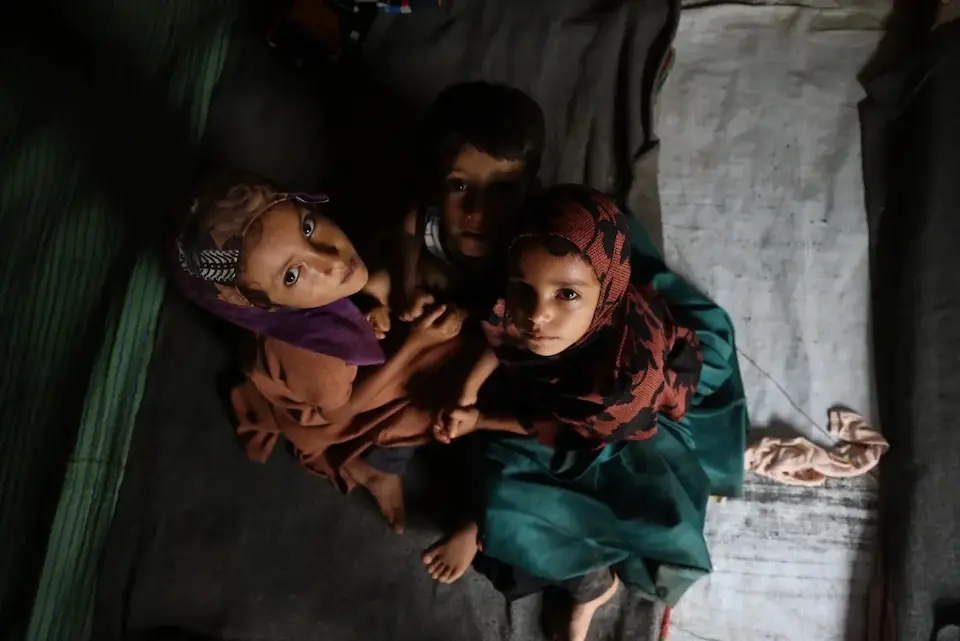
As shells landed closer and closer to their home in Al-Kadaha district in Taiz, a mother named Taghreed and her nine children joined thousands of others fleeing for safety. "We were driven out in the dark of night," she says. "We couldn't even see where we were stepping. Bullets were flying above us, shells were falling, and everything was collapsing."
"We were driven out in the dark of night ... Bullets were flying above us, shells were falling, and everything was collapsing." — Taghreed, mother of nine
Like many displaced families, Taghreed had hoped the conflict was behind her. After previous displacement, she returned home believing conditions had improved. Now she and her children are crowded into a shelter in a site for the internally displaced in Jabal Habashi district, Taiz governorate.
Since the escalation, UNICEF and partners have reached thousands of people with lifesaving aid. For families like Taghreed's, humanitarian support is more than emergency assistance. It's a lifeline that helps children stay healthy, safe and hopeful while they wait for the chance to rebuild their lives.
Learn more: A Mother's Search for Safety in Yemen
Urgent flexible funding is needed to scale up humanitarian support
UNICEF and partners continue to advocate for the protection of children and other civilians and treatment of displaced, malnourished children. Urgent, flexible funding is needed to scale up humanitarian assistance for newly displaced families, sustain essential services and strengthen cholera prevention and response.
“Children in Yemen were already living through one of the world’s most grave humanitarian crises, and many have known little but conflict and displacement,” said Edouard Beigbeder, UNICEF Regional Director for the Middle East and North Africa. "For children who have already endured years of hunger, displacement and disrupted schooling, this latest violence is eroding what little stability they had left.”
HOW TO HELP
There are many ways to make a difference
War, famine, poverty, natural disasters — threats to the world's children keep coming. But UNICEF won't stop working to keep children healthy and safe.
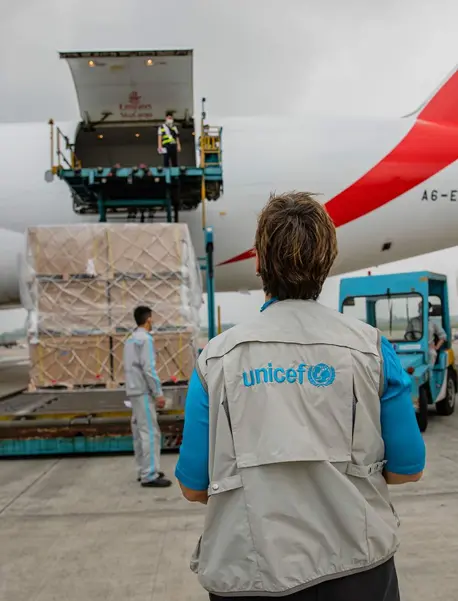
UNICEF works in over 190 countries and territories — more places than any other children's organization. UNICEF has the world's largest humanitarian warehouse and, when disaster strikes, can get supplies almost anywhere within 72 hours. Constantly innovating, always advocating for a better world for children, UNICEF works to ensure that every child can grow up healthy, educated, protected and respected.
Would you like to help give all children the opportunity to reach their full potential? There are many ways to get involved.