Renewed Hostilities Push Children in Yemen Deeper into Crisis
A severe humanitarian crisis intensifies: more than 12 million children in Yemen require assistance
Across western Yemen, intensifying conflict between Houthi opposition fighters and Government forces has deepened an already devastating humanitarian crisis, driving families from their homes, killing and injuring children and cutting off the essential services they rely on.
At least 64 children have been killed and the same number injured since hostilities escalated on Sept. 3. The number of casualties is likely to increase as renewed fighting continues around densely populated areas, particularly in Taiz and Lahj.
“The rising number of children killed and injured in Yemen is devastating. It must stop,” said UNICEF Executive Director Catherine Russell. “Behind every number is a child whose life has been cut short or changed forever.”
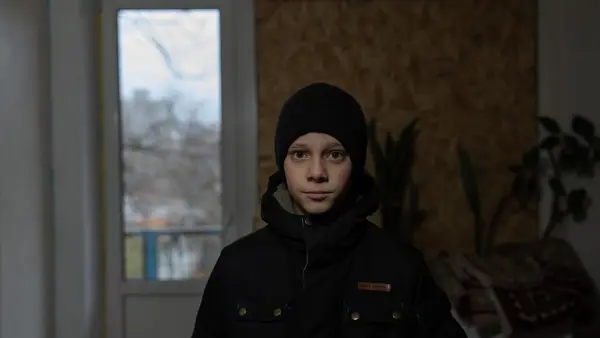
I miss my home, I miss my friends and I miss my school where I used to study. This war came and changed everything. — Mazen, 8
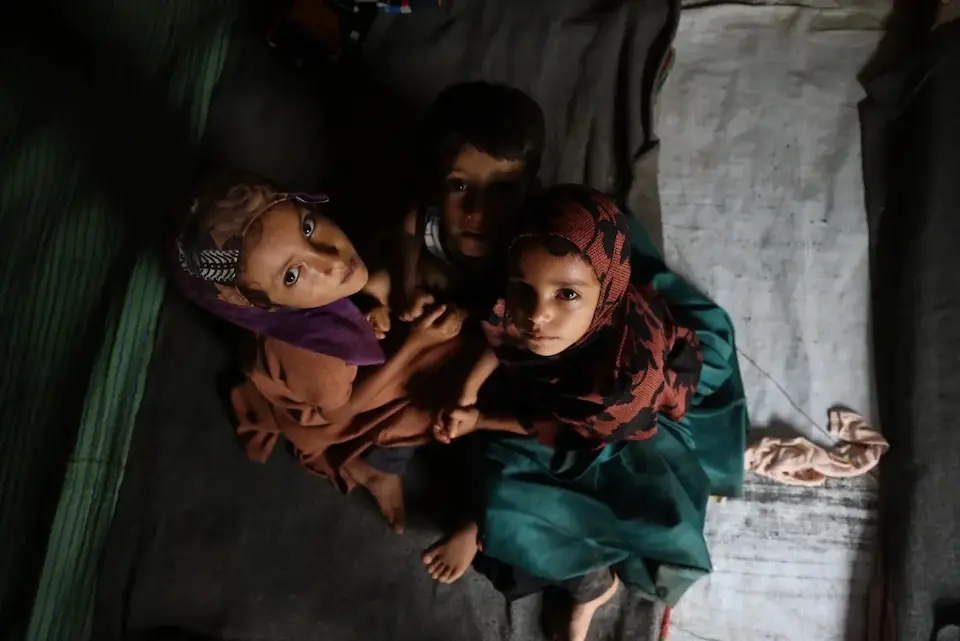
More than 330,000 people, including an estimated 174,000 children, have been displaced since September. Families are sheltering in unfinished or damaged buildings and struggling to access food, safe water and health care.
In their search for safety, children are being separated from loved ones and schools. "I miss my home, I miss my friends and I miss my school where I used to study," says Mazen, 8. "This war came and changed everything."
To support newly displaced families, UNICEF is expanding its emergency response to reach up to 350,000 people, redeploying health and nutrition mobile teams to displacement sites and affected communities in Aden, Lahj, Abyan, Marib and Taiz, scaling up emergency water and sanitation support, and providing psychosocial care and case management for children, including those who are unaccompanied or separated from their families.
Learn more about how UNICEF helps children in Yemen
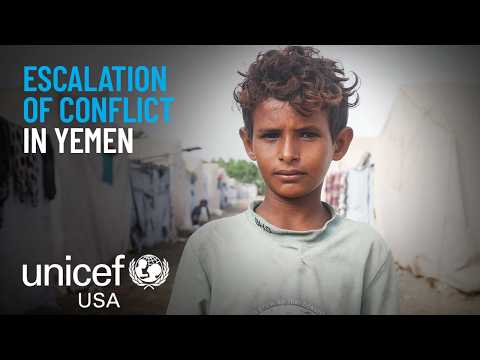
Video: Yemen's children call for peace
Basic services and infrastructure children depend on are under attack
At least seven schools and 28 health facilities, including five supported by UNICEF, have been damaged since the escalation began. On Nov. 2 an attack on the UNICEF-supported Al-Suqyah Health Center in Lahj, which serves around 1,700 people, was reported to have killed five people, including three health workers.
The situation around Taiz City in Taiz governorate, Yemen's most populous region, is particularly alarming. With the main road from Aden closed and alternative routes insecure, more than 800,000 people have reportedly been cut off from humanitarian assistance as of late October.
Water production has fallen by nearly 50 percent, food and fuel prices have more than doubled, and shortages of medicines, fuel, medical oxygen and electricity are threatening emergency, maternal and newborn care.
"We were driven out in the dark of night ... Bullets were flying above us, shells were falling, and everything was collapsing." — Taghreed, mother of nine
As shells landed closer and closer to their home in Al-Kadaha district in Taiz, a mother named Taghreed and her nine children joined thousands of others fleeing for safety. "We were driven out in the dark of night," she says. "We couldn't even see where we were stepping. Bullets were flying above us, shells were falling, and everything was collapsing."
Like many displaced families, Taghreed had hoped the conflict was behind her. After previous displacement, she returned home believing conditions had improved. Now she and her children are crowded into a shelter in a site for the internally displaced in Jabal Habashi district, Taiz governorate.
Since the escalation, UNICEF and partners have reached thousands of people with lifesaving aid. For families like Taghreed's, humanitarian support is more than emergency assistance. It's a lifeline that helps children stay healthy, safe and hopeful while they wait for the chance to rebuild their lives.
Learn more: A Mother's Search for Safety in Yemen
Urgent flexible funding is needed to scale up humanitarian support
UNICEF and partners continue to advocate for the protection of children and other civilians and treatment of displaced, malnourished children. Urgent, flexible funding is needed to scale up humanitarian assistance for newly displaced families, sustain essential services and strengthen cholera prevention and response.
“Children in Yemen were already living through one of the world’s most grave humanitarian crises, and many have known little but conflict and displacement,” said Edouard Beigbeder, UNICEF Regional Director for the Middle East and North Africa. "For children who have already endured years of hunger, displacement and disrupted schooling, this latest violence is eroding what little stability they had left.”
Learn more: A Story of Hope in Yemen
The story doesn't end here. Help change what happens next.
HOW TO HELP
There are many ways to make a difference
War, famine, poverty, natural disasters — threats to the world's children keep coming. But UNICEF won't stop working to keep children healthy and safe.
UNICEF works in over 190 countries and territories — more places than any other children's organization. UNICEF has the world's largest humanitarian warehouse and, when disaster strikes, can get supplies almost anywhere within 72 hours. Constantly innovating, always advocating for a better world for children, UNICEF works to ensure that every child can grow up healthy, educated, protected and respected.
Would you like to help give all children the opportunity to reach their full potential? There are many ways to get involved.