A Lesson in Inclusion: Digital Textbooks in Colombia
HIGHLIGHTS
- Accessible digital textbooks leverage the power of technology to provide inclusive learning for all, including children with disabilities.
- More than 90,000 children have accessed digital books currently available across 1,760 schools in Colombia.
- The initiative is currently being implemented in 17 countries, with a goal of scaling to 50 countries by 2030.
Children in Colombia are learning about inclusion and gaining valuable new skills through UNICEF’s Accessible Digital Textbooks for All initiative.
Accessible digital textbooks provide quality, inclusive learning for every student, including children with disabilities
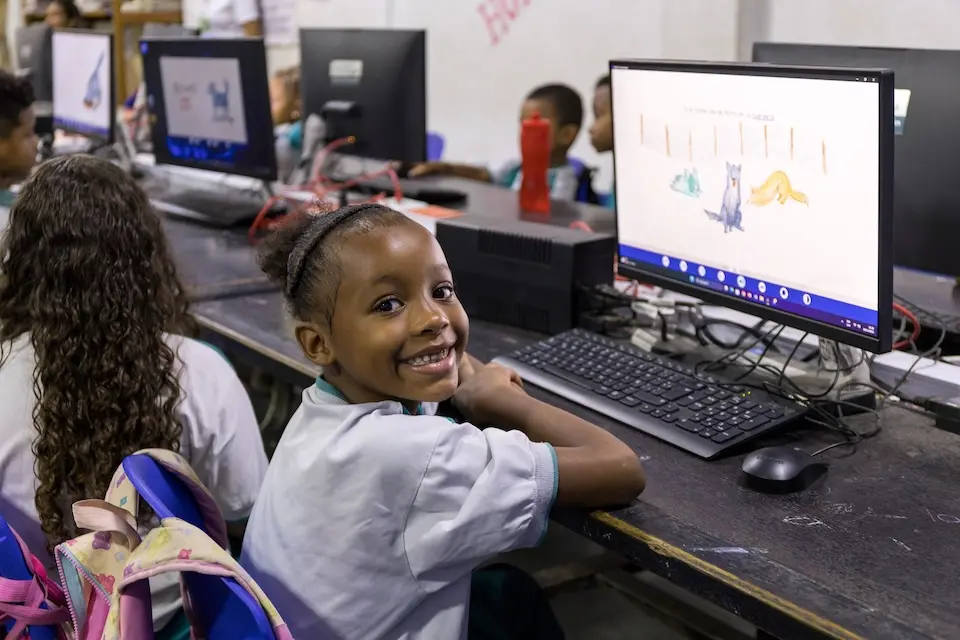
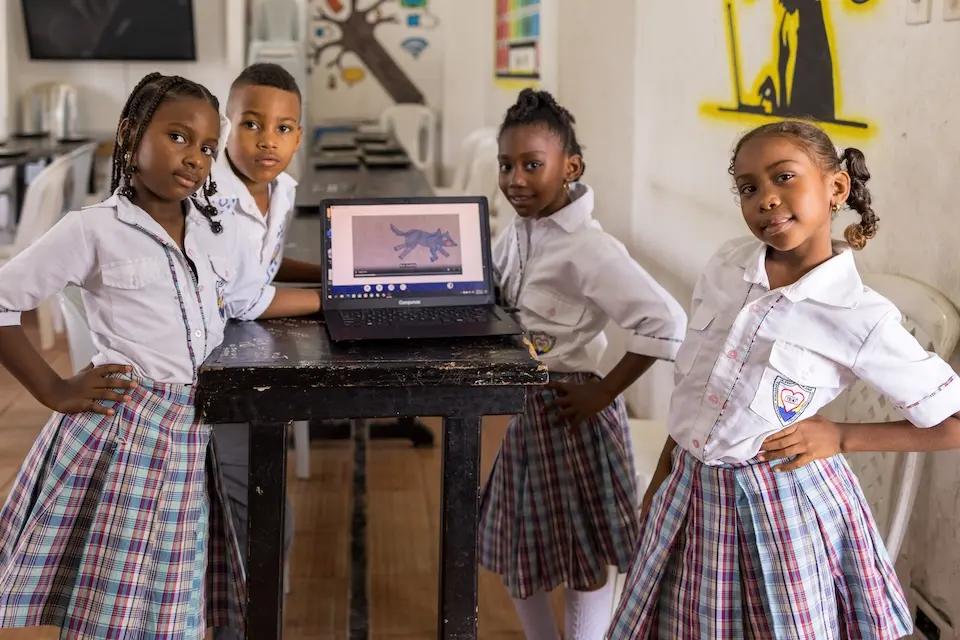
The story of Momo the three-legged dog is a huge hit with the children of 24 de Diciembre Elementary School in Turbo in the Antioquia department in northwestern Colombia. At its core, it is a story of resilience and inclusion — one that inspires children to overcome barriers, embrace diversity and find hope despite the challenges they may face.
All too often, stories like this are not accessible to children with disabilities. Even if they are digitized, they often lack adjustable font sizes, text-to-speech features, sign language video, screen reading capabilities and other interactive exercises that allow children with diverse learning styles to access them.
To address these challenges — and leverage the power of technology to deliver on the promise of quality education for every child, everywhere — UNICEF’s Accessible Digital Textbooks for All initiative (ADT) is taking books like "Momo" and converting them to interactive learning experiences. Not just for children with disabilities, but for their peers without disabilities, too.
“You can stop [the narration] and put it in sign language,” says Benkos, 7, a first grader at 24 de Diciembre School. “If there was a child who was deaf-mute and couldn’t understand, they would be able to have those buttons to see the sign language.”
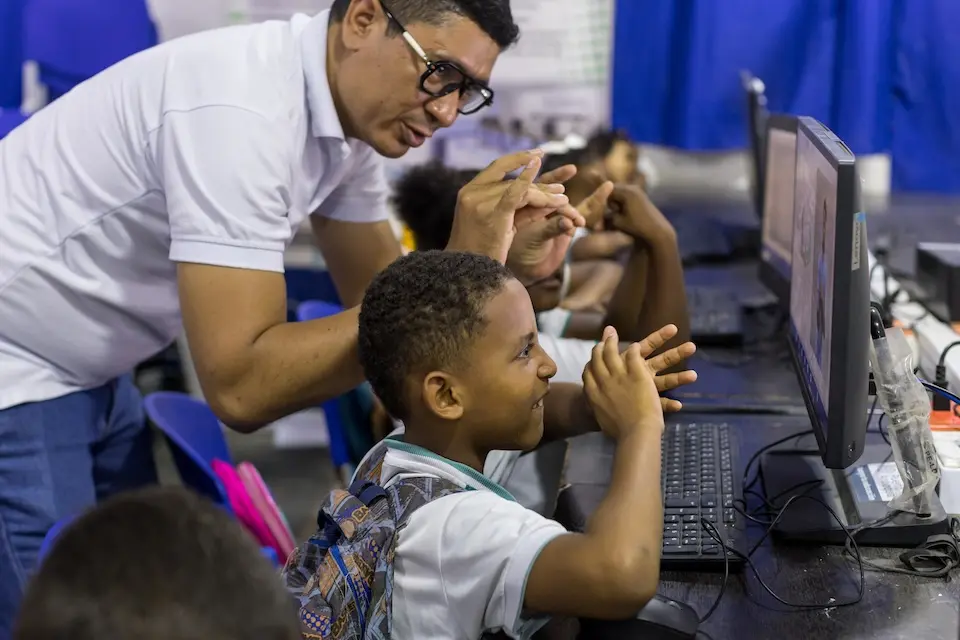
In Colombia, UNICEF is supporting the Ministry of National Education through the ADT initiative to digitize textbooks into accessible formats and provide teachers with training and tools to integrate the new resources into the classroom. The initiative also tests, refines and scales these innovative learning resources to improve equitable access to inclusive learning for all learners, including children with disabilities.
Learn more about how UNICEF supports children with disabilities
Starting small, one accessible storybook at a time
The initiative started small, with big dreams in mind.
In 2025, UNICEF supported the adaptation of three books: "Helena y una Carta Para su Papá," "Una Chalupa Para Juan" and of course, everybody’s favorite, "Momo."
More than 90,000 children across the country have accessed these three books, which are currently available on more than 16,200 computers across 1,760 schools in Colombia.
Teachers and students alike are loving the interactive lessons.
In the small city of Turbo, every teacher who had the chance to add the story of Momo to their lesson plans decided to include it. Perhaps most importantly, 100 percent of the children using the platform reported greater motivation towards reading, and 9 out of 10 of the students with disabilities say the experience overall was stimulating, intriguing, fun and easy to navigate.
“It has been a really cool experience. We had never interacted with this type of resource before,” says David Alberto Parra, a teacher at the Sagrado Corazón de Jesús School. “It allows us to integrate both children with disabilities and those without them. This type of resource allows for a very coherent and harmonious classroom practice. They interact in a very beautiful, collaborative way, and it’s very fulfilling to see.”
Related: How UNICEF Helps Children in Colombia
Accessible digital textbooks: a vision with scale
The ADT initiative is currently being implemented in 17 countries, with a goal of scaling to 50 countries by 2030.
Worldwide, an estimated 240 million children are growing up with some form of disability. When children with disabilities are enrolled in school, they are likely to encounter education systems that are not inclusive and present multiple barriers that hinder their participation, including inaccessible infrastructure, negative attitudes and stereotypes, inadequately trained teachers and a lack of assistive technologies needed to facilitate access, participation and learning. learning. According to a 2021 UNICEF report, children with disabilities are 49 percent more likely to have never attended school and 42 percent less likely to acquire basic literacy and numeracy skills compared with their peers without disabilities.
Accessible digital textbooks are curriculum-based learning materials designed according to Universal Design for Learning principles. They enable all learners — with and without disabilities — to access and engage with the same content in flexible and personalized ways, online or offline, using a phone, tablet or computer. Depending on the textbook and platform, accessibility features may include structured navigation, narration and text-to-speech, easy-read content, adjustable text and display settings, sign-language videos, image descriptions, translations, glossary tools and interactive exercises.
AI is opening up a new world of possibilities for ADTs. It used to take six to nine months to produce a high-quality accessible digital textbook. With the new open-source AI-powered converting tool, known as the ADT Studio, a final, expert-validated product can be ready in a matter of weeks.
There are huge potential cost savings as well. The old-school approach could cost up to $50,000 per textbook. Today, the AI-powered process costs less than $1 of API credits per page. Experts still need to add sign language video and validate the product manually.
Related: UNICEF Supports Inclusive Learning for Children With Disabilities
Accessible textbooks are fun to use and encourage empathy
Ultimately, the initiative provides a clear pathway to make learning more accessible, interactive and fun.
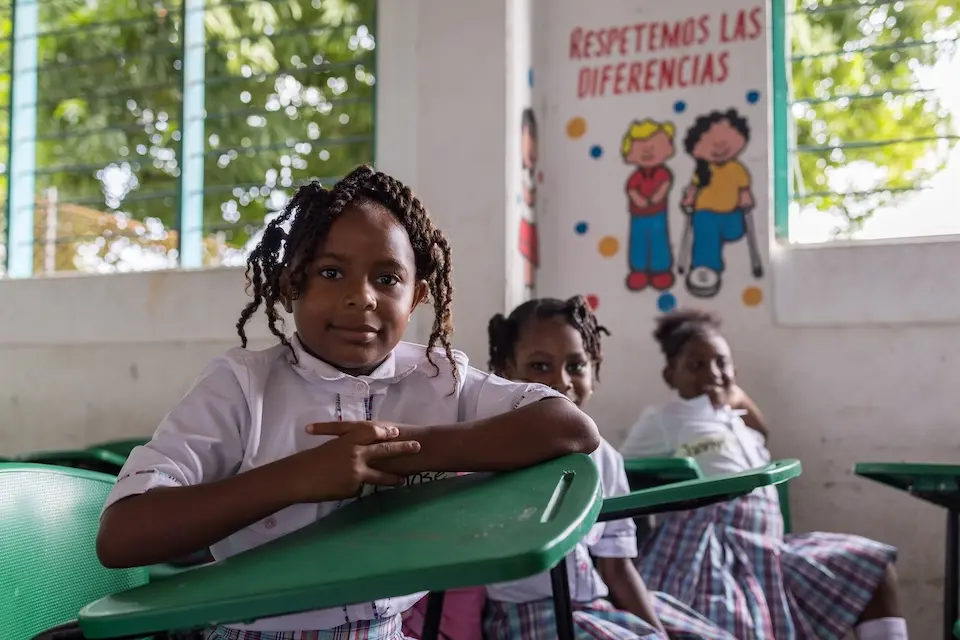
“The children, for the first time, are experiencing a real exercise in inclusion,” says Betsy Palacios, a teacher with Todos a Aprender, a strategy led by the Ministry of National Education designed to improve the quality of learning in Colombia. “An exercise where all the children enjoy themselves without barriers. They enjoyed learning and showed empathy for each other’s learning.”
Momo’s lesson of empathy and understanding is one we can all learn from. Inspiring one reader, one viewer, one user, one teacher and one child at a time.
HOW TO HELP
There are many ways to make a difference
War, famine, poverty, natural disasters — threats to the world's children keep coming. But UNICEF won't stop working to keep children healthy and safe.
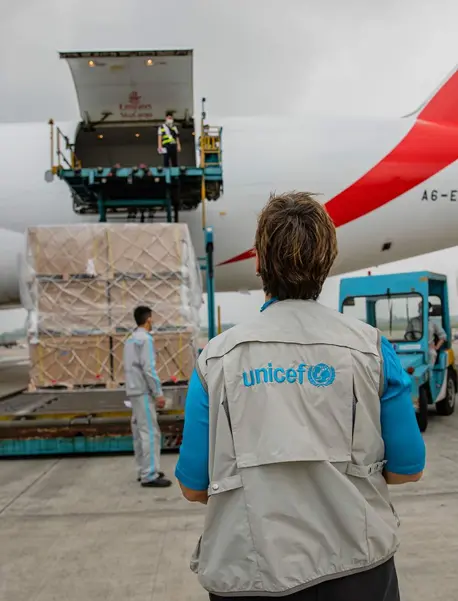
UNICEF works in over 190 countries and territories — more places than any other children's organization. UNICEF has the world's largest humanitarian warehouse and, when disaster strikes, can get supplies almost anywhere within 72 hours. Constantly innovating, always advocating for a better world for children, UNICEF works to ensure that every child can grow up healthy, educated, protected and respected.
Would you like to help give all children the opportunity to reach their full potential? There are many ways to get involved.