UNICEF Supports Inclusive Learning for Children With Disabilities
Every child has the right to a quality education. UNICEF works with partners worldwide to ensure children with disabilities receive the support they need to participate fully in the classroom and have the same opportunities to succeed as their peers.
Innovative learning aids promote basic literacy and numeracy skills for the visually impaired
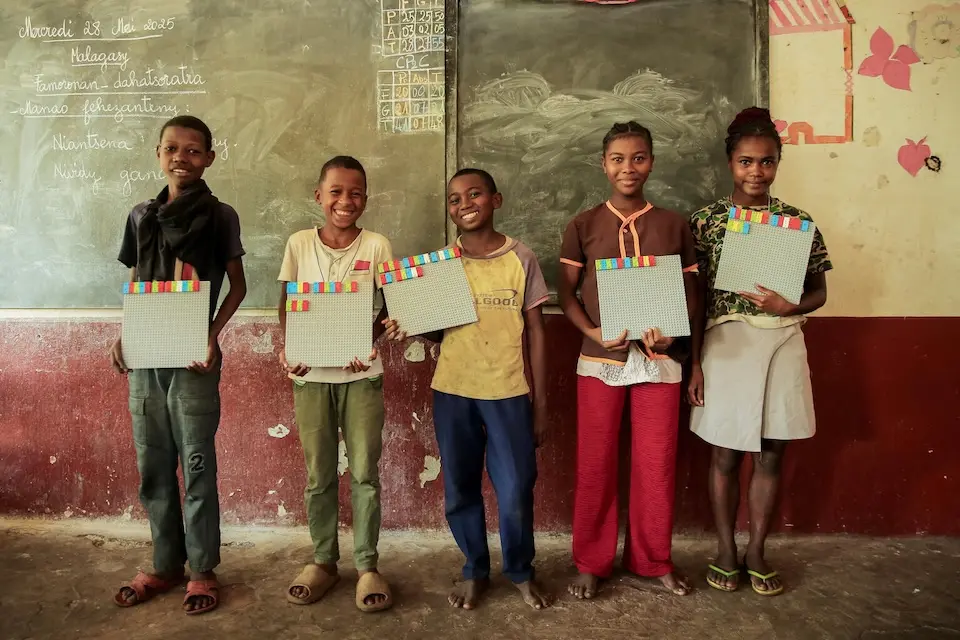
In a busy fifth-grade classroom in Farafangana in southeastern Madagascar, students work together to make sentences using sets of LEGO bricks marked with braille characters.
"Before, I really couldn't keep up with my classmates or form sentences," says 15-year-old Benjamin, who is blind. "Since I started using LEGO Braille Bricks, it has become easier for me. Each LEGO brick corresponds to a letter. When I struggle finding the right letter, the others help me find it."
Since 2022, UNICEF and the LEGO Foundation have been collaborating to introduce braille bricks in schools across Madagascar, Uganda and Burundi. The goal is to offer all children, with and without disabilities, an inclusive education through play.
"Using LEGO Braille Bricks is an advantage for us, because all our students can use them together," says teacher Felix Andrianarisoa. "It really helps blind children learn how to write." Of the 30 students in his fifth-grade class, four are visually impaired and two are completely blind.
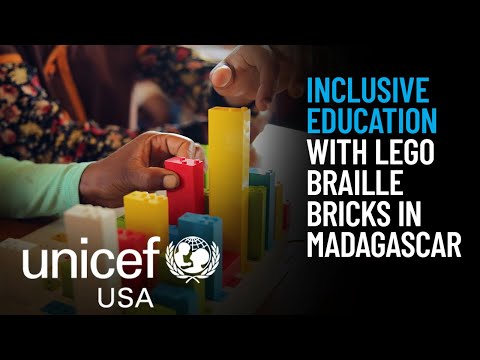
Watch the video:
Children with disabilities are among the most marginalized people in every society
At least 15 percent of the world’s population — approximately 1 billion people — have some form of disability, whether present at birth or acquired later in life. Nearly 240 million of them are children, with an even higher proportion in populations affected by armed conflict and disasters.
Half of those children are out of school.
UNICEF's scalable, cost-effective strategies help children with disabilities access education
UNICEF has a deep-rooted commitment to advancing the rights of children with disabilities through evidence-based actions, working with partners to combat ableism and ensure every child has the support they need to reach their full potential. Access to quality education plays a critical role.
Many education systems and schools struggle to provide inclusive educational experiences, where children with and without disabilities can learn together, due to a lack of materials, inadequate capacity and other barriers.
UNICEF identifies scalable, cost-effective approaches to improve enrollment, retention and learning outcomes for children with disabilities, especially in low-resource settings. Working with partners, UNICEF equips schools and early learning centers with appropriate tools and materials, and strengthens teachers’ capacity to provide quality inclusive education from the early years.
Related: Education a Lifeline for Children With Disabilities in Central African Republic
Accessible digital textbooks offer interactive, differentiated learning
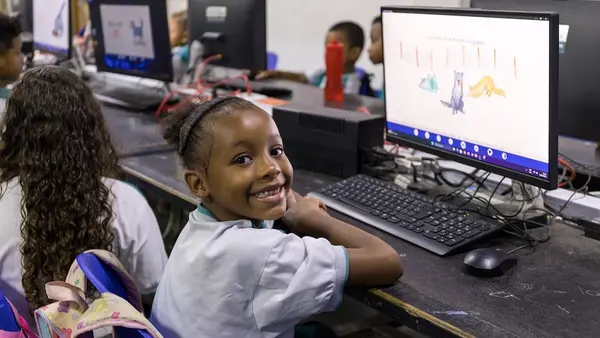
To help children with and without disabilities learn in the same classroom, UNICEF has launched the use of accessible digital textbooks (ADTs) in 11 countries, with a goal of scaling up to 30 countries by 2030. ADTs are teaching and learning tools that allow children with different learning styles, including those with disabilities, to access information in complementary alternative formats including audio and visual content.
The multi-sensory digital textbooks include features like sign language videos, adjustable font sizes, text-to-speech, words that light up and descriptions of images on each page to help all students engage with the learning material, promoting interactive, more individualized instruction.
ADTs have "the potential to transform students' learning experiences," says Tamika Thompson, a vice principal at a primary school in St. Catherine, Jamaica. "ADTs allow children to access the same content, participate in the same textbook-based activities both inside and outside the classroom, and have the same opportunities to achieve positive educational outcomes as their peers."
Learn more about how UNICEF helps children with disabilities
Every child has the right to live in an inclusive world. Donate to UNICEF today to help all children thrive.
HOW TO HELP
There are many ways to make a difference
War, famine, poverty, natural disasters — threats to the world's children keep coming. But UNICEF won't stop working to keep children healthy and safe.
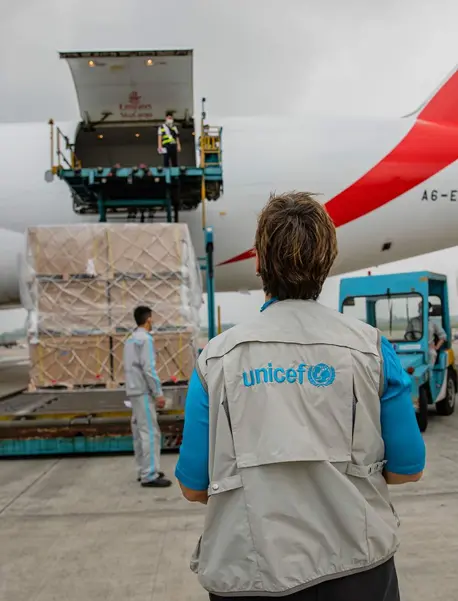
UNICEF works in over 190 countries and territories — more places than any other children's organization. UNICEF has the world's largest humanitarian warehouse and, when disaster strikes, can get supplies almost anywhere within 72 hours. Constantly innovating, always advocating for a better world for children, UNICEF works to ensure that every child can grow up healthy, educated, protected and respected.
Would you like to help give all children the opportunity to reach their full potential? There are many ways to get involved.