Modest Gains in Global Child Immunization in 2025
Highlights
- Global childhood immunization coverage inched forward in 2025. Still, an estimated 13.5 million children received no vaccines.
- Barriers include conflict, displacement, inequitable access and vaccine hesitancy.
- Millions of children remain vulnerable to preventable disease outbreaks.
- UNICEF and WHO urge governments and other partners to strengthen immunization programs and close persistent coverage gaps.
Despite some improvement in coverage, global vaccination rates remained below pre-pandemic levels last year, according to new data. UNICEF urges accelerated action to remove barriers to access, reduce the risks of outbreaks and ensure every child is protected against preventable diseases.
Data show 'zero-dose' children fell by nearly 750,000 in 2025, but coverage gaps remain
Global child immunization rates showed modest improvement last year, but drop-out numbers were high and stagnant, increasing the risk of disease outbreaks, UNICEF and the World Health Organization reported.
According to the latest WHO-UNICEF Estimates of National Immunization Coverage, shared by the agencies on July 15, 2026, annual global coverage improved somewhat, yet remained below 2019 levels — hovering within the same narrow range since 2009.
Ninety percent of infants received at least one dose of a diphtheria, tetanus and pertussis (DTP) vaccine, and 85 percent completed the full three-dose series, 2025 data show. DTP vaccination is considered the best indicator of who is being reached and where, and UNICEF and WHO both use it to assess the reach, equity and performance of routine immunization programs.
An estimated 13.5 million “zero-dose” children did not receive a single vaccine in their first year — 750,000 fewer children than were missed in 2024, according to the report. This progress, however, was offset by a rising number of children who started the schedule and did not complete it.
National averages continue to mask large disparities within and between countries, with children living in conflict, fragile settings and marginalized communities consistently the least likely to be vaccinated. More than half of zero-dose children reside in just nine countries: Afghanistan, Angola, Democratic Republic of Congo, Ethiopia, India, Indonesia, Nigeria, Pakistan and Yemen.
WHO and UNICEF continue to work with Gavi, the Vaccine Alliance and other partners toward the Immunization Agenda 2030 goal of ensuring vaccines reach everyone, everywhere, at every age — yet, as the 2025 coverage estimates show, the world is off track to meet those targets.
Related: Historic Catch-Up Campaign Reaches 18M Children With Lifesaving Immunization
Immunization coverage still far short of what's required to prevent measles outbreaks
More takeaways from UNICEF's statement accompanying the release of the 2025 data:
Globally, 7.3 million infants are estimated to have received their first DTP dose but dropped out before receiving their first measles dose. This contributed to stalled measles coverage, with 84 percent of children receiving the first measles dose and 77 percent receiving their second. Both figures fall far short of the 95 percent threshold required to prevent outbreaks.
In 2025, 57 countries reported large or disruptive outbreaks of measles, a highly contagious virus.
“Governments and health workers have helped global vaccination rates bounce back after dropping significantly during the COVID-19 pandemic," UNICEF Executive Director Catherine Russell said. "But millions of vulnerable children are still being left unprotected due to conflict, displacement and poverty. We must reach every child, and we must rebuild trust where it is fraying. No child should suffer from a disease that a simple vaccine can prevent.”
We must reach every child, and we must rebuild trust where it is fraying. No child should suffer from a disease that a simple vaccine can prevent. — UNICEF Executive Director Catherine Russell
Data from 195 countries show that 100 countries have maintained at least 90 percent coverage with three doses of DTP vaccine since 2019, with little progress in expanding this group. Of the countries below 90 percent coverage in 2019, 30 improved their rates over the past six years, but 65 countries are stagnating or falling behind, including 13 fragile, conflict-affected or vulnerable countries.
Compared to their 2019 baselines, the Americas and Southeast Asia regions fully recovered and improved their performance, with Southeast Asia recording the strongest gains. Countries in Africa, Europe and the Eastern Mediterranean region saw only modest gains, and the Western Pacific region experienced a decline.
Several factors affecting vaccination coverage in individual countries
More than half of all zero-dose children live in humanitarian crisis settings where immunization programs are often strained by political upheaval, insecurity or chronic underfunding. In Syria, a country still struggling to recover from over a decade of civil war, measles vaccination coverage dropped 12 percent in 2025, for example.
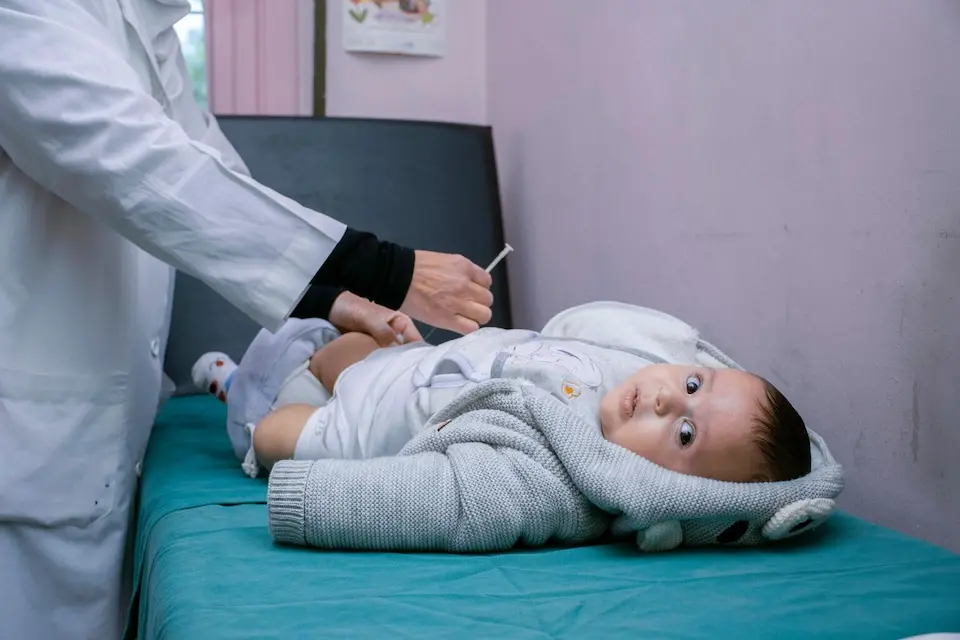
In middle- and high‑income countries — even where vaccines are fully accessible — coverage has been slipping due to shifting political commitment, structural challenges or rising vaccine hesitancy.
By contrast, significant upticks in routine vaccination coverage in Sudan, a country embroiled in a brutal civil conflict, show that access to lifesaving services for children can improve even in a difficult operating environment.
In countries with immunization programs supported by Gavi, the Vaccine Alliance, children today are protected against more diseases than ever before, with 74 percent average coverage across a full course of WHO-recommended vaccines. Sustained investments from governments and partners, commitments from communities, strengthened programs and broad public trust are what made that possible.
The very foundations that enabled this progress, however, are now under significant strain. And the 2025 estimates do not reflect the full impact of more recent cuts to international health financing. These reductions could threaten future vaccination gains if countries are unable to sustain routine immunization programs.
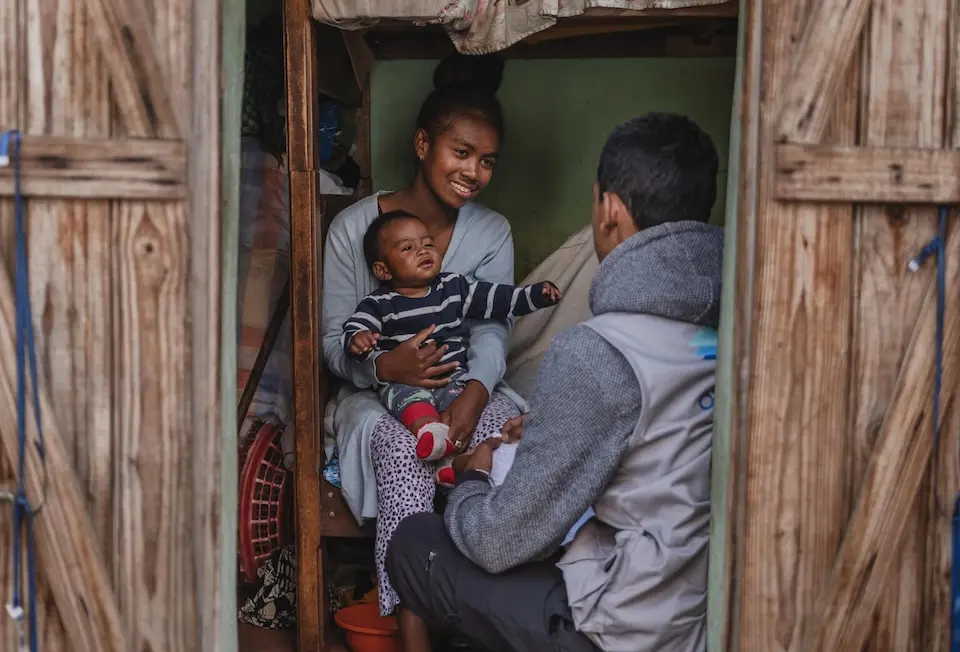
The data systems needed to track that impact and protect against backsliding are themselves showing strain.
Only 18 national immunization surveys were undertaken and submitted this round, down from 50 in 2024 and an average of 33 per year between 2015 and 2019. Weakening investments in surveillance and immunization data systems will make it harder to identify children who are missing vaccines, increasing the risk of preventable outbreaks and deaths, the agencies warn.
Bridging critical gaps in vaccination coverage requires a sharp course correction. To that end, UNICEF is urging governments and partners to work together to:
- strengthen immunization in conflict and fragile settings to reach and retain children
- counter false and misleading health information and fully support vaccine uptake acceleration
- increase and sustain domestic and global funding for immunization programs and partnerships, including Gavi
- invest in stronger data and disease surveillance systems to drive and guide high-impact immunization program strengthening efforts
“The historic levels of immunization that we are seeing across lower income countries shows what can be achieved when all stakeholders work together towards a shared objective,” Gavi CEO Sania Nishtar said. "[O]ur great challenge now will be to maintain this momentum in the face of funding constraints, geopolitical uncertainty and increasing outbreaks — while working harder to reach those children that still do not have access to immunization."
Learn more about UNICEF's partnership with Gavi
Immunization averts an estimated 4.4 million deaths annually, but coverage is uneven, and many children lack access to lifesaving protection. Learn how UNICEF works with partners to make sure all children have access to routine immunizations.
HOW TO HELP
There are many ways to make a difference
War, famine, poverty, natural disasters — threats to the world's children keep coming. But UNICEF won't stop working to keep children healthy and safe.
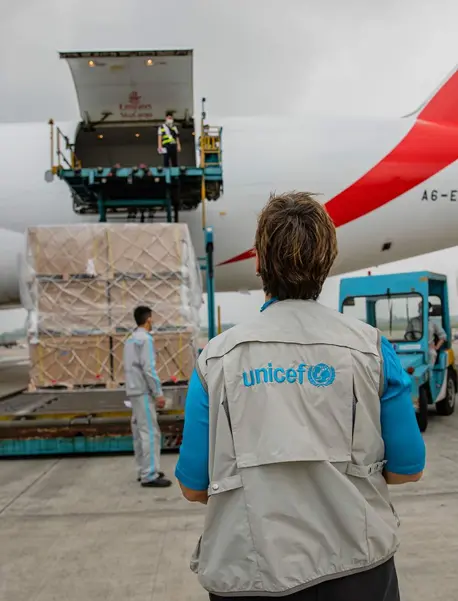
UNICEF works in over 190 countries and territories — more places than any other children's organization. UNICEF has the world's largest humanitarian warehouse and, when disaster strikes, can get supplies almost anywhere within 72 hours. Constantly innovating, always advocating for a better world for children, UNICEF works to ensure that every child can grow up healthy, educated, protected and respected.
Would you like to help give all children the opportunity to reach their full potential? There are many ways to get involved.