Helping Families Manage Grief and Fear After Nepal Floods
Highlights
- Families are coping with grief, shock and fear after massive floods swept through Nepal, destroying homes and infrastructure.
- Through group sessions and individual counseling, UNICEF-supported psychosocial workers help children and caregivers process the trauma they've experienced.
- Restoring a sense of safety for children includes access to essential services and places where they can learn, play and recover.
Through group counseling and individual care, UNICEF-supported teams are providing much-needed psychosocial support for children and caregivers devastated by recent flash floods in Nepal.
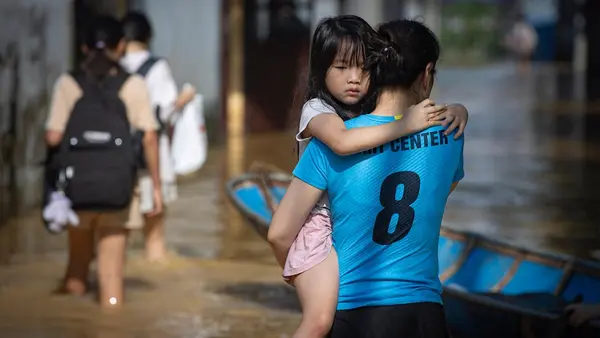
Homes and lives were washed away in an instant when catastrophic flash flooding swept through Nepal on Aug. 26, 2026. Many survivors are now living in temporary community spaces, wrestling with grief, uncertainty and persistent fears of another flood.
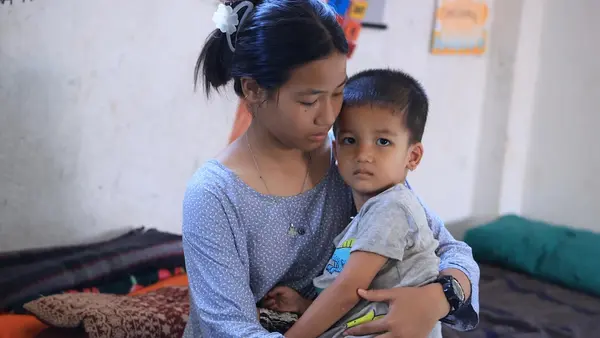
"The children and caregivers are very vulnerable right now," says Sushila Paneru, a psychosocial counsellor with the local government in Bidur municipality, Nuwakot district. "They are under so much stress and pain. They struggle to sleep and don't feel like eating ... Many can't even make eye contact with us."
UNICEF is supporting government counselors and trained mental health and psychosocial support teams — psychiatrists, clinical psychologists and psychosocial counselors — to help children and families in flood-affected areas cope as they begin the long process of putting their lives back together.
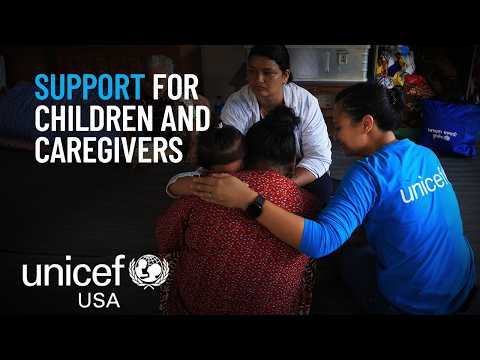
Video:
Trying to make sense of what happened
Sushila knows how suddenly fear can take hold: she herself was in the municipality office near the river when a wall of water rushed in, sending rocks tumbling and shaking the building. “We thought, oh no, it’s an earthquake and a flood together,” she recalls. “We grabbed our things and rushed out.”
In communities along the Trishuli River corridor, communities are trying to make sense of what happened on Aug. 26, when flash floods raged through Rasuwa, Nuwakot, Dhading and other downstream districts.
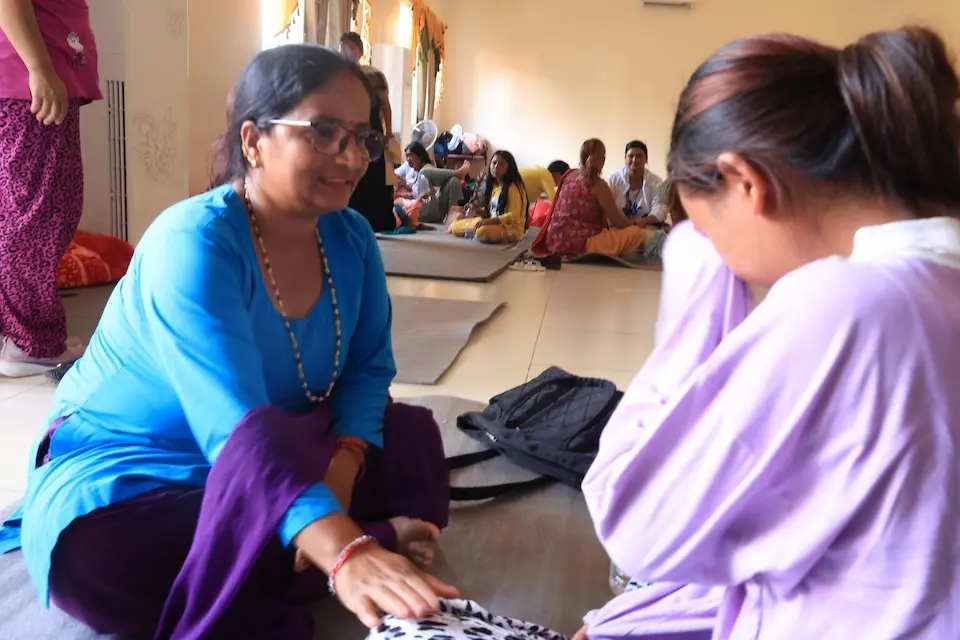
Through group sessions, children and caregivers can share their experiences without pressure, learn simple ways to manage stress, and understand that they are not alone. Individual counseling is also available for people who need more focused support.
For Sushila, the work begins with listening and helping survivors feel that someone is there for them. “It makes them feel, ‘Ah, someone is coming to ask about me, someone is here for me, asking what I need,’” she says.
Related: 'I Didn't Know Where My Parents Were": A 13-Year-Old's Escape From Flash Flood in Nepal
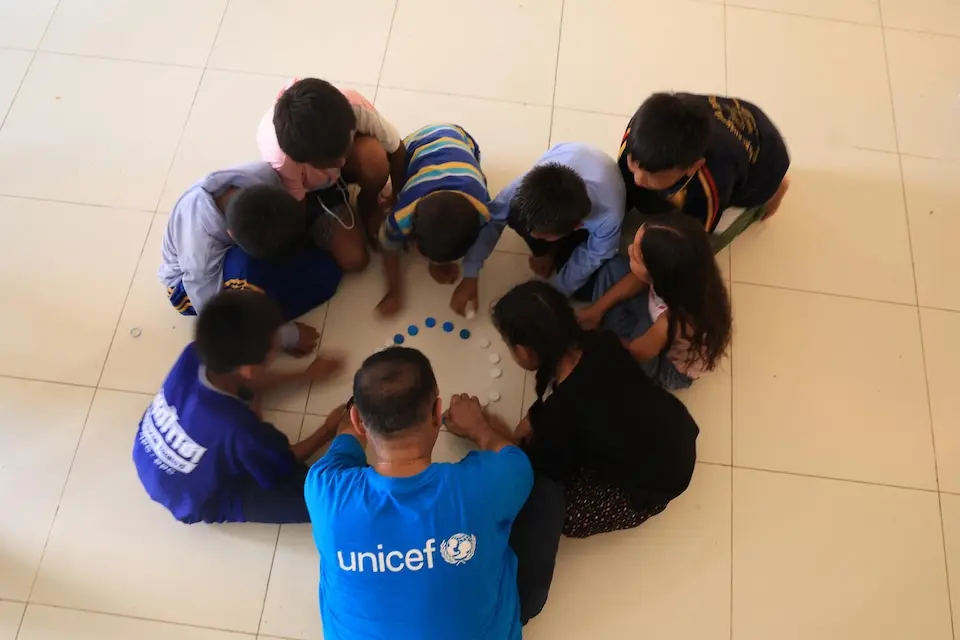
Nepal floods left more than 32,000 children in need of urgent humanitarian assistance
The floods have disrupted far more than homes. Roads, bridges, water systems, health facilities and telecommunications have been damaged, while schools have been destroyed or rendered unsafe. UNICEF estimates that more than 32,000 children have been affected. For them, restoring a sense of safety includes access to essential services, trusted adults and places where they can learn, play and recover.
Sushila is particularly concerned about children who narrowly survived the flood and may feel its effects more strongly in the long term. “Once this period ends and he goes home, I feel the trauma will really hit,” she says of one injured boy she met, pointing to the need for continued support beyond the immediate emergency.
Providing that sustained care can also be difficult for counselors who are absorbing stories of loss while managing their own experience of the disaster. “Seeing their distress makes it really tough for us too,” Sushila says.
“These psychosocial counseling sessions are intended to remind them that they are not alone, that they have support,” she says. “It helps build their morale, facilitates their recovery and helps us identify what they need.”
Learn more about Nepal's flash floods and UNICEF response
Support UNICEF's lifesaving work for children
This story was adapted from unicef.org
HOW TO HELP
There are many ways to make a difference
War, famine, poverty, natural disasters — threats to the world's children keep coming. But UNICEF won't stop working to keep children healthy and safe.
UNICEF works in over 190 countries and territories — more places than any other children's organization. UNICEF has the world's largest humanitarian warehouse and, when disaster strikes, can get supplies almost anywhere within 72 hours. Constantly innovating, always advocating for a better world for children, UNICEF works to ensure that every child can grow up healthy, educated, protected and respected.
Would you like to help give all children the opportunity to reach their full potential? There are many ways to get involved.