After 4 Years of Full-Scale War, UNICEF Continues to Deliver for Ukraine's Children
UNICEF remains on the ground in Ukraine, working with partners to provide urgently needed aid for children caught in a catastrophic war. Learn how UNICEF programs protect children's lives and futures, and how you can help.
Updated Feb. 17, 2026
Systematic destruction of Ukraine's critical infrastructure has pushed children and families to the limit
Ukraine's children are living through yet another long, harsh winter, four years after the full-scale invasion on Feb. 24, 2022 and 12 years after the start of the conflict in eastern Ukraine. The war continues to endanger children's lives, disrupt essential services and take a severe toll on their mental health.
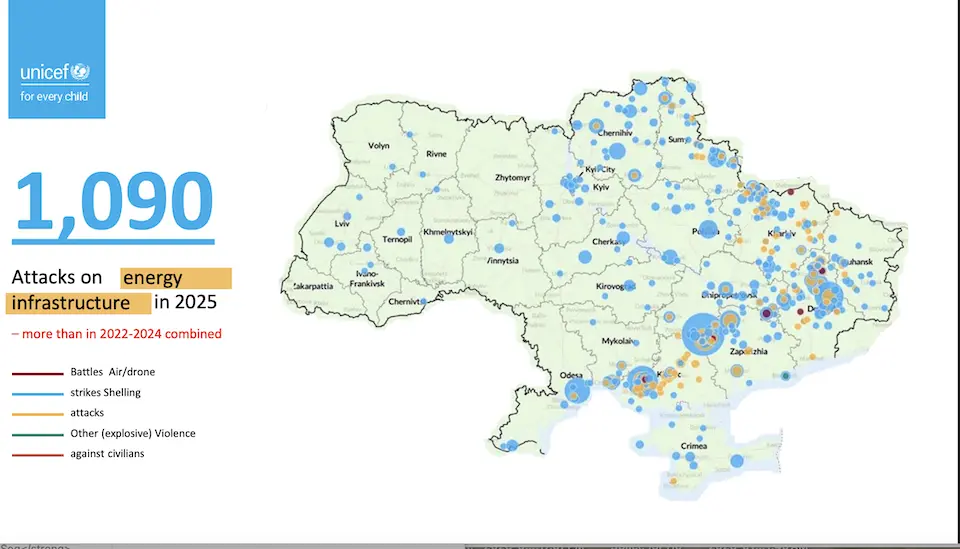
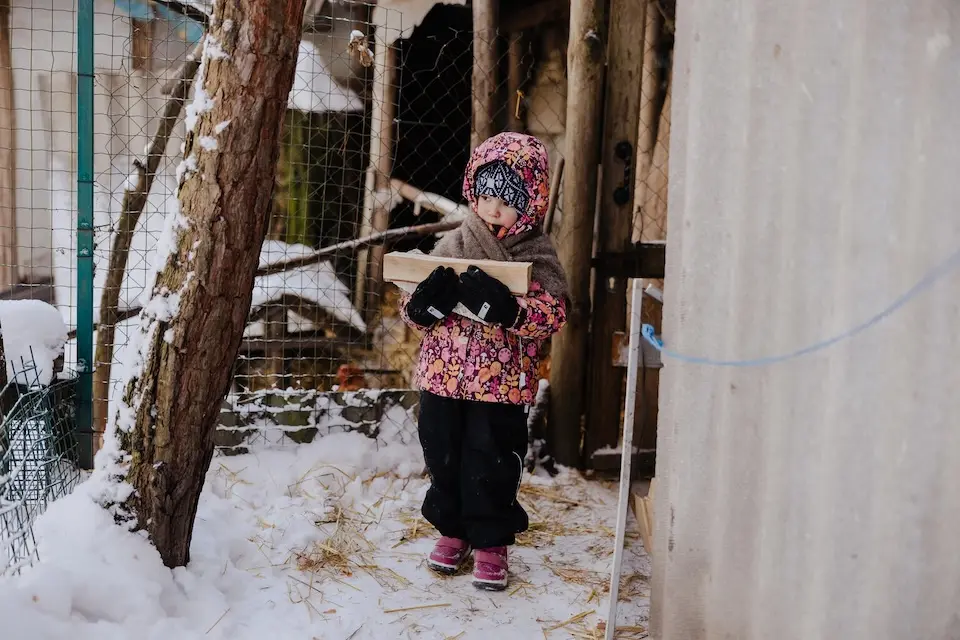
An escalation of unrelenting attacks that began in April 2025 has devastated vital energy and water systems. Millions of families across the country are enduring days without heating, electricity and water supplies. What was once considered "backup power" is now, for many, the only source of power available.
Related: Under Fire and Freezing: Children in Ukraine Need Help
UNICEF aims to reach 1.65 million people, including 470,000 children, in Ukraine with support this winter
UNICEF's expanded large-scale winter response is working to assist 1.65 million people, including 470,000 children, setting up generators in hospitals, schools and child-friendly spaces and providing unconditional humanitarian cash assistance to 190,000 people, including 86,000 children, in frontline areas, so parents can prioritize their children's most urgent needs: warm winter clothes, blankets, heating fuel.
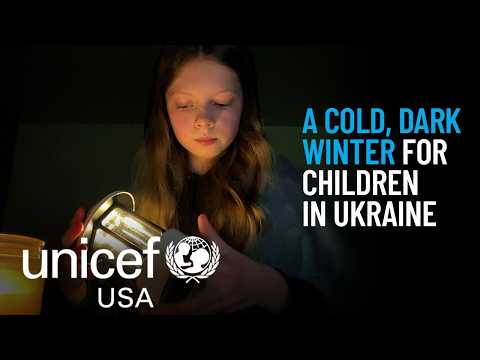
Arina, 12, does her homework by the light of a battery-powered lantern in Kyiv. "I can only keep warm by putting on more clothes. Or by holding a cup of tea," she says. "I try to do my homework as fast as I can, because the lamp doesn't stay charged for long. After a while, you sort of get used to it. But that doesn't mean it's okay."
Learn more: UNICEF Delivers Warmth to Children in Ukraine
Video: Attacks on energy infrastructure have left Ukraine's children freezing cold and in the dark
Child-friendly spaces keep children warm and protect their mental well-being
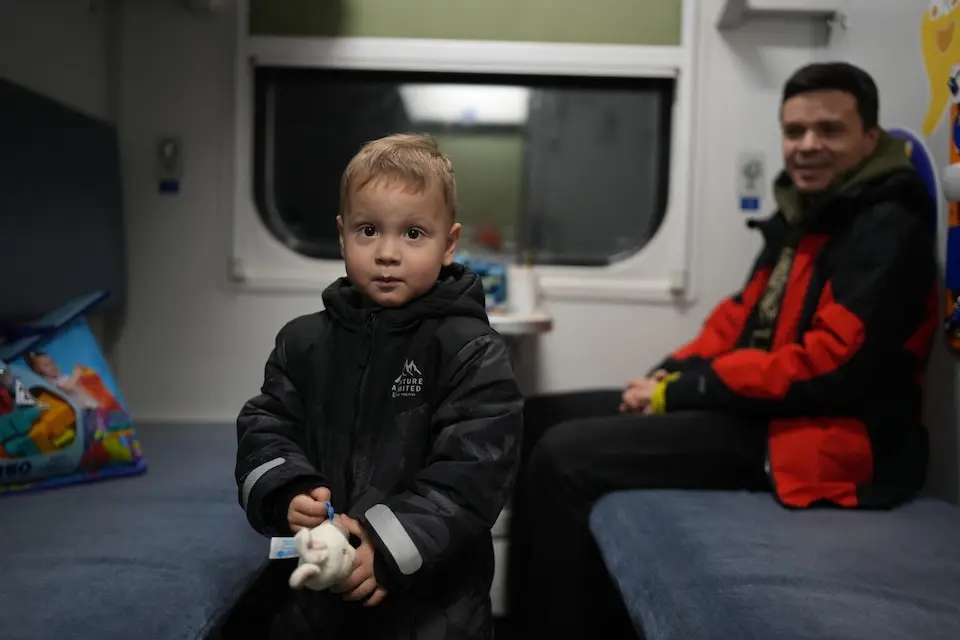
UNICEF supports efforts to ensure families with young children have access to safe, warm and welcoming spaces, helping children maintain routines, play and feel protected during emergencies. In Kyiv, parents bring their children to warm up in heated train cars equipped with seating, power sockets, toys and child-friendly play areas.
Warming tents set up and run by Ukraine’s State Emergency Services offer families a place to get hot food, charge devices and speak with a psychologist — or simply sit in the warmth. UNICEF equips each tent with games and toys, helping both children and adults cope with increased anxiety.
Providing hope through education and youth engagement programs
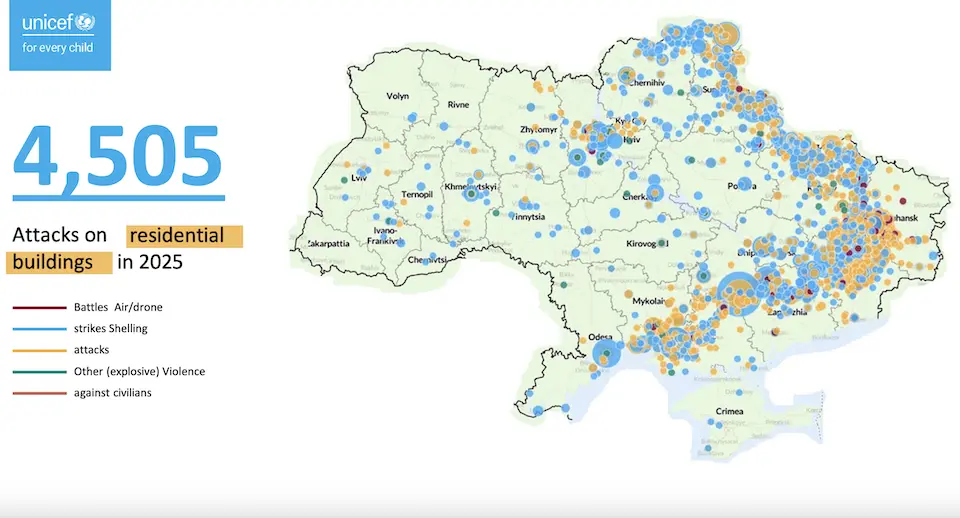
Sub-freezing temperatures are not the only thing that threatens the well-being of children in Ukraine. More than 4,500 residential buildings were attacked in 2025 alone; families live with the constant threat of bombardment.
In 2025, at least 92 children were killed, a 10 percent increase in child casualties from the year before, and 652 were injured. More than 3,200 children have been killed or injured since the start of the full-scale war in February 2022.
The fear of attacks, endless sheltering in basements and isolation at home with limited social connections mean young people are exhausted. Children’s mental health is increasingly under strain.
The Class: Looking Back on 4 Years of Full-Scale War in Ukraine
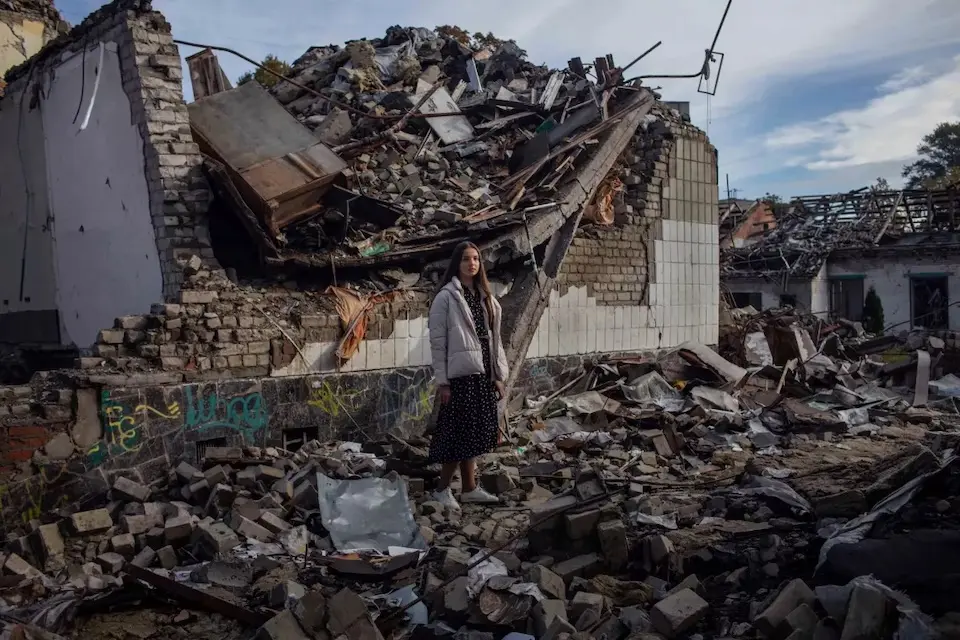
More than 1,700 schools and other educational facilities have been damaged or destroyed, with one in three children unable to attend in-person schooling full-time. Some schools that are still operating have been forced to switch to distance learning because of the lack of heat.
UNICEF provides education support and helps schools and kindergartens strengthen their energy and heating resilience so young students can continue to learn and experience the familiar rhythms of a school day. Heating support includes establishing independent heating or electricity systems, improving building insulation, purchasing fuel for heating and other essential measures to ensure more schools remain warm and operational.
Learn more about how UNICEF supports recovery efforts in Ukraine
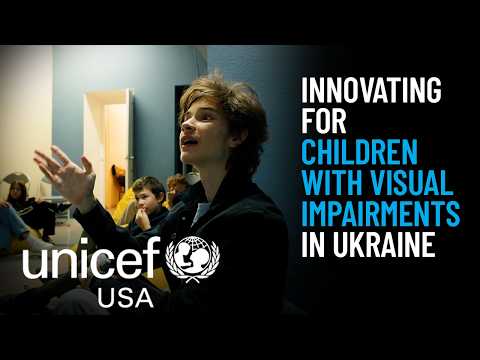
In Odesa, 16-year-old Yaroslav looks for ways to make an impact in his community as a participant in UNICEF's UPSHIFT social innovator accelerator program. UPSHIFT helps young people like Yaroslav, who was born with cerebral palsy, build essential skills like problem-solving, creativity, collaboration, leadership and communication.
When a friend suddenly lost his sight, Yaroslav adapted a board game for use by children with visual impairments by adding Braille to the cards. He and his mother also created a step-by-step guide to help parents adapt other board games for visually impaired children.
"There are many fantastic games, but unfortunately, they are not often adapted to meet different people's needs. That really upsets me," Yaroslav says. "Whether a child is visually impaired or not doesn't matter — what truly matters is their right to play and enjoy their free time."
Video: Building an inclusive world where all children can reach their full potential
The survival and development of every child in Ukraine is at stake — here's how to help
In 2025, 7 million people, including 2.5 million children, affected by the war in Ukraine received humanitarian support from UNICEF working with local partners and the Ukraine government. UNICEF’s recovery work, delivered with and through national and local authorities and partners, strengthened social services for 9.8 million people across the country.
In 2026, the needs are even greater. An estimated 10.8 million people inside Ukraine, including 2.2 million children and 3.8 million internally displaced people, as well as nearly 546,000 Ukrainian refugees living in Belarus, Bulgaria, Moldova, Poland and Romania require humanitarian assistance.
UNICEF is appealing for $387.9 million ($350 million for the response inside Ukraine and $37.9 million for the refugee response) to ensure protection, sustain services, strengthen systems and maintain readiness to meet new or escalating needs.
Ukraine's children can't postpone their childhoods. They need humanitarian assistance now — both lifesaving and life-changing support — so they can continue to learn and play and grow up to reach their full potential.
HOW TO HELP
There are many ways to make a difference
War, famine, poverty, natural disasters — threats to the world's children keep coming. But UNICEF won't stop working to keep children healthy and safe.
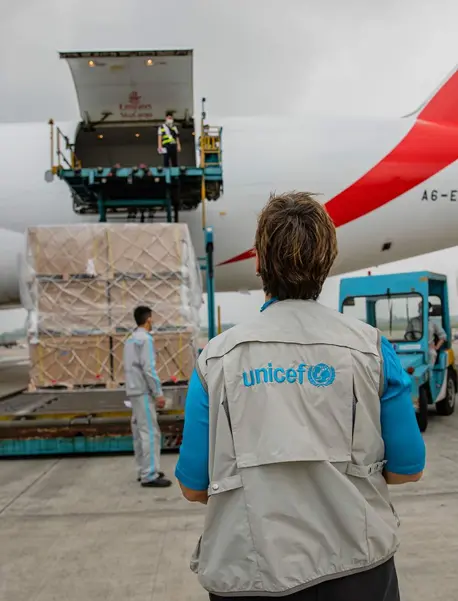
UNICEF works in over 190 countries and territories — more places than any other children's organization. UNICEF has the world's largest humanitarian warehouse and, when disaster strikes, can get supplies almost anywhere within 72 hours. Constantly innovating, always advocating for a better world for children, UNICEF works to ensure that every child can grow up healthy, educated, protected and respected.
Would you like to help give all children the opportunity to reach their full potential? There are many ways to get involved.