Help Support Children in Ukraine with UNICEF
Death and destruction have been a constant in the lives of children in Ukraine since February 2022. Such violence not only causes immense suffering; it also disrupts children’s development and jeopardizes their future. UNICEF works with partners to meet urgent needs and support ongoing recovery efforts for children affected by war in Ukraine.
Updated July 20, 2026
Children in Ukraine: by the numbers
- 10.8 million people in Ukraine require humanitarian assistance, including 2.2 million children.
- 3,300+ schools and preschools are damaged or destroyed.
- 86 percent of children under age 6 are experiencing symptoms of stress or anxiety.
- 2.5 million children were reached by UNICEF and partners in 2025.
Over four years of war: How Ukraine's children are still fighting to survive
UNICEF has been on the ground in Ukraine helping children and families since 1997, working with the government and local partners to meet immediate and long-term needs and to safeguard children's rights. By the time conflict began in the country's eastern region in 2014, UNICEF was already providing critical support to help close gaps in Ukraine's health system, particularly in the areas of childhood immunizations and HIV prevention.
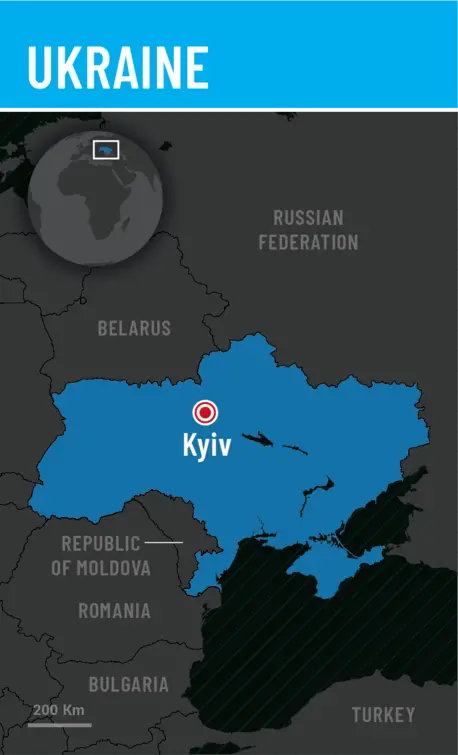
As fighting engulfed the east, UNICEF ramped up its support, then swiftly scaled emergency deployments in the face of full-scale war. That war, which entered its fifth year on Feb. 24, 2026, continues to be devastating for children. Even with aid, children in Ukraine are facing overlapping risks to their health, safety, education and mental well-being as the war disrupts daily life and essential services.
And children continue to be killed and injured in attacks across Ukraine. June 2026 recorded the highest number of child casualties for a single month since 2022, with 7 children killed and 116 injured. Over 3,200 children have been killed or injured since February 2022.
A 2025 UNICEF survey showed that 1 in 5 children in Ukraine reported having lost a close relative or friend.
Swiftly scaling up support in face of full-scale war
The UNICEF response to the war in Ukraine has been far ranging. Leveraging existing partnerships, UNICEF was able to rush emergency supplies — like essential medicines, midwifery kits and surgical kits to health facilities where women were giving birth in makeshift basement bunkers — while expanding programs and emergency interventions across all its major program areas, from health and nutrition to education and child protection.
UNICEF Impact Story: Delivering for Ukraine's Children
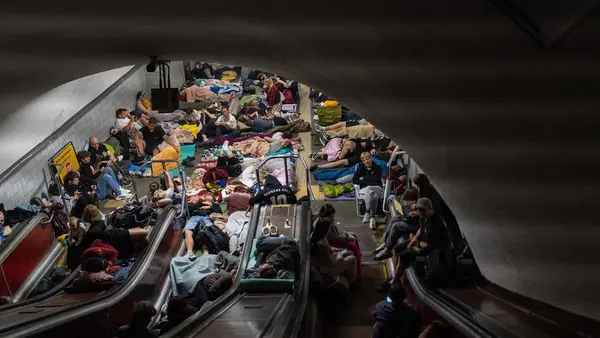
It's a difficult operating environment. Attacks on critical water, sanitation and energy infrastructure, children’s homes, schools and health care facilities have been relentless. There were 1,224 attacks on energy infrastructure recorded in 2025 alone — the highest since the full-scale war began — attacks that interrupted access to water and heating, closed schools, limited operating hours at health facilities. Many children forced to spend nights in cold, dark shelters during air raids.
An estimated 70 percent of children — 3.5 million children — in Ukraine lack access to basic goods and services, including adequate food or shelter. One-third of Ukraine’s children live in homes without functioning water supply and sewage and nearly half of all children lack access to an area to play at home or outside.
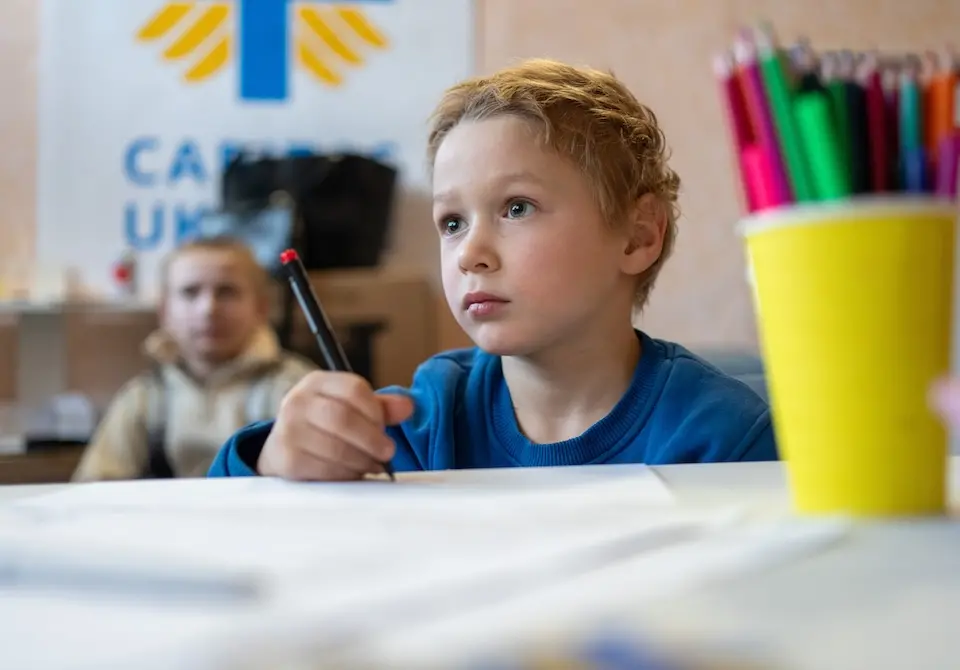
Over 3,300 schools and pre-schools have been damaged or destroyed. Two-thirds of children's learning time was disrupted because of power outages, school closures and air raids. In frontline areas, many students attend classes in underground shelters due to safety concerns.
Living in these conditions has taken a terrible toll on young children's social and emotional development. UNICEF estimates that up to 86 percent of children under age 6 are experiencing delays.
Meanwhile, Ukraine has become one of the most mine-contaminated nations in the world, with landmines and explosive remnants of war suspected in 30 percent of its territory.
UNICEF remains committed to continuing its support for children's health, safety and mental well-being as it appeals for more funding and urgent investment in Ukraine's critical services and systems.
Learn more about UNICEF's emergency response and resilience programs
UNICEF Ukraine relief efforts
Alongside government, NGO and other partners, UNICEF works to alleviate suffering, mitigate risks to children’s healthy development and lay a foundation for Ukraine's long-term recovery. These UNICEF Ukraine relief efforts help children and families access critical aid while also supporting the recovery of systems children depend on.
In frontline areas where intense fighting continues — and where humanitarian access remains constrained — UNICEF participates in inter-agency humanitarian convoys, working with local authorities and civil society partners to reach children and families in need of emergency assistance.
Despite the challenging operating environment, UNICEF and partners were able to reach 7 million people in Ukraine with assistance, including 2.5 million children, in 2025.
Children in Ukraine continue to be at risk. Those with disabilities, children without parental care, children at risk of family separation, and children in institutions remain particularly vulnerable.
Learn more: Read UNICEF's 2025 Situation Report for Ukraine
UNICEF's impact for children in Ukraine
The impact of UNICEF's response to war in Ukraine spans all major programs. Together with parters, UNICEF helps millions of children and their families access critical support and services, including:
- primary health care in UNICEF-supported facilities or through mobile health teams
- safe water for drinking and domestic needs, by helping to restore and maintain municipal water systems
- mental health and psychosocial support, through a combination of direct services, capacity building and outreach to strengthen individual and community resilience
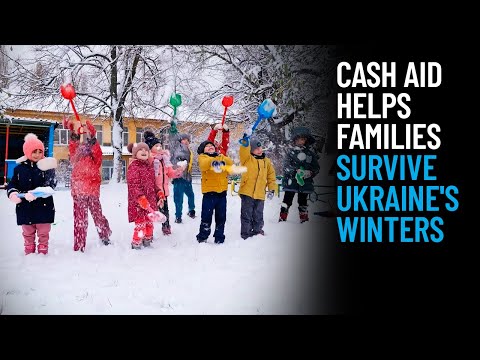
- humanitarian cash assistance to help pay for food and other essentials, particularly during the harsh winter months
Related: Help UNICEF Deliver Warmth and Safety This Winter
How UNICEF is improving access to education in Ukraine
UNICEF and partners are also working together to address the profound impacts of full-scale war on children's learning by providing formal and informal education support.
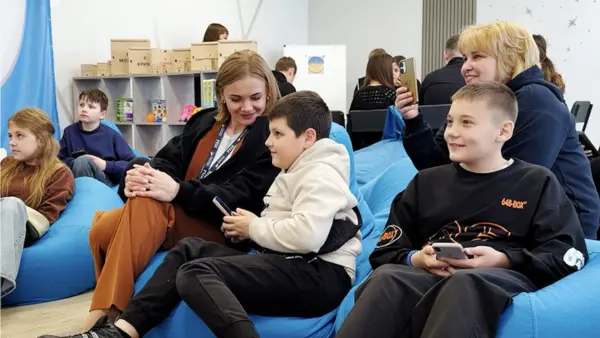
Nearly 40 percent of children study only online or through a mixture of in-person and remote classes, with an average learning loss of two years in reading and one year in math. A growing network of UNICEF and partner-supported learning centers are helping them catch up.
Since the start of full-scale war in February 2022, UNICEF has reached over 1.45 million children through a wide-ranging education response. This includes work at national and local levels to strengthen early childhood development as a foundation for learning recovery.
An urgent education gap remains, especially for Ukrainian children and adolescents in frontline areas and displaced communities.
How UNICEF supports children's education
Why UNICEF prioritizes early childhood development
How UNICEF is strengthening child protection in Ukraine
In child protection, UNICEF continues to provide comprehensive case management services through mobile teams, child-friendly hubs and support to the state social workforce.
Gender-based violence prevention, mitigation and response interventions are top priority. UNICEF-supported outreach teams conduct awareness sessions in collective shelters and public spaces while also helping girls’ clubs organize peer-to-peer sessions.
In the central and western parts of the country, UNICEF works within existing national systems to help strengthen social services for children. One initiative, called Better Start to Life, focuses on strengthening early childhood development opportunities for the youngest children. A second initiative, called Better Learning and Skills, focuses on older children and youth.
UNICEF's child protection programs
UNICEF is also supporting ongoing efforts to reform Ukraine's childcare system, by expanding and improving family-based alternative care (i.e. foster care, guardianship and domestic adoption) for children without adequate parental care; safely reintegrating children living in institutions into family care; and transforming those institutions into community service providers.
“The war in Ukraine continues to devastate the country’s children. Investing in them, and the services they rely on, is the best way to secure Ukraine’s future,” UNICEF Executive Director Catherine Russell said in July 2025. “The opportunity to protect and nurture Ukraine’s children and young people - from the early years through adolescence – is now. The country’s future depends on it."
Russell added: “We must put children, their education, safety, health and development at the heart of Ukraine’s recovery. This means investing in early childhood development, quality education, and providing young people with the skills they need to succeed. Above all, Ukraine’s children must be protected from further harm. They need peace.”
Related: How UNICEF supports children impacted by war and conflict
How UNICEF is helping Ukrainian refugees in host countries
By the end of May 2022, just three months after the outbreak of full-scale war, 7.7 million people in Ukraine had been internally displaced by war and more than 6.4 million people — including nearly two-thirds of all children in Ukraine, at a rate of one child every second — had crossed into Central and Eastern Europe.
Roughly 3.8 million people in Ukraine remain internally displaced. UNHCR, the UN's lead refugee agency, reported that as of September 2025, there were 5.75 million refugees from Ukraine recorded globally, including 5.2 million in Europe.
Refugee children and families face protracted uncertainty, with limited access to health care and housing and ongoing challenges integrating into society. UNICEF has been helping to ease these struggles, working in ways that complement refugee-hosting country government efforts in order to address humanitarian needs and promote a sustainable transition for families staying long term.
In Belarus, Bulgaria, Czech Republic, Moldova, Poland and Romania — all countries where UNICEF has active operations — access to education, child protection, health and social protection has been maintained through a mix of international humanitarian support and national systems funding and structures. UNICEF, alongside partners, helps facilitate these measures.
Hundreds of thousands of refugee women and children have been able to access health care, education and mental health and psychosocial support, with UNICEF's help.
And while integration has progressed — particularly in education and social protection — economic pressures, language barriers and limited access to specialized services, notably for adolescents and children with disabilities, remain persistent obstacles to full inclusion. UNICEF’s work in supporting national capacities, data systems and winter preparedness remains essential to safeguard access to services for refugee and host community children through the coming season.
Frequently Asked Questions
When did the Ukraine war start?
Ukraine’s conflict with Russia began in eastern Ukraine in 2014 and sharply escalated with a full-scale invasion on Feb. 24, 2022. The war continues to endanger children in Ukraine and disrupt essential services including education, taking a severe toll on their mental health.
Where do Ukraine refugees go?
There are an estimated 5.2 million Ukrainian refugees across Europe — 40 percent of them children — with many hosted in the Czech Republic, Germany, Hungary and Moldova. UNICEF works with governments and other partners to provide support to Ukrainian children and families wherever they are.
How can I support children in Ukraine?
UNICEF is reaching millions of children and families in Ukraine with lifesaving humanitarian aid, helping them access safe water, health care, education and protection. Supporting UNICEF means supporting children in Ukraine.
How can I donate to Ukraine from the U.S.?
You can donate to Ukraine relief through UNICEF USA's official donation page. Your tax-deductible gift helps UNICEF deliver lifesaving support to children in need all around the world — including children in Ukraine and refugee children.