A Day in the Life: Advocating for Children on Capitol Hill
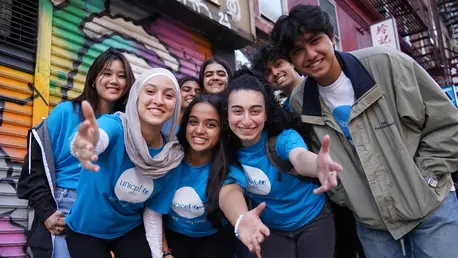
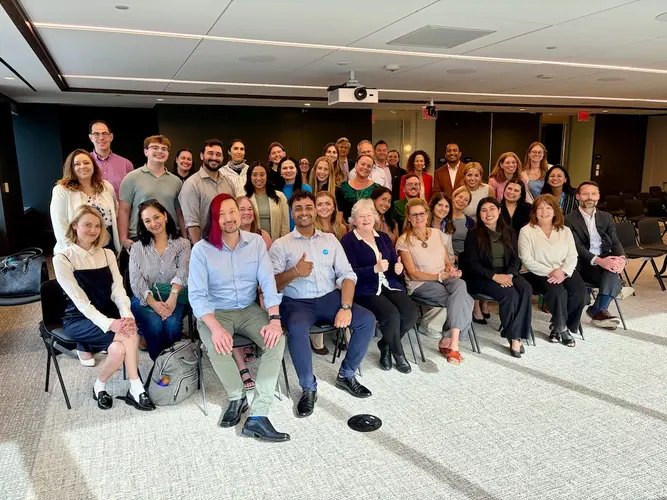
In April 2026, UNICEF USA advocates from 10 target states gathered in Washington, D.C. to urge their elected representatives to continue federal funding for UNICEF to protect and care for children worldwide.
UNICEF's lifesaving and life-changing work for children is funded entirely by voluntary contributions
It’s a warm spring Tuesday, and lawmakers have just returned to Washington, D.C. after a two-week recess. Appropriations season is getting underway on Capitol Hill — a several-month process that takes place each year, during which Congress decides where and how to spend federal funds.
As a part of this process, each member of Congress — 435 Representatives and 100 Senators —submits dozens of letters and forms detailing their requests for federal funding for everything from local emergency departments to cancer research.
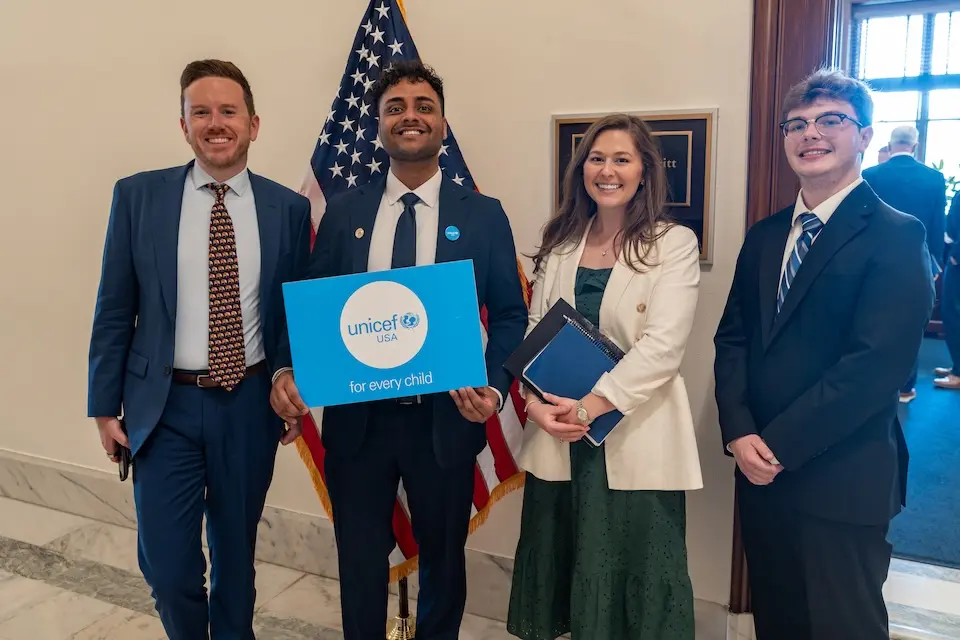
That’s why UNICEF advocates from 10 target states gathered at the U.S. Capitol to meet with 27 priority Congressional offices. As the federal government budget for Fiscal Year 2027 is being outlined, they spoke directly to their elected representatives about the importance of UNICEF funding.
Almost 80 years of bipartisan support from the U.S. Government has helped UNICEF reach more children than any other humanitarian organization
For nearly 80 years, UNICEF has received consistent, bipartisan support from the U.S. Government that has helped reach more children than any humanitarian organization with health and nutrition services, safe water and sanitation, quality education and skill building, protection, HIV prevention and treatment for mothers and babies.
This type of advocacy is especially important now: 2025 was a catastrophic year for children, and 2026 will see global humanitarian needs approach record levels. In the last year and a half, governments across the world, including the United States’, have drastically scaled back their funding for foreign aid and humanitarian assistance. For the first time in decades, the pace at which the world is reducing child mortality is slowing, and in some cases, even stalling.
When children are healthy, educated and protected, communities are more stable and economies are stronger, reducing the pressures that drive conflict and forced migration while enabling more cooperative global partnerships. — Skylar, UNICEF Club President, Georgetown University
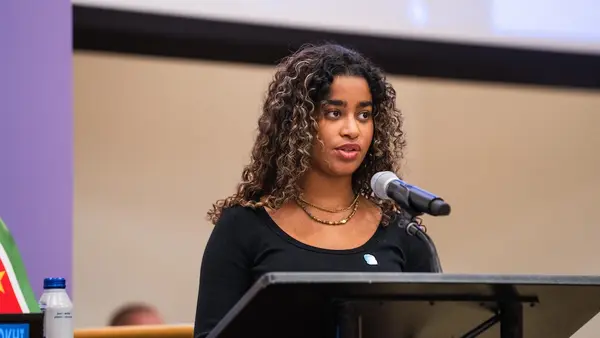
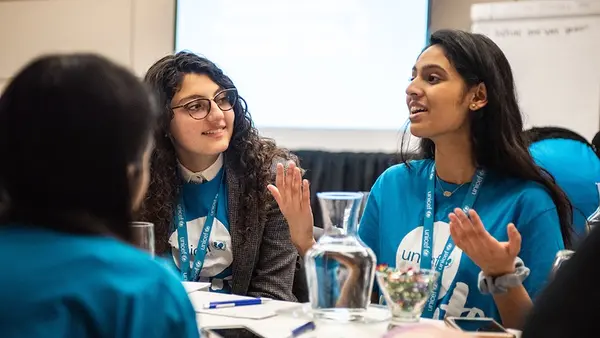
The day began with a panel conversation moderated by UNICEF USA President and CEO Michael Nyenhuis and Skylar, a sophomore at Georgetown University and president of her school's UNICEF Club. They were joined by three experts — Carrie Filipetti, Executive Director of the Vandenburg Coalition; Roberto Benes, UNICEF’s Regional Director for Latin America and the Caribbean, and retired U.S. Army Brigadier General Kim Field — who spoke to how the development, defense and diplomacy sectors can work together effectively.
“Supporting children reinforces the very foundation of effective foreign policy," Skylar said. "When children are healthy, educated and protected, communities are more stable and economies are stronger, reducing the pressures that drive conflict and forced migration while enabling more cooperative global partnerships. Foreign policy is strengthened when development, diplomacy and defense mutually reinforce each other and uplift the lives of children around the world.”
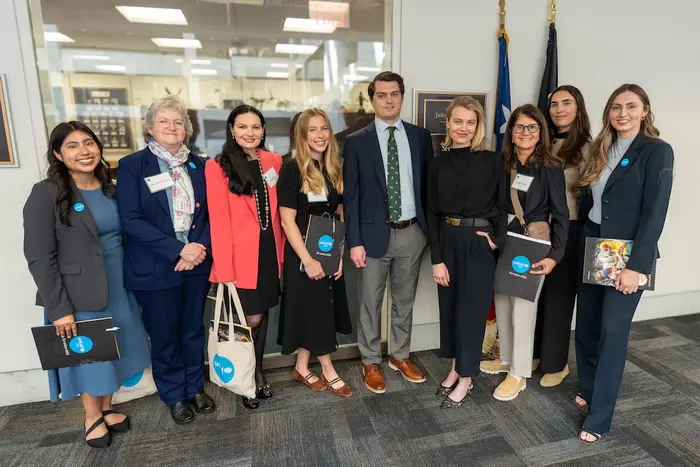
Constituent input has a significant impact on legislative processes. If lawmakers get enough feedback that something matters to the people they represent, they are more likely to prioritize it in the federal budget process. Advocates from across the country with a wide range of ages, backgrounds and life experiences brought their unique perspectives and stories to these critical conversations.
Shahmir, a University of Alabama-Birmingham student and founder of the school's UNICEF Club, has had the opportunity to witness UNICEF's lifesaving work firsthand in Pakistan. “Your heart gets full when you see the difference 8,000 miles away,” he explained. “Someone is getting food, someone is getting health care, because you stepped out of your comfort zone and came here because you wanted to advocate. It’s important.”
Your heart gets full when you see the difference 8,000 miles away. Someone is getting food, someone is getting health care, because you stepped out of your comfort zone and came here because you wanted to advocate. — Shahmir, founder of University of Alabama-Birmingham's UNICEF Club
Taylor Diebel, a former educator from Kentucky, has seen firsthand the importance of early interventions in a child's development. “UNICEF has a program where they teach educators and parents how to nurture, about nutrition and education," Diebel said. "I find that a great component of UNICEF. All children should thrive regardless of where they are globally, and education is so important to help them thrive and become great citizens of their country.”
Congressional staff members were open and receptive, and many indicated they learned something new during the meetings. Some did not know the extent of UNICEF’s work, or how much value UNICEF generates for the U.S. economy. In 2025, UNICEF procured over $756 million in goods and services from businesses in 37 states.
Urge Congress to support funding for UNICEF
Advocates left Capitol Hill that afternoon feeling optimistic and encouraged by their conversations, while recognizing that the work to protect and care for children around the world continues.
“I cannot emphasize enough how important these meetings and conversations were. I am leaving with a sense of hope,” said Iliana Alvarenga Prato, a UNICEF NextGen Leadership Council member from Kansas. “There is still real opportunity to shape the kind of world we want to live in. It requires paying attention, showing up and engaging. The stakes are too high. Children's lives depend on all of us showing up.”
Join the effort advocating for children around the world: send a message to your member of Congress and ask them to protect the U.S. Government's ongoing investment in UNICEF.
HOW TO HELP
There are many ways to make a difference
War, famine, poverty, natural disasters — threats to the world's children keep coming. But UNICEF won't stop working to keep children healthy and safe.
UNICEF works in over 190 countries and territories — more places than any other children's organization. UNICEF has the world's largest humanitarian warehouse and, when disaster strikes, can get supplies almost anywhere within 72 hours. Constantly innovating, always advocating for a better world for children, UNICEF works to ensure that every child can grow up healthy, educated, protected and respected.
Would you like to help give all children the opportunity to reach their full potential? There are many ways to get involved.