Advocacy, Action and Hope: 5 Questions With UNICEF Ambassador Amanda Gorman
Amanda Gorman — celebrated poet, author and advocate — has taken on a new role as a UNICEF Ambassador. In this interview, she shares her perspectives on the power of young voices, the importance of hope and why she believes children must always remain at the heart of global action.
On youth, hope and humanitarian action

You’re the youngest inaugural poet in American history, an award-winning writer, Harvard graduate, activist and model — and now, a UNICEF Ambassador. Tell us what this new role means to you.
AMANDA GORMAN: This new role is incredibly meaningful to me. I am a firm believer that young people and their thoughts, emotions and ideas hold the key to our future, and I have always admired UNICEF’s tireless dedication to aiding and addressing children’s needs worldwide. UNICEF’s incredible reach is wholly inspiring to me as an activist, but also as a human being. How amazing is it that UNICEF exists to bolster the needs of children across so many diverse sectors, including education, emergency response, nutrition and the establishment of child-friendly spaces. I’m so proud to be partnering with them!
Your poetry calls on us to imagine a better world. In your poem, “The Hill We Climb,” you wrote, “For there is always light, if only we’re brave enough to see it, if only we’re brave enough to be it.” Where do you see that light in UNICEF’s work, or in the communities and young people you hope to support?
AMANDA GORMAN: It’s easy to lose hope in difficult times, but UNICEF shows us that a better world begins with improving the lives of our youngest community members, to ensure that a better future is possible. Even when faced with the most difficult scenarios, UNICEF steps up at the front lines, offering humanitarian aid to those who need it most. That is where true light is found: in helping others and offering hope in their darkest moments.
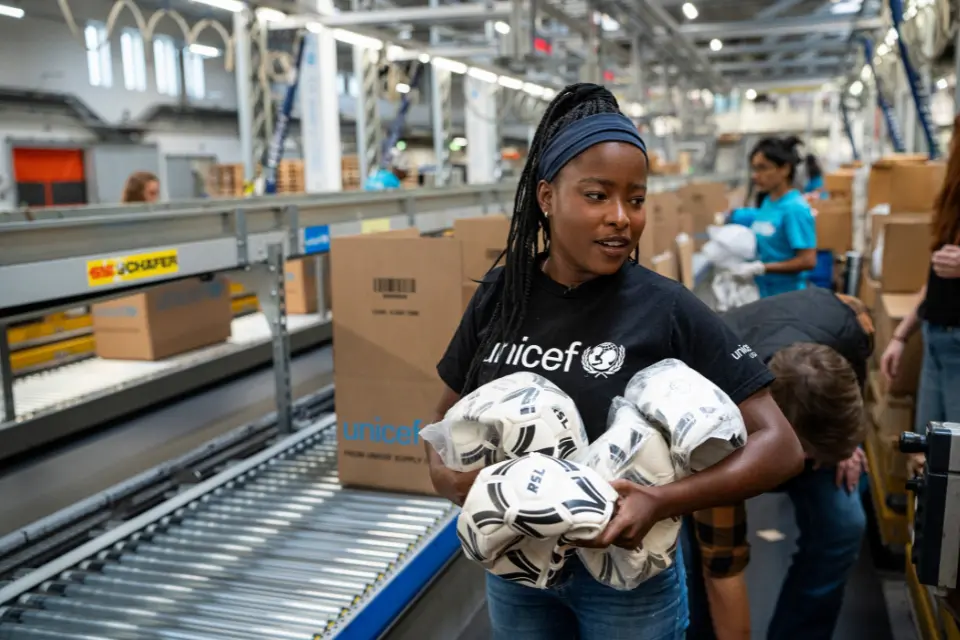
UNICEF’s work reaches children facing crises, from conflict and displacement to climate-related disasters. How do you think art and advocacy can help people connect to these realities in a deeper way?
AMANDA GORMAN: Art uniquely accesses our humanity by drawing us in and urging us to look closer at the lives affected by large-scale incidents such as natural disasters and conflict. Art breeds both empathy and resilience, and it empowers us to help not just ourselves, but also those around us. In the same way that poetry can offer a new perspective, advocacy encourages us to be curious and willing to learn about what others may be facing.
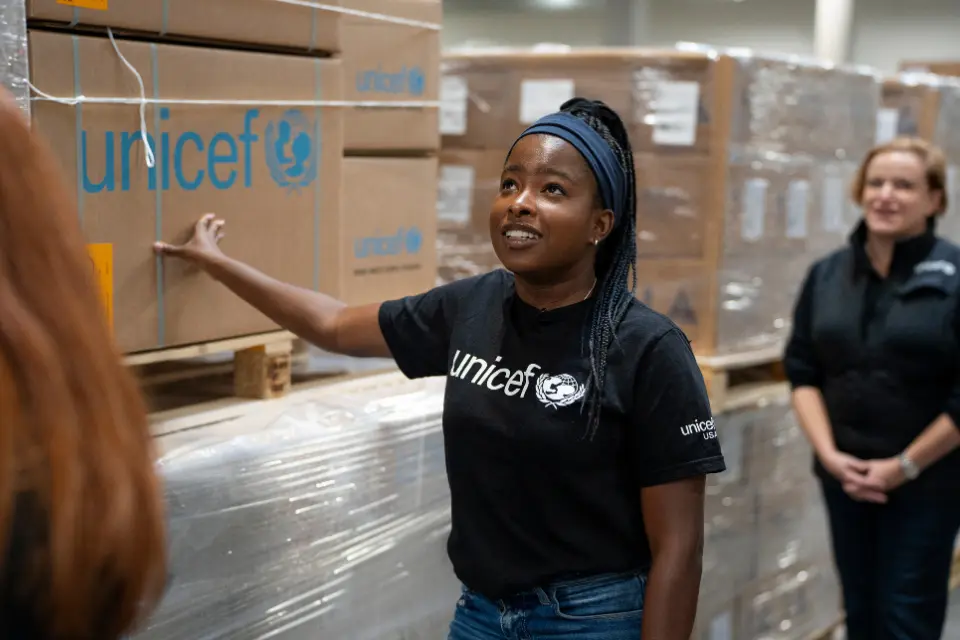
What message would you share with young people who want to speak up for change but don’t know where to start?
AMANDA GORMAN: I would encourage young people to start within their own communities. There is no wrong way to start. Find out what you are curious and passionate about, who needs help around you and the small ways you can improve your local community. Maybe you pick up trash at your local beach or stand up for a friend who is being bullied. Your voice is powerful, and I promise that even the smallest actions can lead to big changes.
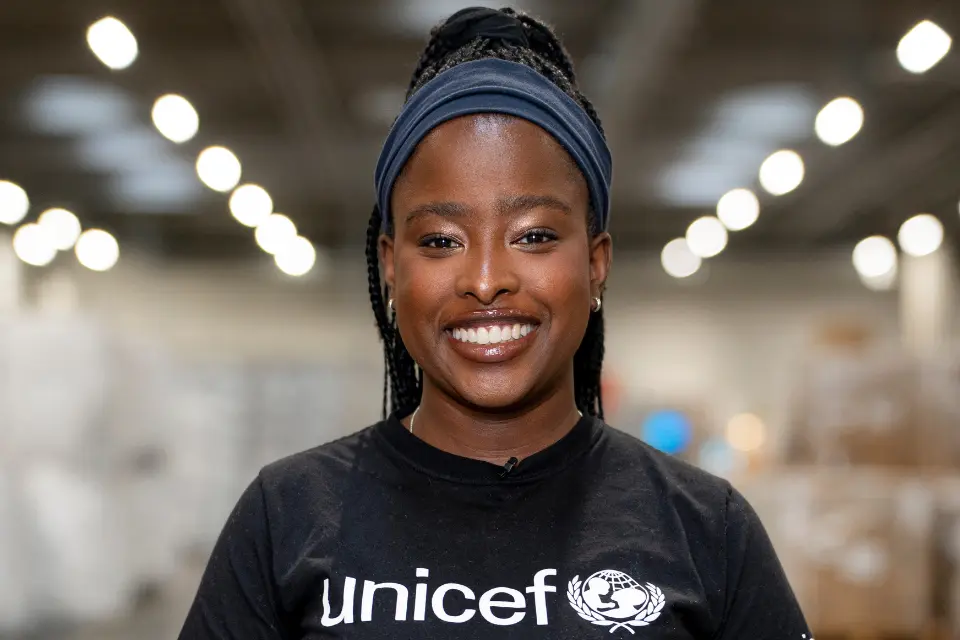
UNICEF’s mission is rooted in hope — ensuring every child not only survives but thrives. How do you see the role of hope in driving real, lasting change? And what’s bringing you hope right now?
AMANDA GORMAN: Hope is essential in driving real change because it is what we look to in our most difficult moments. It shows us a world that embodies possibility, and a better tomorrow. Young activists and advocates bring me immense hope — seeing courageous and kind young people helping out in their own communities shows us a future where we can take care of one another and demonstrate leadership with empathy and compassion.
Hope requires action. Gorman’s message is clear: all of us, at every age, have the power to shape the world we want to live in. As Gorman begins her journey as a UNICEF Ambassador, we invite you to join UNICEF USA in taking action for every child. Learn how you can get involved.
HOW TO HELP
There are many ways to make a difference
War, famine, poverty, natural disasters — threats to the world's children keep coming. But UNICEF won't stop working to keep children healthy and safe.
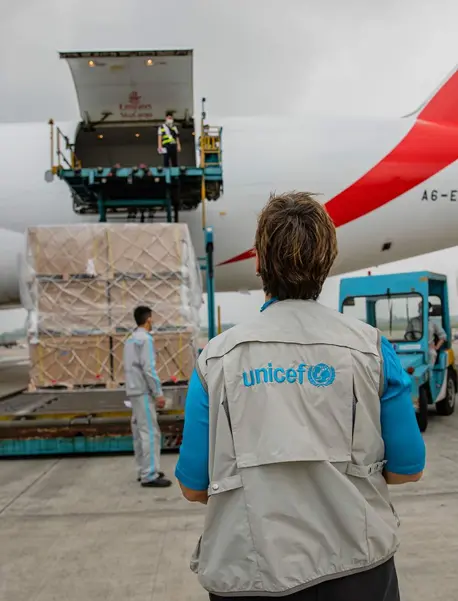
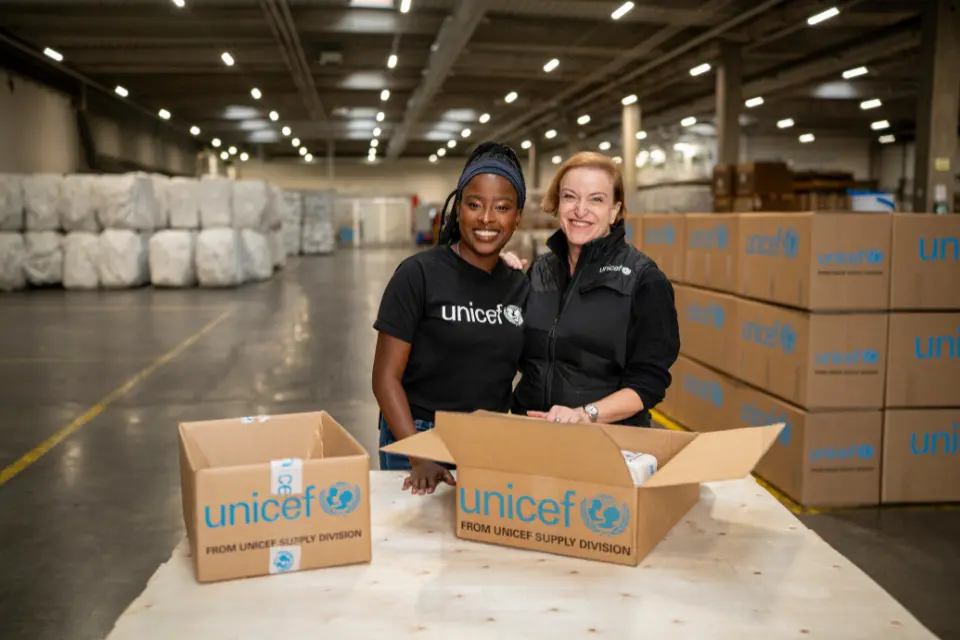
UNICEF works in over 190 countries and territories — more places than any other children's organization. UNICEF has the world's largest humanitarian warehouse and, when disaster strikes, can get supplies almost anywhere within 72 hours. Constantly innovating, always advocating for a better world for children, UNICEF works to ensure that every child can grow up healthy, educated, protected and respected.
Would you like to help give all children the opportunity to reach their full potential? There are many ways to get involved.