Building Better Futures for Girls in Syria and Yemen
With help from UNICEF, children whose lives have been upended by conflict can get the support they need to move confidently in the direction of their dreams. In Syria and Yemen, teenagers Cidra and Kholoud share their stories.
Every child has the right to learn
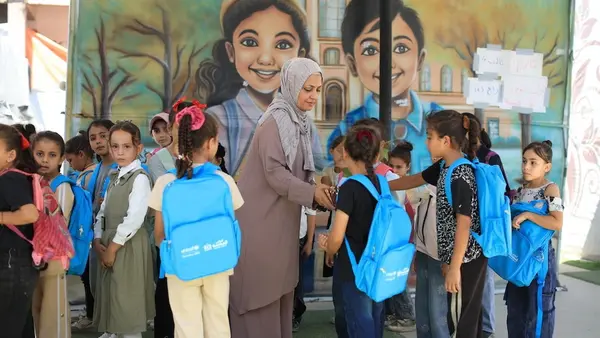
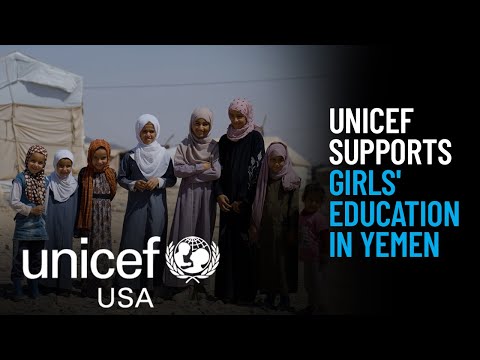
Thirteen-year-old Kholoud dreams of living in a peaceful place filled with green trees someday, a place where there aren't any power outages. The internally displaced persons (IDP) camp where she lives with her mother in Marib governorate, Yemen, isn't green, and there aren't many trees. But there is a temporary learning space supported by UNICEF, where Kholoud is getting an education.
"One of the biggest challenges I face in the camp is the long distance to school," Kholoud says. "When I go, it is usually cold and windy, and there is no electricity, which sometimes makes it impossible for me to study or complete my homework."
Related: Helping Out-of-School Children Learn in Yemen
Watch the video: Kholoud's story
Access to education opens doors in Yemen
Kholoud's father died in Yemen's civil war. She and her mother are among the millions of people in Yemen who have been displaced after a decade of conflict and collapse.
UNICEF delivers lifesaving assistance to children and families in Yemen, while working to strengthen systems and build resilience. In the first six months of 2025, UNICEF supported access to both formal and non-formal education for vulnerable children across Yemen; 228,470 children (46 percent girls) benefited from quality learning opportunities through basic education initiatives.
My dream is to become a journalist and photographer to share the struggles of life in the camp. — Kholoud, 13
Despite the hardships they've endured, Yemen's young people are yearning for a better future. Kholoud already knows what she wants to do when she grows up. "My dream is to become a journalist and photographer to share the struggles of life in the camp, including the strong winds, heavy rain, power outages and cold, so that the world knows our story," she says.
Learn more about UNICEF's work for children in Yemen

Regaining a sense of optimism in Syria
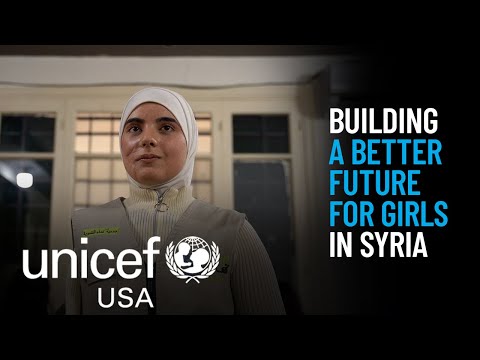
At a UNICEF-supported adolescent development and participation (ADAP) center in Aleppo City, Syria, 16-year-old Cidra is getting her life back. She has lived through 14 years of conflict, overcoming unimaginable loss and hardship.
In 2016, Cidra and her 5-year-old brother, Ahmad, were on their way home after buying bread when a missile hit. Ahmad was killed, and Cidra's arm was so badly injured, it had to be amputated.
She tells the story calmly, but the pain is still visible in her eyes. "Through all the challenges I have faced, from 2016 to 2025, my mother has been my pillar of strength, supporting me every step of the way," Cidra says.
Related: UNICEF in Syria: Responding to Emergencies, Supporting Recovery
Watch the video: Cidra's story
Building skills needed to thrive
In 2023, Cidra joined the UNICEF-supported ADAP center in Aleppo City. The center provided her with vital support, helping her rebuild her confidence and acquire essential skills. She learned computer skills, new languages and life skills that empowered her to envision a brighter future.
"It helped me move forward in life with greater confidence," Cidra says. "My message to every girl and boy, whether my age or older: Keep pushing forward with your studies, no matter the challenges or difficulties you face. Keep going, and never give up, because education is what shapes a person's future and their worth in society."
Keep going and never give up, because education is what shapes a person's future and their worth in society. — Cidra, 16
In the first six months of 2025, ADAP life skills, citizenship education and employability training reached 10,700 young people (including 6,392 young women) in Syria through adolescent-friendly spaces and mobile teams. Centers like the one Cidra attended are crucial in helping young people overcome the trauma of conflict and build the skills they need to thrive. These safe spaces offer educational and recreational activities, psychosocial support and vocational training, helping adolescents transition from learning to earning.
UNICEF won't stop until every child is healthy, educated, protected and respected.
Right now, the lives of the most vulnerable children hang in the balance as conflicts and crises jeopardize the care and protection that they deserve. Dependable, uninterrupted and effective foreign aid is critical to the well-being of millions of children. Please contact your members of Congress and urge them to support ongoing U.S. investments in foreign assistance.
HOW TO HELP
There are many ways to make a difference
War, famine, poverty, natural disasters — threats to the world's children keep coming. But UNICEF won't stop working to keep children healthy and safe.
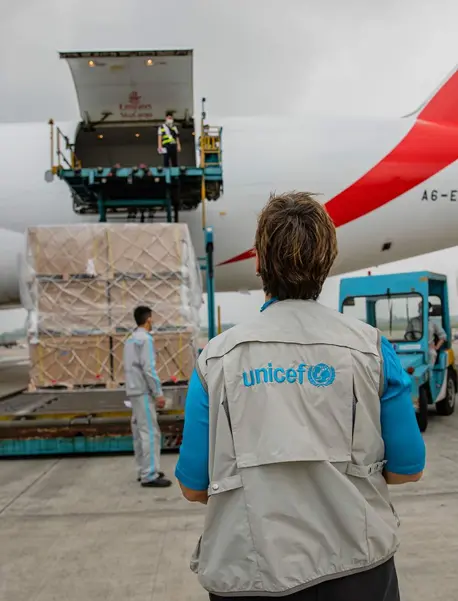
UNICEF works in over 190 countries and territories — more places than any other children's organization. UNICEF has the world's largest humanitarian warehouse and, when disaster strikes, can get supplies almost anywhere within 72 hours. Constantly innovating, always advocating for a better world for children, UNICEF works to ensure that every child can grow up healthy, educated, protected and respected.
Would you like to help give all children the opportunity to reach their full potential? There are many ways to get involved.