Child Refugees
and Migrants
Globally, there are tens of millions of refugees and internally displaced children and families struggling to survive, awaiting humanitarian aid or safe harbor. A look at how UNICEF and partners work to protect refugee children and migrant children.
UNICEF: a strong focus on protecting the rights and well-being of children on the move
The number of people worldwide forced to flee conflict, violence, human rights violations and persecution has reached an all-time high.
Roughly 1 in 6 children globally are either living in or fleeing active conflict zones. According to UNHCR, the UN's leading refugee agency, there were approximately 41.6 million refugees globally at the end of 2025, including 16 million children.
Climate shocks, earthquakes and other natural disasters continue to uproot vulnerable children and families in greater and greater numbers as well. An estimated 60 percent of refugees and internally displaced people live in countries that are hardest hit by climate change.
And in an increasingly mobile and interconnected world, there are between 37 million and 42 million children who are also migrants.
No matter where they are from, no matter why they and their families move, they are children first, with the same human rights as all children — rights that do not expire at borders.
Children who are uprooted from their homes shouldn't have to forfeit their childhoods. With the right support, they can stay safe, learn and recover — and UNICEF is committed to helping them.
Whether they are migrants, refugees or internally displaced, all children deserves respect and assistance. Every child has the right to protection, care and the support and services they need to thrive.
Read about how UNICEF is showing up to support children displaced by conflict in Lebanon
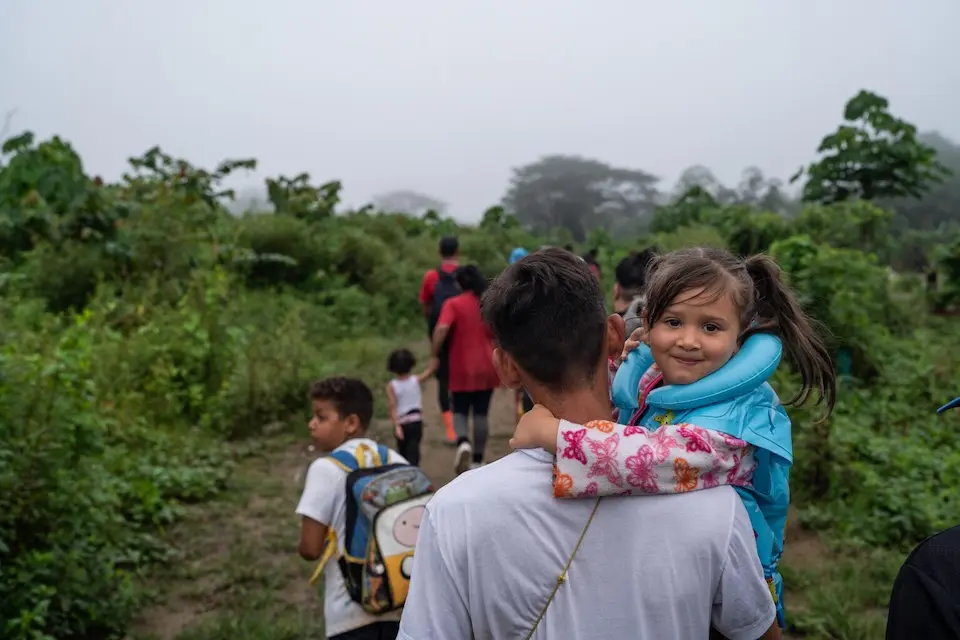
Advocating for child-centered migration systems and policy
UNICEF plays a leading role in the International Migration Review Forum, a convening of United Nations Member States and partners to discuss migration systems and policy.
In that role, UNICEF calls on Member States to make specific pledges to protect children in migration, and, by integrating child rights into migration policies and border management frameworks, demonstrate that migration can be managed in a way that protects children.
Actionable priorities include:
- ending child immigration detention
- ensuring child-sensitive return and reintegration processes
- guaranteeing inclusive access to essential services such as health care and education
- expanding regular pathways for children and youth and supporting family unity
- strengthening learning-to-earning pathways
- improving data systems on children in migration contexts
Read Advancing the Rights of Children in Migration — a UNICEF policy brief making the case for coordinated, child-centered policies to ensure that every child on the move can survive, thrive and reach their full potential, wherever they are
Providing protective services and support to help uprooted children stay safe and healthy
In many countries and regions of the world — in Eastern Europe, the Middle East, Africa, Southeast Asia and the Americas — UNICEF acts to defend the rights of child refugees and migrants and to protect their futures.
UNICEF also creates safe spaces for uprooted children to learn and play and to receive mental health and psychosocial support, whether they are staying in camps, informal settlements or host communities.
Refugees and migrants returning home often need support too. In 2025, nearly 3 million Afghans returned to Afghanistan from neighboring countries, primarily from Iran and Pakistan; around 60 percent were families with children. Millions more are expected to return in 2026 as conflict escalates in the Middle East region to the west and along Afghanistan's eastern border areas.
“The pattern is not new, and the cause is often the same: violence and fear," explains Dr. Tajudeen Oyewale, UNICEF Representative in Afghanistan.
Here are some more examples of how UNICEF is helping children on the move around the world.
Sudan: the world's largest child displacement crisis
Sudan remains the largest child displacement crisis globally, with over 5 million children forcibly displaced. Since a brutal civil war erupted in April 2023, more than 3 million Sudanese have fled across borders.
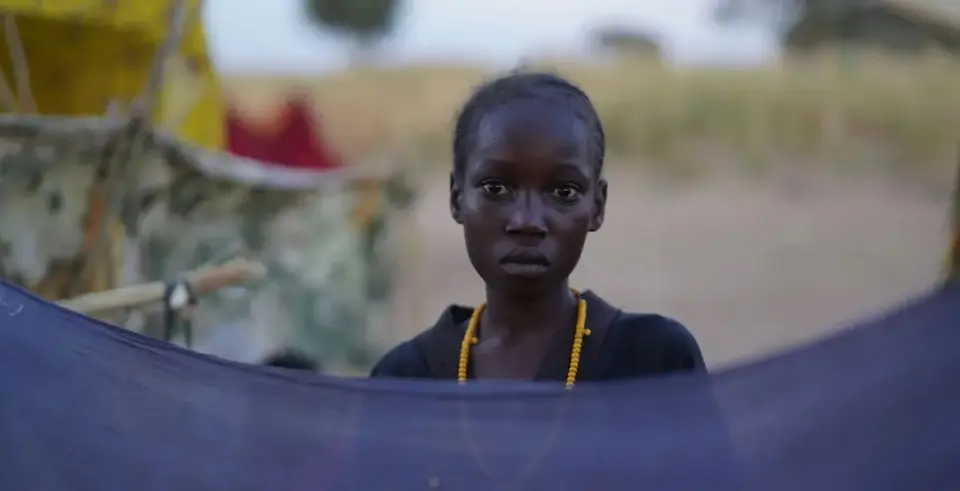
UNICEF is on the ground in Sudan and in refugee host countries working alongside partners to deliver lifesaving, high-impact interventions that sustain essential services for the most vulnerable children and families, including displaced and refugee children.
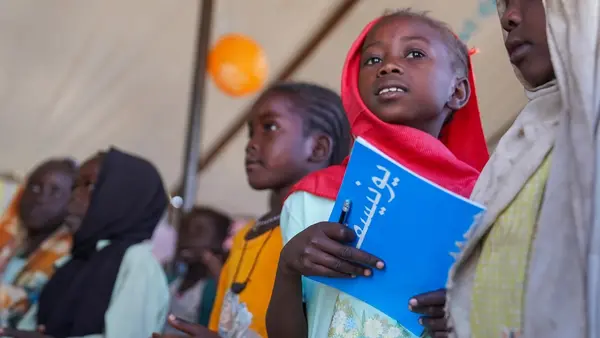
Priorities include protecting children’s right to learn and heal by providing safe and inclusive temporary learning spaces that serve as protective environments for recovery and psychosocial support.
Child protection interventions include family tracing and reunification, and mental health and psychosocial support. UNICEF is also working with partners to address gender-based violence and the risks posed by explosive ordnance.
Learn more about UNICEF's ongoing emergency response to the Sudan crisis
Helping refugees from the Ukraine war
Millions of people fled Ukraine when war escalated in February 2022. Nearly 9 out of 10 of them were children and women. While many have since returned to Ukraine, nearly 6 million remain abroad, primarily in Europe. Another 3.7 million remain internally displaced inside Ukraine.
Watch the video: a 16-year-old shares her experience fleeing war in Ukraine
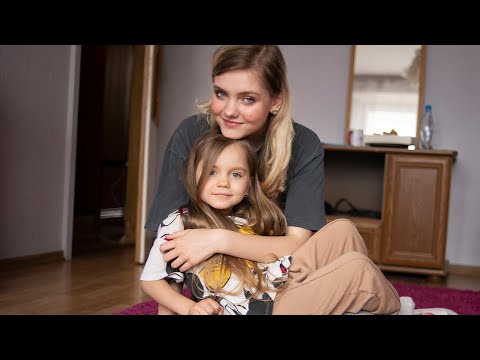
In the early months of the war, UNICEF assisted children and families on the move at dozens of 'Blue Dot' centers established along transit routes in partnership with UNHCR and in close coordination with local authorities and other partners. These centers reached up to 1,000 people a day with education and psychosocial support, health care, safe water and hygiene supplies, protection and other essential services.
Over 180 similar facilities called Spilno centers are actively operating inside Ukraine. Like other UNICEF child-friendly spaces, the Spilnos offer a welcoming space for kids to rest, play and simply be a child at a time when their world has been turned upside down.
In refugee host countries, UNICEF supports refugee children by training local teachers in inclusive learning approaches and supporting cash assistance programs, among other services.
Related: Transforming how Ukrainian refugee students learn
Supporting millions of Syrian refugee children in the Middle East
While more than 1 million Syrians have returned to Syria since the country's political transition following the 2011-2024 civil war, close to 5 million remain in neighboring countries, including Egypt, Jordan, Lebanon and Türkiye, where many families continue to require humanitarian assistance.
Together with partners, UNICEF continues to support Syrian refugee children and families with a focus on delivering integrated and inclusive services that provide urgent relief to refugees, host communities and other vulnerable populations, while also supporting safe, voluntary and dignified returns for Syrians choosing to return to Syria.
Priorities include ensuring access to quality education and skills development; essential health and nutrition services; mental health and psychosocial support; protection for survivors of gender-based violence; safe water, sanitation and hygiene (WASH) services and cash assistance for families in need.
Delivering lifesaving assistance to Rohingya refugee families in Bangladesh
There are nearly 1 million Rohingya refugees sheltering in Bangladesh — some 700,000 of whom fled Myanmar in August 2017 to escape a brutal military campaign of violence and persecution.
UNICEF and partners provide safe water, education, protection and more to children and families living in the camps in Cox’s Bazar, the largest refugee settlement in the world.
Learn more about UNICEF's ongoing emergency response to the Rohingya refugee crisis
Safeguarding children's rights along migration routes in the Americas
UNICEF is leveraging decades of humanitarian expertise to help children fleeing gang violence, persecution, extreme poverty and the devastating effects of climate change in countries like El Salvador, Guatemala and Honduras. UNICEF’s work supporting and protecting the rights of children on the move includes supporting shelters and service providers along migration routes and working with partners in-country to address the root causes of migration.
Frequently asked questions about refugee and migrant children
How many refugees are children?
Children make up a significant share of the global refugee population. UNHCR, the UN's lead refugee agency, estimates there are between 42 million and 43 million refugees in the world, and that nearly half of them are children.
How does the international community define 'refugee'?
A refugee is someone who has been forced to flee his or her country because of persecution, war or violence; has well-founded fear of persecution for reasons of race, religion, nationality, political opinion or membership in a particular social group; and most likely cannot return home or are afraid to do so.
What causes refugees to flee?
War and ethnic, tribal and religious violence are leading causes of refugees fleeing their countries.
Where are most refugee children from?
More than two-thirds of child refugees come from five countries: Afghanistan, South Sudan, Syria, Ukraine and Venezuela.
What does it mean to be internally displaced?
An internally displaced person, or IDP, is someone who has been forced to flee their home but remains within the borders of their country of origin.
What does it mean to be a migrant child?
The term migrant generally refers to anyone who is living outside their country of birth or citizenship, for any reason, voluntary or involuntary. The global migrant population includes refugees and asylum seekers who have been forcibly displaced from their home countries. According to 10 Facts About Children on the Move, published by UNICEF in December 2025, at least 37 million of the world's 304 million international migrants are children.
How can I help refugee children and migrant children?
You can help by supporting UNICEF programs, donating or raising awareness.