Support Children in Afghanistan with UNICEF
UNICEF works with partners to reach children in Afghanistan with health care, education, protection and other essential services and support. Learn more about this critical humanitarian work, and how to help.
Children in Afghanistan need help
Millions of children and families in Afghanistan are in need of humanitarian assistance. The Taliban takeover in 2021 led to rapidly deteriorating conditions in the country — one already marked by decades of insecurity and climate-driven natural disasters — creating one of the worst humanitarian crises of modern times.
With a warming rate that is higher than the global average, Afghanistan is among the countries most vulnerable to climate change. Successive years of drought, followed by destructive heavy rainfall and flash floods have severely impacted access to safe water in several provinces, while compounding other humanitarian needs.
Just as needs continue to increase, services are being reduced due to funding cuts.
Severe malnutrition and other challenges for children in Afghanistan
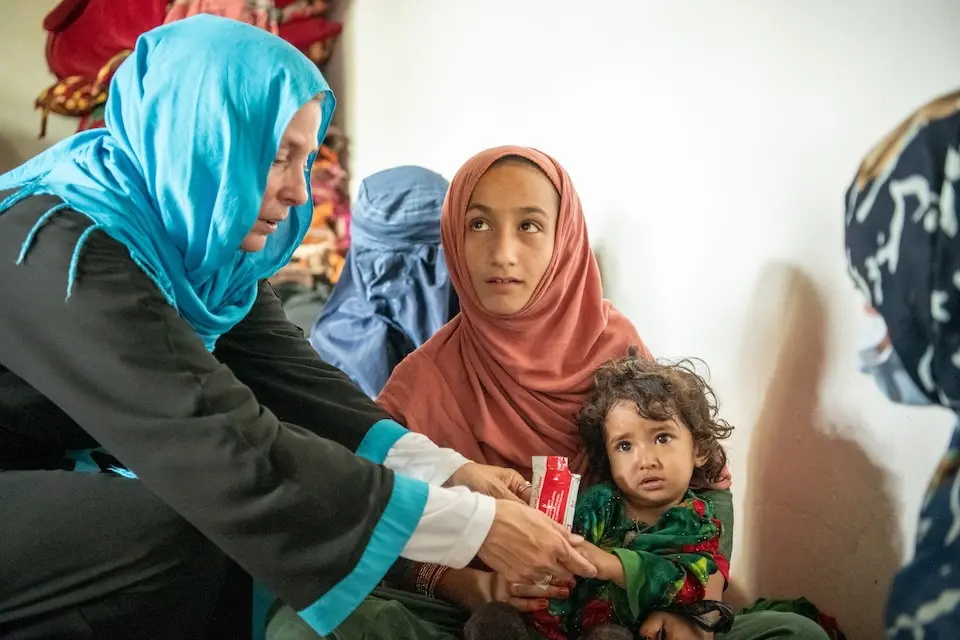
Food insecurity in Afghanistan is high and getting worse due to a combination of climate shocks, displacement and economic instability. Half of Afghanistan’s children live in severe child food poverty, consuming food from two or fewer food groups per day.
"When children reach six months of age and should begin receiving nutritious complementary foods alongside breastmilk, the reality for many families is very different," Dr. Tajudeen Oyewale, UNICEF Representative in Afghanistan, explains. "A child's first foods may consist of little more than bread with tea or watered-down yoghurt. For a growing child, that is simply not enough."
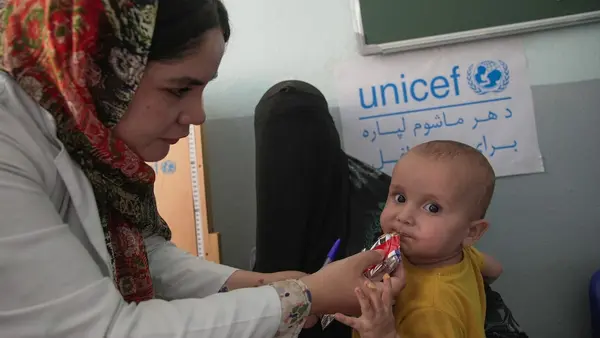
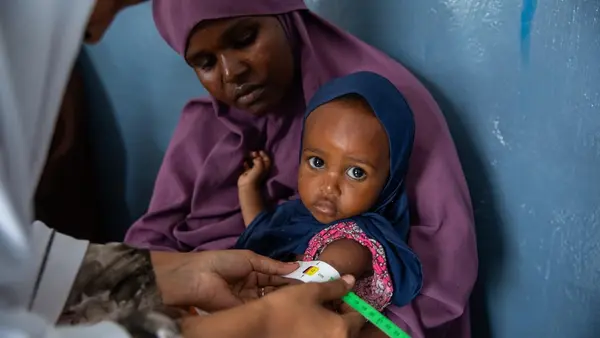
An estimated 3.7 million children are suffering from wasting, including 1 million children with life-threatening severe acute malnutrition. Hospitals are overwhelmed, while funding cuts have forced treatment centers to close. Unsafe water and inadequate sanitation continue to undermine the health and well-being of Afghan children and families in many areas.
Communities and systems are also struggling to absorb returning Afghan refugees, many of whom had fled Iran during the military escalation in the Middle East of late February/March 2026, part of an all-too-familiar pattern of violence and fear. In 2025, nearly 3 million Afghans, 60 percent of them families with children, returned to Afghanistan from neighboring countries, mainly Iran and Pakistan, putting added pressure on health, nutrition, water and child protection services that children and families rely on and intensifying needs across the board.
"For families returning with very limited means, displacement and uncertainty can quickly increase the risk of malnutrition and ill health, particularly for young children and for pregnant and breastfeeding women," Oyewale says.
Learn more: Afghan children returning from Iran need urgent assistance
How UNICEF is helping children and families in Afghanistan
With a presence in Afghanistan since 1949, UNICEF works closely with local partners and other UN agencies to improve access to essential services and otherwise meet the humanitarian needs of children and their families.
Priorities include:
- addressing undernutrition and child malnutrition, by providing treatment, while strengthening prevention; this includes protecting nutrition of women during pregnancy, supporting breastfeeding and helping families diversify their children's diets
- bolstering access to essential health services, including supporting immunization services to protect against vaccine-preventable diseases
- improving access to clean water and sanitation
When disaster strikes, UNICEF is also there to provide emergency relief.
Earthquake relief in Afghanistan
When a powerful earthquake struck the eastern provinces of Kunar and Nangarhar in August 2025, UNICEF immediately launched a multi-sectoral response, delivering lifesaving assistance, including emergency health, nutrition and child protection support within the first 72 hours. UNICEF had deployed a similar rapid response after a series of quakes devastated western Herat province in October 2023.
With tens of thousands of people still living in tents many weeks later — and winter approaching — UNICEF prepared and then distributed warm clothing and other cold weather gear. Support programs continue to assist earthquake survivors who remain displaced and to safeguard children's rights in very challenging circumstances.
Girls' rights to education and protection under threat in Afghanistan
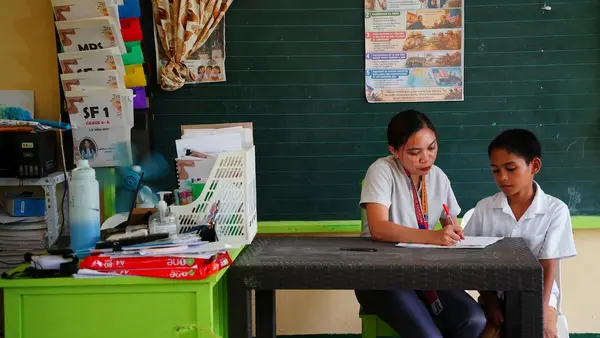
The situation for women and girls in Afghanistan remains of grave concern. Girls remain barred from attending school beyond grade 6, creating significant learning and protection risks and likely impacting generations to come.
These and other restrictions on women and girls have curtailed basic freedoms, deprived many women of income-earning opportunities and created barriers to accessing services.
A complex operating environment for humanitarians
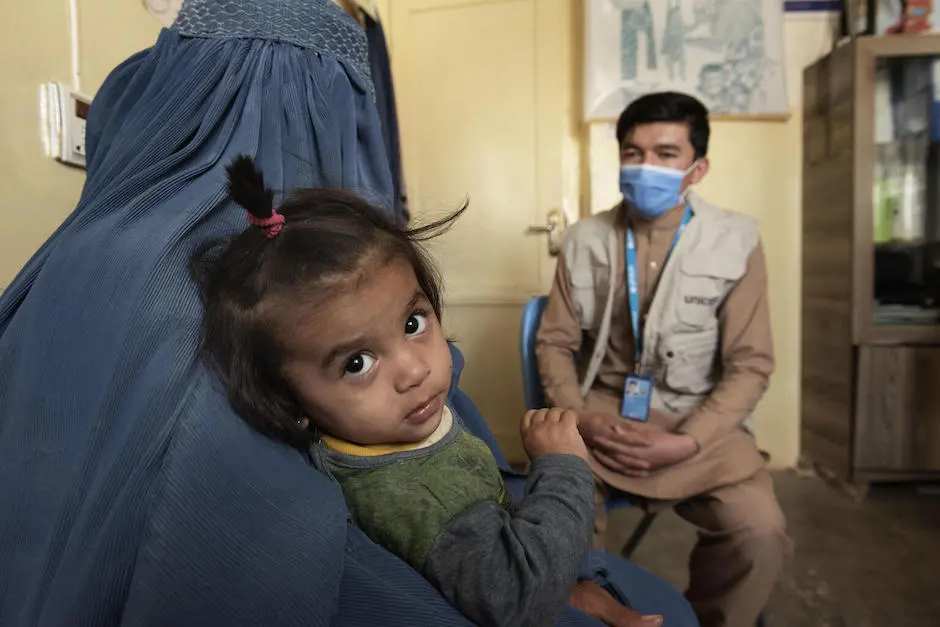
UNICEF focuses on strengthening and improving access to essential services and providing lifesaving support and protection despite a highly complex operating environment. While physical access to people in need has largely improved, bureaucratic impediments, threats and intimidation of humanitarian workers and restrictions on female humanitarian workers continue, often hindering service delivery.
UNICEF continues helping Afghanistan by advocating for unimpeded and principled access to people in need, while seeking donor support to help close significant funding gaps so that critical programs — in health and nutrition, water and sanitation, education and child protection — can be scaled and sustained. UNICEF also continues to advocate for the rights of women and girls.
Frequently asked questions about UNICEF Afghanistan
Where is Afghanistan and why does UNICEF work there?
Afghanistan is a landlocked country in South-Central Asia bordered by Pakistan, Iran, Turkmenistan, Uzbekistan, Tajikistan and China. UNICEF Afghanistan works with partners to support children’s rights and well-being by helping strengthen health care, nutrition services, education and child protection systems across the country.
Is Afghanistan safe for children?
Living conditions vary across the country, but many Afghan children face risks related to poverty, food insecurity and limited access to basic services. In some communities, families struggle to access health care, safe water or schooling. UNICEF supports programs that help improve safety and stability for children and their families.
Why are kids in Afghanistan facing humanitarian challenges?
Afghanistan’s children are affected by economic hardship, climate-related disasters and gaps in essential infrastructure. These pressures can contribute to hunger, illness and disruptions to education. Ongoing humanitarian work in Afghanistan focuses on addressing these challenges while helping communities strengthen long-term support systems for children.
How can I help Afghanistan’s children?
If you want to make a difference, consider supporting UNICEF. Donations help UNICEF continue its humanitarian work for children. Donate below to help kids in need in Afghanistan and worldwide.