World Cup: The Simple Joy of the Soccer Ball
Highlights
- UNICEF delivered tens of thousands of soccer balls for children around the world in 2025
- Soccer gives children in difficult circumstances a chance to experience the healing power of play
- Sports programs promote peace-building and child well-being
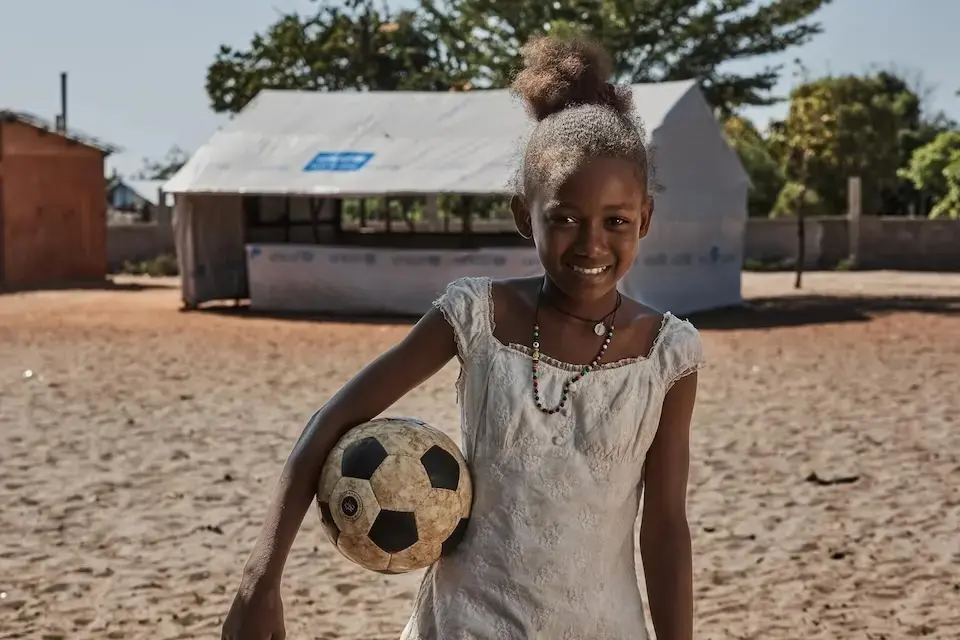
All children need to play. No matter how difficult the circumstances, the pleasure of the beautiful game is universal.
"They call it by many names: the sphere, the round, the tool, the globe, the balloon, the projectile." — Uruguayan writer Eduardo Galeano, Soccer in Sun and Shadow
With the 2026 FIFA World Cup underway, it’s a good time to appreciate the simple joy that a soccer ball can bring — to boys, to girls, to children of any age.
Wherever there is no ball, people find ways to make one using any materials at hand. Pelé, Brazil’s greatest soccer hero, learned the game with a ball that his father made out of a sock stuffed with rags.
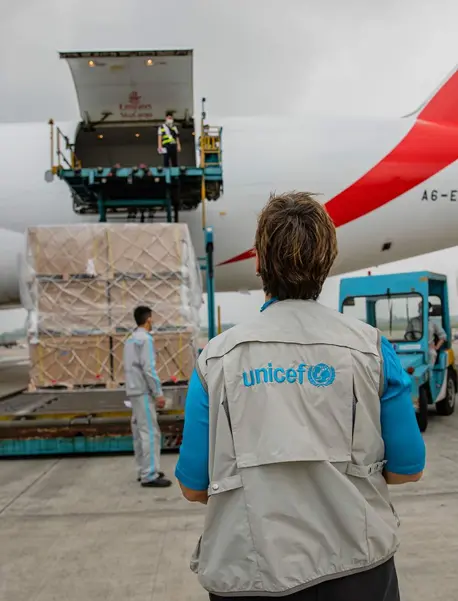
UNICEF does its best to make things easier for children and parents, placing two soccer balls into every UNICEF recreation kit. Tens of thousands of balls were delivered last year, procured at local factories or shipped from the UNICEF Supply Division warehouse in Copenhagen. They went to, among other places, temporary displacement sites in Lebanon, child-friendly spaces in Sudan and Rohingya refugee camps in Bangladesh — anywhere that children need to step away from difficult circumstances and experience the healing power of play.
The images below, taken by UNICEF photographers over the years, show that the pleasure of the beautiful game is the same in communities around the world.
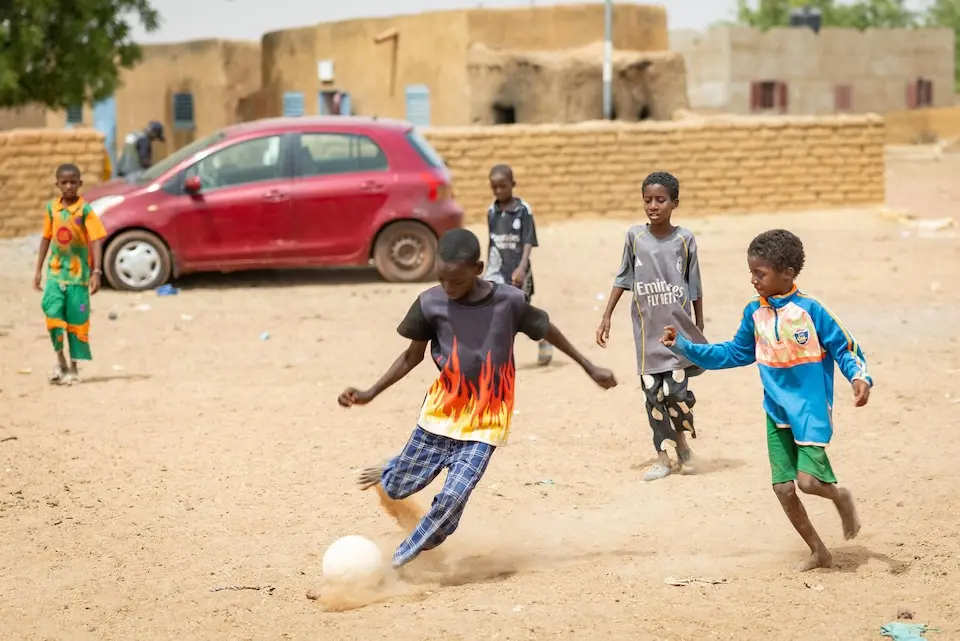
Children play soccer after school in the village of Horoguendé on the outskirts of the city of Sévaré, in the Mopti region of central Mali in May 2026. The primary school serves girls and boys from both host and displaced communities. © UNICEF/UNI993465/Dicko
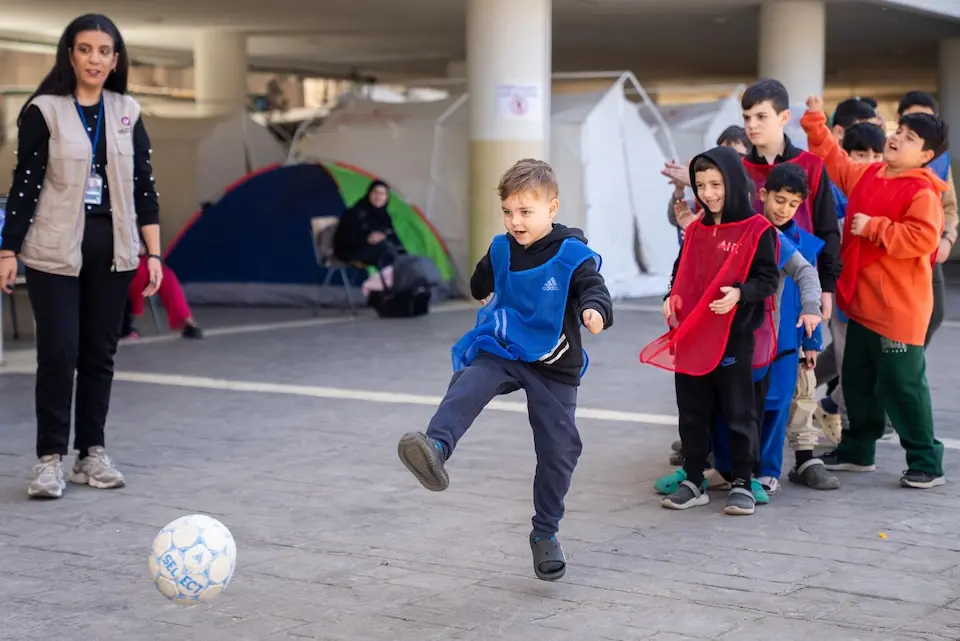
Children practice their soccer skills at a UNICEF-supported temporary displacement site at Omar Faroukh School in Beirut in March 2026. For children living in a crisis zone, having a safe place to play provides a much-needed sense of normalcy. © UNICEF/UNI964787/Choufany
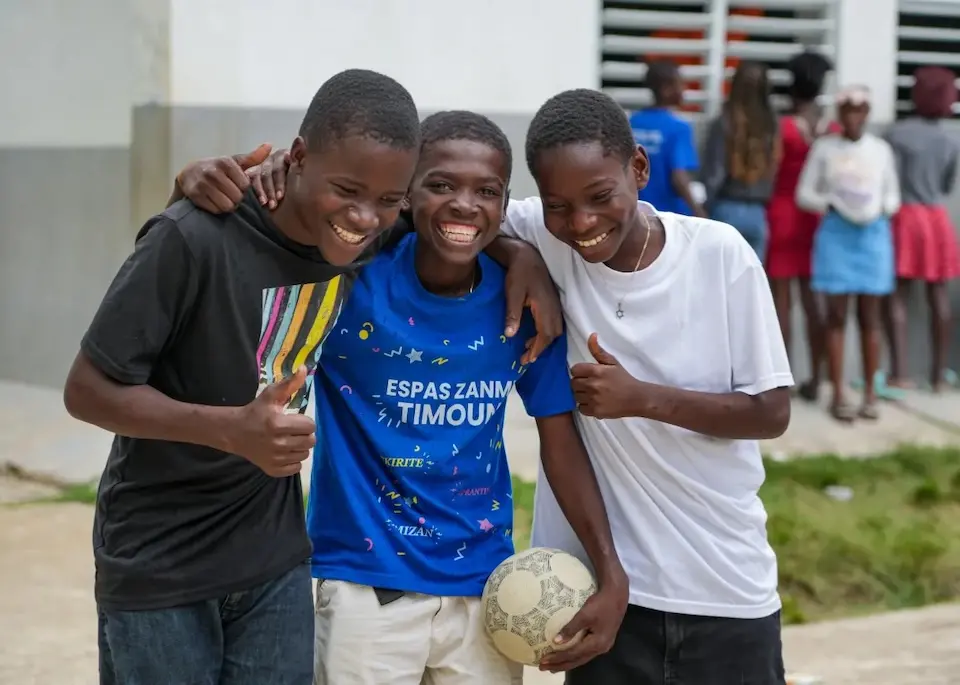
Friends celebrate after a soccer match at a UNICEF child-friendly space in Peredo, South-East, Haiti, in March 2026. "Football is my pride. Even when I got injured, I never wanted to give up," says Peter, center. "When I play, I forget everything, and I dream of representing Haiti." © UNICEF/2025/Joseph
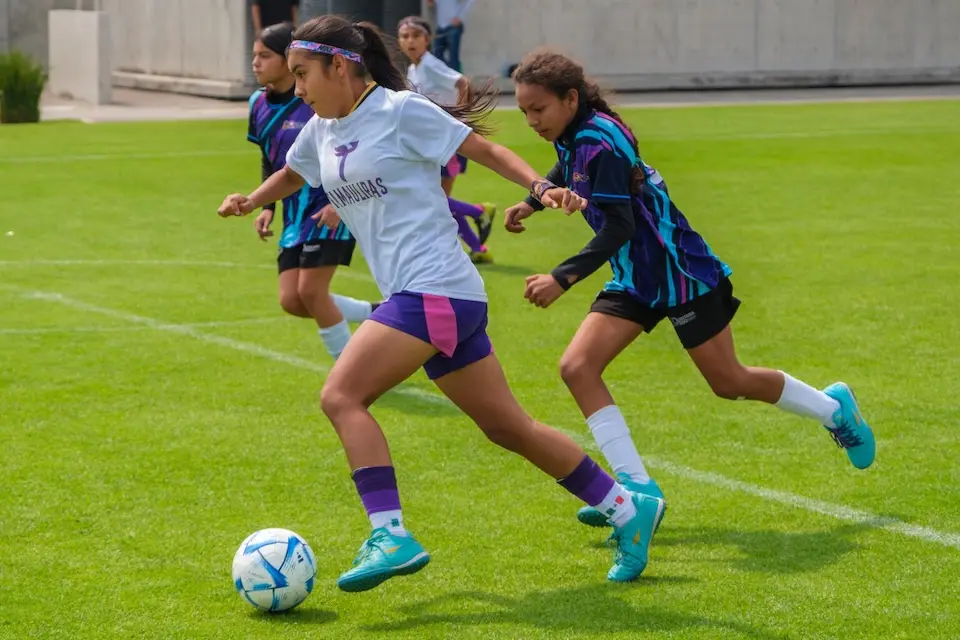
A player from the Tamaulipas team controls the ball under pressure from a Quintana Roo player during a match at the National School Soccer Tournament in Toluca, Mexico, in 2025. The tournament was organized by the Ministry of Education and Mexican Soccer Federation to promote soccer for peace-building and child well-being. © UNICEF/UNI823011/Carrillo
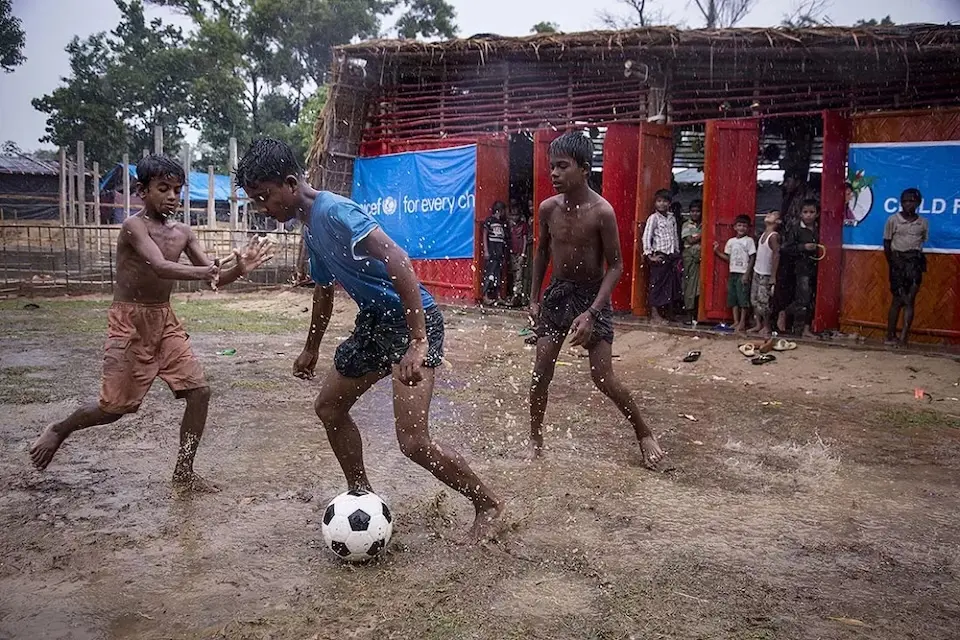
Rain can't stop the game outside a UNICEF child-friendly space in Balukhali, a Rohingya refugee camp in Cox's Bazar, Bangladesh, in 2017, the year hundreds of thousands of Rohingya fled attacks and violence in Myanmar. © UNICEF/UN0143106/LeMoyne
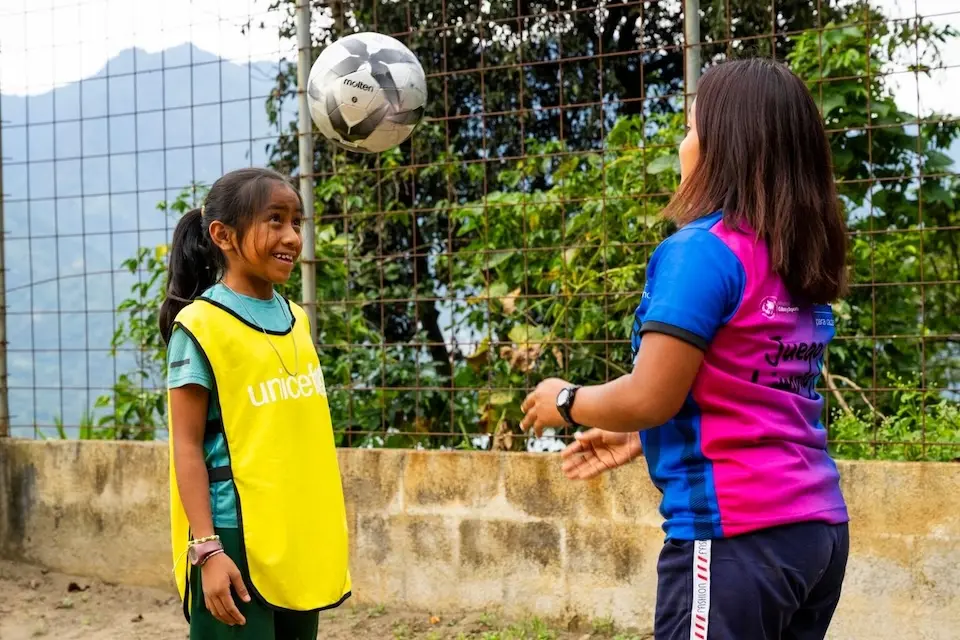
Eleven-year-old Regina, left, works with a coach in San Pedro La Laguna, Sololá, Guatemala, in 2025. In rural Guatemala, access to safe play spaces remains limited, particularly for girls. Before joining the Juego Limpio program — implemented by UNICEF in partnership with the Ministry of Culture and Sports — Regina spent most of her days alone at home. Through the program, she now participates in regular training sessions that promote teamwork, confidence and life skills in safe and inclusive spaces for girls. © UNICEF/UNI924498/Izquierdo
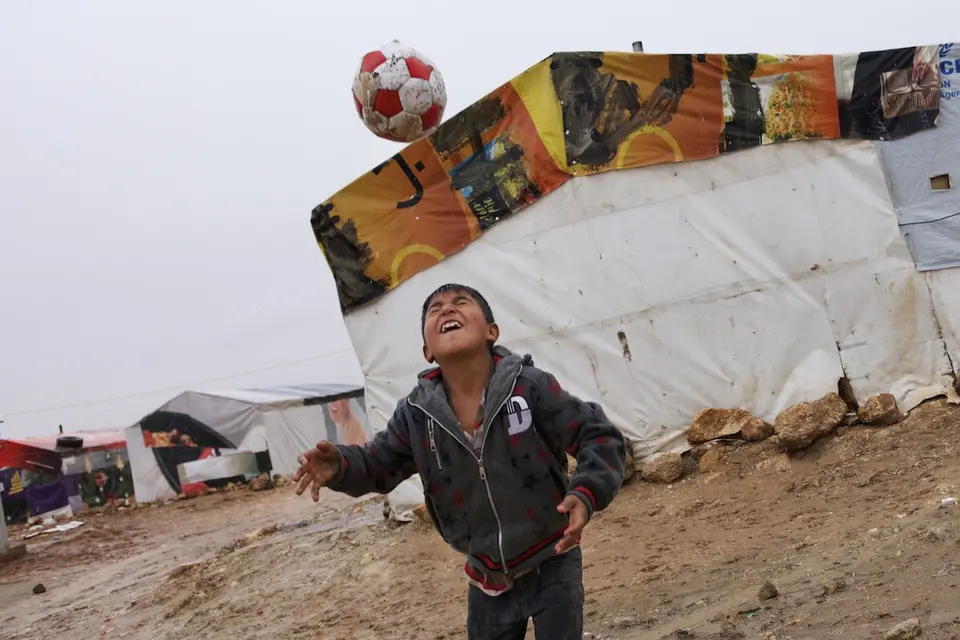
A boy practices near his family’s tent shelter in the Tal Al Abiad settlement for Syrian refugees in Baalbek, Lebanon, in 2013. © UNICEF/NYHQ2013-1387/Noorani
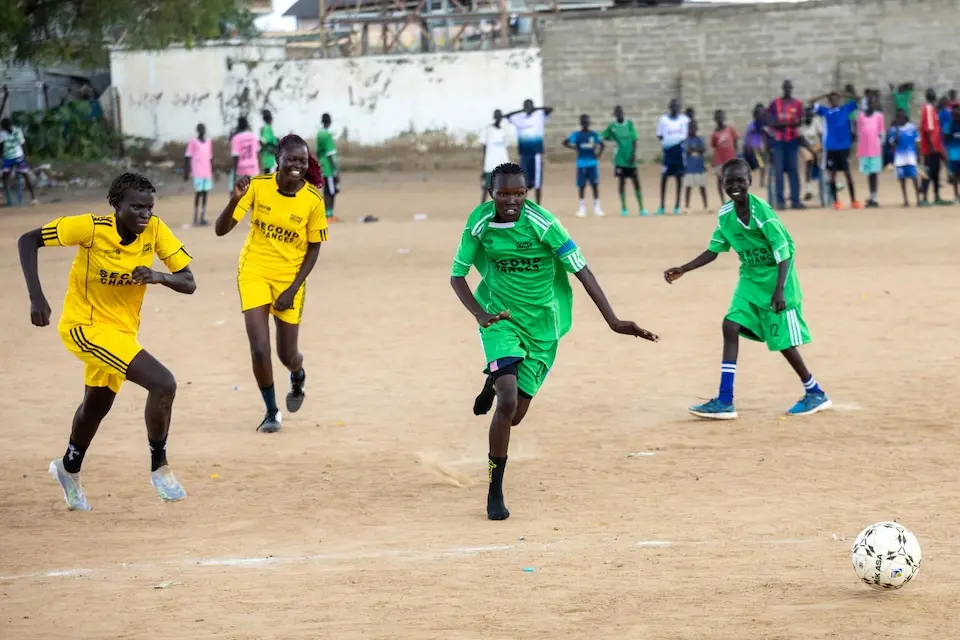
Participants in the Young Dreams Foundation (YDF) Academy program play football in a sports tournament in Juba, South Sudan, in 2025. The program empowers young people through sport, offering football academy training sessions, games and tournaments, in addition to integrated educational initiatives and life skills development programs. © UNICEF/UNI883710/Prinsloo
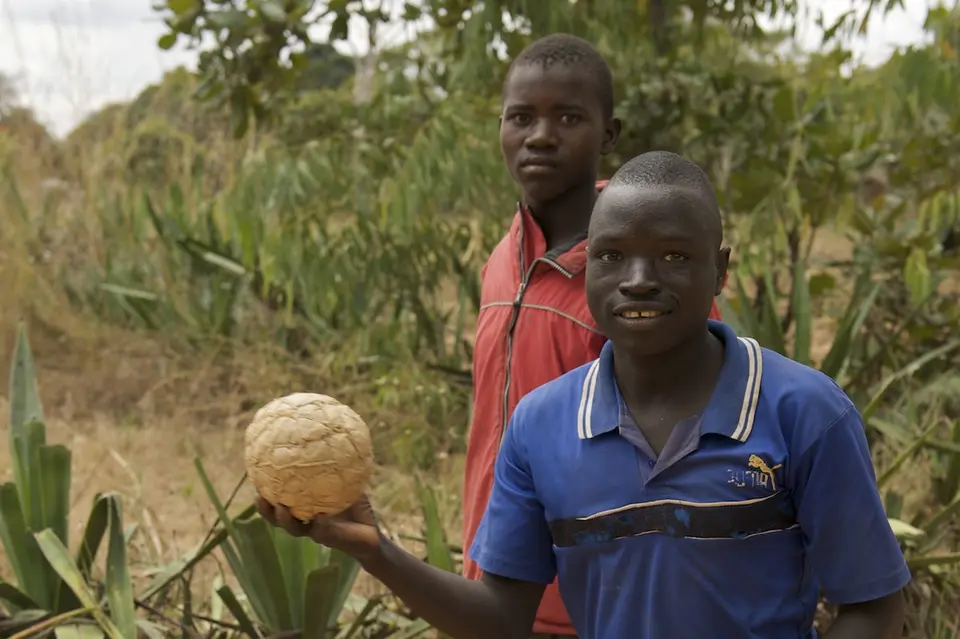
A boy holds a homemade soccer ball in Mkangeni village, Malawi, in 2010. © UNICEF/MLWB2010-355/Noorani
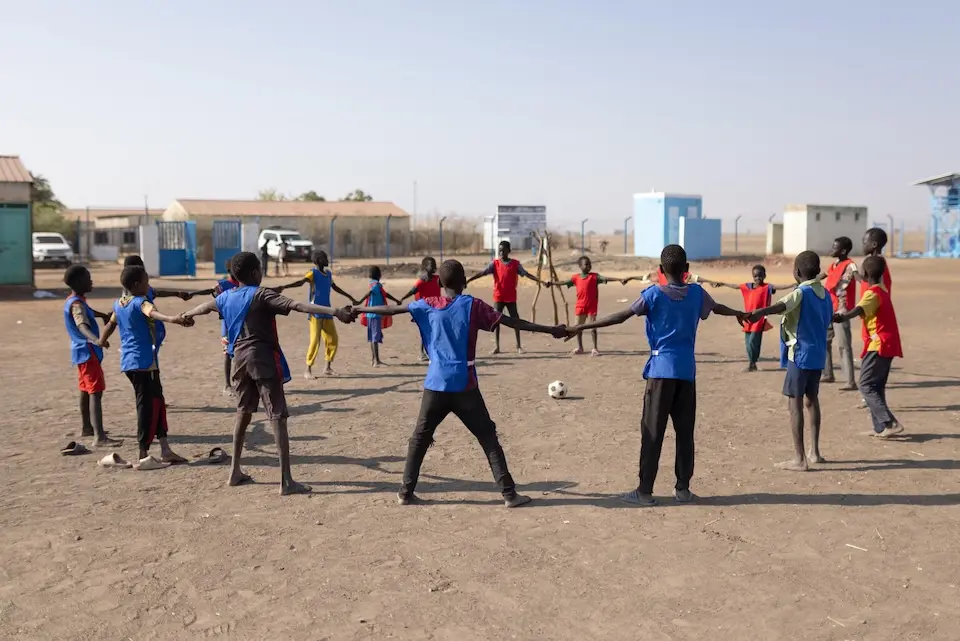
Children prepare for a soccer match at the UNICEF-supported child-friendly space in Al Kashafa camp, White Nile State, Sudan, in February 2026. © UNICEF/UNI956902/Dawod
Learn more about why soccer is one of UNICEF's most powerful tools for changing a child's life.
HOW TO HELP
There are many ways to make a difference
War, famine, poverty, natural disasters — threats to the world's children keep coming. But UNICEF won't stop working to keep children healthy and safe.
UNICEF works in over 190 countries and territories — more places than any other children's organization. UNICEF has the world's largest humanitarian warehouse and, when disaster strikes, can get supplies almost anywhere within 72 hours. Constantly innovating, always advocating for a better world for children, UNICEF works to ensure that every child can grow up healthy, educated, protected and respected.
Would you like to help give all children the opportunity to reach their full potential? There are many ways to get involved.