What Do Young People Really Think About Life Online?
Highlights
- Over 211,300 U-Reporters across 119 countries shared feedback about their digital experiences.
- Most respondents said they valued the internet for connection and learning.
- AI use among poll respondents is high, with 66 percent using it at least a few times a week.
- Young people want better internet access, privacy, safety and digital skills. Young people also want tech and governments to prioritize accountability and well-being.
To mark International Youth Day, UNICEF shared findings from a global U-Report poll asking young people about their experiences with digital platforms and AI — and what they think governments and technology companies should do to make these spaces and tools safer and more supportive.
U-Report poll asking young people about their digital experiences draws 211,300 responses across 119 countries
In today's world, digital technologies are reshaping how children and young people learn, connect and participate in society. An important part of UNICEF’s mission is to help ensure children's rights are respected and safeguarded every step of the way.
To better understand how children and young people are experiencing life online, UNICEF, in collaboration with GSMA, launched a global U-Report poll in January. Participants were invited to answer questions such as, "What’s most important about being connected to the internet?" and "How often do you use artificial intelligence (AI)?"
Related: Protecting Children in the Age of AI
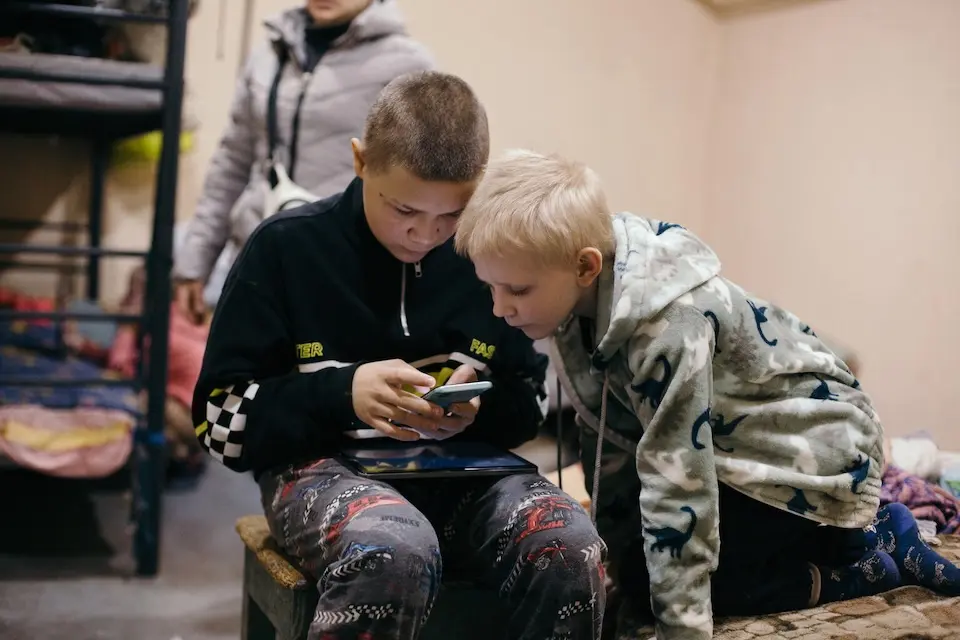
"As 18-year-old Fiza from Canada told us: 'Adults design the internet, but we're the ones growing up inside of it,'" " UNICEF explained on the poll website. "Your feedback can help shape online spaces where children and young people feel better supported, more in control of what they see and share, and respected when decisions are made about the platforms and features they use."
Over 211,300 U-Reporters in 119 countries responded, including 84,834 U-Reporters who answered the poll's open-ended question: What’s the one thing you wish governments and companies understood better about your life online?
A few dominant themes emerged.
Life Online U-Report poll 2026: Key insights
Here are UNICEF's main takeaways from the poll results:
- 39 percent of respondents under age 18 and 37 percent of those aged 18 to 24 said they felt most confident being their real selves online rather than in person. Frequent AI users were also much more likely to feel most like themselves online than people who rarely used AI.
- Nearly two-thirds of respondents said children and young people’s needs were always or sometimes considered when decisions were made about the apps and sites they use. However, 36 percent said their needs were rarely or never considered, or were unsure if they had been considered.
- 32 percent of respondents said communicating with friends and family was their main reason for being connected to the internet. Learning was a close second, with 31 percent of respondents naming it as their top reason. Only 7 percent chose entertainment.
- 66 percent of respondents reported using AI at least a few times a week, including 45 percent who used it about once a day or more. Among non-AI users, lack of awareness was the most commonly reported barrier, followed by lack of access and not seeing a need to use AI.
- 4 in 5 respondents reported that AI-generated information is at least somewhat relevant to their country. The majority of respondents reported verifying AI-generated information by checking another source or asking follow-up questions, rather than trusting it outright.
What young people want out of their digital experiences
UNICEF also shared several insights derived from the written responses to the open-ended question about the role of governments and companies.
Internet access important for connection, learning
When asked what governments and companies could do, many respondents mentioned improving digital public services and expanding internet access, making it more affordable and reliable.
“We want to make the internet cheaper for young people because schools are closed and our only way to learn is through the online way," wrote one respondent, a 20-year-old female in Afghanistan. "Some people can't attend their classes because of the price of the internet.”
“One thing I want governments and tech companies to focus on is improving faster, more stable, and more affordable internet access for everyone, especially in areas where access is still limited. That way, we can more easily access information, services, and opportunities in the online world!” wrote another, a 17-year-old male in Indonesia.
Employment opportunities
Economic opportunity is also on many young people's minds. Some 27 percent of respondents noted a desire for support in leveraging digital spaces as platforms for jobs, livelihoods, entrepreneurship and economic participation.
“To empower young people, even by creating online jobs, could reduce ... unemployment," wrote a 22-year-old female respondent from the Democratic Republic of the Congo.
"The internet is not only entertainment," a 23-year-old male from Uruguay wrote. "It is also a work tool and has a great impact on us.”
Privacy and online safety
There were also growing concerns about digital rights, privacy and online safety. More than 17 percent of respondents framed their concerns as fundamental rights and used rights-based language to call for control over personal data, protection from online harms, freedom of expression and respect in digital spaces.
“In my online life, I would like governments and companies to understand that I am not just a 'user' but a person with needs, dreams and rights," wrote a 20-year-old male from Haiti.
My online life is part of my real life. It's not a product to be exploited, it's my space, my data, my time and my attention. I want more transparency, more control over my personal information and less manipulation by algorithms.
My online life is part of my real life," wrote a 19-year-old male in the DRC. "It's not a product to be exploited, it's my space, my data, my time and my attention. I want more transparency, more control over my personal information and less manipulation by algorithms.
Skills training
More than 15 percent of poll respondents believed governments and companies should do more in the areas of digital literacy, online learning resources and skills training.
“I wish they realized that just having access isn't enough," wrote one 22-year-old male respondent from Pakistan. "We need better digital education and mentorship to turn 'being online' into real-world career success and professional growth.”
Just having access isn't enough. We need better digital education and mentorship to turn 'being online' into real-world career success and professional growth.
An 18-year-old male from Yemen commented: "I wish they understood that young people want more tools and support to learn programming and AI to build our own future projects."
Transparency and accountability
Poll respondents also called on platforms, companies and governments to be accountable for their practices and to operate transparently and ethically.
“From the government, I hope that there will be a firm policy regarding data protection and equal access," an 18-year-old female respondent from Indonesia commented. "From tech companies, I hope they care more about the well-being of users, not just screen time and profits. Because in the end, the internet is not only a means of entertainment, but a second living space for many people, including students like me.”
“As a U-Reporter, my online life is a space for expression, engagement and civic participation," wrote a 19-year-old female from Niger. "I would like governments and businesses to really listen to these voices, respect them and take them into account. Respecting, protecting and considering our words must be at the heart of the digital world.”
An 18-year-old female from Tunisia added: “Algorithms shape real lives, not just screens. What I see online changes how I learn and decide.”
Concern for mental health
Respondents also emphasized the value of staying connected with family and friends, and called for balanced online engagement given the psychological and emotional impacts of digital life, including screen time concerns and social media effects on mental health.
“I wish they understood how much online environments affect mental health," wrote a 24-year-old female from Nigeria. "Safer, more respectful digital spaces matter just as much as physical ones."
“I always feel happy when I am online because I get to forget about my problems and stress when I am talking to my friends," shared an 18-year-old female from Sierra Leone.
“Governments and tech companies often treat online mental health as either entirely good or entirely bad when the reality is nuanced," wrote a 22-year-old female respondent from Zambia. "They may not understand that for many people, online communities aren't 'less real' than in-person ones — they're where genuine friendships form and where people find crucial support. At the same time, design choices (infinite scroll, notification patterns, recommendation algorithms) have psychological impacts that aren't always acknowledged or addressed.”
Ensuring safe and youth-centered digital spaces
U-Report is UNICEF's innovative mobile digital platform for amplifying young people's voices on issues that matter to them, sharing trusted information and supporting action in their communities. Spearheaded by UNICEF's Child & Youth Engagement Section, the Life Online poll was designed to inform ongoing advocacy efforts toward ensuring safe and youth-centered digital spaces.
In sharing key insights from the poll results, UNICEF's aim is twofold: to raise awareness of the challenges young people still face when navigating digital spaces and to inspire action to better protect their rights in an increasingly digital world.
Visit u-report.org for more about the Life Online poll results
UNICEF champions a world where every child’s right to safety, participation and freedom of expression is upheld and protected, wherever they are. Get involved
HOW TO HELP
There are many ways to make a difference
War, famine, poverty, natural disasters — threats to the world's children keep coming. But UNICEF won't stop working to keep children healthy and safe.
UNICEF works in over 190 countries and territories — more places than any other children's organization. UNICEF has the world's largest humanitarian warehouse and, when disaster strikes, can get supplies almost anywhere within 72 hours. Constantly innovating, always advocating for a better world for children, UNICEF works to ensure that every child can grow up healthy, educated, protected and respected.
Would you like to help give all children the opportunity to reach their full potential? There are many ways to get involved.