Sparking Innovation in Honduras
Highlights
- UNICEF’s Tinkering with Tech and AI program in Honduras teaches students coding, design thinking and responsible technology use through hands-on STEM learning with Micro:bit boards.
- The pilot program operates in over 100 educational centers across four northern Honduran departments, with special support aimed at encouraging girls in STEM fields.
- Students are applying technology to solve real-world problems, including creating flood warning systems, hurricane alerts and tools to help conserve water and support agriculture.
- Teachers, parents and communities have become increasingly engaged, with educators receiving training and mentorship to expand the program sustainably across the country.
- The program has shown global success in building creative problem-solving skills and is now expanding beyond Honduras to countries including Laos, Ukraine and Uzbekistan.
UNICEF’s Tinkering with Tech program is connecting technology with design thinking to build the classroom of the future, one line of code at a time.
Building skill sets fit for the 21st century
Technology has the potential to transform the way children learn, how they play, how they interact, how they grow — and how they drive innovation.
In Honduras, a UNICEF-led program called Tinkering With Tech and AI is providing girls and boys with the creative problem-solving skills, digital fluency and growth mindset they need to build skill sets fit for the 21st century.
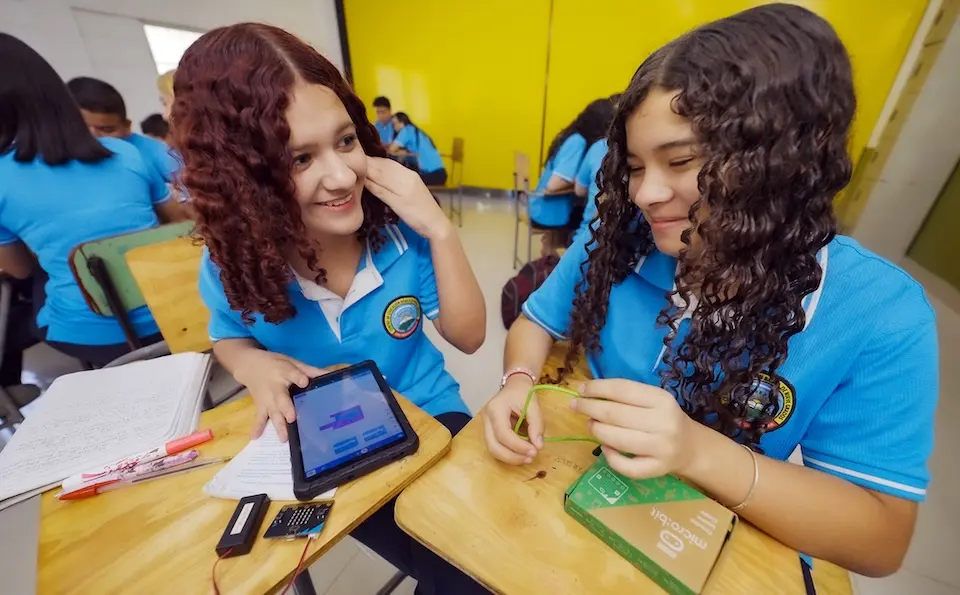
Through a pilot program delivered across four departments in the northern part of the country, students, teachers and school leaders now have access to new technologies such as programmable Micro:bit boards that are being used to teach science, technology, engineering and math (STEM) in the classroom.
Girls — who are very often overlooked in the STEM fields — are receiving bespoke support to advance their learning pathways.
Teaching kids how to code — and to use tech responsibly
The students aren’t just learning to code. By applying design-thinking approaches to real-world problems, they are learning how to use technology in responsible ways, and how to adapt the way they learn and interact in the bold new world of artificial intelligence, quantum computing and global connectivity.
“For me, Micro:bit is a very fun application," says Sherlin, 12. "We learned how to program. We made a step counter and even learned how to calculate temperature. We also created a project — a traffic light — that we used to help save water.”
Students like Sherlin have used the Micro:bit platform and integrated lessons to address real-world problems. Northern Honduras is deeply impacted by poverty, violence, migration and significant school dropout. Climate change and cyclical floods have further impacted learning.
I found it really fun because there were several projects I never imagined I could make. [Micro:bit] is a platform that combines work, fun, creativity and imagination. — Leah, 13
In a school on the outskirts of San Pedro Sula, students used Micro:bit to create an alarm system to alert their community in advance of heavy rains. In a ‘Grand Challenge’ event in San Pedro Sula, students came together to showcase their projects that addressed floods, landslides, hurricane alerts and a novel application to ensure plants can thrive in a changing climate.
“I found it really fun because there were several projects I never imagined I could make,” says 13-year-old Leah, who is taking a dedicated course on Micro:bit. “It’s a platform that combines work, fun, creativity and imagination.”
Getting parents, communities on board: 'My child teaches me'
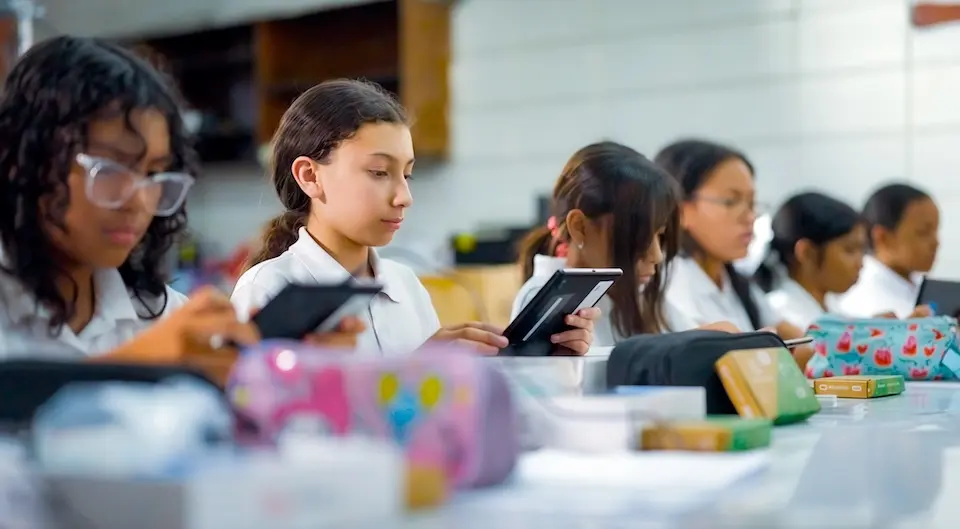
Teachers are becoming the students – and whole communities are benefiting from the pilot initiatives. With support from the Ministry of Education, Save the Children, Micro:bit and community members and educators, over 100 educational centers across four departments have built Micro:bit lesson plans since 2023.
The key to sustainability and impact is taking a human-centered design approach. While parents and teachers both shared initial skepticism, they are now embracing the new technology, with one parent sharing that “now, my child teaches me.”
The skills the program is teaching are the ones that will "ensure these students become great professionals in the future," says Conrado Cáceres, a teacher at Honduras’ Center for Educational Research and Innovation. "For them, the Micro:bit class has become their favorite."
Teachers connected through communities of practice, online groups and trainings go from learning about the new technology to becoming masters and mentors themselves. This cascading approach to scale the new technology will be essential as UNICEF and the government of Honduras work together to expand the program across the country's other regions.
“In Phase 1 of the program, I discovered the potential of the Micro:bit board as an educational tool," says Wendell Dubón, a teacher at the Centro de Educación Basica José Ramón Ayala in San Pedro Sula.
"Learning programming concepts, logic and sensors in a practical and fun way with our sixth-grade students was a gateway to active learning," Dubón continues. "I discovered how such a small device can transform the way we understand creative problem-solving. Each project sparked in me the excitement of seeing ideas become code and code become reality."
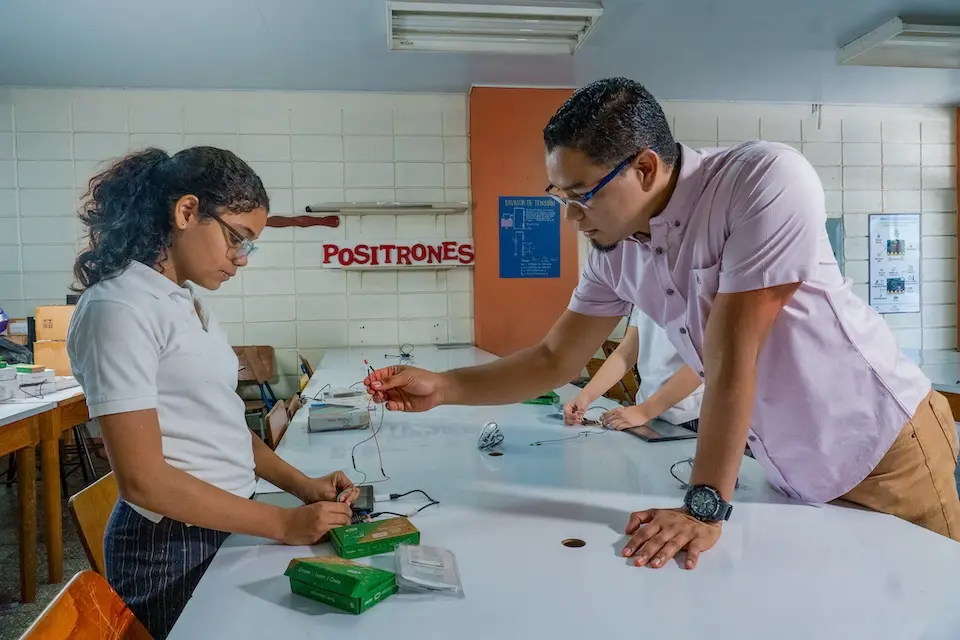
In Phase 2, Dubón adds, he took on a new challenge: mentoring. "This role allowed me to share what I had learned, see the program from a different, enriching and comprehensive perspective, and guide processes and support others as they developed their first technological solutions.”
Globally, the Tinkering with Tech program has seen strong progress in building creative problem-solving skills, engaging girls in STEM learning and ensuring the responsible adaptation of technology-centered approaches into traditional education systems.
Tinkering with Tech was the beginning of a path where teaching is also about continuing to grow. — Wendell Dubón, teacher, San Pedro Sula
The global program’s initial pilot phase delivered innovative ed-tech solutions largely based on the Micro:bit platform in Honduras as well as the Maldives, Montenegro and Vietnam. The program is now being accelerated in Honduras and replicated in Laos, Ukraine and Uzbekistan, with continued support from the Finland Ministry for Foreign Affairs and Arm.
New partners are being brought in to provide tech solutions that match local needs, with communities, governments, teachers and students taking a leading role in designing and delivering the new initiatives.
“This journey reminded me that technology isn't just learned — it's lived, shared and multiplied,” Dubón says. “Tinkering with Tech was the beginning of a path where teaching is also about continuing to grow.”
Learn more about how UNICEF supports programs aimed at skilling youth
Tinkering with Tech is part of AI in Play, a UNICEF purpose-driven partnership platform for tech industry leaders to back diverse AI builders and build AI-powered solutions for global social impact for children.
HOW TO HELP
There are many ways to make a difference
War, famine, poverty, natural disasters — threats to the world's children keep coming. But UNICEF won't stop working to keep children healthy and safe.
UNICEF works in over 190 countries and territories — more places than any other children's organization. UNICEF has the world's largest humanitarian warehouse and, when disaster strikes, can get supplies almost anywhere within 72 hours. Constantly innovating, always advocating for a better world for children, UNICEF works to ensure that every child can grow up healthy, educated, protected and respected.
Would you like to help give all children the opportunity to reach their full potential? There are many ways to get involved.