Impact of Gaza Donations
Highlights
- Despite a nominal ceasefire, children in Gaza face health and safety risks and severe hardships due to ongoing violence and destroyed infrastructure.
- Donations help UNICEF address urgent needs like clean water, medical care, nutrition, shelter and emergency supplies in a highly strained environment.
- Efforts include repairing water systems, delivering safe water, restoring health care services, running vaccination campaigns and supporting malnourished children.
- UNICEF also provides psychosocial support, education through specialized learning centers and protection services for traumatized and displaced children.
- Continued funding is critical, as recovery will take years and donations enable UNICEF to sustain aid in Gaza while supporting other global crises.
Ongoing violence and the impact of more than two years of war continue to weigh heaviest on children in the Gaza Strip. How supporters have enabled UNICEF to deliver critical aid to children and families in need — and the case for sustaining that support during Gaza's long road to recovery.
Families in Gaza are still struggling to keep their children safe amid ongoing violence and the collapse of basic systems. More than 300 Palestinian children have been killed since a ceasefire was announced in October 2025. Over 400 have been injured, many with catastrophic wounds. Water and sanitation systems have been extensively damaged, leaving almost the entire population exposed to serious public health risks. Hospitals are overwhelmed.
Children who have survived repeated displacement and traumatic loss are still waiting for the care they need. And families trying to piece their lives back together are doing it without the daily necessities crucial to children’s health and well-being.
This is what the ceasefire looks like for Gaza's children — and why Gaza support matters more than ever before.
How donations to Gaza support children and families
A conflict of this scale leaves behind collapsed health systems and contaminated water. Children's immune systems are compromised by malnutrition. Trauma too often goes untreated.
These are the conditions UNICEF is working against in Gaza, today and in the months and years to come. Donations ensure UNICEF can do its work without sacrificing the needs of other vulnerable children around the world.
Each donation, no matter how small, helps ensure UNICEF can deliver for children in Gaza and the hundreds of other emergencies that arise every year.
Meeting urgent humanitarian needs
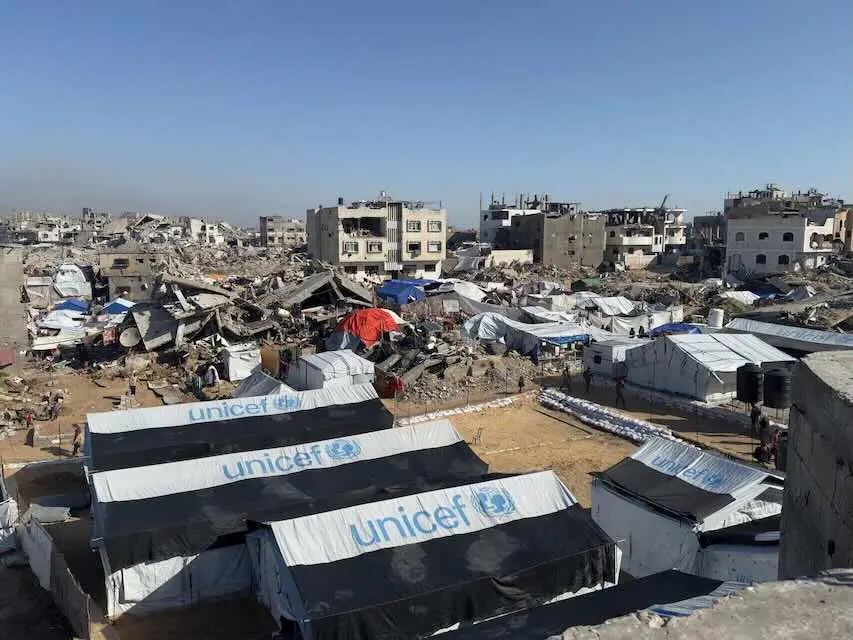
The crisis in Gaza is not driven by a single shortage but by a convergence of hazards working together: collapsed services, restricted supply routes, unsafe water and sanitation, overcrowded shelters and tents that provide little to no protection from extreme cold or heat.
Together, these forces accelerate the spread of disease, compromise the health of mothers and newborns and overwhelm an already severely weakened health care system.
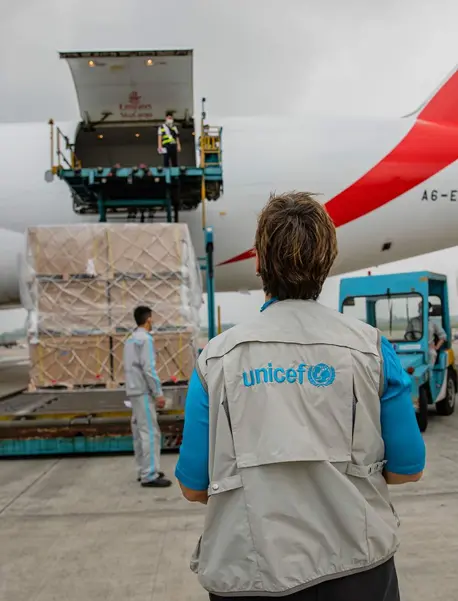
As part of its emergency response, UNICEF prepositions supplies so that when access becomes possible, aid can move quickly. The basics that UNICEF donations help provide in times of war and natural disaster can make the difference between a child getting sick and a child staying strong enough to survive a crisis.
After the ceasefire in Gaza was announced in early October 2025, UNICEF scaled up humanitarian shipments. Within three months, supply shipments had increased by 300 percent.
In December 2025, as winter bore down on families desperate to protect their children from heavy rains and bitter cold, UNICEF delivered winter supplies to keep children in Gaza warm and safe. By year’s end, families received nearly 1 million thermal blankets and more than 290,000 winter clothing kits, including insulated footwear.
Learn more about UNICEF emergency response
Supporting education through emergencies
For more than two years, the majority of Gaza's children went without learning. Most schools were damaged or destroyed.
As the ceasefire took effect, UNICEF had more than 1,000 trucks at the ready with essentials children desperately needed. Among them were education and psychosocial supplies that had been blocked for far too long.
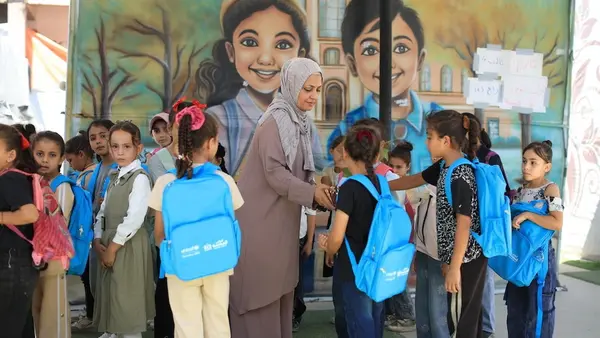
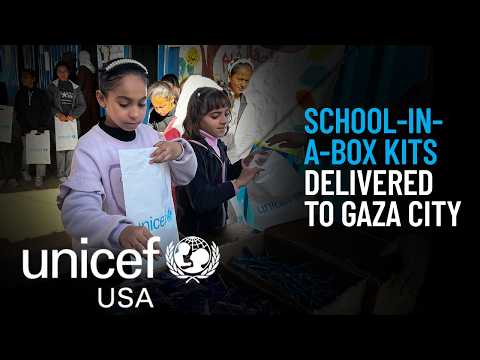
As part of a Gaza-wide Back-to-Learning campaign, UNICEF has been able to bring recreational kits, early childhood development (ECD) kits and education kits into Gaza. These supplies support children's learning, well-being and resilience — including for children with disabilities. Meanwhile, UNICEF and its partners are working to support the education of 100,000-plus children through temporary learning centers.
These spaces do more than teach reading and math. They provide structure and routine at a time when children are still coping with trauma. They serve as access points for nutrition screening, health services, child protection and psychosocial support.
A child with a pencil poised over an open exercise book is connected to an entire infrastructure of care.
Ensuring access to clean and safe water
For a child in Gaza, safe water is not a convenience. It is what protects them from preventable, potentially fatal illnesses.
Damage to water and sanitation infrastructure across Gaza has left nearly the entire population exposed to serious public health risks. Water pumping stations, desalination plants and wastewater treatment facilities are operating far below capacity — when they operate at all. The result: conditions ripe for disease outbreaks.
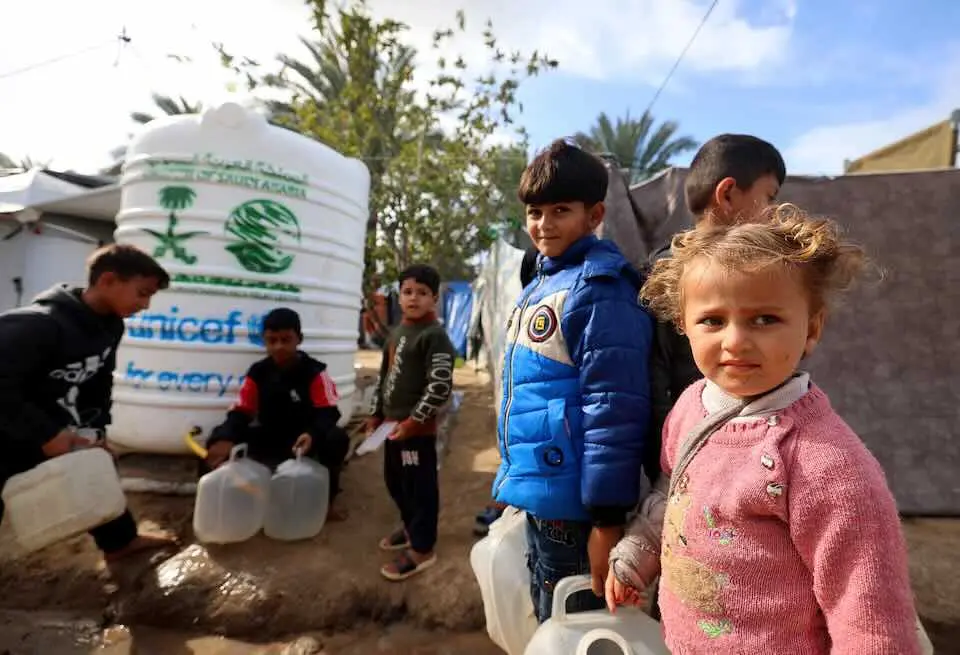
UNICEF works to close that gap: repairing water systems, trucking clean water to families and distributing water purification tablets and safe water kits to help households treat what water they have. These supplies help prevent the waterborne illnesses — diarrheal disease, Hepatitis A and others — that flourish in overcrowded displacement sites.
Learn more about how UNICEF works with partners to bring safe water to children
Delivering lifesaving medical care
Not a single hospital in the Gaza Strip is fully functional. Many were damaged or destroyed during the conflict. Others operate with critical deficits of medicines, equipment shortages and staff stretched beyond their limits.
The consequences fall hardest on young children, mothers and babies. Preterm and low-birthweight deliveries have increased sharply, as maternal malnutrition, chronic stress and limited prenatal care take their toll. Respiratory infections are rising, including severe cases requiring hospitalization. Common childhood illnesses easily treatable in normal circumstances can become life-threatening when a child is already weakened by malnutrition.
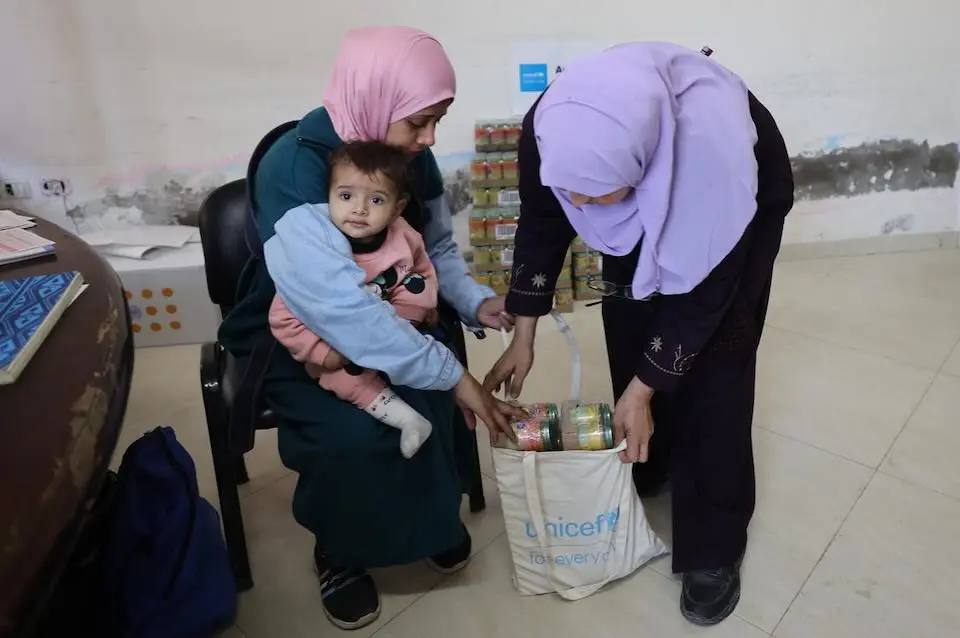
UNICEF is working to rebuild care capacity. Lifesaving pediatric intensive care services have been restored at Al Shifa Hospital in Gaza City. Hospital beds have been re-equipped with ventilators, monitors and oxygen delivery systems. UNICEF has established neonatal intensive care unit to serve the surge of at-risk newborns. Mobile health teams bring essential services to families who cannot reach care on their own, including malnutrition screening, therapeutic feeding, micronutrient supplementation and caregiver counseling.
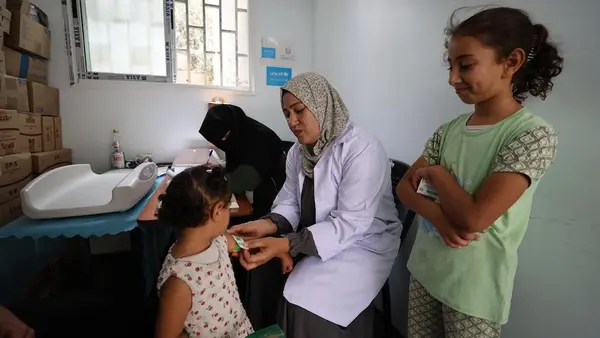
UNICEF also supports vaccination catch-up campaigns through a network of fixed sites and mobile teams, supported by community mobilizers who go door-to-door and tent-to-tent to find children who have missed their doses. These campaigns protect children against measles, polio, rotavirus and other preventable diseases that can move swiftly through crowded settings. Mobilizers also screen children for malnutrition during these visits, connecting those who need follow-up care to the right services.
Providing protection and psychosocial support for children in Gaza
Children in Gaza need mental health and psychosocial support after two years of war, displacement and extreme hardship — the effects of which are visible and lasting.
Children who have been displaced again and again, who have lost family members, who have experienced sustained fear and uncertainty, carry deep emotional scars. Left untreated, these wounds can shape development, learning and well-being for years to come.
At UNICEF temporary learning centers, children receive psychosocial support so they can begin to process what they've been through with the support of trained workers. In these safe places, children can reconnect with peers and simply be children for a while.
UNICEF also provides family reunification services for children who have been separated from their caregivers — a painful and far-too-common consequence of mass displacement at this scale.
More than 11,000 children are estimated to have serious injuries requiring long-term rehabilitation. Thousands more need urgent medical evacuation for care unavailable within Gaza.
Learn more about UNICEF's child protection work
The story of a vaccination campaign: reaching every child
In every neighborhood of the Gaza Strip, from crowded shelters to damaged streets, parents have been making the same choice: to vaccinate their children. Behind that simple act stands one of the largest community engagement efforts UNICEF has led in the Gaza Strip.
The goal was not only to deliver doses. It was to reach families navigating displacement, cold weather and disrupted services with answers to their questions to help protect as many children under age 3 as possible.
UNICEF-supported social mobilizers who had been visiting families week after week spread word of the campaign through mosque announcements, door-to-door visits, radio, social media and even megaphones. In some areas, mobilizers also carried screening tools to check children for malnutrition and connect those in need to follow-up services.
This is what UNICEF delivers: not only supplies, but experts and trusted helpers who make it possible for families to take this vital step to protect their children.
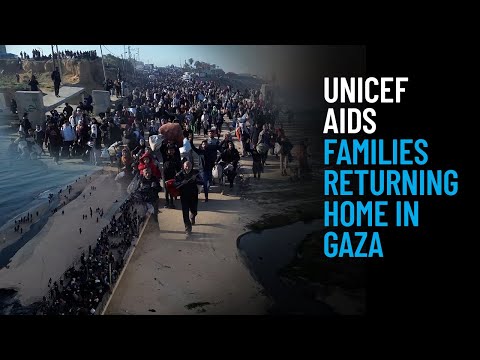
Watch: UNICEF aids families returning home in Gaza
How UNICEF ensures your donation reaches children in Gaza and other crisis zones
Humanitarian access in Gaza is complicated. There are damaged roads, restricted crossings, limited warehouse capacity and significant bureaucratic obstacles to moving supplies. Often first on the ground during an emergency and the last humanitarian organization to leave, UNICEF has the experience and staying power to surmount those obstacles by:
Operating with neutrality and child-first principles
UNICEF operates as a neutral, impartial humanitarian organization guided entirely by the rights of children, not by politics. That neutrality is what allows UNICEF to build the trust with communities and authorities necessary to work in a place like Gaza and other conflict zones. It is what gets UNICEF through access points when other organizations cannot.
Delivering aid through established supply chains
UNICEF has the world's largest humanitarian warehouse built for situations like these. Supplies are pre-positioned before they're needed, so when access opens — however briefly — aid can move immediately. Vaccines and cold chain equipment are staged in advance of campaigns so that sites open with supplies already in place. Logistics networks are coordinated across partners to eliminate delays and duplication.
Partnering with local organizations and health networks
UNICEF does not work alone. In Gaza, UNICEF works alongside the Palestinian Ministry of Health, the World Health Organization and other partners to deliver essential services. Community mobilizers — people who live in the neighborhoods they serve and are trusted by the families there — extend the reach of professional health workers into the most remote areas. Local partnerships make UNICEF’s response work.
Challenges in delivering humanitarian aid to Gaza
Transparency matters, and UNICEF has never minimized the obstacles. Roads are damaged. Access for humanitarian health missions can be restricted or denied. Restrictions on and de-registration of international NGOs complicate health missions alongside unsafe water and sanitation, overcrowded shelters and harsh weather.
Where barriers persist, UNICEF works within them by advocating actively for sustained humanitarian access throughout the Gaza Strip and all countries gripped by conflict. Deploying mobile teams alongside fixed sites, coordinating with the Palestinian Ministry of Health, WHO and community mobilizers, UNICEF does what it takes to reach families and children.
What your Gaza donation and support for all UNICEF’s programs can do today
UNICEF's Humanitarian Action for Children appeal for Gaza requires significant funding to meet the urgent needs of children and their families. And so far, only a small fraction of what's needed has been secured. The gap between what's funded and what's needed is enormous.
Ongoing, sustained support matters because this crisis will take years to overcome. The ceasefire reduced the violence. It did not rebuild the hospitals, restore the water systems, treat the malnutrition or heal the trauma. That work is happening now — and it requires steadfast commitment.
Ongoing, sustained support will allow continued provision of:
- clean water — trucking operations, infrastructure repair, purification tablets and safe water kits
- medical care — mobile health and immunization services, neonatal and pediatric intensive care support and vaccination campaigns
- nutrition — nutrition-support facilities, treatment for acutely malnourished children, malnutrition screening and prevention, support for pregnant and breastfeeding women
- education — temporary learning centers, School-in-a-Box kits, recreational and development supplies, teacher training
- psychosocial support — safe spaces, trained community workers, family reunification services
- emergency supplies — thermal blankets, winter clothing, hygiene kits for displaced families
Donate for Gaza relief and UNICEF humanitarian aid for other crisis zones
The question donors may be asking right now is: Is my donation still needed? The answer is yes — urgently.
The needs have shifted from the acute emergency with active bombing to the slower crisis of repairing collapsed systems, treating malnutrition and addressing the many other conditions children suffer. With so many falling so dangerously behind in nutrition, health care and learning, children have much to recover from.
Your donations to UNICEF USA provide Gaza support while ensuring UNICEF can continue helping other vulnerable children most in need around the world.
Monthly donors provide UNICEF with reliable, flexible funding that enables rapid response. Because no one knows where or when the next crisis will occur, UNICEF relies on dependable funding to act the moment a need arises.
Frequently asked questions
How do donations to Gaza support children and families?
Donations to UNICEF USA fund the full range of services children in Gaza and other conflict zones need to survive and recover: clean water delivery and system repair, lifesaving medical care through mobile teams and hospital support, vaccination catch-up campaigns, malnutrition treatment, mental health and psychosocial support, temporary learning centers and emergency supplies for displaced families. UNICEF works with the Palestinian Ministry of Health, WHO and local partners to deliver these services even where access is restricted.
How does UNICEF ensure my donation reaches children in need?
UNICEF operates as a neutral, impartial humanitarian organization to provide assistance guided by need not politics. UNICEF uses its global supply chain, pre-positioned supplies, community mobilizer networks and local partnerships to deliver aid as efficiently as possible even under difficult conditions. UNICEF USA is a 501(c)(3) organization that solicits donations to UNICEF's programs for children.
What immediate needs does my Gaza donation and support for all UNICEF’s programs address?
Right now, children in Gaza need safe water, medical care, protection from disease outbreaks, nutritious food, mental health support and access to education. The infrastructure that should be delivering those things — hospitals, water systems, schools — has been severely damaged or destroyed. UNICEF is working to fill that gap and rebuild. Every donation helps support that work and all of UNICEF’s programs for children.
HOW TO HELP
There are many ways to make a difference
War, famine, poverty, natural disasters — threats to the world's children keep coming. But UNICEF won't stop working to keep children healthy and safe.
UNICEF works in over 190 countries and territories — more places than any other children's organization. UNICEF has the world's largest humanitarian warehouse and, when disaster strikes, can get supplies almost anywhere within 72 hours. Constantly innovating, always advocating for a better world for children, UNICEF works to ensure that every child can grow up healthy, educated, protected and respected.
Would you like to help give all children the opportunity to reach their full potential? There are many ways to get involved.