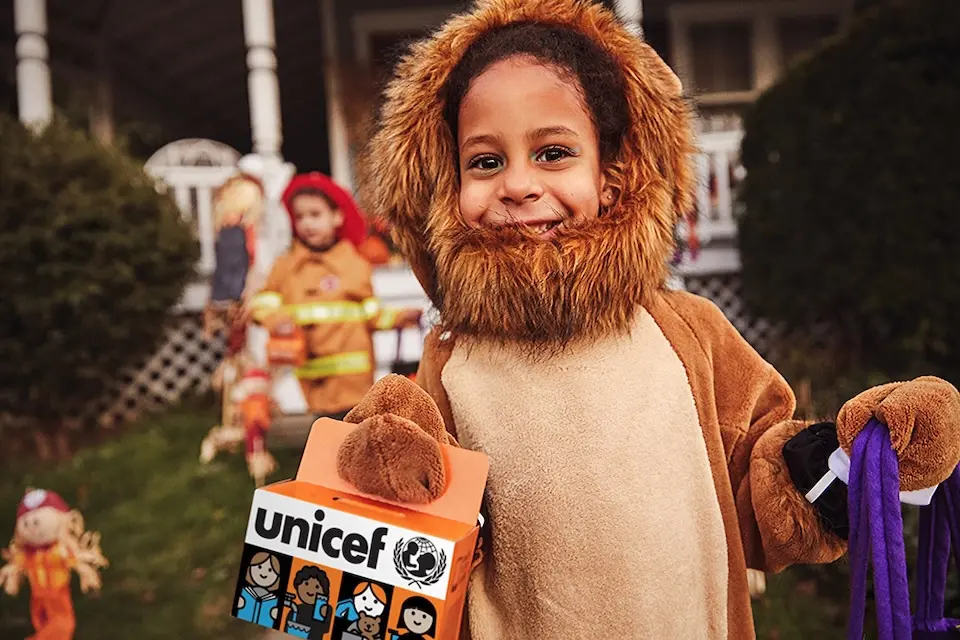
Trick-or-Treat for UNICEF: History & Impact
Discover the history of Trick-or-Treat for UNICEF, an American Halloween tradition that has raised millions of dollars for children in need worldwide while teaching kids they can make a difference.
Give like a kid again — Trick-or-Treat for UNICEF 2026
A tradition of kids helping kids
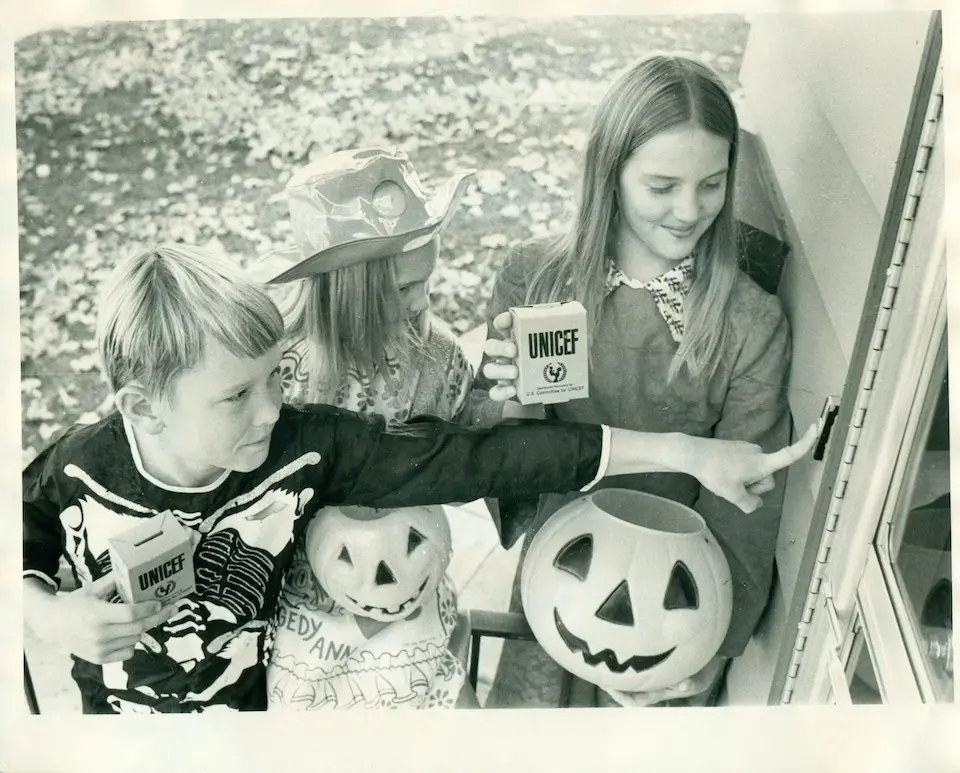
Since 1950, when children first collected coins in milk cartons on Halloween night to support children in post–World War II Europe, Trick-or-Treat for UNICEF has stood as a powerful symbol of kids helping kids.
For many, the little orange box was their first experience with philanthropy and a formative lesson in civic engagement. For parents and caregivers, it was an opportunity to teach compassion, generosity and global citizenship.
The longest-running youth engagement campaign in the United States, Trick-or-Treat for UNICEF has inspired millions of Americans over generations to come together for the world’s children, raising close to $200 million to date.
Join the fun: Order free boxes and learn how to start your own fundraiser at TrickorTreatforUNICEF.org
How did trick-or-treating start?
The cultural tradition of trick-or-treating can be traced back centuries to the beginnings of Halloween itself: the ancient Celtic harvest festival called Samhain, an Irish word meaning summer's end, held on or around Oct. 31.
In 16th-century Scotland and Ireland, children would go “guising” on All Hallows’ Eve, donning costumes and performing songs or poems in exchange for food or money. The influx of Scotch and Irish immigrants brought that custom to America in the mid-19th century.
By the 1920s, the notion had become known as trick-or-treating, distributing candy viewed as a way to prevent teenage pranks.
History of Trick-or-Treat for UNICEF
It was 1947, some two decades later, when a teacher and her pastor husband in a Philadelphia suburb had the idea that would ultimately birth the Trick-or-Treat for UNICEF campaign.
That year Mary Emma Allison and Clyde Allison asked local children in their community to do more that Halloween. "My mom looked at the swarms of children collecting candy for themselves and made a plea to my dad, 'How do we make this into something good?'" the couple's son, Monroe Allison, recalled in his 2019 account for UNICEF USA. "My dad’s reply was, 'We can.'"
In 1948, the Allisons had kids collect shoes to send to children living in refugee camps. In 1950, teaming up with UNICEF, they switched to coin collection, amassing $17. The money went toward a UNICEF program providing undernourished children with powdered milk.
"My parents’ lifelong mission was to be warriors of love for children," Monroe wrote. "Their work was threaded with the notion that empathy could be built into children's daily lives."
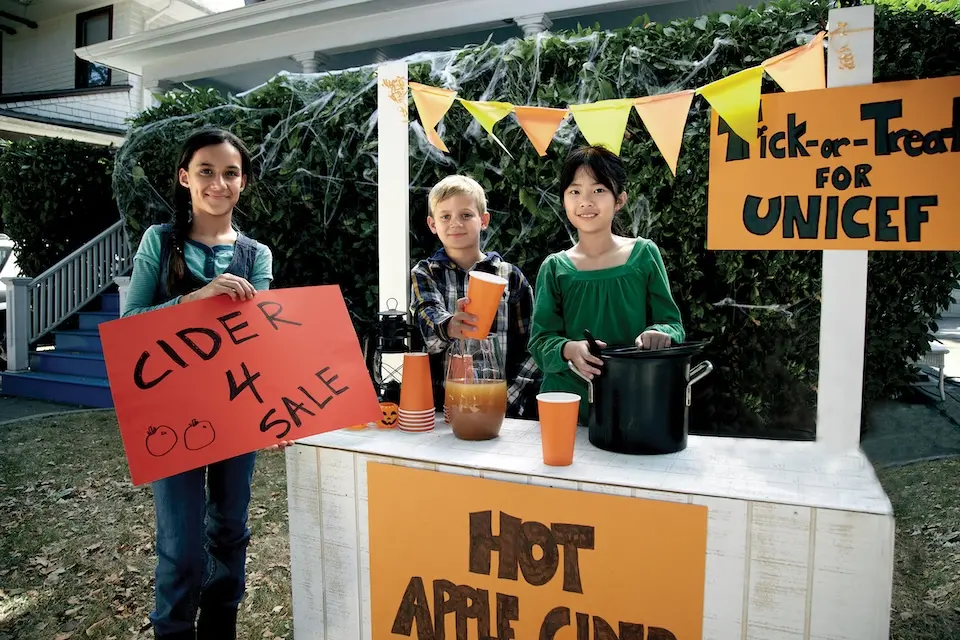
That initial effort grew into a kids helping kids movement involving millions of children, along with their families, schools and wider communities, together achieving global impact.
The vast majority of the close to $200 million in funds raised have directly supported UNICEF's health, nutrition, education and other humanitarian programs for children in need all around the world.
Read more about how Trick-or-Treat for UNICEF turned kids into global citizens
Gaining momentum and support over generations
It didn't take long for the UNICEF Trick-or-Treat initiative to gain traction, expand internationally and capture media attention along with celebrity endorsements.
In 1955, Trick-or-Treat for UNICEF launched in Canada, raising $15,000 its first year. The tradition continues through in-classroom fundraising and community engagement.
The program made its first TV appearance in an episode of "Lassie" shot in 1959. In the show, Timmy and friends learn about kids in need and decide to trick-or-treat for UNICEF. Lassie barks her approval.
When UNICEF won the Nobel Peace Prize in 1965, U.S. President Lyndon B. Johnson wrote a congratulatory letter praising the organization for turning "a holiday too often marred by youthful vandalism into a program of basic training in world citizenship." In 1967, President Johnson declared Halloween National UNICEF Day.
In 1969, popular TV sitcom "Bewitched" starring Elizabeth Montgomery (a UNICEF celebrity spokesperson) devoted an entire episode to the campaign. In the show, Samantha, Montgomery's character, is making Halloween costumes for a UNICEF benefit. Her mother Endora, unhappy with how Halloween presents witches, turns her son-in-law Darrin into one.
UNICEF Trick-or-Treat has helped turn a holiday too often marred by youthful vandalism into a program of basic training in world citizenship. — President Lyndon B. Johnson
In the 1970s, Sammy Davis Jr., members of the "Brady Bunch" cast and other popular stars joined in promoting the campaign. In 1975, Danny Kaye was declared World's Fastest-Flying Entertainer after setting a Guinness World Record for visiting 65 U.S. and Canadian cities in just five days to promote Trick-or-Treat for UNICEF.
Beloved TV characters like Kermit the Frog, Casper the Friendly Ghost and Spider-Man would soon get in on the action. In the 1990s, poet and activist Maya Angelou served as a Trick-or-Treat for UNICEF ambassador.
In 2000, Trick-or-Treat for UNICEF celebrated its 50th anniversary with recording artist and celebrity spokesperson Brandy, who was 20 at the time. She appeared in a spot for TNT where she goes trick-or-treating with some kids dressed as a UNICEF box.
UNICEF Trick-or-Treat in the 21st century: international impact
The campaign has hit a number of milestones over the last 25 years and continues to increase its impact.
A decision was made in 2002 to dedicate all funds raised through Trick-or-Treat for UNICEF to eradicating polio, helping to reduce cases by 99 percent.
In 2005, two major disasters — the Indian Ocean tsunami and Hurricane Katrina — spurred American children to collectively raise $18.25 million, making 2005 a record-breaking year for the program. Half the proceeds were designated for hurricane victims in the U.S., the first time campaign funds were used to back a domestic assistance effort.
Then in 2012, Hurricane Sandy hit right around the holiday, inspiring trick-or-treaters to step up collection efforts. Following a string of destructive hurricanes in 2017, Trick-or-Treat for UNICEF focused on raising funds to support emergency relief for children and families in Puerto Rico, the Caribbean and Mexico.
Jennifer Lopez helped promote the campaign that year with a video message: "When you trick-or-treat for UNICEF, you get to be a hero, no matter what your costume is. You get to help save other kids all around the world."
Learn more about how UNICEF's responds to weather disasters
Modernizing Trick-or-Treat for UNICEF for the digital age
The program continues to adapt to changing times. In 2022, Trick-or-Treat for UNICEF was a fully digital campaign, leaning into mobile giving and virtual experiences at a time of pandemic lockdowns and otherwise limited in-person interaction, and the campaign went bigger and broader to connect with a new generation of change makers.
By this time social media was already a popular place for kids and their families to raise awareness, share their experiences and post their fundraising totals. A downloadable, printable QR code for cashless payments was introduced to support a wider range of fundraising opportunities outside of trick-or-treating time. There was more peer-to-peer online fundraising, where supporters could launch their own digital fundraiser for UNICEF across their own networks, spreading the word about the initiative without leaving their homes. QR codes could be personalized and fundraisers could track their impact in real time.
Trick-or-Treat for UNICEF's digital transformation
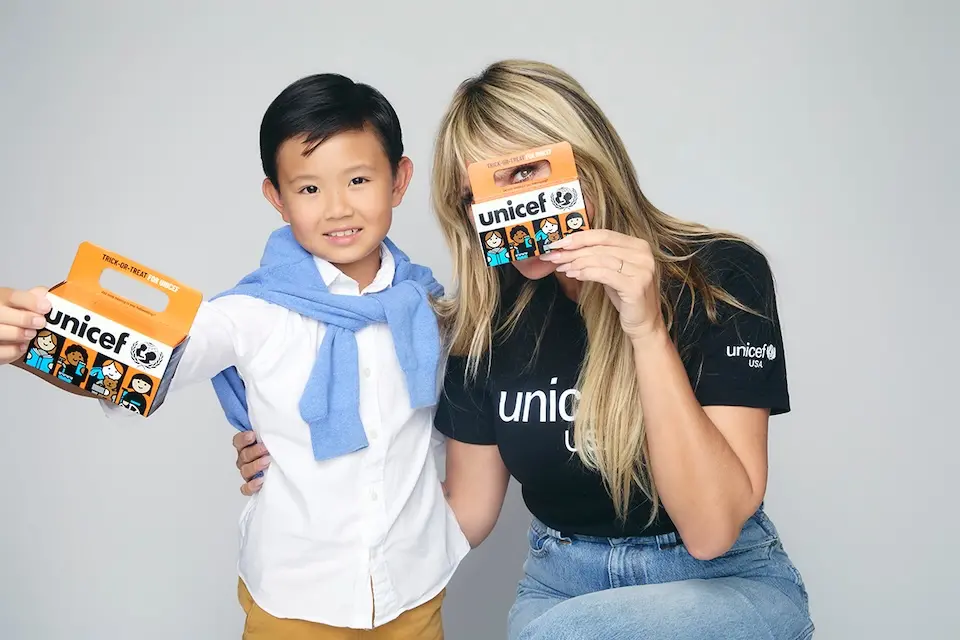
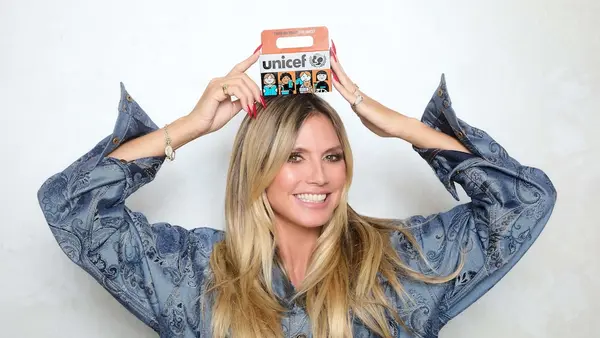
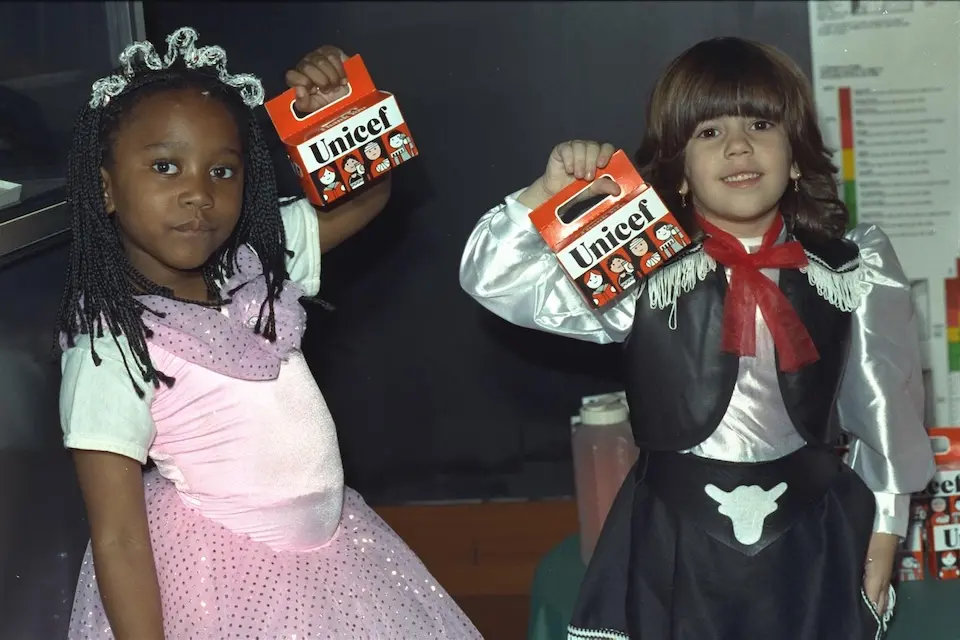
In 2024, the little orange box was re-introduced sporting a vintage look. UNICEF Ambassador Heidi Klum, a UNICEF supporter since 2011, helped generate excitement, earning her the title "Queen of Halloween."
In 2025 Klum brought her spirit and imagination to the campaign again, marking its 75th anniversary by spotlighting how children can turn Halloween — and the entire month of October — into a force for good.
Where do Trick-or-Treat donations go?
Trick-or-Treat for UNICEF donations go to critical, flexible funding that can be used to help children when and where they need it most. UNICEF leverages these core resources to deliver essentials like safe water, education and vaccinations against deadly childhood diseases. Trick-or-Treat donations also support UNICEF emergency response.
Today, children's needs have never been greater or more urgent. With severe cuts to public funding, support for UNICEF's programs has become more critical than ever.
With Trick-or-Treat 2026, parents, grandparents and other caregivers will once again have the chance to show children that even small contributions can add up to real change.
Read about how UNICEF delivered for children in 2025
Continuing the Trick-or-Treat legacy going forward
There are many ways to participate in Trick-or-Treat for UNICEF, and it's easy to give and invite others through peer-to-peer fundraising.
Visit TrickorTreatforUNICEF.org to order free boxes, learn how to start a fundraiser and sign up for impact reports.
Read our What UNICEF Does page to learn more about ongoing efforts to ensure children are healthy, educated, protected and respected.
Rediscover the generosity and optimism of childhood. Support UNICEF's work to help children when and where they need it most. Trick-or-Treat for UNICEF in 2026
HOW TO HELP
There are many ways to make a difference
War, famine, poverty, natural disasters — threats to the world's children keep coming. But UNICEF won't stop working to keep children healthy and safe.
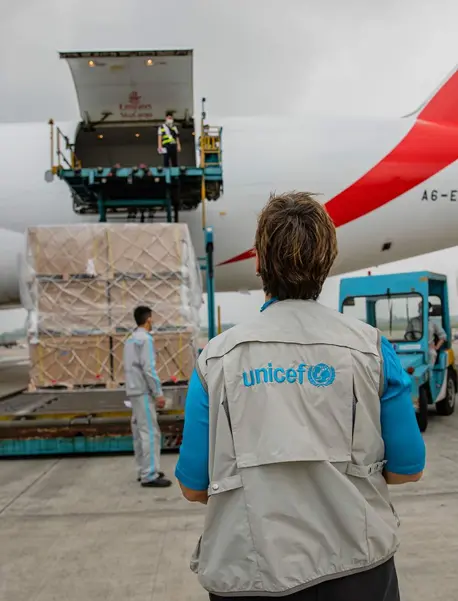
UNICEF works in over 190 countries and territories — more places than any other children's organization. UNICEF has the world's largest humanitarian warehouse and, when disaster strikes, can get supplies almost anywhere within 72 hours. Constantly innovating, always advocating for a better world for children, UNICEF works to ensure that every child can grow up healthy, educated, protected and respected.
Would you like to help give all children the opportunity to reach their full potential? There are many ways to get involved.