Afghan Dreamer: Somaya Faruqi's Journey from Robotics to Global Advocate
Afghanistan is the only country in the world that bans girls from attending school beyond the primary level. Education advocate Somaya Faruqi is working with Education Cannot Wait and UNICEF to protect every girl's right to learn.
The right to education is non-negotiable
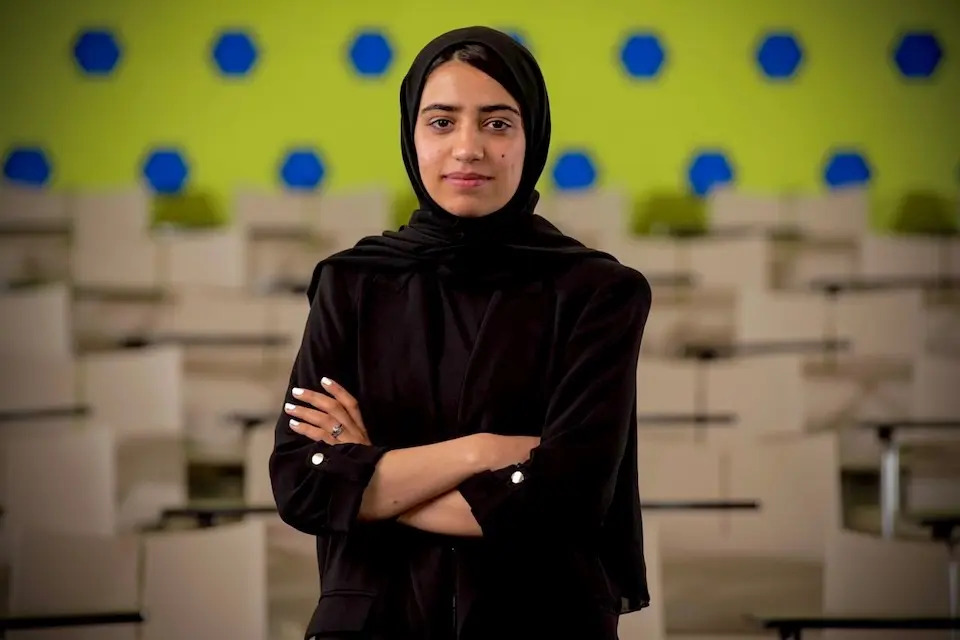
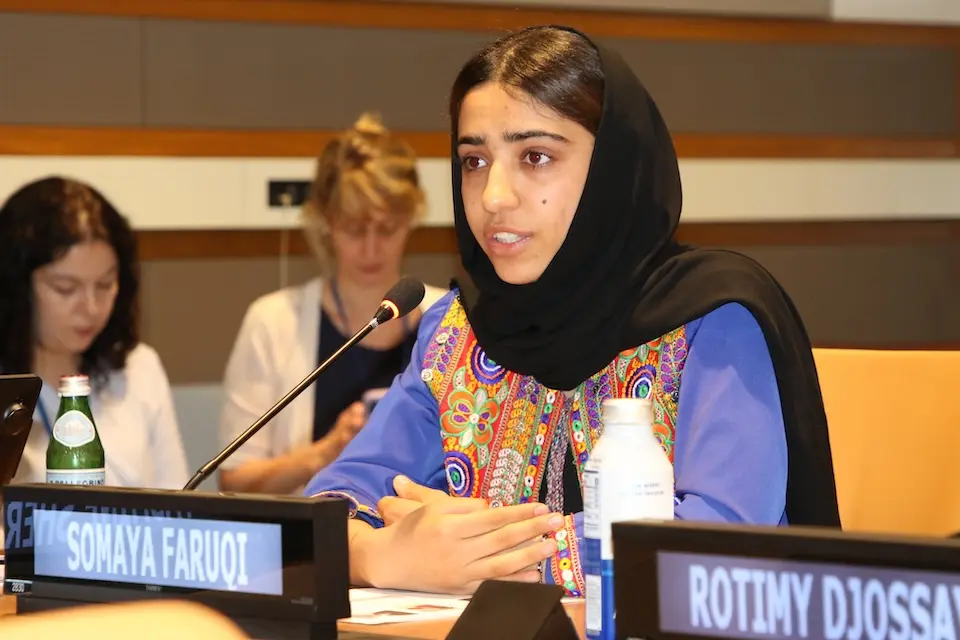
In her father's mechanic shop in Herat, Afghanistan, 7-year-old Somaya Faruqi found her calling. It was a bold dream for any Afghan girl — to learn about science, technology, engineering and math. It was a dream to break free, a dream that has united a global movement to let Afghan girls learn.
“I was only allowed to work in my dad’s shop on Fridays, when there were no men," says Somaya, now 23. "There, I learned to fix engines, to take things apart and, most importantly, how to put them back together again."
I was only allowed to work in my dad's shop on Fridays, when there were no men. There, I learned to fix engines, to take things apart and, most importantly, how to put them back together again. — Somaya Faruqi
By 17, Somaya had taken the lessons she learned in her dad’s shop to become the captain of the Afghan Girls Robotics Team. They called themselves the Afghan Dreamers. Their story, made famous by the breakout movie Rule Breakers, is one of courage, perseverance and the vast potential of the human spirit.
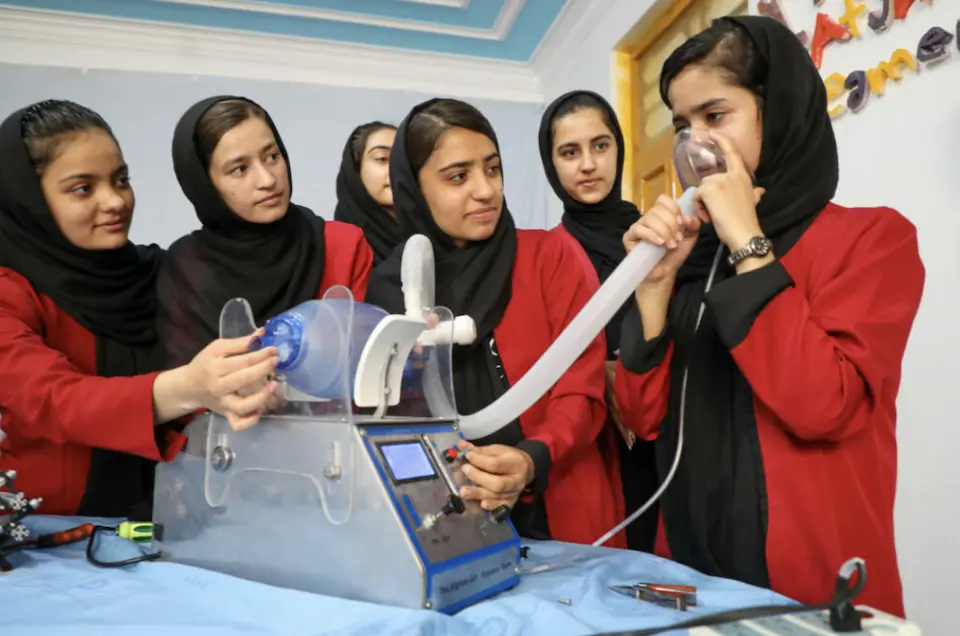
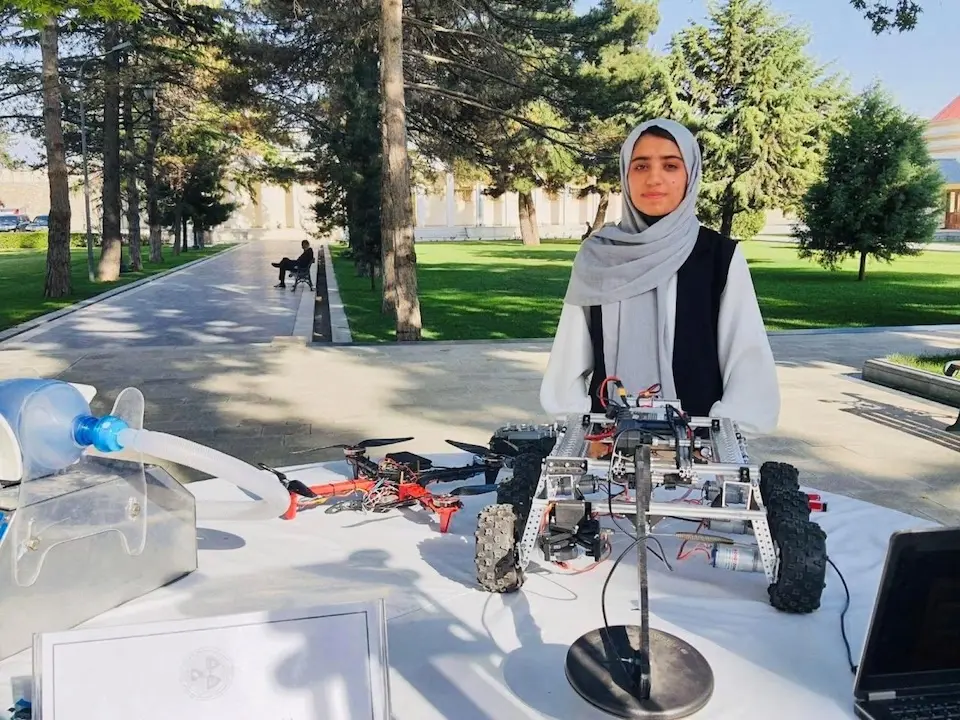
For several years, the team competed in competitions across the world, turning heads and changing minds as they worked long hours to develop cutting-edge robots built to solve some of the world’s most pressing problems. One robot was designed to detect landmines. They even made a COVID ventilator from used car parts.
“As a girl growing up in Afghanistan, I faced deeply entrenched gender inequalities," Somaya says. "But with an education, I was able to break through those norms and chase my dreams."
As a girl growing up in Afghanistan, I faced deeply entrenched gender inequalities. But with an education, I was able to break through those norms and chase my dreams.
When the Taliban took control of Afghanistan in August 2021, Somaya and her teammates rushed to evacuate. Several made it out, but not all. Somaya was among the lucky ones, fleeing first to Qatar and then to the United States, where she is now pursuing an engineering degree.
But she will never forget her friends and former classmates, and all the girls in Afghanistan who have not had the same opportunities she's had. Through her ongoing advocacy as a global champion for Education Cannot Wait — a global multilateral fund hosted by UNICEF that focuses on supporting the lifeline of a quality education for girls and boys trapped in the world’s most severe crises — Somaya is using her celebrity as a tool for good.
Related: Protecting Girls in Afghanistan
Girls' education in Afghanistan is under siege
More than 2.2 million girls in Afghanistan are currently banned from attending school beyond primary school, according to UNESCO. Recent analysis from UNICEF indicates that up to 7 million children are now out of school in Afghanistan due to the ban and other constraints.
The impact on the Afghan people is enormous. In a nation where 85 percent of the population lives on less than $1 a day, the ban could result in a total loss of $1.5 billion to GDP by 2030 and $9.6 billion by 2066, according to UNESCO.
Learn more about UNICEF's work for children in Afghanistan
Together, we can make a difference
With the backing and support of UNICEF and other global partners, Education Cannot Wait’s investments in Afghanistan have already reached close to 300,000 children with the safety, hope and opportunity of a quality education. Fifty-four percent are girls.
With over $90 million in investments, ECW’s local delivery partners have managed to sustainably expand girls’ access to education by further scaling up community-based education in remote and underserved areas. These partners are also rolling out tailored accelerated learning programs for adolescent girls unable to access the formal education system.
Gender-responsive strategies are boosting girls’ education. For instance, through one ECW investment delivered by Save the Children and the Aga Khan Foundation in partnership with local NGOs, girls enrollment and retention increased, with nearly 19,500 girls remaining enrolled in primary education compared to about 13,000 boys — up from nearly 15,400 girls in 2023, according to ECW’s Annual Results Report.
Online pilot programs are also seeing strong success. Built through ECW investments in Afghanistan, an online pilot program for out-of-school girls aged 14–18 led to significant gains in confidence (from 38 percent to 83 percent), emotional well-being (93 percent), leadership and motivation. By the end of the program, 84 percent of participants had applied for income-generating opportunities and 81 percent had developed personal future development plans.
Paving the way for meaningful change for girls in Afghanistan
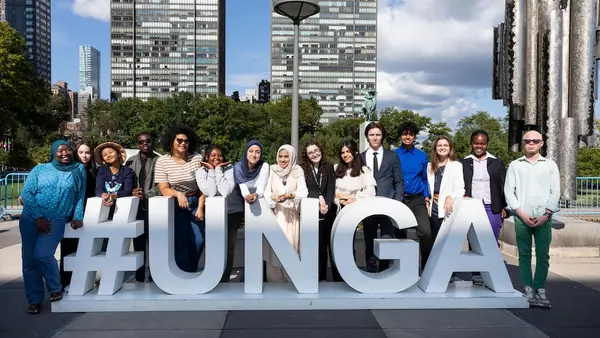
These are small steps that are helping to pave the way for meaningful change for girls in Afghanistan. ECW and UNICEF are joining with partners worldwide to continue to press for change in Afghanistan through the #AfghanGirlsVoices global campaign, kicked off by Somaya Faruqi and the UN Special Envoy for Global Education, The Rt. Hon. Gordon Brown.
“We must keep hope alive for the girls of Afghanistan,” Somaya says. “Despite the challenges ahead, the world must not stop calling for an end to the unconscionable ban on girls’ secondary education and oppressive rules that are denying an entire generation of young dreamers their inherent human rights.”
Right now, the lives of the most vulnerable children hang in the balance as conflicts and crises jeopardize the care and protection that they deserve. Dependable, uninterrupted and effective foreign aid is critical to the well-being of millions of children. Please contact your members of Congress and urge them to support ongoing U.S. investments in foreign assistance.
HOW TO HELP
There are many ways to make a difference
War, famine, poverty, natural disasters — threats to the world's children keep coming. But UNICEF won't stop working to keep children healthy and safe.
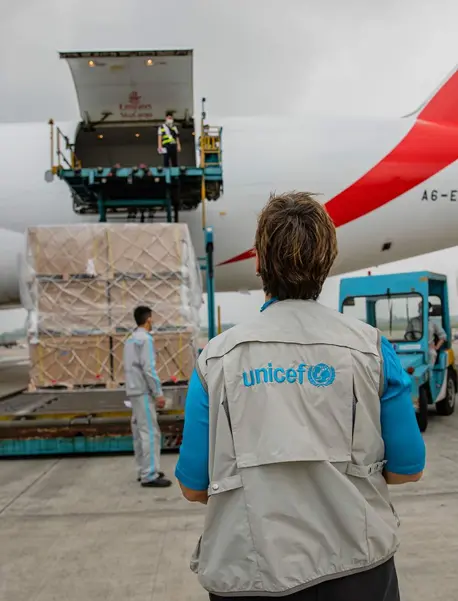
UNICEF works in over 190 countries and territories — more places than any other children's organization. UNICEF has the world's largest humanitarian warehouse and, when disaster strikes, can get supplies almost anywhere within 72 hours. Constantly innovating, always advocating for a better world for children, UNICEF works to ensure that every child can grow up healthy, educated, protected and respected.
Would you like to help give all children the opportunity to reach their full potential? There are many ways to get involved.