
Ebola Virus Outbreak Response
Acute and serious, Ebola virus disease is often fatal if left untreated. When an outbreak occurs, children are especially vulnerable. UNICEF works with partners to strengthen prevention and outbreak response to better protect and support children and families. Learn more about Ebola, symptoms of Ebola virus disease, how outbreaks spread and how to support UNICEF emergency response efforts.
When there's an Ebola outbreak, UNICEF is there
An outbreak of Ebola virus disease of any size is a public health emergency that requires a swift response due to the highly contagious and deadly nature of the disease. Children are especially vulnerable to the impacts of Ebola outbreaks, including disruptions to essential services, loss of parents and caregivers, stigma, psychosocial distress and increased protection risks.
During an Ebola outbreak, children risk losing access to health care, safe water, school and protection services at the very moment they need support most.
On May 17, 2026, the World Health Organization declared the Ebola outbreak in the Democratic Republic of the Congo and Uganda a public health emergency of international concern. UNICEF is supporting emergency outbreak response efforts in both countries while also helping South Sudan and other neighboring nations prepare for possible cross-border transmission. The current outbreak of Ebola virus disease is related to the rare Bundibugyo strain.
UNICEF has successfully managed multiple Ebola responses in DRC and Uganda before, demonstrating that the virus can be contained through strongly community-grounded surveillance, engagement and response — and by leveraging existing humanitarian structures and operations.
Learn more: UNICEF Responds to Ebola Outbreak in DRC and Uganda
How UNICEF responds to Ebola outbreaks to protect children and families
The 2014-2016 Ebola epidemic in West Africa — the worst in history — killed more than 11,000 people in six countries: Guinea, Liberia, Mali, Nigeria, Sierra Leone and the United States. UNICEF played a major role in the response, delivering more than 8,000 metric tons of medical supplies and working with local communities to raise awareness of safe health and hygiene practices.
Other critical tasks included:
- deploying emergency water and sanitation services and support
- leading public information campaigns communicating the risks of the disease and how to prevent its spread
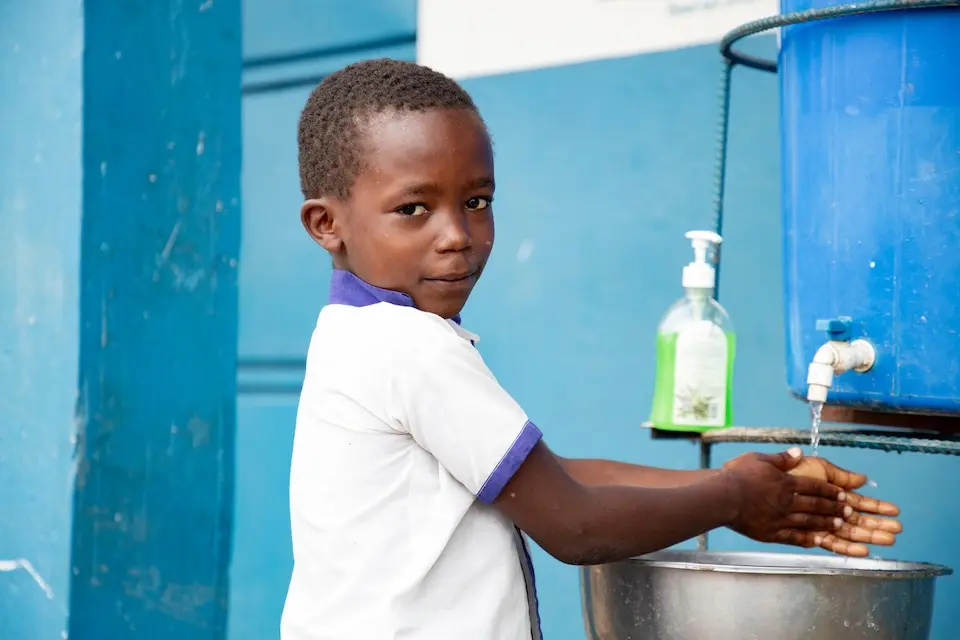
- installing handwashing stations and otherwise supporting schools to ensure environments remain safe for students so kids can keep learning
- addressing myths and misinformation that may be circulating, threatening to undermine the effectiveness of prevention efforts
- providing psychosocial support to assist children and families affected by Ebola
- helping country health systems build resilience to gird against future outbreaks
Ebola resurfaced again in the DRC in May 2018, the beginning of three successive outbreaks, which lasted through November 2020. Again, the response was immediate. UNICEF worked with partners to mobilize teams of specialists on the ground to help contain the spread, support affected children and families and protect children from the consequences. Efforts included setting up nurseries to care for children whose mothers were undergoing treatment.
The epidemic showed how quickly Ebola virus disease can disrupt children, families, schools and health systems, making it clear there was need for additional support.
Some of the systems put into place to fight Ebola helped lay the groundwork for DRC's response during the COVID-19 pandemic and mpox outbreaks.
The most recent outbreak — the 17th one the DRC has faced since the virus was discovered in 1976 — was confirmed on May 15, 2026. UNICEF mobilized emergency supplies and rapid response teams following initial alerts of sudden deaths in communities and health facilities in DRC and Uganda, most of them in DRC's eastern Ituri province. Ongoing emergency efforts are focused on safeguarding frontline workers, children and families.
UNICEF is also collaborating closely with local leaders to reinforce trust, foster collaboration and ensure communities remain central to the response.
Read about UNICEF's response to the Ebola outbreak in DRC and Uganda
Frequently asked questions about Ebola
What is Ebola?
Ebola virus disease, formerly known as Ebola hemorrhagic fever, is a rare but severe and often fatal illness in humans. It was first discovered in 1976 in former Zaire, now DRC, near the Ebola River, by Dr. Peter Piot of Belgium and his colleagues.
The Ebola virus is transmitted to people from wild animals, such as fruit bats, porcupines and non-human primates. Human-to-human transmission is through direct contact with contaminated bodily fluids. The virus is relatively robust and can survive on surfaces and materials contaminated with those fluids, such as bedding and clothing.
What are Ebola symptoms?
Symptoms of Ebola virus disease include fever, severe headache, redness around the eyes, diarrhea, vomiting, abdominal pain, muscle pain, unexplained bleeding or bruising, weakness and fatigue. Symptoms may appear anywhere from 2 to 21 days after contact with the virus, typically within 8 to 10 days.
Early symptoms can resemble malaria and other infectious diseases, making early diagnosis difficult.
Can Ebola be treated?
Ebola disease case fatality rates typically range from 25 to 50 percent but can be as high as 90 percent in an outbreak. Early intervention significantly improves the chances of a patient's survival.
Who is most at risk for getting Ebola?
Children are at a higher risk of dying from Ebola than adults. One in 10 Ebola cases is under the age of 5. For most people, the risk of getting Ebola is low. The risk increases if you travel to Africa or visit or work in areas where Ebola virus outbreaks have occurred. While not always a pandemic, Ebola outbreaks can still have serious impacts on children, families and communities.
Is there an Ebola vaccine?
There is a vaccine that protects against the Zaire strain of Ebola virus, the ERVEBO, developed by Merck with funding from the U.S. government. The injectable single-dose vaccine is approved for people 12 months of age and older.
A vaccine to protect against Ebola virus disease caused by the Bundibugyo strain is still under development and is not yet available.
UNICEF — in partnership with the World Health Organization, the International Federation of Red Cross and Red Crescent Societies and Médecins Sans Frontières and with support from Gavi, the Vaccine Alliance — helped establish a global Ebola vaccine stockpile in January 2021 to support rapid response to outbreaks. Prior to the vaccine’s licensing, WHO authorized its compassionate use.
UNICEF helps manage the global stockpile and can ship vaccines from its supply hubs within 48 hours.
Because cases are relatively rare and unpredictable, a stockpile of Ebola vaccines is maintained for emergency outbreak response and is primarily used in a “ring vaccination” strategy — vaccinating people at highest risk of infection, including health workers, frontline responders, and people who have been in contact with a confirmed Ebola patient, such as family members, neighbors and caregivers.
Learn more about how UNICEF supports children's health.
TOP PHOTO: A student washes her hands outside Elikya primary school in Mbandaka, DRC. A critical part of UNICEF's response in the event of an outbreak of Ebola or other highly contagious disease is to make sure schools have handwashing stations and other hygiene supplies available to students. © UNICEF/UN0367575/Tremeau