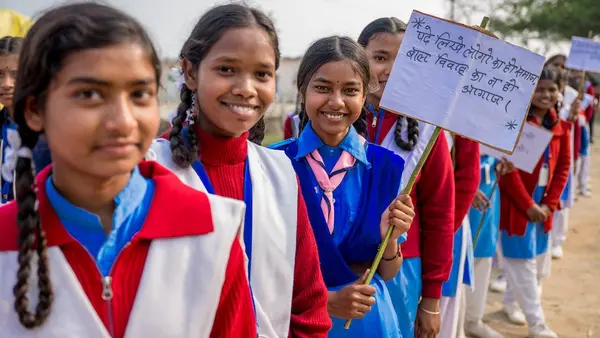
Redefining Philanthropy: UNICEF USA's Young Professionals Network
Highlights
- UNICEF USA's inaugural Young Professionals Network (YPN) brought together 32 emerging leaders aged 22–27 for a six-month leadership experience designed to help young adults connect their careers with meaningful social impact.
- Through research, mentorship and collaborative projects, participants explored how UNICEF can better engage Gen Z in philanthropy, advocacy and purpose-driven action.
- Across teams, the cohort developed practical recommendations centered on transparency, storytelling, community and lifelong engagement.
UNICEF USA's Young Professionals Network offers a research and advocacy training ground for young adults looking to explore meaningful ways to support UNICEF's mission that go beyond financial giving. Participants in the inaugural 2026 session share what they learned.
Seeking purpose beyond work, and ways to support causes beyond writing a check
For many recent grads, philanthropy isn't exactly top of mind. While entering the workforce has always been, to some degree, disheartening, nowadays, it seems that even good-intended career advice from older generations is way past its sell-by date.
On top of that, the things that anchored them before — like being part of their UNICEF Club community — often no longer have a place in this new infrastructure they find themselves in.
And while many young adults seek purpose beyond their work, just as they did in college, engaging with the causes they care about often can feel tied to financial giving, leaving them unsure of where they fit in.
Young professionals offering their ideas and time is itself an act of giving — and one that nonprofits need more then ever.
Impact, however, takes many forms. Young professionals offering their ideas and time is itself an act of giving — and one that nonprofits need more then ever. This kind of engagement often lasts a lifetime. A recent CCS Fundraising study found that alumni who give within five years of graduating are ten times more likely to give for life.
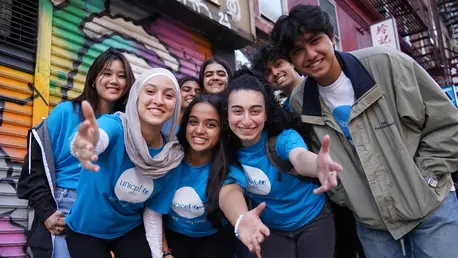
That’s where UNICEF USA’s Young Professionals Network (YPN) comes in. The first-of-its-kind, six-month leadership experience was created for under-30 adults — former Youth Leaders and UNICEF Club members as well as newcomers drawn to UNICEF's mission.
Through workshops, mentorship and small community groups, the inaugural cohort of 32 participants were given a framework for exploring some of the questions that often come up in early adulthood: What kind of leader do I want to be? What is my purpose? How do I align my talents with the impact I want to make?
Members were divided into three groups with two teams in each. Over six months, the different teams worked together to devise some creative and actionable ways for organizations like UNICEF to engage the next generation of supporters.
Over six months, the different teams worked together to devise some creative and actionable ways for organizations like UNICEF to engage the next generation of supporters.
“What made my YPN experience especially meaningful to me was the opportunity to learn from people across a wide range of professions and life experiences who all share a commitment to UNICEF's mission," said Alice Wu, a member of YPN Advocacy Team B who is also a former UNICEF Club Member and current UNICEF NextGen member.
Here is a recap of what they studied and some of the lessons learned.

The Impact Group
Team A challenge question: How do you build a generation of people who don't just give once, but give for life?
Participants: Sofi Pizarro, Ana Flood, Justin Lim
Impact Group Team A set out to study the landscape of youth philanthropy across various organizations, including their own universities, to return with a list of recommendations for UNICEF USA. As participant Justin Lim noted, “Our research took us from globally scaled operations similar to UNICEF all the way down to county-level government programs that guide local high schoolers in the philanthropic life cycle.”
One of the schools they looked at was Justin’s alma mater, Stanford University. According to data from Stanford's Social Innovation Review, while overall charitable giving has increased, just 3 percent of donors account for nearly 78 percent of all charitable dollars.
In contrast, the number of small- and mid-level donors, often those with strong social capital, is shrinking. A very simplified version of their conclusion: the best way to reverse this trend and boost retention is to get people engaged earlier and to be transparent about how each contribution, regardless of amount, is used and how effectively. And community fundraising toolkits should be updated regularly to reach newer, more diverse audiences.
"It feels truly heartwarming to meet so many other individuals like myself whose lives have been touched by working with UNICEF," said Justin Lim, 23, a member of YPN Impact Team A and former UNICEF National Youth Council Member. "To collaborate with those same people and give back through this network has been an unforgettable experience."
Team B challenge question: How do you make philanthropy feel purposeful?
Participants: Ava Cohn, Kavi Shrestha, Isabella Walters, Lily Luu, Olivia Giovenco
Setting out to build practical tools that lower the barrier to giving, Team B created a guide to help parents and caregivers who are donors introduce philanthropy to children.
Because individuals tend to engage with giving differently at different stages of life, the guide provides a starting point for different kinds of conversations, offering real-life examples tailored by age, be it 5, 15 or 25. Covering UNICEF's core program areas, the guide also gives families concrete ways to connect those issues to their everyday lives, to help children better understand what reality can look like for other children around the world.
"This experience opened our eyes to how comprehensive the field of philanthropy can be," said Kavi Shrestha, a member of YPN Impact Team B. "It is more than simply writing a check, and its impact is even greater when involving people from all backgrounds and age groups."
The Purpose Group
Team A challenge question: How do you inspire people to care before a crisis makes headlines?
Participants: Angelique Nguyen, Charlene Lam, Jasmine Samontina, Kyle King, Lauren Richner
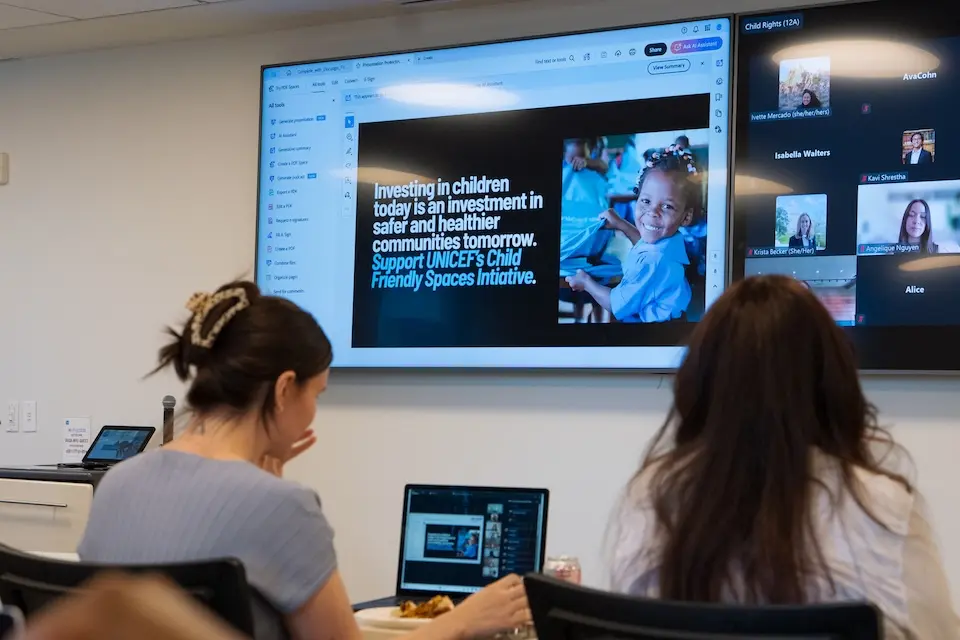
To explore the why behind Gen Z's giving, Team A of the Purpose Group turned its attention to UNICEF's child-friendly spaces. In the middle of a humanitarian crisis, these spaces provide vulnerable children with a safe setting for playing, learning and receiving mental health and psychosocial support — in short, spaces where they can be kids. UNICEF constructed temporary housing shelters and child-friendly spaces after a devastating earthquake hit Türkiye in 2023, to name just one example.
And even though their own circumstances were very different, many of Team A’s members found the research findings resonated with them personally. For many, while growing up, school had been the place where they felt most safe and supported. As they learned, chronic stress physically alters a child's brain and endocrine system, raising the risk of lifelong emotional dysregulation. Programs implemented at child-friendly spaces actively interrupt that process.
Group A concluded their research by recommending that instead of reserving major fundraising pushes solely for emergencies, governments and public-sector donors should lead with these granular stories of how UNICEF shows up for children every day. These stories help create a more personal connection with audiences, and work better than relying solely on the urgency of a crisis to drive an emotional response, the team found. Leveraging stories to communicate impact could help shrink the funding gap among younger donors.
"We used our CliftonStrengths to intentionally assign tasks to one another, and because of this, we were not only able to create a policy brief but a digital deck," said Jasmine Samontina, a member of YPN Purpose Team A and a former UNICEF Club President. "It was interesting to see how each person’s unique strengths contributed to different aspects of such an ambitious project. I am incredibly proud of what we were able to accomplish together! I will definitely be using this moving forward in my career.”
Team B challenge question: How can philanthropy be infused with a sense of purpose?
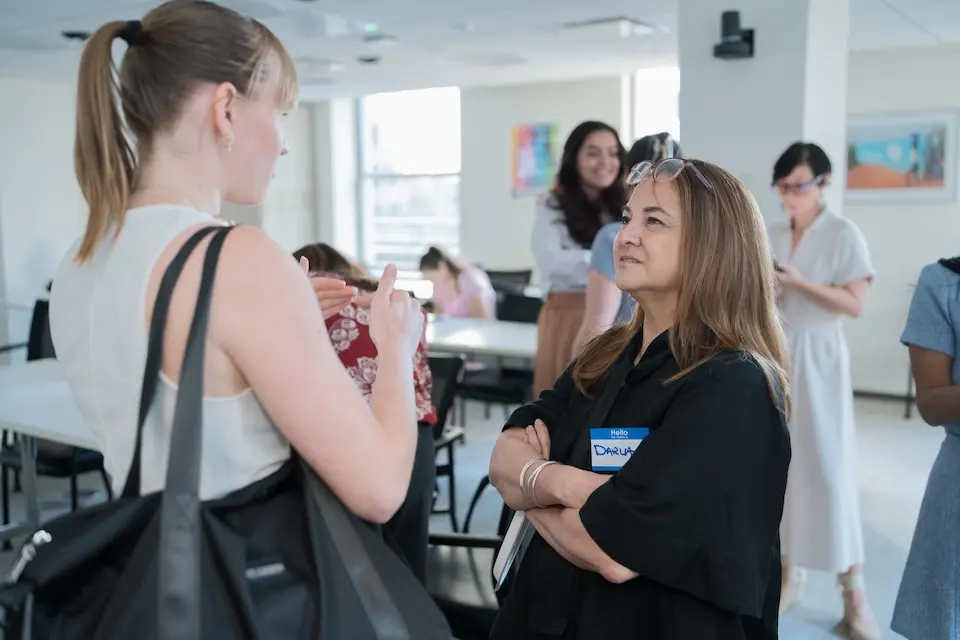
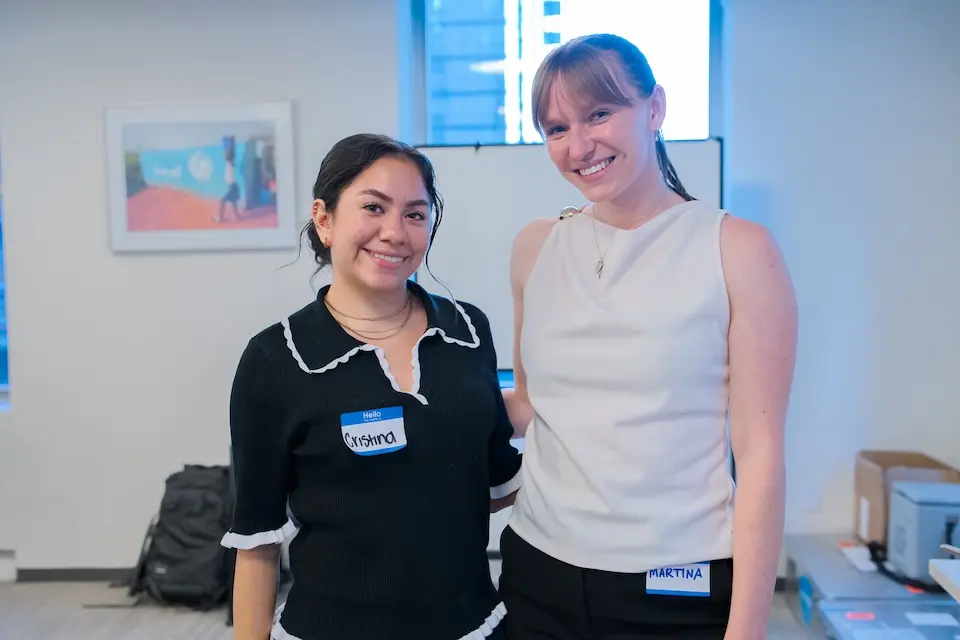
Participants: Cristina Villena, Martina Croce, Djenabou Barry, Henry Goldberg, Kashish Kumar
Building on Team A's topic, Team B of the Purpose Group explored how issues affecting children in the United States and globally could strengthen UNICEF’s narrative with Gen Z. They found that purpose in philanthropy is created by closing the gap between lived experiences on the ground and how those realities are understood by younger audiences.
Focusing specifically on children on the move, the team spoke with Rhonda Fleischer, a Program Specialist with UNICEF's Migration and Displaced Children unit, who emphasized that, regardless of where they are in the world, children on the move face many of the same challenges: disrupted education, family separation and increased risk of violence and exploitation.
The team then wanted to find the way that would be most effective in getting Gen Z to listen. Unsurprisingly, the answer was stories. Like Team A, they discovered the importance of showing UNICEF’s impact over time, following individual children’s journeys to illustrate how support is actively helping shape their futures. According to their research, in doing so, UNICEF can help audiences better see the lasting difference that support can make.
“The Young Professionals Network has reminded me of the importance of community and the power of standing together regardless of age, financial capacity, or experience," said Djenabou Barry, a member of YPN Purpose Team B. "I’m encouraged by my peers who — though we may not always feel equipped — continue to show up in challenging spaces ready not only to learn, but also to challenge systems and advocate for improving the lives of children around the world.”
The Advocacy Group
Team A challenge question: What kind of social media content actually inspires Gen Z to take action?
Participants: Elijah Warren, Safiro Kosaenu, Sara El Mir, Kesiena Lesso, William Tantribeau
While the Impact and Purpose Groups explored why and how young people give, the Advocacy Group focused on where to reach Gen Z and what would inspire them to take action, discovering that transparency in all communication is key.
Team A set out to find the type of content that, rather than scrolling past, would get someone to respond to a post. Their envisioned solution was to make UNICEF's impact feel personal. Rather than just saying UNICEF provides emergency education, they imagined a short video following a teenager before and after accessing a UNICEF-supported learning space.
“My first exposure to UNICEF was fundraising for Trick-or-Treat for UNICEF in high school," said Charlene Lam, member of YPN Purpose Team A. "I still remember standing outside in the classic Pacific Northwest rain with a huge smile on my face, realizing for the first time that my voice could make a difference. Years later, this project feels like a profound, full-circle moment. It has elevated my approach from grassroots fundraising to strategic advocacy, showing me how to turn my passion into systemic impact."
Team B challenge question: Where does my money actually go?
Participants: Alice Wu, Serena Ye, Elizabeth Todor, Raissa Mascarenhas, Jane Park-Stettner, Keala Samms
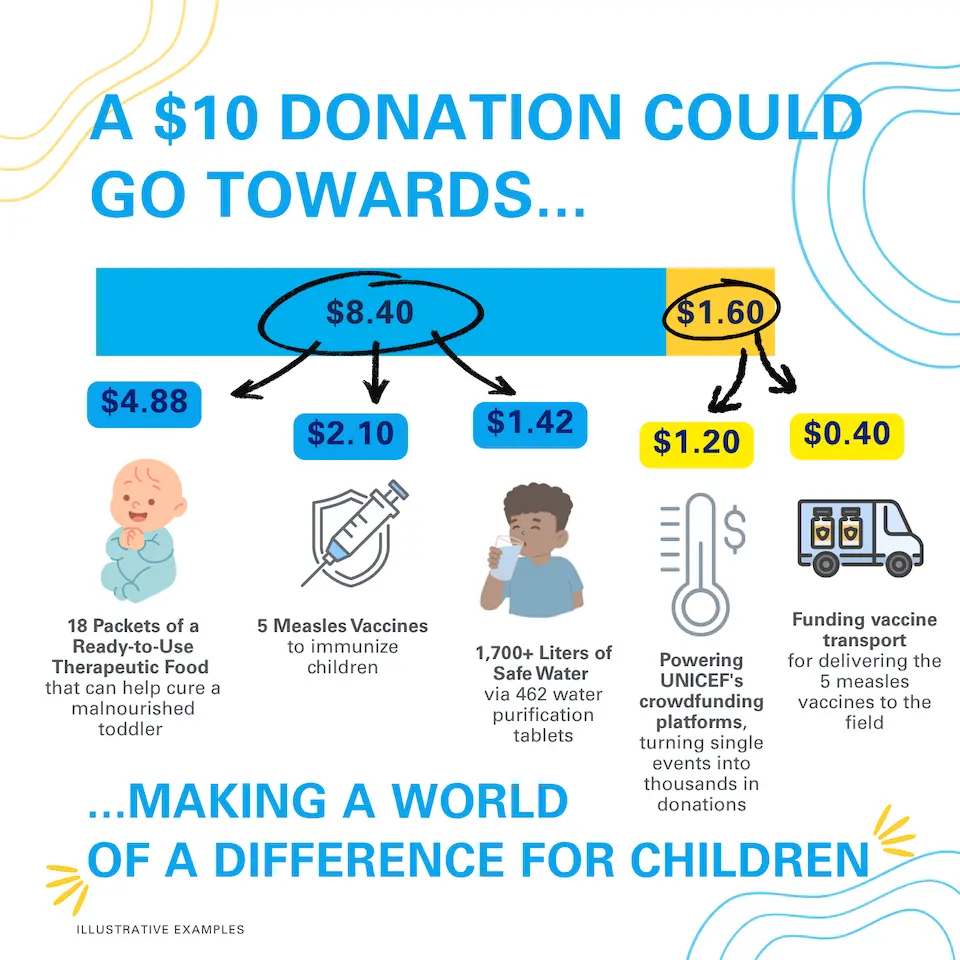
Seeking to answer their challenge question with tangible information, Team B designed graphics that break down the exact impact of a donation.
For example, a $10 gift could provide 18 packets of lifesaving ready-to-use therapeutic food for a malnourished child. It could fund five measles vaccines. It could deliver over 1,700 liters of safe water through purification tablets. It could also support the systems that get these resources to children who need them most.
A clear graphic, the team found, eliminates fluff and helps young people see where their funds are going. Gen Z wants content that feels real, like a real person is speaking to them, instead of a brand. In other words, show, don’t tell.
"UNICEF Clubs and NextGen helped me build community and deepen my involvement with UNICEF alongside peers at similar stages in life and YPN showed me how my passion for UNICEF can evolve alongside a career," Advocacy Team B member Alice Wu said.
"As a YPN cohort member, I was introduced to living examples of how advocacy and service don’t have to be separate from professional life," Wu added. "This experience showed me that supporting UNICEF can shape not only who you are personally, but also how you contribute professionally.”
Philanthropy on their own terms
If there was one lesson that emerged across every YPN Group project, it’s that Gen Z is eager to keep advocating for the causes they care about, even as they graduate into a rapidly changing world.
They’re drawn to philanthropy, just on their own terms. They’re looking to understand the impact of their actions, contribute their unique talents, and do so as part of a community.
Time and again, this cohort reminded us that when Gen Z is genuinely invited to help shape something new, they don't just show up. They show the rest of us how it's done.
Learn more about how to get involved in UNICEF USA to help support children globally
HOW TO HELP
There are many ways to make a difference
War, famine, poverty, natural disasters — threats to the world's children keep coming. But UNICEF won't stop working to keep children healthy and safe.
UNICEF works in over 190 countries and territories — more places than any other children's organization. UNICEF has the world's largest humanitarian warehouse and, when disaster strikes, can get supplies almost anywhere within 72 hours. Constantly innovating, always advocating for a better world for children, UNICEF works to ensure that every child can grow up healthy, educated, protected and respected.
Would you like to help give all children the opportunity to reach their full potential? There are many ways to get involved.