A Lifeline to Education for Children in Syria
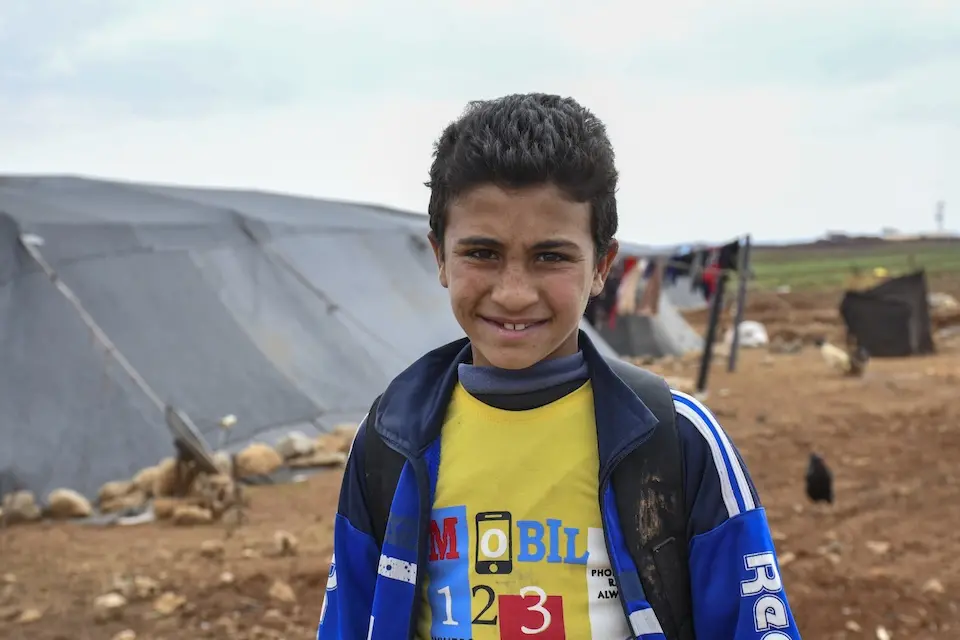
As a nation rebuilds from the ashes of war, 13-year-old Mohamed is a symbol of hope and endurance. Through an innovative program delivered by UNICEF with funding from Education Cannot Wait, hundreds of thousands of girls and boys impacted by conflict, forced displacement, natural disasters, cholera outbreaks and other emergencies are finally able to access quality education.
It happened in an instant. One morning six years ago, a young boy named Mohamed set out with his father to work in the fields in the province of Dar’a, Syria. It was a day like any other.
“I was busy with the harvest,” says Mohamed’s father Darweesh. “I didn’t notice that Mohamed wandered off to the roadside.”
The boy had found a little box beside the road. Thinking it was a toy, he picked it up. Then came the blast. This was no toy. It was a weapon of Syria’s civil war, a conflict that resulted in countless civilian deaths and the displacement of millions of people, including Mohamed and his family, who had fled from their home in Shahba City when the bombing became too intense.
Mohamed lost part of his right arm in the blast, along with several fingers on his left hand, yet another innocent victim of a brutal civil war.
Related: UNICEF in Syria: Responding to Emergencies, Supporting Recovery
Every child has the right to a quality education
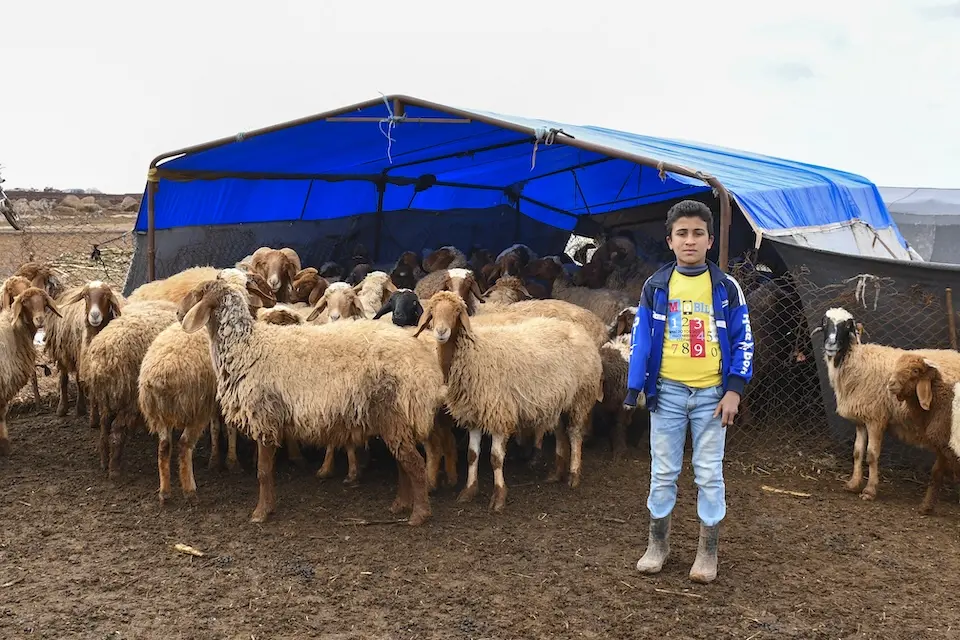
The war cut short Mohamed's childhood — and his hope for the future. Life in the camp for the displaced was scary and hard. Water was scarce, electricity was unreliable and the thin tent walls did little to insulate against the brutal heat of the summer and cold of the winter.
As they sat in their tent, Darweesh saw his son tracing letters in the dirt with his fingers. He made a decision: if school was out of reach, he would bring learning home.
“The nearest school is an hour's walk away. It was just too dangerous to send children alone on that road,” Darweesh says. “I always felt guilty that he was missing out on school. So, I did what I could — I taught him the basics, the Arabic letters and numbers.”
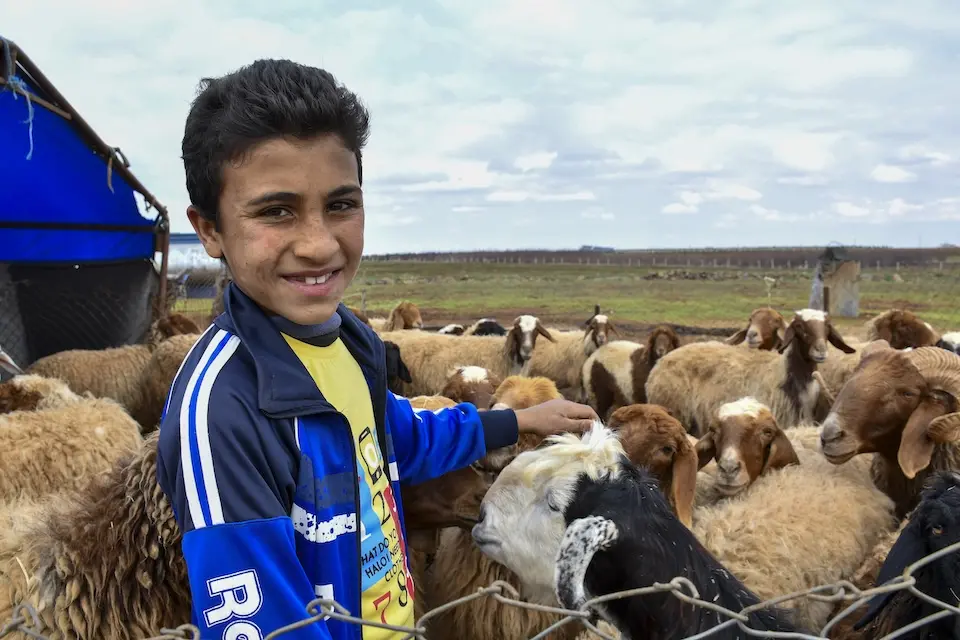
During the day, Mohamed would head out to tend their small flock of sheep. At night, he would study with his father.
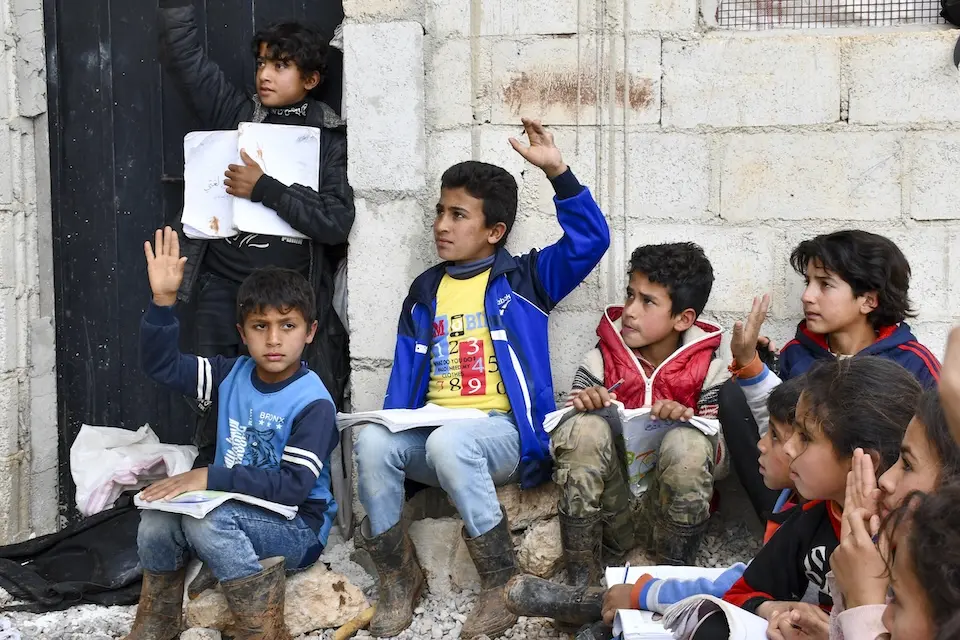
An innovative self-learning program delivered by UNICEF with funding from ECW
No child should be left behind. Without the lifeline of a quality education, Mohamed had lost his rights to learn, to grow and to dream. That all changed a year ago, when Mohamed — now a rambunctious 13-year-old — was able to enter an innovative self-learning program delivered by UNICEF with funding from Education Cannot Wait (ECW), the global fund for education in emergencies and protracted crises hosted by UNICEF.
Since inception, ECW’s total investments in Syria — delivered across a broad consortium of partners including UNICEF, Save the Children, the Norwegian Refugee Council and local partners — have reached a total of 657,527 children, including 321,814 girls. About half of the children reached (46 percent) are internally displaced children like Mohamed. To enhance the quality of education, approximately 133,000 children have received learning materials, and around 10,000 teachers have received training.
“When I heard the news, I was overwhelmed,” Mohamed says. “Finally, I had a chance to catch up. I made a schedule — morning lessons first, then herding the sheep. Before dark, I would spend two hours reviewing my lessons and doing my homework.”
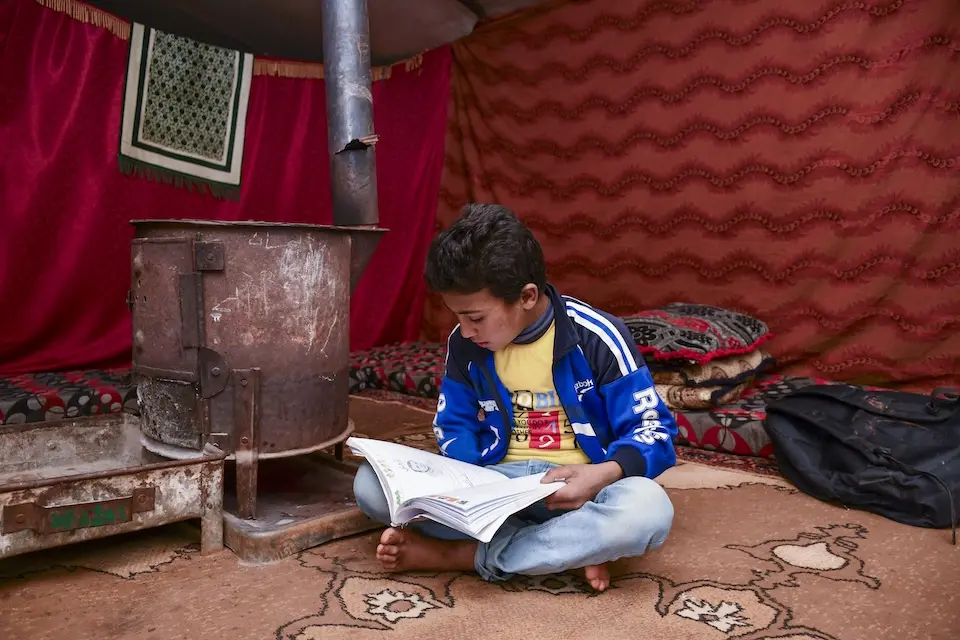
Through the program, Mohammed is back to the safety and hope of an education. He is finally able to dream, and finally able to find his place in the world.
“I always felt inferior,” says Mohamed. “I thought I was not as good as [other children]. But today, I felt that gap disappear. In my last exam, I even scored higher than some of my classmates.”
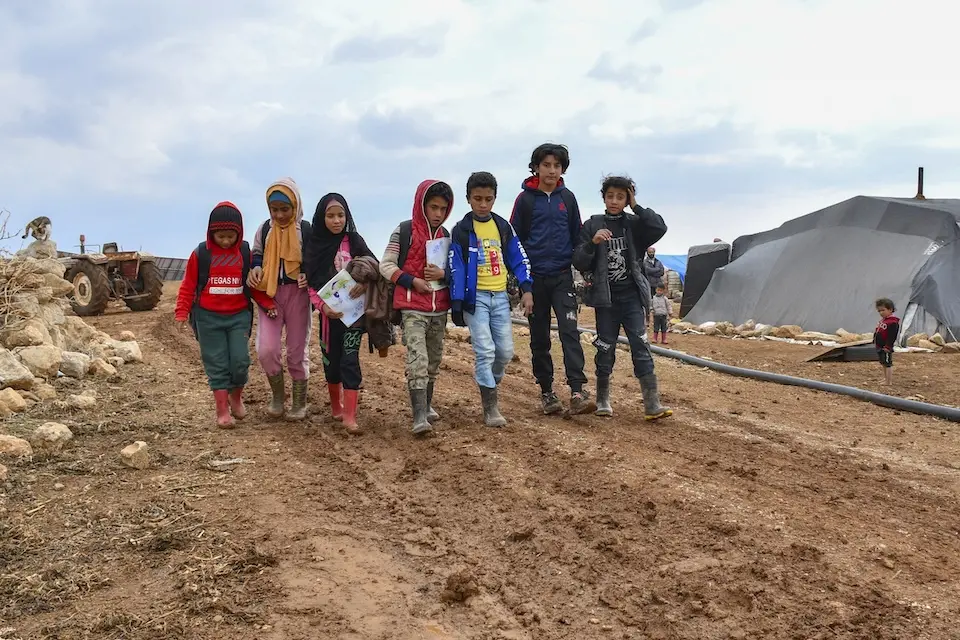
As he continues his learning journey, Mohamed is not just a student, he is also a teacher. Every evening, he patiently sits with his younger brothers, guiding them through the Arabic alphabet and helping them prepare for the school days ahead.
The war has come to a close, and a tenuous peace is extending across Syria. But with over 7,000 schools damaged or destroyed, ongoing flare-ups, economic instability and an estimated 2 million children out of school, the work to rebuild has only just begun.
Learn more about how UNICEF supports children in Syria
How to help children in Syria
To reach more children like Mohamed, ECW and UNICEF are calling for expanded support for ECW’s investments in Syria and beyond. These investments provide children with a lifeline in a world filled with uncertainty. They are an investment in peace, an investment in economic resilience and an investment in a better world for generations to come.
HOW TO HELP
There are many ways to make a difference
War, famine, poverty, natural disasters — threats to the world's children keep coming. But UNICEF won't stop working to keep children healthy and safe.
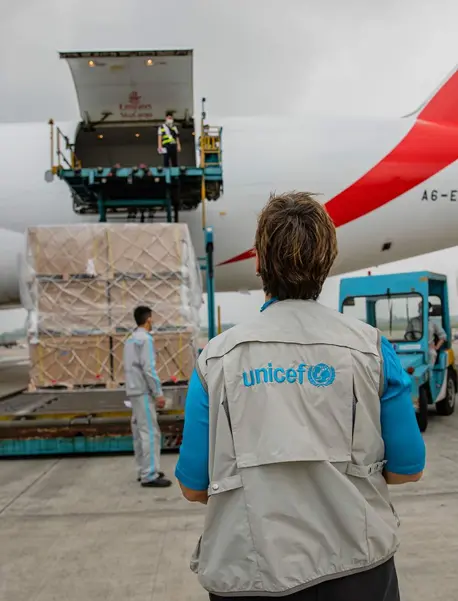
UNICEF works in over 190 countries and territories — more places than any other children's organization. UNICEF has the world's largest humanitarian warehouse and, when disaster strikes, can get supplies almost anywhere within 72 hours. Constantly innovating, always advocating for a better world for children, UNICEF works to ensure that every child can grow up healthy, educated, protected and respected.
Would you like to help give all children the opportunity to reach their full potential? There are many ways to get involved.