How to Talk to Your Children About Their Feelings and Experiences Related to Immigration Enforcement Actions
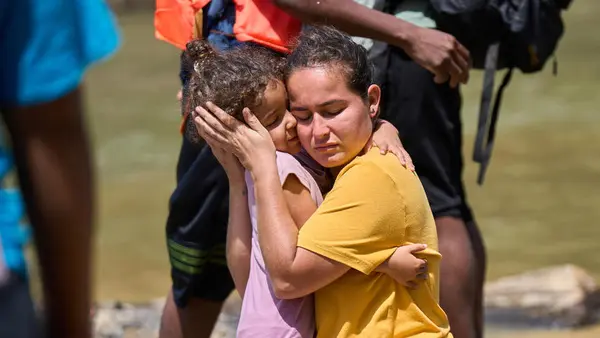
The increase in immigration enforcement activities in and around schools, hospitals and other community centers has left many children across the U.S. frightened, confused or with unanswered questions. Whether children are exposed on a TV screen or up close in their own community, here are some tips on how to talk to kids and engage their questions.
Every child has the right to a safe and healthy childhood
Children move across borders for complex reasons — conflict, poverty, family reunification and protection needs are often factors.
For decades, UNICEF has worked with government partners and other stakeholders around the world to strengthen child protection systems and reception processes, scale up family- and community-based care and facilitate cross-border case management and child-sensitive return and reintegration.
With a growing number of children in the U.S. caught up in or exposed to immigration enforcement actions — directly or indirectly — parents across the country are left wondering how to talk with their children about what's going on.
In uncertain times, finding the right words to say to a child can be difficult. Here's some guidance for parents on how to help children cope, and how to find hope — even under very challenging circumstances.
How can I help my child process what they may be hearing or seeing in the news?
Check in on your children in an age-appropriate way and give them space to share their thoughts and feelings. Choose a time and place when you can bring it up naturally and your child is more likely to feel comfortable talking freely, such as during a family meal. Ask open-ended questions. Try to avoid talking about the topic just before bedtime.
For older children, ask them about what they may have seen or heard. Use this opportunity to reassure them and to potentially correct any inaccurate information they may have come across online, on TV, at school or from friends. If you don't know the answer to a question they have, look it up together, using reputable news sources.
How can I help my kids handle their fears?
Let them know that fear is a normal reaction when something changes or there's a risk of danger. It's also normal to feel sad or worried.
"Children pick up on emotional cues, whether it’s through body language or facial expressions, so try to keep as calm as possible and speak to your children in a reassuring way," says UNICEF’s child psychology and mental health expert Dr. Marcia Brophy. "It is okay to share that you are feeling scared too. This helps your child to understand that you are both going through this together."
How can I tell if my child is distressed?
Distress can manifest in many ways in children: restlessness, irritability, fatigue, nightmares, grief. Children may sleep or eat too much, or too little; they may feel nauseous, fidgety or short of breath.
Ask your child to observe their feelings, and explore them together with you. What are they feeling? How long does it last? Understanding feelings of distress can make those feelings easier to manage.
What are some ways to help children stay calm?
Children find comfort in the familiar, so try to stick to a routine when it's possible. Eating regular meals and going to bed at the same time helps children stay connected to the patterns of their daily life, even when the world around them is changing.
Try deep breathing together with your older children: take five deep belly breaths, spending five seconds breathing in and five seconds breathing out, breathing in through your nose and out through your mouth. If you have a younger child, make it into a game: Every hour on the hour, breathe together and see how you can calm your mind and body by slowing down your breathing.
If you are feeling overwhelmed, try giving yourself a 10-second pause and, if possible, find a trusted adult that you can speak to about how you are feeling.
How can I help my children if they are feeling helpless?
One way to combat feelings of powerlessness is to find a way to be useful to someone in need. Check in on your kids' friends and members of your community. If your family knows another family that is afraid to leave their home, find ways to support them.
Caring for others — family, school friends, neighbors — and connecting with community can bring a powerful sense of agency and belonging that children will carry with them throughout their lives.
How can I give my children a sense of hope?
Even when the news is frightening, there are stories of people who are looking out for each other, people who care about their neighbors and the health of their community.
Tell your children to always look for the helpers, the people who are showing kindness and concern for one another. Remind them that there are some people who are angry and hateful, but that the majority of people around the world are peaceful. Be on the lookout for positive stories and moments of human connection that you can share with your kids.
HOW TO HELP
There are many ways to make a difference
War, famine, poverty, natural disasters — threats to the world's children keep coming. But UNICEF won't stop working to keep children healthy and safe.
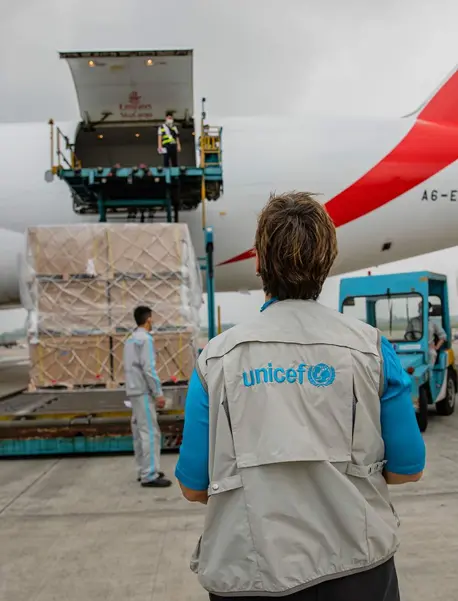
UNICEF works in over 190 countries and territories — more places than any other children's organization. UNICEF has the world's largest humanitarian warehouse and, when disaster strikes, can get supplies almost anywhere within 72 hours. Constantly innovating, always advocating for a better world for children, UNICEF works to ensure that every child can grow up healthy, educated, protected and respected.
Would you like to help give all children the opportunity to reach their full potential? There are many ways to get involved.