The Global Child Labor Crisis
Forced labor steals childhoods. Learn the facts about child labor, the consequences of child labor for children and how UNICEF is working to end child labor worldwide.
June 12 is World Day Against Child Labor
In 2002, the International Labor Organization (ILO) designated June 12th as World Day Against Child Labor. The 6th Global Conference on the Elimination of Child Labor, held in Marrakech in February 2026, reaffirmed the urgent need to accelerate action and translate commitments into concrete results and produced a roadmap for tackling the issue through integrated responses that address root causes and protect every child’s rights.
UNICEF, the ILO and other partners consistently call for governments to do more to prevent or reduce child labor, while also working to advance programs that leverage a number of proven strategies for doing so. These include: expanding access to quality education; strengthening community child-protection systems; strengthening legal protections and enforcement; improving data collection and monitoring; and advancing policies around business accountability and the protection of children in supply chains.
Action to end child labor globally is urgently needed. Despite progress, 138 million children remain in child labor worldwide, including nearly 54 million in hazardous work.
Related: AI Data Center Expansion Poses High Risk of Child Labor Issues
What is child labor?
Child labor is defined as work that is done by someone who is too young, or work that, based on the nature or circumstances, is harmful to a child's physical or mental health, social or educational development.
Agriculture remains the largest sector for child labor, accounting for 61 percent of all cases, mostly related to subsistence or family farming. The services sector, the second largest, includes domestic work and selling goods in markets. Industry, including mining and manufacturing, accounts for roughly 13 percent of child labor cases.
What are the risks for a child laborer?
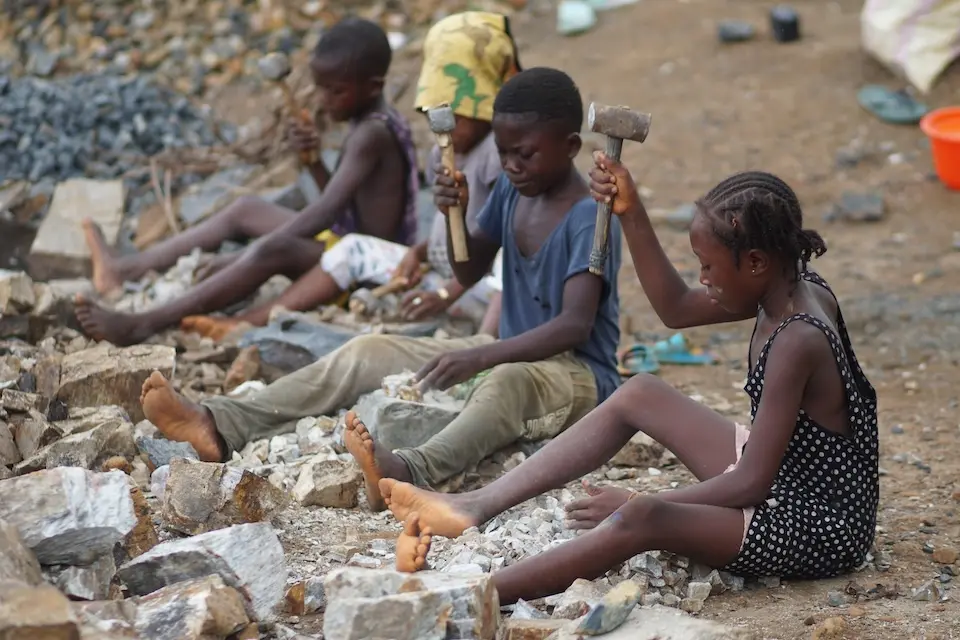
A child engaged in hazardous work risks bodily and mental harm, even death. Child labor can lead to slavery and sexual or economic exploitation. It often cuts children off from schooling, health care and other critical services, restricting their fundamental rights.
Learn more about how UNICEF works to safeguard children's rights
How prevalent is child labor?
An estimated 7.8 percent of the world's children are engaged in child labor. Boys are more likely than girls to be involved in child labor at every age, but when unpaid household chores of 21 hours or more per week are included, the gender gap reverses.
While the latest child labor facts show a total reduction of over 20 million children since 2020, reversing a previous spike, the world has missed its target of eliminating child labor by 2025.
In the world's poorest countries, slightly more than 1 in 5 children aged 5 to 17 are engaged in labor that is considered detrimental.
In the world's poorest countries, slightly more than 1 in 5 children aged 5 to 17 are engaged in labor that is considered detrimental. Sub-Saharan Africa carries the heaviest burden, accounting for nearly two-thirds of all children in child labor, or around 87 million.
While prevalence fell from roughly 1 in 4 to closer to 1 in 5, the total number is unchanged against the backdrop of population growth, ongoing and emerging conflicts, extreme poverty and stretched social protection systems.
"Children belong in classrooms, not in workplaces," Etleva Kadilli, UNICEF Regional Director for Eastern and Southern Africa (ESA), said in a statement accompanying the release of a 2026 report spotlighting regional trends. An estimated 41 million children in Eastern and Southern Africa are engaged in child labor.
"[P]rogress remains fragile. Economic pressures, climate shocks, conflict and global funding cuts threaten to reverse hard-won gains.”
Children belong in classrooms, not in workplaces. — Etleva Kadilli, Regional Director for Eastern and Southern Africa
In Latin America and the Caribbean, Middle East and North Africa, child labor rates are much lower, at 1 in 20. The Asia and the Pacific region saw its child labor rate decline from 6 percent to 3 percent between 2020 and 2024 (49 million to 28 million children).
Download the UNICEF/ILO joint publication
What drives child labor worldwide?
Child labor is often linked to:
- School dropout
- Household poverty and economic shocks: Most often child labor is a product of financial insecurity due to lost livelihoods or lost income.
- Agricultural supply chains (especially cocoa)
- Displacement and migration: Many child refugees and other children uprooted by conflict, disaster or other emergency often face heightened risks of being forced into work and even trafficked, especially if they are migrating alone or taking irregular routes with their families.
- Weak access to social protection services: Trafficked children are often subjected to violence, abuse and other human rights violations. For girls, the threat of sexual exploitation looms large, while armed forces or groups may exploit boys.
Is child labor a problem in the United States?
Yes — child labor is a growing problem in the United States due to higher living costs and an expanding population of vulnerable children.
UNICEF USA developed a compliance framework to help companies address child labor violations in the U.S. corporate supply chain. Designed for a broad range of stakeholders — including legal and compliance, supply chain, sustainability and human resources professionals — the framework aligns with international standards and covenants as well as U.S. regulatory guidance.
Related: Child-Centered Solutions to Address Child Labor in the U.S. — a UNICEF USA report
Related: Children's Rights and Business
Is child labor illegal?
The issue of child labor is guided by two ILO conventions: No. 138, which sets a minimum age for employment, and No. 182, which prohibits and calls for immediate action to eliminate the worst forms of child labor. It is also covered in the United Nations Convention on the Rights of the Child.
These conventions frame the concept of child labor and form the basis for child labor legislation enacted by signatory nations.
Video: Child labor in Yemen — one boy's experience

In Yemen, the number of out-of-school children has doubled due to protracted armed conflict, which erupted in 2015 and has left more than 2 million school-age children out of the classroom, jeopardizing their futures.
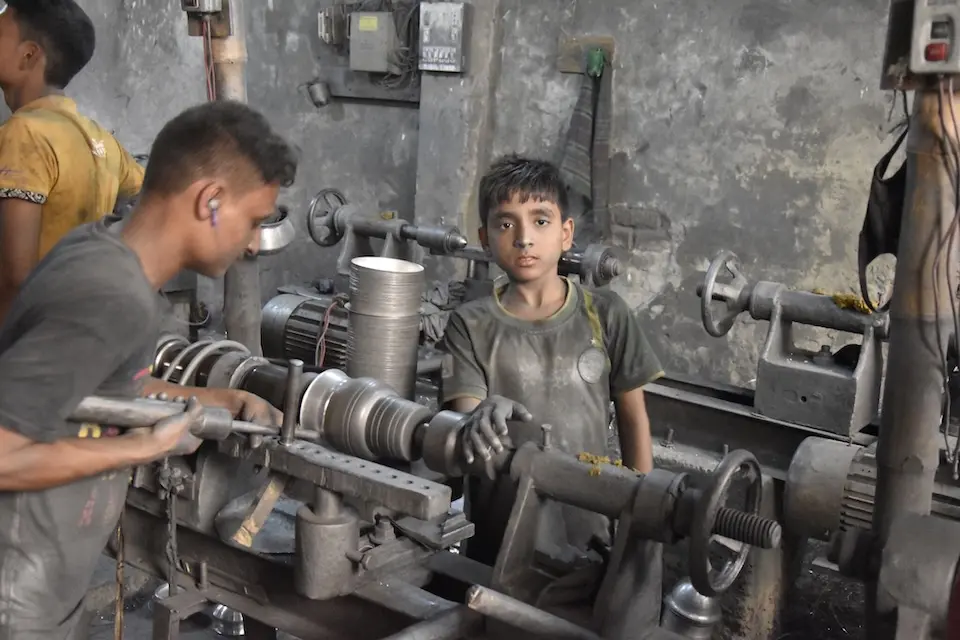
In the city of Taizz, in Yemen's southwest, 12-year-old Anas's childhood effectively ended the day his father died. That's when he became his family's sole breadwinner. He works 11-hour shifts as a metalsmith, operating dangerous machinery.
I stopped studying because there is no one to support my family. — Anas of Taizz, Yemen, age 12
Working from 7 a.m. to 6 p.m. leaves little time for studying, so Anas was forced to drop out of school. But he is determined that his younger brothers continue their educations so they can fulfill their dreams.
"I stopped studying because there is no one to support my family," he says. "I made my four brothers study ... so that they graduate from universities and get jobs."
UNICEF is on the ground in Yemen, working with partners to protect children like Anas and his brothers, so they have the opportunity to reach their full potential.
Learn more about how UNICEF supports and protects children in Yemen
UNICEF: working with partners to eliminate child labor and safeguard children's rights
To accelerate progress toward reducing and ultimately eliminating all forms of child labor, UNICEF and ILO call on governments to:
- Invest in social protection for vulnerable households, including social safety nets such as universal child benefits, so families do not resort to child labor
- Strengthen child protection systems to identify, prevent, and respond to children at risk, especially those facing the worst forms of child labor.
- Provide universal access to quality education, especially in rural and crisis-affected areas, so every child can learn.
- Ensure decent work for adults and youth, including workers’ rights to organize and defend their interests.
- Enforce child labor laws and business accountability to end exploitation and protect children across supply chains.
What works to eliminate child labor?
According to UNICEF Innocenti, there is strong evidence that shows these strategies effectively ensure children are learning and not working.
1. Providing regular and adequate cash transfers through social protection programs
This can simultaneously address household poverty and encourage school participation, thus contributing to the elimination of child labor. The cash support can be used to help cover school fees and basic household expenses, easing income pressure on parents and helping them avoid negative coping mechanisms like sending children to work.
2. Working to improve children's access to formal or non-formal education and investing in education quality
This includes providing learning materials and other support to students, teachers and classrooms. providing adequate scholarships or school meals contributes to reducing children’s work by making school more affordable.
Extending the duration of the school day can reduce child labor by increasing time spent at school. Combining education and apprenticeships in another effective way to get older children back in school while also improving their employment opportunities later in life.
Reducing gender inequalities in access to and completion of all levels of schooling is essential to reduce girls’ contribution to unpaid care and domestic work. Educating both girls and boys will bring benefits for families and their communities and support overall sustainable development.
3. Working with governments to adopt and implement child labor laws, regulations and policies
Legal protections — and enforcement — are essential for protecting children from child labor and other forms of exploitation and abuse. Ensuring better wages and working conditions for parents and ensuring formalized market structures is also critical. Formal economies generate more tax revenues that can support financing of social protection and education.
"Child labor has long-term negative effects on children, depriving them of leisure, play and education," says Dr. Ramya Subrahmanian, UNICEF Innocenti's Chief of Research on Gender, Rights and Protection.
"To ensure healthy childhood development and a safe transition to adulthood, we must invest in preventing and eliminating child labor. This requires a comprehensive approach that focuses on securing family livelihoods, reducing economic stress and uncertainty and improving services for all children."
How to support efforts to stop child labor
Sustained and increased funding – both global and domestic – is needed more than ever if recent gains against child labor are to be maintained.
Cuts in foreign aid affect education, social protection and other humanitarian programs — threatening to push already vulnerable families to the brink, and forcing some to send their children to work. Meanwhile, shrinking investment in data collection will make it harder to see and address the issue.
UNICEF continues to advocate for ending child labor by applying legal safeguards, expanding social protection, increased investment in free, quality education and improved access to decent work for adults.
"Ending child labor demands a whole-of-society approach," Kadilli said. "We urgently need governments, the private sector, civil society and communities to work together and implement a joint roadmap aligned with national and continental commitments to end child labor.”
HOW TO HELP
There are many ways to make a difference
War, famine, poverty, natural disasters — threats to the world's children keep coming. But UNICEF won't stop working to keep children healthy and safe.
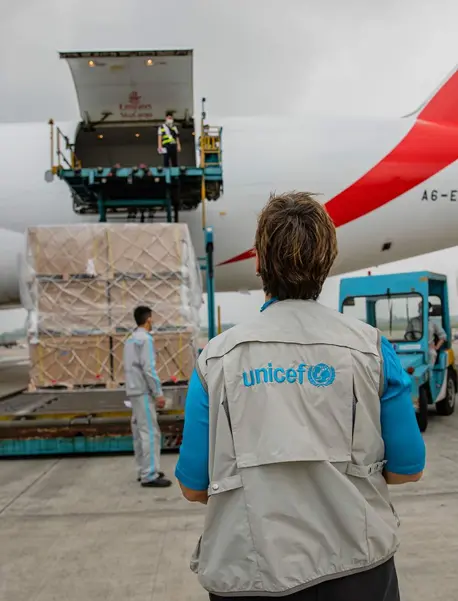
UNICEF works in over 190 countries and territories — more places than any other children's organization. UNICEF has the world's largest humanitarian warehouse and, when disaster strikes, can get supplies almost anywhere within 72 hours. Constantly innovating, always advocating for a better world for children, UNICEF works to ensure that every child can grow up healthy, educated, protected and respected.
Would you like to help give all children the opportunity to reach their full potential? There are many ways to get involved.