Project LION
Every child deserves to grow and thrive in a nurturing place they can call home. Project LION aims to create sustainable, system-wide change to ensure that children in India who are living without parental care are supported and protected.
Improving the lives of orphaned and displaced children in India
India has more children than any other country in the world, where millions of children grow up separated from parental care — by poverty, illness, disability, displacement or crisis. For decades, the default response was to place children in childcare institutions (CCIs), which often leads to low standards of care and poor developmental outcomes for children. These institutions are often privately run and poorly regulated, leaving children extremely vulnerable to abuse, exploitation and neglect.
The saga of how 5-year-old Saroo Brierley survived life on the streets after being separated from his brother and his eventual adoption by an Australian couple inspired the 2016 movie "Lion." It also called attention to the plight of India’s “forgotten” children — those forced to survive without parents or family. Inspired by the film and UNICEF's work in India, a collective of UNICEF USA Board Members and supporters teamed up with UNICEF USA to launch Project LION in 2018 and the results are extraordinary.
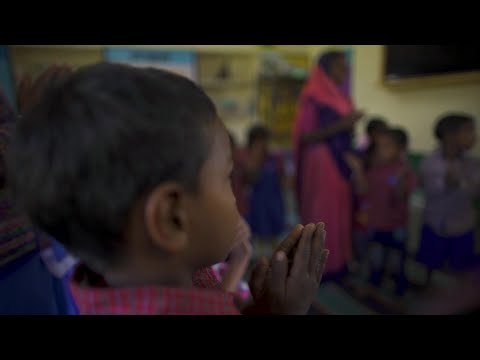
Project LION: Supporting Millions of Children Across India
Project LION works across government, civil society and community stakeholders to prevent family separation and improve the standards of care for vulnerable children. In its first eight years, Project LION has made incredible progress in mainstreaming family-based alternative care, while building the policy frameworks, trained workforce, and public systems needed for that shift to endure.
Since its launch in 2018, Project LION has helped catalyze one of the most significant shifts toward family-based care in the world. Thanks to the support of anchor donors to LION, UNICEF has been a meaningful part of transforming how India cares for children without parental support and accelerating a nationwide move away from the institutionalization of children.
Project Lion’s Phase 1 efforts primarily focused on improving the standards of care within childcare institutions across 12 states in India, where over 350,000 children living in CCIs benefited from these improved standards. During this first phase, UNICEF also laid the groundwork for broader family-based care models, providing support to families at risk of separation, including linking them to welfare programs and training over 22,000 frontline workers on how to effectively introduce family-based care to vulnerable children.
PROOF OF IMPACT: PHASE 2 RESULTS FAR SURPASS EVERY ORIGINAL BENCHMARK
From 2021-2025, UNICEF has delivered results that exceeded every target set for Project LION’s phase two by remarkable margins. More importantly, it has fundamentally changed what India's childcare system looks like.
A system-wide shift from institutions to families: When Phase 2 began in 2021, 56% of children without parental care lived in institutions. Today that figure is 6% — a near-complete transformation in four years. The number of children in institutions has fallen by 59%, and 12% of childcare institutions in Project LION-supported states have closed. Children in family-based care now outnumber those in institutions by nearly 15 to 1.
The scale of results reflects a deliberate strategy to achieve systems change. UNICEF developed and institutionalized family-based care models like kinship care and sponsorship that were adopted into Mission Vatsalya, India's flagship national child protection program. This integration creates a truly exponential impact of the initial philanthropic investment made in this work.
PHASE 3: BUILD THE FOSTER CARE SYSTEM INDIA NEEDS (2027–2032)
India stands at a once-in-a-generation tipping point. Phase 2 has proven that family-based care can become the norm at national scale. The final mile requires building something that does not yet meaningfully exist: a foster care system for children with no available family to turn to. Today, foster care represents less than 1% of family-based placements — not because it is unimportant, but because it demands significant upfront infrastructure: legal frameworks, trained social workers, vetted foster families, public trust, and robust monitoring. Project LION Phase 3 will build that foundation, ensuring the transformation UNICEF has catalyzed reaches every child, including those with the most complex needs.
PHASE 3 STRATEGY: A WHOLE-OF-SOCIETY APPROACH TO FOSTER CARE
- Strengthen foster care policies and systems
- Build child protection workforce capacity
- Scale district-led foster care models
- Generate evidence and learning
- Strengthen families before separation occurs
- Expand foster care and family reintegration
- Mobilize local governments and communities
- Support care leavers into adulthood
- Reduce stigma and shift public perceptions
- Equip foster families with practical support
- Build acceptance through schools and communities
- Amplify foster care stories nationwide
JOIN THE MOVEMENT, MEET THE MOMENT
This exciting and essential next phase in Project LION is only possible with continued investment from philanthropic leaders like you. UNICEF seeks $15 million to support this program operating in-depth across all 17 states. With that support, UNICEF aims to enable:
We invite you to join us in completing India’s care transformation and ensure every child has a safe, nurturing home that fosters their health, well being and future.