Measuring Impact For Children: What Borrowers’ Voices Reveal About the Child Impact of Financial Inclusion
In 2025, UNICEF USA partnered with 60 Decibels, VisionFund, and Global Partnerships to deepen understanding of how financial inclusion impacts children and families. Together, the organizations developed and tested a new child-focused impact assessment designed to help investors better understand how their strategies affect children’s well-being across regions and contexts.
This work responds to a growing need in the investment field. Although children are our future leaders, consumers, investors, and decision-makers, there is limited data showing how investment strategies influence outcomes for children. Without child-specific data, investors and institutions may overlook both the positive impacts and potential risks their investments create for families.
As part of this effort, 60 Decibels integrated a Child Lens impact assessment module into a subset of 3,500 clients within its 2025 Microfinance Index. Overall, the Index surveyed more than 24,450 microfinance clients served by 85 financial service providers across 39 countries in Latin America, Africa, and Asia. Among respondents, 23,764 shared caregiving information.
The findings showed caregivers consistently reported stronger improvements in household resilience, financial management, and overall child-wellbeing compared to households without children. The research also highlighted regional and demographic differences, as well as persistent child protection challenges in some markets.
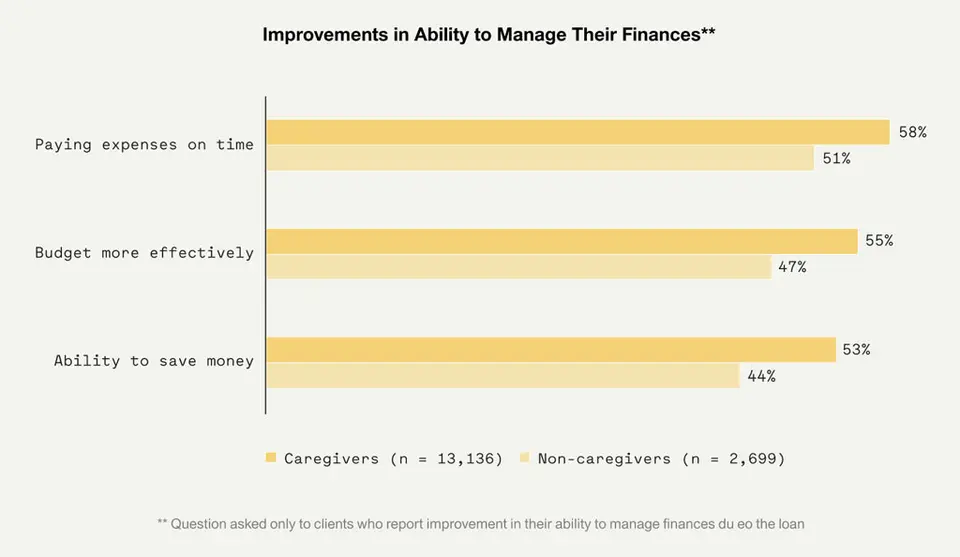
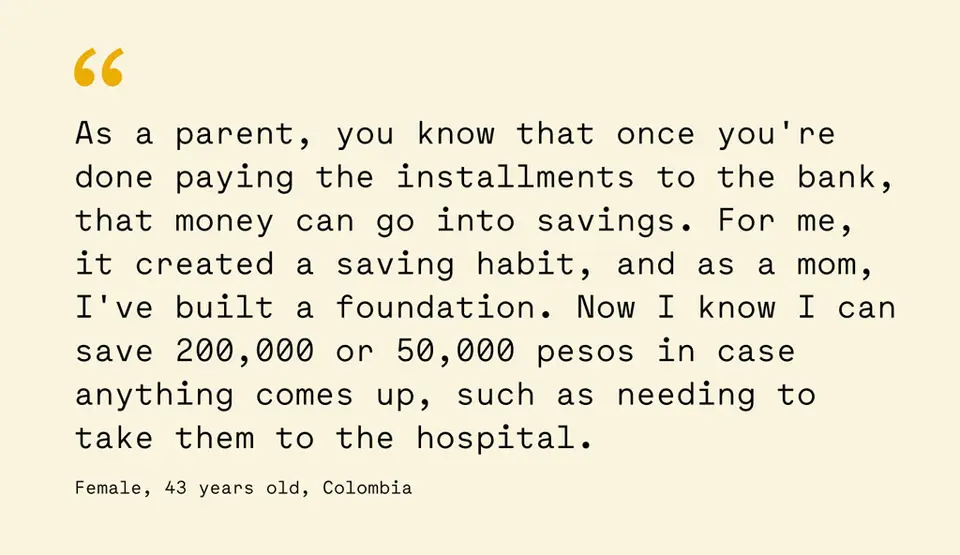
The report emphasizes how listening directly to borrowers can provide practical insights for investors and financial service providers. Caregivers were more likely to use loans for business purposes and reported stronger improvements in savings and emergency preparedness, highlighting opportunities to pair financial products with savings tools or financial education tailored to families.
Building on these findings, Global Partnerships and UNICEF USA also developed two case studies examining social enterprises providing housing finance in Guatemala and the Dominican Republic. The case studies explore how housing finance can contribute to safer and healthier living environments for children.
“The findings affirm that well-designed financial products for housing can be a credible pathway to impact for families in poverty and their children,” said Tara Murphy Forde, the Chief Capital and Impact Officer at Global Partnerships. “This direct line-of-sight into outcomes enabled is a triple win: It allows investors to be more precise, gives investees actionable insight from which to grow, and thus enables more end-clients to experience changes that are meaningful to their families.”
These insights represent an important step forward for the field of child-lens investing. By embedding children’s well-being into impact measurement and management, investors can move beyond optimizing their strategies against broad household indicators and can move toward decisions that are more likely to create lasting, generational impact.