UNICEF in Bangladesh
UNICEF works with the government and other partners in Bangladesh to provide support and protection to children and families in need — including Rohingya refugees — while advancing longer-term solutions to climate, public health and other threats.
Why UNICEF works in Bangladesh
The people of Bangladesh face overlapping challenges driven by climate-related disasters and one of the world’s largest and most prolonged refugee situations, placing sustained pressure on communities and essential services and increasing poverty rates.
Millions of Bangladeshi children – most of them boys – are forced to live on the streets, at great risk to their health, safety and future well-being. Many survive by waste collecting, begging or working in tea stalls, factories and workshops.
Despite progress in recent decades, child marriage remains a serious concern in Bangladesh, limiting girls’ access to education, protection and opportunities for the future.
Climate change impacts and other challenges for children in Bangladesh
Extreme weather, severe flooding and other impacts of climate change have been particularly hard on the country. Cyclones have killed hundreds of thousands of people in recent years. Landslides, thunderstorms and extreme heat are all part of a growing problem.
Recurring floods and other climate-related disasters have displaced communities, damaged homes and infrastructure, and disrupted access to education, health care and safe water.
Climatic events are expected to continue to cause deaths and injuries, displace populations and damage water and sanitation systems, schools and health facilities, not to mention shelters constructed of bamboo and tarpaulins. UNICEF projects that 1 in 7 people in Bangladesh will be displaced by climate change impacts by 2050.
Amid regular outbreaks of diphtheria, measles, cholera and dengue, public health emergencies are a constant threat. These recurrent emergencies, including outbreaks of vaccine-preventable and waterborne diseases, particularly impact children in vulnerable and displaced communities.
Home to the world's largest refugee settlement
Bangladesh hosts hundreds of thousands of Rohingya refugees, many of them children, who fled violence and persecution in neighboring Myanmar. Most live in a sprawl of camps in Cox’s Bazar, a southeastern coastal area. Those who arrived as part of a mass exodus in 2017 joined the some 300,000 people already living in Bangladesh from previous waves of displacement — effectively forming the world's largest refugee settlement.
Rohingya refugees living in Bangladesh rely entirely on humanitarian assistance to survive. Their future return to Myanmar, a country gripped by instability and ongoing insecurity, remains uncertain.
The camps where they live are overcrowded, and the conditions are often dangerous. There is widespread malnutrition and an ever-present risk of violence and human trafficking.
How UNICEF is helping children and adolescents in Bangladesh
UNICEF has been working with the government and other local, national and international agency partners in Bangladesh to meet urgent and long-term needs of the most vulnerable children and families in Bangladesh since 1952.
Alongside its country-wide programs, UNICEF maintains a strong presence in Rohingya refugee camps, working with partners to deliver lifesaving assistance while supporting services for both refugee and host communities.
Interventions span all major program areas, including safe water and sanitation, health care, nutrition, education and protection. Many programs, however, are significantly underfunded.
Related: Funding cuts put half a million Rohingya children's futures at risk
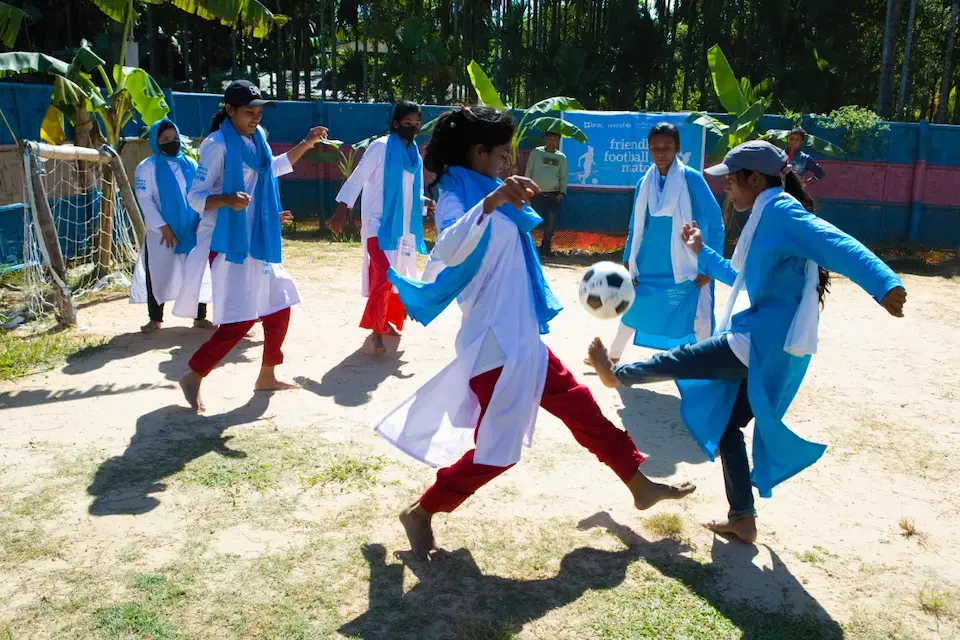
While working to reach those most in need of critical support, UNICEF also continues to invest in system strengthening, community preparedness and resilience building and forging closer ties between humanitarian and development work.
Specific priorities include:
Health and nutrition programs
To improve maternal, newborn, child and adolescent health services, including immunizations, UNICEF is working with the government to improve the quality of care and to strengthen service delivery — including treatment for children suffering from severe acute malnutrition.
Improving access to education
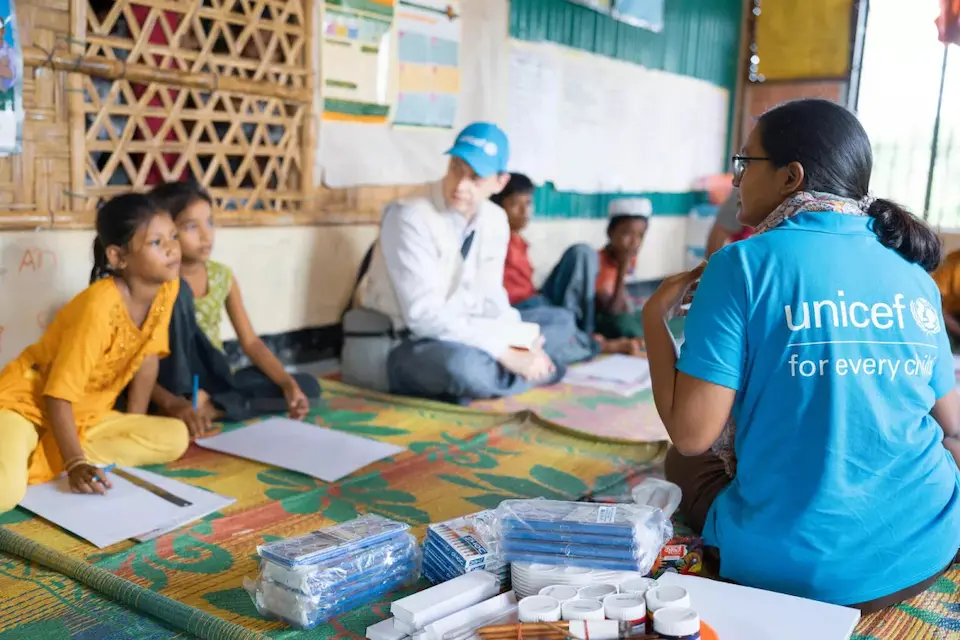
To prevent long-term learning loss and protect children affected by displacement and crisis, UNICEF has focused on providing displaced children access to education and creating a number of programs designed to train adolescents in the kind of technical skills that will ensure access to employment and a livelihood in the future.
Related: UNICEF-supported Skills4Girls program prepares young women for a better future
Building climate resilience
UNICEF has been working with the government of Bangladesh and other partners to identify, prepare for, and mitigate the impact of natural disasters, by helping to improve the quality of essential services available in times of crisis – including uninterrupted access to a safe water supply and sanitation services.
Protecting vulnerable children
To assist children living without shelter or caregivers, UNICEF has established and helps support thousands of child protection services hubs in Bangladesh. These centers provide nutritious meals, showers, overnight accommodations and a space for kids to learn and play. There are also social workers and other volunteers standing by to help children in crisis.
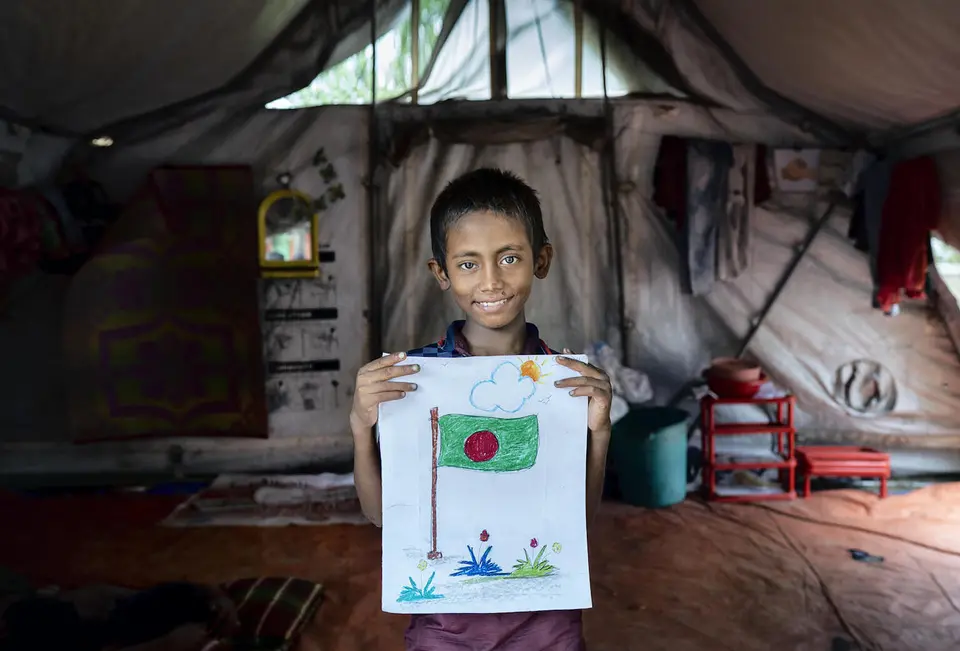
UNICEF is also working with the government to expand the number social workers available for case work. In rural areas, UNICEF’s goal is to place a social worker in every village to protect children from harm and to prevent children from ending up on the streets in in the first place.
In the refugee camps, UNICEF has worked with partners to develop community-based mechanisms for identifying vulnerable children in need of protection and to reach those children with services including psychosocial support.
UNICEF is also helping to train social workers in disaster-prone districts to improve gender-based violence prevention and response.
Tahmina's story
Much of UNICEF's impact for children and adolescents in Bangladesh (and around the world) is done in partnership with local authorities and groups, through community outreach and risk communication strategies.
Consider Tahmina, a 16-year-old girl from Ukhiya, Cox’s Bazar, who narrowly escaped being forced to drop out of school and get married. Her parents, lacking the funds to cover the school fees, began searching for a groom.
But then Tahmina found help through her local UNICEF-supported child protection community hub. A community volunteer at the hub connected the family to a local representative of the Ministry of Women and Children Affairs. The official went to Tahmina's parents’ house, where they discussed the risks and consequences of early marriage for girls.
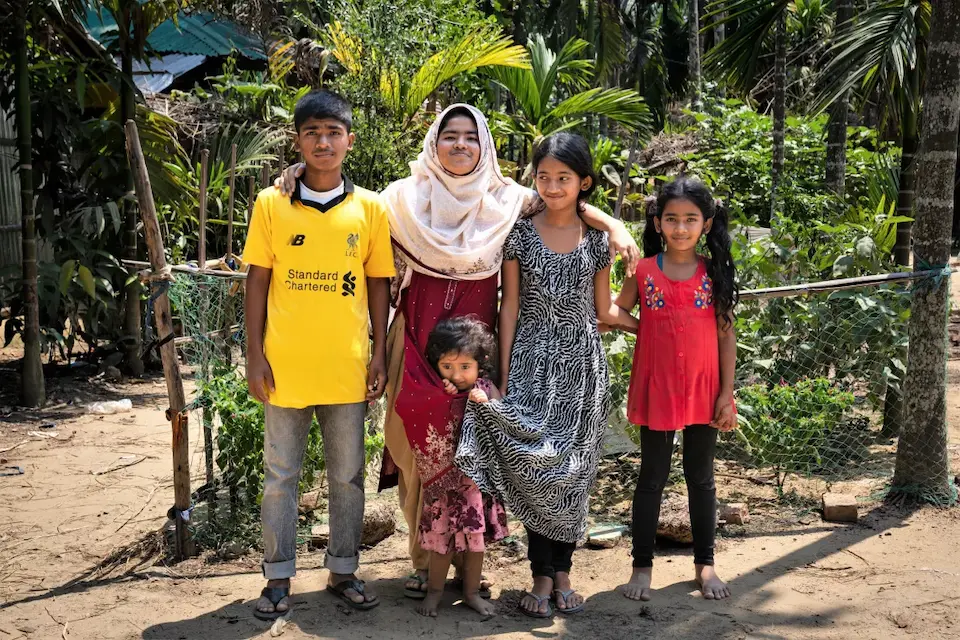
“I realized later that I was wrong – that child marriage is wrong,” says Tahmina's mother Arefa, who was herself a child bride at 13. “I decided to stop it before it was too late for Tahmina. I did not want her to get hurt forever.”
Today Tahmina is a peer leader at the protection hub. She talks to other children about child marriage and child labor to raise awareness of the long-term costs.
UNICEF depends on voluntary donations to achieve impact for children and adolescents in Bangladesh and around the world. Humanitarian support has declined for all but the most high-profile crises. Flexible funding allows UNICEF to meet critical needs whenever and wherever they are needed most. Donate today.