Si Se Ve / If You See
Chapter 1: The impact of UNICEF
I get asked all the time, why UNICEF? And for me, the answer is pretty clear.
If you want to make grand transformational change on a scale like no other, then you turn to UNICEF. They
have the expertise, the skills, the relationships with governments in 190 countries. That's profound. That's what I got to see when I was in Peru.
Chapter 2: Visiting UNICEF programs in Peru
The idea of going to Peru was incredible to me because I was going to get to see so many sectors of where UNICEF does its
work. We were able to see that vision in multiple areas including education,
child protection and health. And what was amazing was that there was a succinct plan in place for each one of
these sectors and each was being tackled in a creative but datadriven way. My
trip to Peru only lasted for 4 days, but we fit a lot into those days. I can see when I go to Peru, when I visit the
schools, every child has a voice, every child has importance, and every child has rights.
Chapter 3: Preventing violence in schools
So when we went to the schools to see the programming that UNICEF had created in order to tackle child violence, we
learned that children there, particularly the adolescents, are in so much danger from a violence perspective.
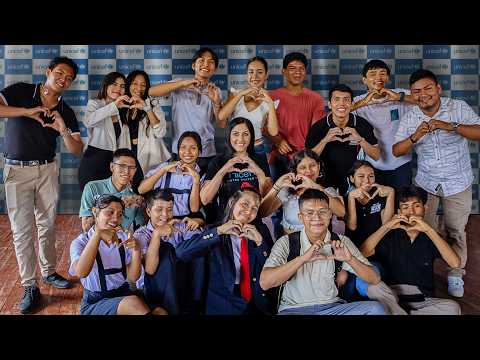
It was wonderful to see these classrooms filled with awareness and tackling these issues and giving these children a voice
and a way for them to protect themselves. That's where UNICEF has come in to really not only detect this issue,
but to come up with a strategic plan to give these kids an incredible route to be part of the solution for such a
horrific situation. These children were able to read materials and act out skits
with masks that are from their indigenous tribes. They related to those characters and had a wonderful time
putting on the skits for us, but it showed their real understanding of the issues and it's turning the whole generation against violence.
I got to speak to some of the children.
They felt like leaders coming out of that program and you could see their zest in wanting to teach it to the younger children in the school as well.
Chapter 4: Supporting children’s mental health
As a physician, mental health is the cornerstone to anyone's well-being. And it was wonderful to see that UNICEF was
making this a priority for these children, especially adolescence. It's very clear when children have had good mental health support. It lays the
foundation for their success throughout life. One moment that I'll never forget was a 10-year-old boy named Sebastian.
He had such a bright, warm spirit and he ran to greet me and gave me a hug immediately and he took my hand and he
held it so tight and I could feel so much love and he led me to an area under
a pagota where we got to see books that UNICEF had donated to the school and it
was such a bonding moment. It was such an incredible moment where he just felt so seen. He felt heard and in one of the
books it shows the UNICEF logo and he pointed to the logo and he pointed to my shirt and then he made a little heart
sign. I got to give him a hug and tell him to stay in school and work hard because he could achieve anything and he
felt confident. I think he knew that he could and that he was going to. It was such a beautiful moment I'll never forget.
Chapter 5: Rural health care and vaccine refrigeration
On our second day, we traveled up river to a place called Masaaya to visit a rural health center. Considering the
journey we had to take to get to Masa, it was breathtaking to see the clinic there.
As a physician, I found the clinic to be so well supported. I'm not even sure how UNICEF was able to get all of that equipment into that clinic in Masaya.
these massive solar powered refrigerators in this remote clinic.
It's critical for vaccines to stay at a certain temperature and so cold chain is essential in delivering vaccines. UNICEF
provided a way to keep vaccines cold in the rainforest so that children there could get life-saving vaccines. It was
incredible to see that in Masa, such a remote area where children deserve to be vaccinated, a cold chain was
established. I learned that UNICEF was trusted all by word of mouth. You were
seeing all of these mothers trusting this clinic in particular for their care. In Peru, it's common in these
indigenous tribes for women to stand while they're birthing their child. and UNICEF has made that possible in their
clinic. We even saw a tree trunk that UNICEF had brought in for the mothers to use so they felt more at home and more
at ease. And that's a wonderful way for them to be introduced to the medical community and then they continue to get
their care there for themselves and their children. There was a section of the clinic that focused on adolescent
Chapter 6: Adolescent health and community connections
medicine really focusing on them and their particular needs. A wonderful interaction that I had was I got to be
with a group of adolesccents who had come in for their routine checkups and they immediately engaged with me. They
immediately wanted to know where I was from and I was so impressed with their worldly knowledge and their curiosity.
Incredible questions that they had for me. We ended the conversation by talking about my ethnicity being Indian-American.
And so we ended the conversation by saying namaste. It was so wonderful
because every time I would get a peak of them through the hallways, they would turn around and say namaste. It was
really fun to see them take in some of my culture, too. Afterwards, we got to spend some time with the community.
Chapter 7: Sanitation in Amazon communities
UNICEF had just installed new dry toilets. These communities were so grateful for the advent of the dry
toilets that they had in each one of their homes. They used to have so many diseases due to the open defecation that was occurring in terms of
gastroenteritis and other fatal diseases. These girls no longer have to go outside of their homes to use the restroom. And so they've seen a real
difference. and also they were able to have dignity.
Chapter 8: Newborn screening in Pucallpa
On our last day, we were back in Pukulpa visiting the regional hospital. I was really surprised to learn that neonatal
screenings are not a standard practice in Peru. This is something we take for granted in the United States as all of our newborns are screened for
life-threatening diseases like PKU and congenital adrenal hyperplasia. It was wonderful as a physician to see these
newborns being screened. Of course, throughout the community, there was a lot of doubt of why their children needed to be screened for these as it
hadn't been done before. But with the support of UNICEF and collaborators, these mothers felt very comfortable
bringing their children, their newborns into the hospital to get these screenings. And it's saving lives.
Whether a mother is from Pukalpa, Peru or Houston, Texas, she wants the same thing for her child. A bright future
where her child can thrive, these kids have every ability and desire to succeed in life. Just a little support is all
they need. And I promise you, they'll do the rest themselves. UNICEF gives them that support so they can go on to reach
their full potential and chase their dreams. When I go on these trips as a mother, I see the faces of my children
Chapter 9: A personal commitment to children
in the children that I'm visiting and it's a feeling of responsibility. You want to help all the children. When I
left, I absolutely felt that almost desperation to help and do something for
them. But as time has gone on, I've been able to understand the role of UNICEF.
It just gives me so much conviction for how UNICEF handles every situation and tackles every issue. It's not a numbers
game for UNICEF. It's every child. When I come back from these trips and I share the photos and videos and stories from
what I've seen, my children are enthralled. They want to know what they can do, how they can make a difference.
That was the exact moment that I knew UNICEF would be part of my life forever.
And I wanted UNICEF to be part of my children's lives, part of my family's lives, part of my friends lives because
I want everyone that I love to experience the same kind of fulfillment and joy that I do when I get to work
with UNICEF and help the world's children.