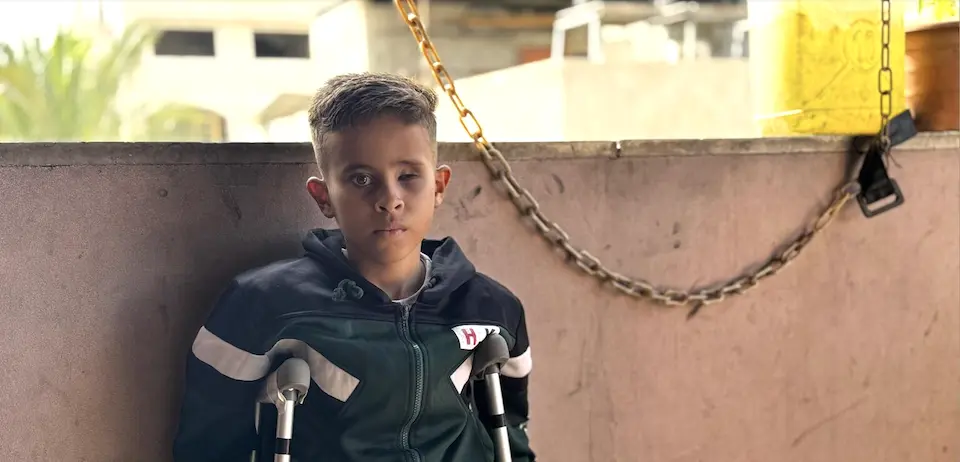
UNICEF in the Middle East: Supporting Children in Crisis
UNICEF coordinates with partners to respond to emergencies and meet urgent humanitarian needs of children and families affected by multiple crises across the Middle East region. Learn more, including how to help kids in the Middle East affected by conflict and displacement.
Protracted conflicts and fragile contexts are increasing humanitarian needs in the Middle East
Armed conflict. Extreme poverty. Climate shocks and natural disasters. Food insecurity. These and other emergencies are impacting millions of children and families in the Middle East, fueling humanitarian needs and leaving many children in crisis.
Across the region, risks to children are growing due to violence and displacement, disrupted education systems and limited access to health care and safe water.
Alongside partners, UNICEF advocates for the protection of children's rights across the region, including in the Gaza Strip and the West Bank, Iran, Iraq, Jordan, Kuwait, Lebanon, Oman, Qatar, Saudi Arabia, Syria, Türkiye (Turkey), United Arab Emirates and Yemen.
Priorities include ensuring access to safe water and health care, including essential vaccinations; preventing and treating malnutrition; protecting children from violence, exploitation and abuse and supporting their mental health. UNICEF also works to maintain or restore children's access to quality education.
While implementing emergency humanitarian assistance to meet urgent needs, UNICEF also works to shore up essential systems and advance longer-term solutions to strengthen community resilience to future crises.
As conflict escalated across the region in early 2026, UNICEF called on all parties to "exercise maximum restraint and uphold their obligations under international humanitarian law," urging for the protection of civilian infrastructure and safeguarding of children.
"The cost of further escalation will ultimately be measured in the lives and futures of children who deserve protection, dignity and hope," UNICEF asserted in a press statement, "not the deepening consequences of a conflict they did not choose."
Related: 5 Ways Conflict in the Middle East Impacts Children
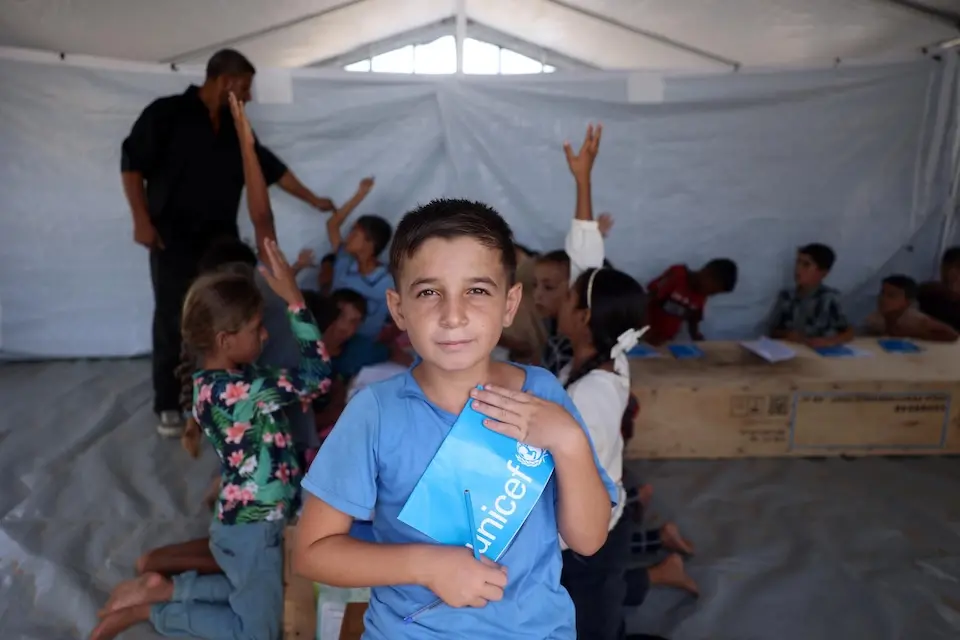
The devastating consequences of conflict and war for children in the Middle East
Here are some examples of places where children are suffering and UNICEF is responding.
UNICEF's ongoing emergency response in Gaza
In the Gaza Strip, while a fragile ceasefire has provided some improvements, the situation for children remains extremely precarious and deadly. Children continue to endure airstrikes, and are impacted by shattered health, water and education systems.
In the West Bank, including East Jerusalem, rising violence and conflict continues to undermine children’s access to safety, leaving families in a perpetual state of fear and uncertainty.
UNICEF continues to advocate for all parties to uphold the ceasefire and to deliver on the promise to end children's suffering, while continuing to lifesaving interventions alongside partners. Priorities are fighting malnutrition, shoring up health services, delivering vaccines and safe water, improving sanitation, scaling up humanitarian cash transfer programs and delivering learning, mental health and psychosocial support, among other child protection services.
UNICEF focuses not on the causes of conflict, but on the consequences for children. In high-income countries such as Israel, governments generally have adequate capacity to respond to emergencies. Upon request from the government, UNICEF can extend support.
Learn more about UNICEF's role in Israel, Gaza and the West Bank
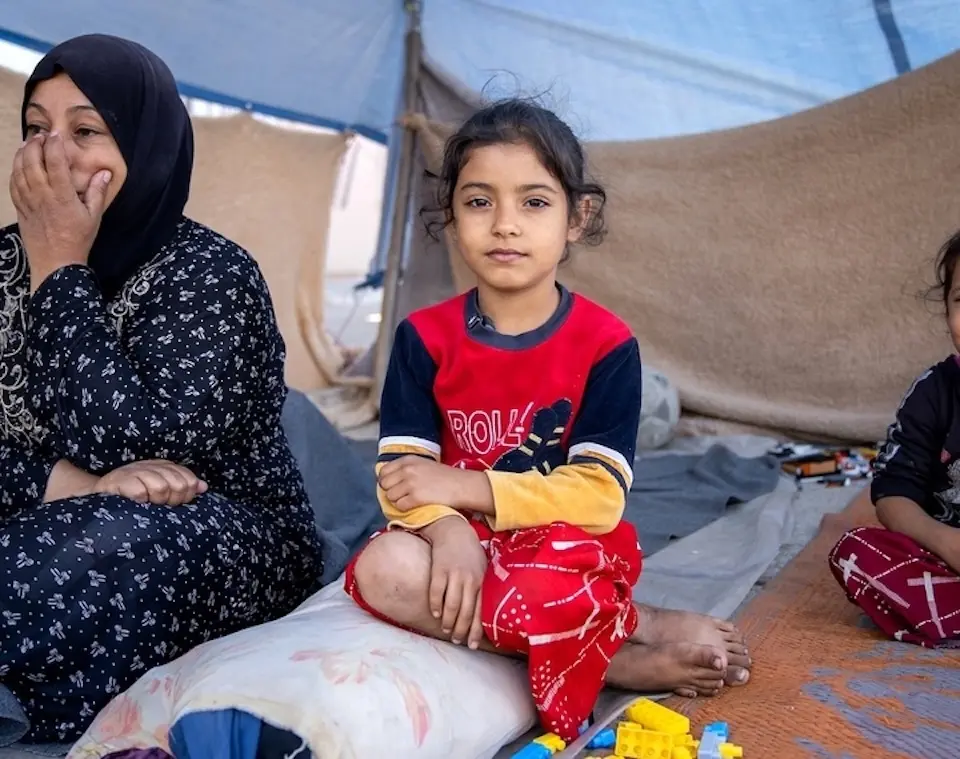
UNICEF's ongoing emergency response in Lebanon
Lebanon continues to grapple with a multifaceted crisis in which ongoing hostilities, a large displaced and refugee population, climate change and the impact of economic collapse are all deepening child vulnerability. Middle East conflict and instability continues to endanger children.
UNICEF programs in Lebanon are aligned with the nation's own response plan. It is focused on helping the most vulnerable children and households through individual, community and systems interventions designed to improve access to education, safe water and sanitation and health care and nutrition services.
In response to the 2026 military escalation in the region, UNICEF is scaling up emergency support for displaced families in shelters, host communities and hard-to-reach areas.
Learn more about what UNICEF is doing for vulnerable children in Lebanon
UNICEF's ongoing emergency response in Syria
While the full-blown civil conflict ended in December 2024 — having lasted nearly 14 years — children in Syria continue to suffer significant vulnerabilities. Insecurity, displacement and drought-like conditions continue to strain communities and hinder the delivery of essential services.
Returning refugees and internally displaced persons require sustained reintegration support. Explosive ordnance contamination continues to threaten children’s safety and access to education and essential services.
The plan for humanitarian action in 2026 is to maintain an integrated, equity-based and resilience-focused response. A “One Syria” strategy focuses on strengthening education, health, nutrition and water and sanitation systems, social policy, climate resilience and youth empowerment.
Learn more about UNICEF's work for children in Syria
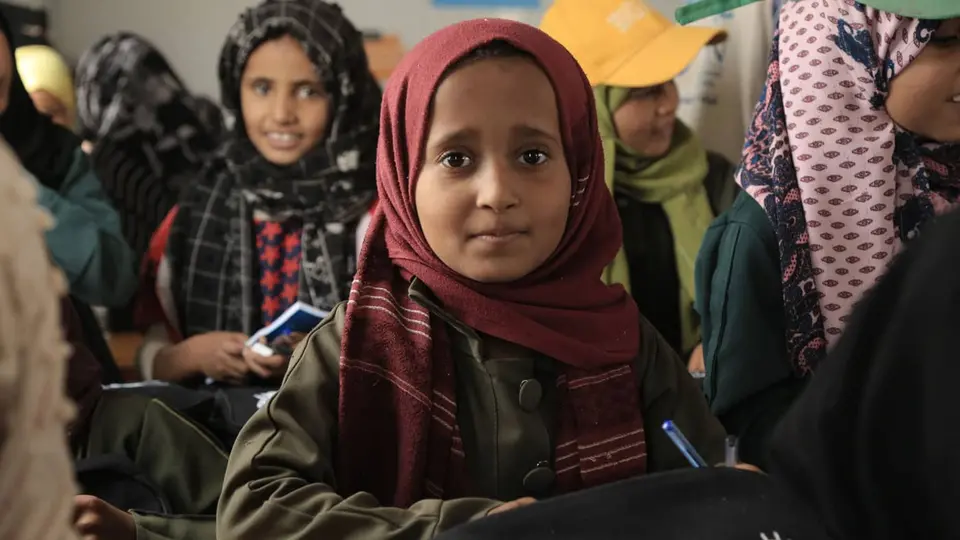
UNICEF's ongoing emergency response in Yemen
Yemen’s children continue to face multiple crises due to many years of conflict, economic shocks, food insecurity and failing social systems.
UNICEF's priorities in the country include screening and treating children for malnutrition, immunizing children against measles and other vaccine-preventable diseases, helping to contain disease outbreaks and providing psychosocial support to children and families.
Emergency health and nutrition programs, along with water, sanitation and hygiene (WASH) and child protection interventions remain significantly underfunded.
Learn more about how UNICEF is supporting children in Yemen
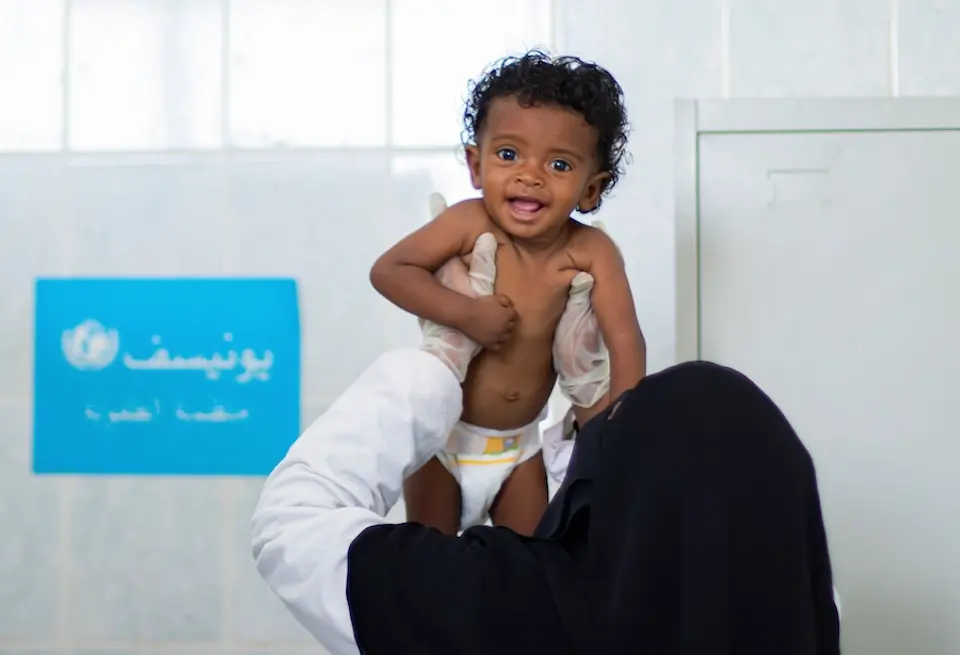
Displacement and humanitarian needs across the Middle East
Across the Middle East, large-scale displacement has reshaped communities and placed additional pressure on public services, schools and health systems. Families who flee instability or violence often settle in neighboring countries or move within their own borders in search of safety and stability.
Many refugee and displaced families face barriers to consistent access to education, health care and safe living conditions. For kids in the Middle East, displacement can interrupt schooling, separate families from community support systems and increase the risk of exploitation or long-term poverty.
UNICEF works with governments and partners across the region to strengthen services that benefit both displaced families and host communities. Programs focus on expanding access to education, supporting health systems, providing safe water and sanitation and protecting Middle Eastern children from violence, exploitation and abuse.
As humanitarian needs evolve, UNICEF continues to support communities affected by displacement while working to ensure that children in crisis receive the protection, care and opportunities they need to grow and thrive.
Learn more ways to help Middle Eastern children
UNICEF relies on voluntary contributions from donor governments, civil society groups, businesses and others — including individuals — to help scale emergency interventions, sustain critical programs and maximize impact for children in need.
* UNICEF USA complies with U.S. sanctions restrictions, and, as such, we do not accept funds specifically designated for programs in Iran. We do, however, raise funds for UNICEF programming in the Middle East and North Africa region.
Frequently asked questions about UNICEF and children in the Middle East
The Middle East is a transcontinental region that includes countries and territories in western Asia, northeastern Africa and southeastern Europe. UNICEF works with partners across the region to support children and families affected by conflict, displacement and other humanitarian challenges.
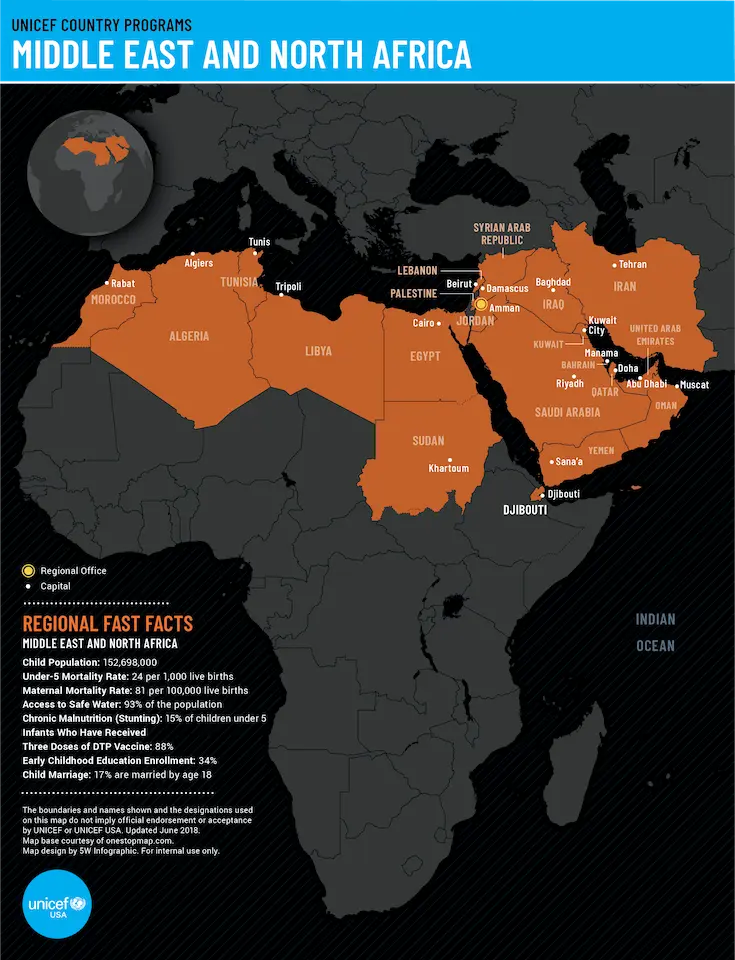
Where does UNICEF work in the Middle East?
UNICEF has programs and advocates on behalf of children's rights in the Gaza Strip and the West Bank, Iran, Iraq, Jordan, Kuwait, Lebanon, Oman, Qatar, Saudi Arabia, Syria, Türkiye (Turkey), United Arab Emirates and Yemen.
UNICEF's program and emergency response work in the Middle East is managed through the Middle East and North Africa (MENA) regional office.
Why are many children in the Middle East in crisis?
Across the Middle East, many children are affected by conflict, economic instability, displacement and climate-related pressures. These challenges can disrupt education, health care and access to safe water, leaving many children in crisis who need humanitarian support.
How does conflict affect kids in the Middle East?
Ongoing Middle East conflict can affect nearly every aspect of a child’s life. Violence and displacement can interrupt schooling, damage health systems and limit access to essential services. UNICEF works with partners to support kids in the Middle East through programs focused on education, health, nutrition and child protection.
What can I do to help children in the Middle East?
There are many ways to help children in the Middle East. Supporting organizations like UNICEF can help provide health care, education, safe water, nutrition and protection services for children affected by conflict and displacement. People can also help by learning more, raising awareness and supporting efforts that protect Middle Eastern children and families across the region.