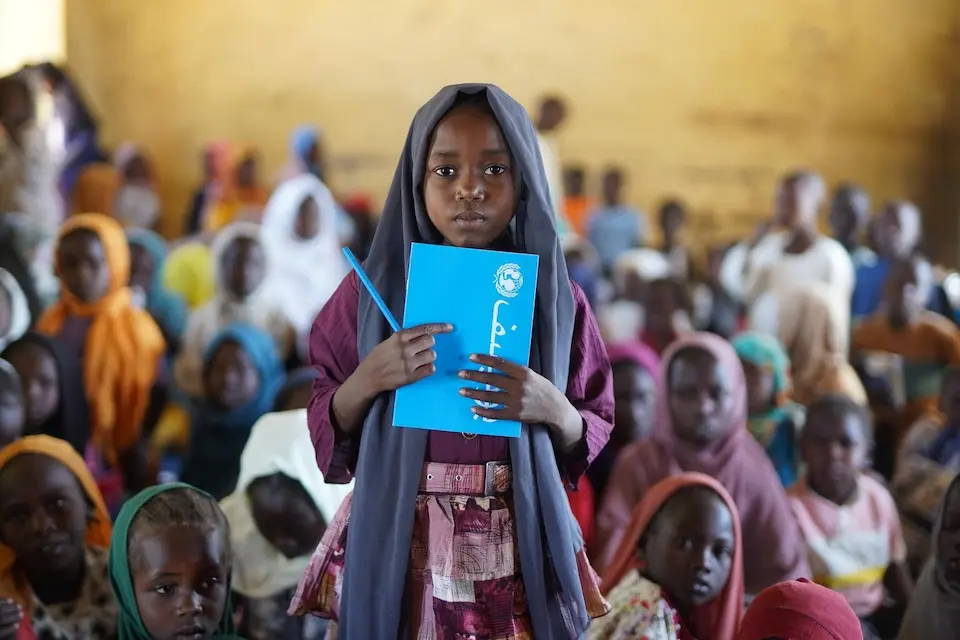
Sudan Child Alert 2026
Sudan’s ongoing conflict has reignited large-scale violence, mass displacement, acute hunger and grave violations against children across Darfur. UNICEF is delivering against the odds, but more help is urgently needed.
Darfur: 20 years on, children under threat
Two decades after Darfur shocked the world, children face renewed violence with less international attention. In late 2005, UNICEF warned that 1.85 million people were displaced in Darfur, including hundreds of thousands of children. Conflict devastated whole communities. Children faced a dangerously uncertain future: homes torched, classrooms shut and childhoods reduced to a fight for survival. The situation drew global outrage, helping to raise the alarm on the scale of the crisis.
Today, children are once again trapped in a catastrophic conflict that reignited in 2023, engulfing the region. More than 5 million children are facing extreme deprivation across the five Darfur states. Children’s needs have grown in scale and complexity, yet funding shortfalls, access restrictions, the changing nature of warfare and limited international attention are sharply limiting the reach of lifesaving support.
Related: Darfur Crisis — Children at a Breaking Point
UNICEF Sudan Child Alert 2026: key takeaways
- After three years of war in Sudan, about 33.7 million people — over half of them children — need humanitarian assistance. An estimated 15 million people across the country have been uprooted. Children have seen their schools destroyed, their communities attacked and their rights flagrantly violated.
- Children are being killed, maimed, recruited and abducted at alarming rates. Over 5,700 grave violations against children have been verified across Sudan; Al Fasher alone has recorded more than 1,500 violations since April 2024. The actual numbers are certainly higher.
- For more than 18 months, Al Fasher, the capital of North Darfur, was surrounded by the Rapid Support Forces (RSF) and allied fighters, cutting off the city from supplies and aid. Around 260,000 civilians, including an estimated 130,000 children, were trapped as food dwindled, safe water ran out and health services collapsed.
- Famine conditions were confirmed in Al Fasher in November 2025. Even before the war, Sudan had one of the world's highest child malnutrition rates. Across the country, an estimated 4.2 million cases of acute malnutrition are expected in 2026, including more than 825,000 cases of severe acute malnutrition, many in Darfur.
- Since April 2023, formal education in large parts of Darfur has essentially ceased, especially in North and West Darfur. Of the estimated 3.9 million school-aged children in Darfur, 3.3 million are out of school.
- Darfur's crisis is driving displacement across borders, with the largest refugee movements into eastern Chad. By the end of 2025, Chad was hosting approximately 897,000 Sudanese refugees and nearly 367,760 Chadian returnees from Sudan. More than 62 percent of Sudanese refugees and 68 percent of Chadian returnees are children.
Read "Darfur: 20 Years On, Children Under Threat" — UNICEF Child Alert
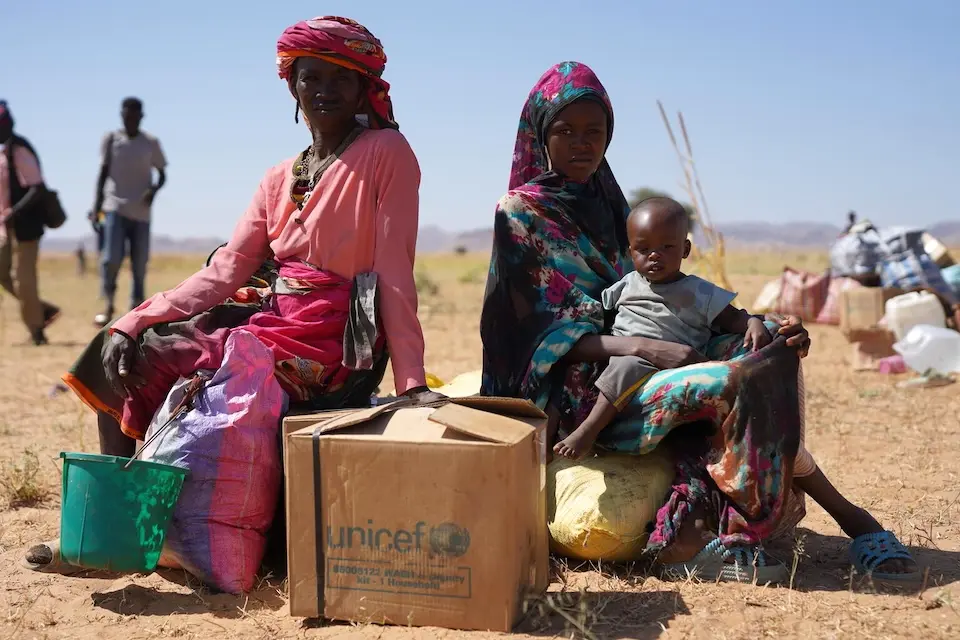
UNICEF continues to deliver for children, but it is not enough
- Throughout 2025, UNICEF and partners worked across 18 states in Sudan, including Darfur, reaching 14.7 million people with safe water, treating 612,000 children for malnutrition, and supporting 3.2 million children and adolescents in education. These numbers are remarkable — but they represent a fraction of the need in a crisis of this magnitude.
- Lack of access and underfunding are crippling UNICEF's humanitarian response. UNICEF's appeal for Sudan is only 16 percent funded. Simultaneously, humanitarian actors face constant access denials, bureaucratic obstruction and insecurity that prevent help from reaching vulnerable children. Without access and funding, UNICEF cannot scale.
- Protection must be non-negotiable. Children cannot survive on humanitarian aid alone. Immediate diplomatic action is needed to secure ceasefire commitments on explosive weapons in populated areas, protect schools and health facilities, and end grave violations.
A time for leadership
The world must decide now: Will we mobilize sustained resources and diplomatic will to protect a generation? Children in Darfur are showing extraordinary resilience — they deserve more than our best efforts; they deserve our commitment to peace.
“Twenty years ago, the world united in outrage at the suffering of children in Darfur. Today, a new generation of children is living through horrific violence, hunger and terror,” said Catherine Russell, UNICEF Executive Director. “We cannot allow history to repeat itself. Children in Darfur need protection and sustained humanitarian access. The parties to this conflict must end this brutal war.”