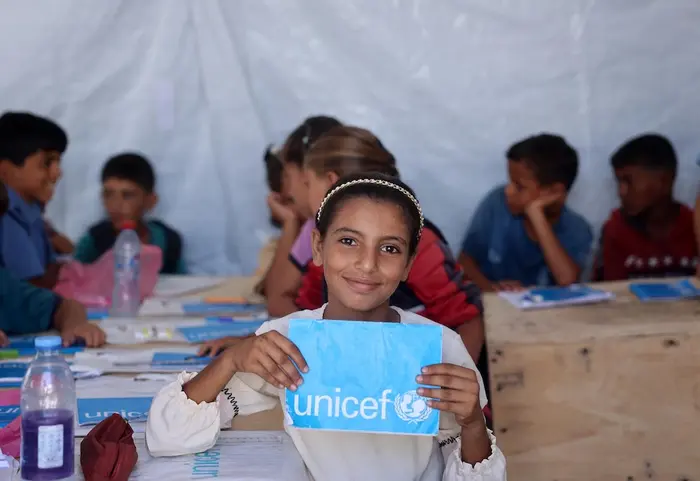
UNICEF Delivers for Children in Conflict Zones
Children caught in crises need urgent humanitarian assistance
Children don't start wars, but they invariably suffer most from its consequences. Conflict drives approximately 80 percent of all humanitarian needs around the world, disrupting access to the essential goods and services children rely on, from food and water to health care and education.
No matter how great the challenge, UNICEF is on the ground, working to help and protect children in conflict zones. UNICEF's Supply Division leverages its vast humanitarian logistics networks to procure and deliver crucial supplies and services kids need to survive and thrive, even in the most difficult circumstances.
Learn more about UNICEF's Copenhagen supply hub, the world's largest humanitarian warehouse
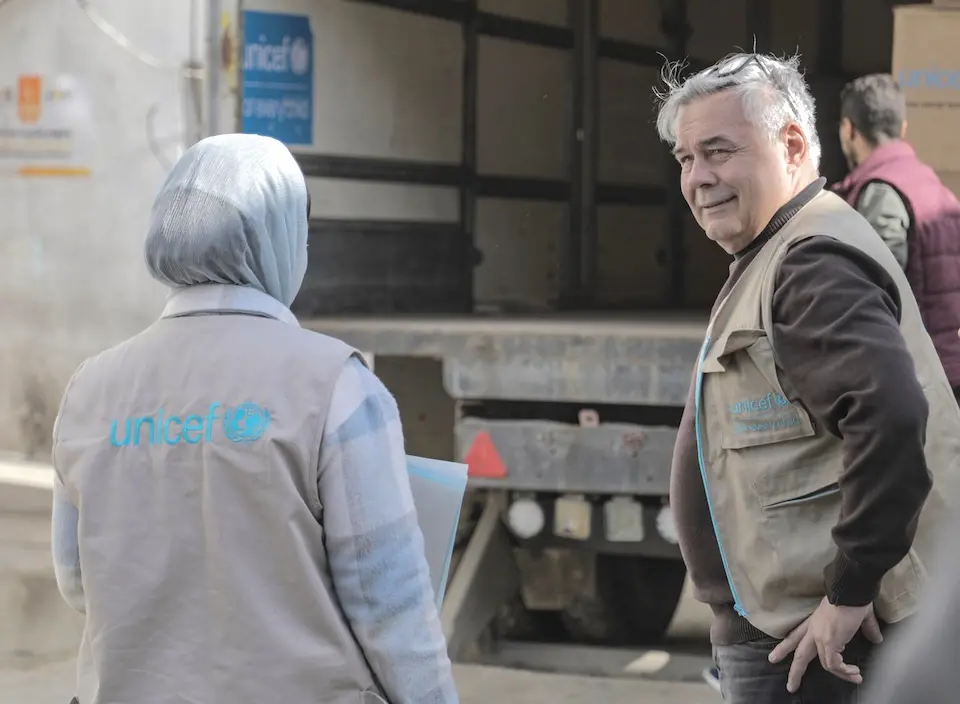
Getting aid into Gaza: from the border to last mile delivery
Throughout more than two years of brutal conflict in the Gaza Strip — despite the challenges, the risks, the bombings and the periods of unacceptable restrictions on aid delivery — UNICEF has still managed to get lifesaving aid to children every single day.
Nine out of ten homes have been damaged or destroyed, hospitals and water infrastructure lie in ruins. Nearly every child in Gaza has been displaced repeatedly. The needs are enormous, but so is UNICEF's commitment to providing relief for every child: Safe water. Tents and tarpaulins for use as emergency shelter. Therapeutic food to treat the severely malnourished. Medical supplies to care for sick and injured children. Lifesaving vaccines to protect against disease. Temporary learning spaces and education materials to help kids get back to learning and feel a sense of normalcy again.
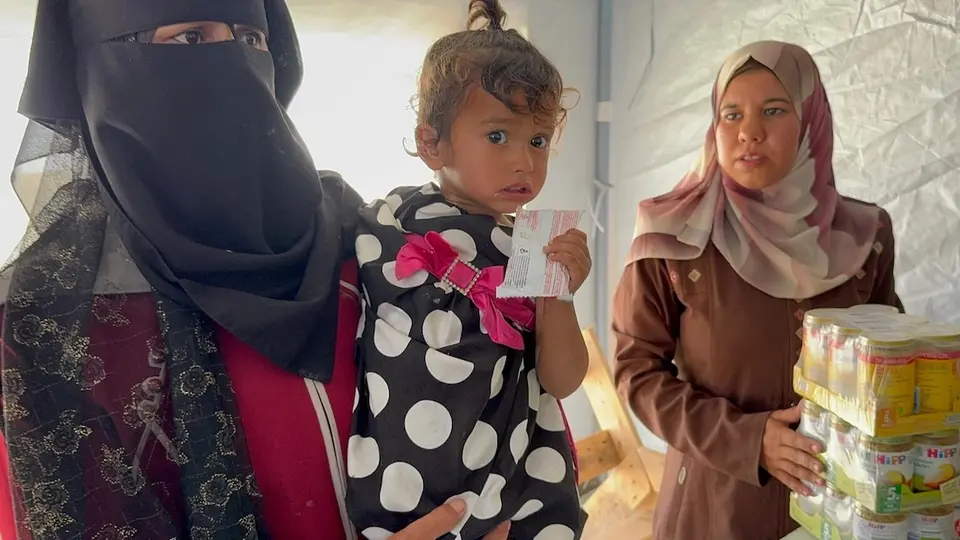
When we receive the UNICEF cash transfer of 1,000 shekels, I feel so happy. I buy diapers, fruits and vegetables ... I no longer think about myself or what I eat as long as they have enough for a while. — Rania, mother of 2 young children, Al Mawasi, Gaza
As the flow of goods and commodities from the private sector increases, UNICEF's humanitarian cash assistance program gives Palestinian families caught in the Gaza conflict dignity and flexibility to prioritize their most urgent needs. The regular payments are a lifeline for mothers like Rania, who lives with her two young children in a crowded tent camp for the displaced in Al Mawasi. "When we receive the UNICEF cash transfer of 1,000 shekels, I feel so happy," Rania says. "I buy diapers, fruits and vegetables ... I no longer think about myself or what I eat as long as they have enough for a while."
With winter on the way, UNICEF is distributing warm clothing kits, targeting 600,000 babies and children under 10, along with blankets to protect 900,000 children from the cold months ahead.
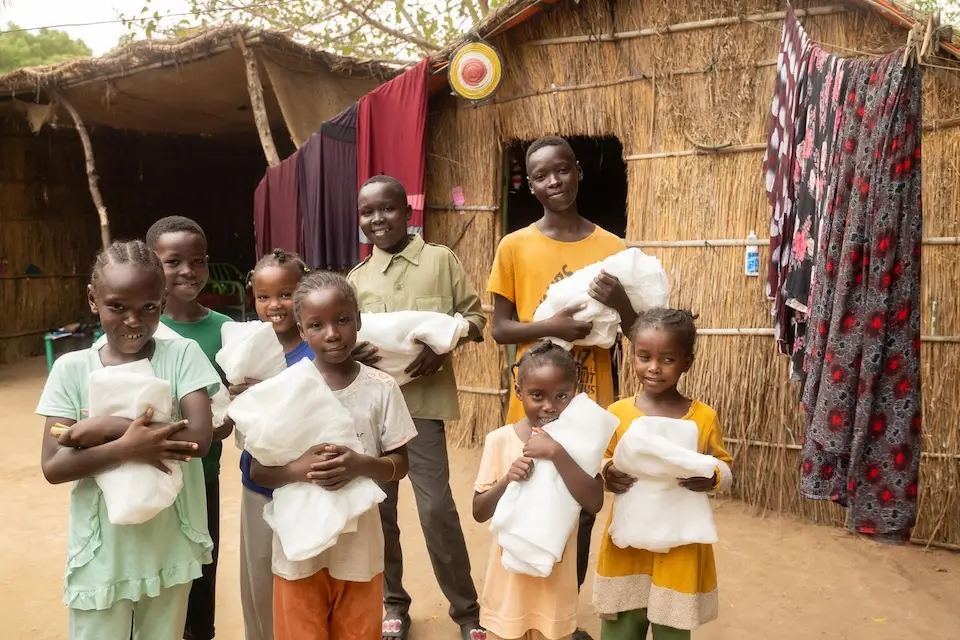
Protecting children's lives and futures during the Sudan conflict
Now in its third year, the war in Sudan has displaced 10 million people. Persistent conflict and systemic collapse have left 30 million, half of them children, in need of humanitarian aid. It's the world's largest humanitarian crisis. Since the start of the war in April 2023, UNICEF has been on the ground, delivering for children and families across health, nutrition, education and child protection sectors.
"Sometimes we have only a very narrow window to deliver supplies," says UNICEF Sudan Logistics Officer Shoshat Osman. "Missing it could mean that health kits or nutritional supplements don’t reach children in time. We succeed some days, and other days we don’t. But we never stop trying. Remaining neutral and impartial is also incredibly difficult in a conflict zone. We constantly have to remind all parties that our sole mission is to serve children regardless of who they are or where they come from. That’s not always an easy conversation, but it’s a vital one."
Learn more: How a Logistics Officer Directs Lifesaving Aid in Sudan
Therapeutic food, safe water and essential medicines and health services can save lives, but only if we can reach children in time. — Lucia Elmi, UNICEF Director of Emergency Operations
During mass displacement, the risk of disease outbreaks soars. UNICEF works with partners to deliver vaccines, bed nets, safe water and health services to stop diseases like cholera and malaria from spreading. As food insecurity deepens and famine takes hold in the west, UNICEF continues to deliver lifesaving RUTF to bring severely malnourished children back to health. More help and safe, sustained humanitarian access are urgently needed.
"Therapeutic food, safe water and essential medicines and health services can save lives, but only if we can reach children in time," says Lucia Elmi, UNICEF Director of Emergency Operations.
Related: 5 Ways UNICEF Is Supporting Sudan's Children
Delivering hope for children displaced by violence in Haiti
More than 1.3 million people have been displaced in Haiti, where armed groups control more than 85 percent of Port-au-Prince and key roads, cutting families off from food, health care and protection, while humanitarian actors risk grave danger to reach those most in need.
“Children in Haiti are experiencing violence and displacement at a terrifying scale,” says Catherine Russell, UNICEF Executive Director. “Each time they are forced to flee, they lose not only their homes but also their chance to go to school, and simply to be children.”
UNICEF is staying to deliver for children and families affected by the Haiti conflict, providing RUTF needed to treat severe acute malnutrition, along with health care, safe water and hygiene supplies for families living in crowded displacement sites.
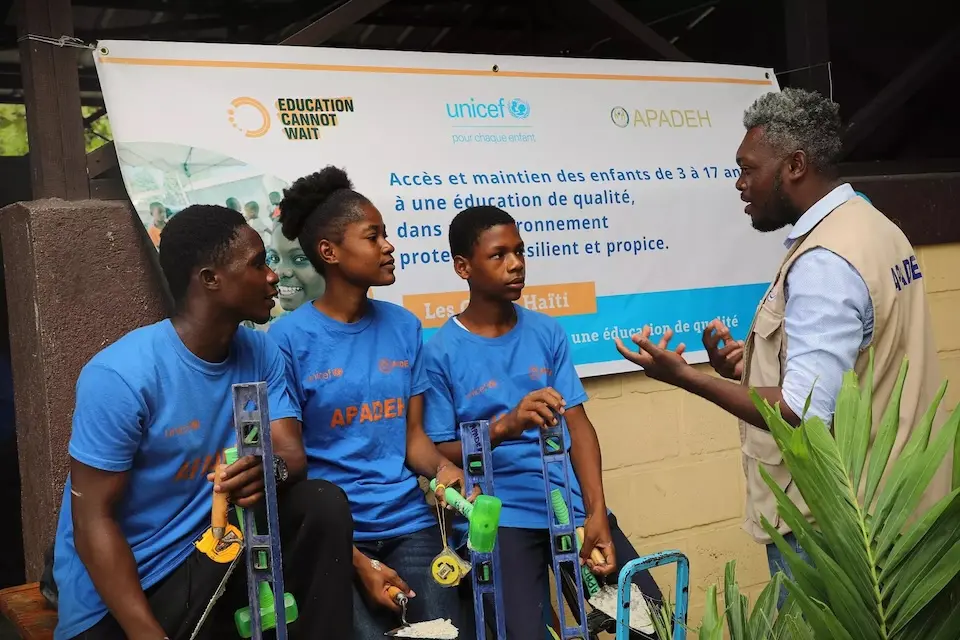
I fled Port-au-Prince with nothing but my courage. Here, I’m learning tiling, a trade I’ve loved for a long time. It’s not just about placing tiles but about rebuilding my life. — Kevin, Les Cayes, Haiti
UNICEF also distributes educational materials to temporary learning centers and supports vocational programs to help Haiti's children prepare for a better future. For young people like Kevin, non-formal education sessions run by UNICEF and its partner APADEH, with funding from Education Cannot Wait (ECW), provide job skills training — and hope.
“I fled Port-au-Prince with nothing but my courage," Kevin says. "Here, I’m learning tiling, a trade I’ve loved for a long time. It’s not just about placing tiles but about rebuilding my life.”
Learn more about UNICEF's work for children in Haiti
UNICEF won't stop delivering for children trapped in conflict zones
Wherever children are affected by conflict, UNICEF is there, providing vital supplies and assistance. Because every child has the right to a safe and healthy childhood. Help UNICEF deliver for every child.
Right now, the lives of the most vulnerable children hang in the balance as conflicts and crises jeopardize the care and protection that they deserve. Dependable, uninterrupted and effective foreign aid is critical to the well-being of millions of children. Please contact your members of Congress and urge them to support ongoing U.S. investments in foreign assistance.