Building a Child-Centered Recovery in Gaza
Palestinian children are calling for the future they need
After more than two years of a catastrophic conflict, children in Gaza are living in conditions no child should ever experience. And they have a lot to say about it — not only about what they have lost, but about what should come next.
UNICEF's "The Gaza We Want" initiative centers children's perspectives on recovery and reconstruction, engaging children between the ages of 5 and 18 across all five governorates of Gaza on the impacts of war and their dreams for better days ahead.
Video: Children in Gaza want their childhoods back
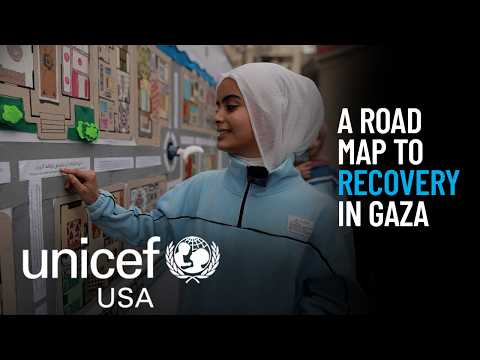
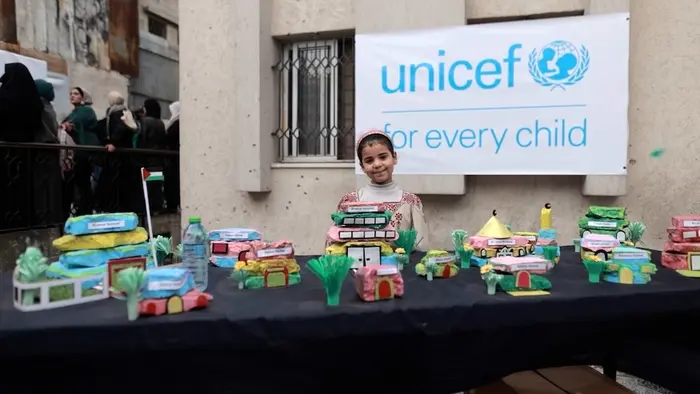
At least 11,000 children participated in the initiative through various creative activities across Gaza. They drew pictures, built models using rubble and recycled materials, and wrote poems, short stories and letters describing their hopes and dreams. They also created group murals and plays and completed simple surveys supported by trained facilitators.
When thousands of children, across age groups and geography, independently draw very similar things —trees, schools, hospitals, clean streets, playgrounds — that is not coincidence. It is a direct appeal to the world. — UNICEF's Jonathan Crickx
"These drawings and poems are not symbolic. They are data and evidence expressed in crayons, cardboard and courage," said Jonathan Crickx, UNICEF State of Palestine Chief of Communication.
"When thousands of children, across age groups and geography, independently draw very similar things — trees, schools, hospitals, clean streets, playgrounds — that is not coincidence," Crickx continued. "It is a direct appeal to the world. They want their childhoods back."
Learn more about UNICEF's ongoing support for children in Gaza
Safety, education and a sense of normalcy
First and foremost, Gaza's children want safety and protection from bombardment and violence. They want to be able to sleep through the night, and to walk to school without fear.
Mayar, 14, described the panic she feels when she mistakes the sound of a fast-moving car for an incoming missile. "I dream of seeing all of Gaza with safe buildings and homes, with space between each house and the next," she said. "I want to open the windows and see green views without rubble."
I want to open the windows and see green views without rubble. — Mayar, 14
They also want to learn in school buildings with walls and roofs, equipped with desks, working bathrooms, running water, libraries and playgrounds. "We need real schools, not tents, so we can feel like children in the rest of the world," said Mohamed, 14.
For Gaza’s children, school represents normalcy, stability and possibility.
“Missing school affected my learning a lot," said 15-year-old Hala. "Education matters for my future, so I dream of a safe life — having a secure home, my own room and a good school where I can learn and grow."
We need real schools, not tents, so we can feel like children in the rest of the world. — Mohamed, 14
Again and again, children mentioned the need for safe, clean hospitals and mental health support along with physical care. The youngest, in particular, want safe places to play: parks, beaches, sports fields. Play is how children reclaim what has been stolen from them.
“The Gaza I want is a safe Gaza with a home, a school and a hospital for every child,”one 12-year-old said.
Learn more about UNICEF's work to get every child in Gaza back to learning
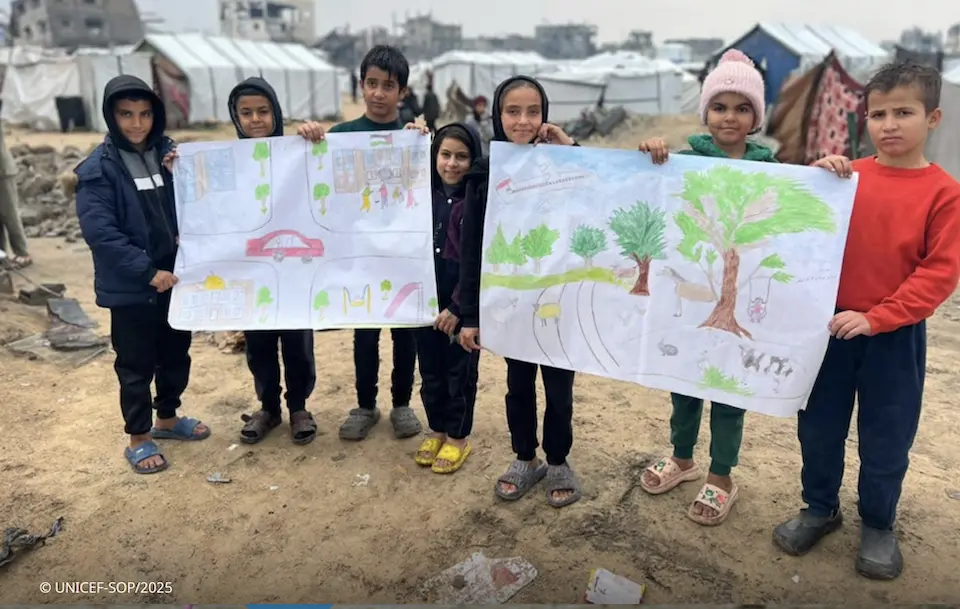
A recovery map for children who understand loss — and hope
The children not only described their dreams for the future; they also shared a timeline:
- First, safety, shelter, learning spaces and psychological first aid
- Then permanent homes, schools, parks and health clinics
- Later, universities, industries, cultural centers and places for remembrance
"Listening to children is not optional," said Crickx. "It is the minimum standard for a credible recovery. Because the Gaza children describe is not abstract. It is the Gaza they want and have the right to grow up in."
UNICEF staff remain on the ground, working with partners to meet the most urgent needs of children and their families, and to support Gaza's recovery. More help is needed.