
World Poetry Day: How Poetry Gives Children a Voice
What is World Poetry Day?
Sometimes referred to as Poetry Day, World Poetry Day is a global observance established in 1999 to celebrate poetry as a cultural and educational form of expression.
The day is celebrated around the world with poetry readings, workshops and other activities.
When is World Poetry Day observed?
World Poetry Day is observed on March 21 each year, as designated by the United Nations. This is a global recognition separate from National Poetry Month, which is observed in the United States in April.
Why poetry is recognized globally
Poetry has been practiced throughout history, in every culture and on every continent. It’s important to recognize the value of poetry to preserve language and cultural identity, while also encouraging dialogue across cultures and generations. Poetry has a way of reminding people of their common humanity and shared values.
The role of poetry in early learning and childhood development
Poetry supports early childhood development, helping to enhance language acquisition, boost cognitive development and foster emotional intelligence through rhythm, rhyme and creative expression.
Many children learn poetry during early education as the rhyme and rhythm help with recognizing and manipulating the sounds in words, which is foundational for learning how to read and write. The rhythmic, repetitive nature of poetry also helps improve children's memory skills.
Poetry as an outlet for emotional expression
Poetry also encourages children to visualize, imagine and think outside the box. Literary devices like metaphors, imagery and symbolism come to life through poetry, building critical thinking and analytical skills. Poetry also provides a safe space for children to understand and manage their own feelings, while exposing them to different viewpoints.
For children of all ages all around the world, poetry can be a tool for building creativity and confidence. It can help children find their voice, and use that voice to share their unique perspectives through storytelling.
UNICEF works to ensure that all children have access to quality education, which includes exposure to and nurturing of creative expression. Through year-round programs and initiatives like safe learning spaces in areas affected by violence or disaster, UNICEF provides essential outlets for emotional expression, including poetry.
Poems for Peace: poetry as a way for children to express hope, resilience
Complex emotions like anger, fear and hope can be difficult to process. Through reading and writing poetry, children can express and understand what they’re feeling, giving them the tools to move forward.
Poetry also provides agency for children — allowing them to tell their own stories in their own words, preserving dignity and their voice.
By writing about overcoming obstacles, children around the world facing a variety of challenges can build resilience and look toward a brighter future.
UNICEF's Poems for Peace initiative, launched in 2020, gave children in war and conflict zones an opportunity to reflect on the challenges they’ve faced and the aspirations they hold and to put their lived experiences into words.
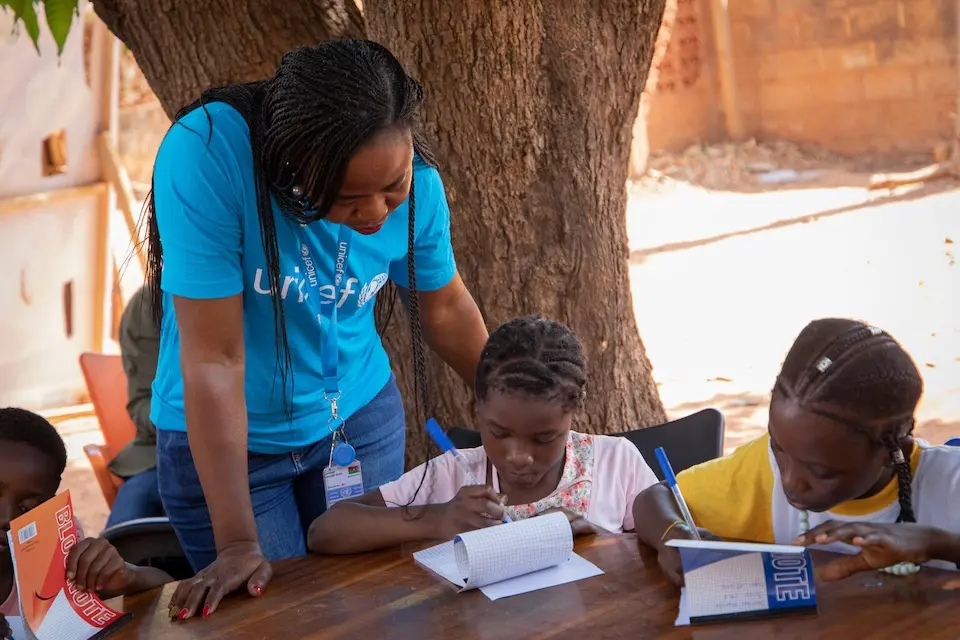
Poems for Peace is also a way to amplify these young voices and to elevate their perspectives to influence peace-building processes, while inspiring audiences around the world to advocate for the protection of children in armed conflict.
The poems demonstrate many common themes, highlighting how war affects children, but also include a distinct sense of hope for peace and the future.
A verse from "For Dad," a poem written in 2025 by then 11-year-old Victoriia from Kyyvyi Rih, Dnipropetrovski region, Ukraine:
With pencil, in secret, I'm sketching the spring
Where flowers will bloom when peace takes wing
Where you'll return like a bird to blues skies
And never again shall pain make us cry
Reading poetry also teaches children about empathy, providing a way for them to better understand the lived experiences of others.
More poems for peace by children from Ukraine
Amanda Gorman and the influence of young poets today
In contemporary culture, young poets have emerged as some of the most influential voices, bridging the gap between art and activism. Young poets often use a combination of written works, spoken word performances and social media to help shape public conversations and ensure their voices are heard.
Young poets around the world use their voices to tackle topics like social justice, politics, climate change, identity, mental health and other issues facing society today.
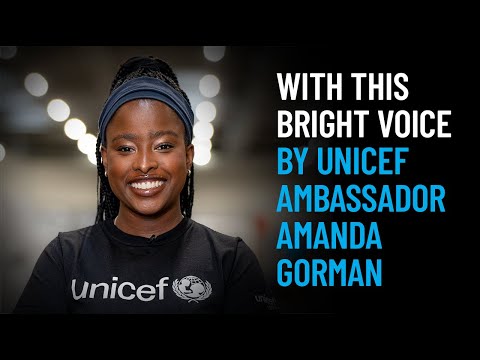
Amanda Gorman, a celebrated young poet, author and advocate, uses her voice to fight for children around the world as a UNICEF Ambassador.
An excerpt from her poem “With this Bright Voice”:
We must care for every child, everywhere
No matter their race, religion or gender
In this, we never back down, we never surrender
Because every child deserves a chance
And this world deserves a change
Related: Advocacy, Action and Hope: 5 Questions With UNICEF Ambassador Amanda Gorman
How UNICEF USA supports UNICEF — and how to help
As a UNICEF National Committee, UNICEF USA secures crucial financial support and government funding for UNICEF, while also educating the American public and rallying their support for children.
Through this work, UNICEF USA helps elevate children’s voices by providing UNICEF with the necessary support to keep its programs moving swiftly and efficiently.
World Poetry Day FAQs
Why is poetry important for children?
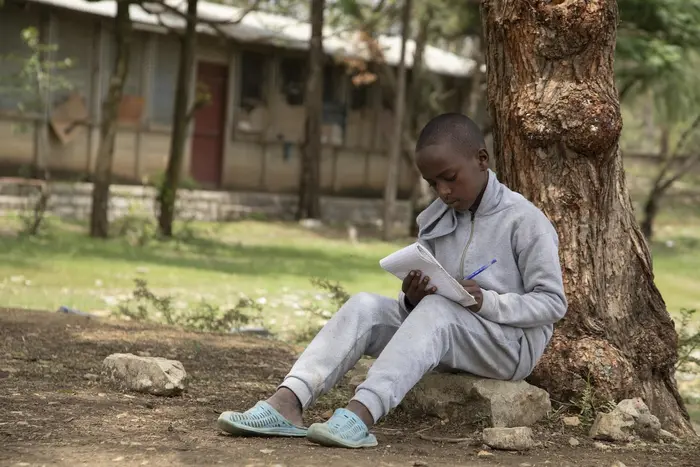
Poetry supports language development, reading skills and creative thinking by helping children explore emotions, ideas and personal experiences. Through poetry, children around the world are able to share their voices and unique perspectives.
How can families recognize World Poetry Day?
Celebrate World Poetry Day by reading poems together. Encourage the children in your life to write and share their own poems with you. For a well-rounded experience, take some time to explore poetry from children in other countries, cultures and languages.
How can people support children’s voices on World Poetry Day?
Support children’s voices on World Poetry Day by seeking out and sharing stories and poems written by children and adolescents that center their perspectives. Use World Poetry Day as a moment to advocate for children worldwide through conversations with family and friends or on social media. Take some time to learn more about and support programs that work to expand access to education and creative learning, like UNICEF’s Every Child Educated campaign.
Poetry supports language development, reading skills and creative thinking by helping children explore emotions, ideas and personal experiences. Through poetry, children around the world are able to share their voices and unique perspectives.
Celebrate World Poetry Day by reading poems together. Encourage the children in your life to write and share their own poems with you. For a well-rounded experience, take some time to explore poetry from children in other countries, cultures and languages.
Support children’s voices on World Poetry Day by seeking out and sharing stories and poems written by children and adolescents that center their perspectives. Use World Poetry Day as a moment to advocate for children worldwide through conversations with family and friends or on social media. Take some time to learn more about and support programs that work to expand access to education and creative learning, like UNICEF’s Every Child Educated campaign.