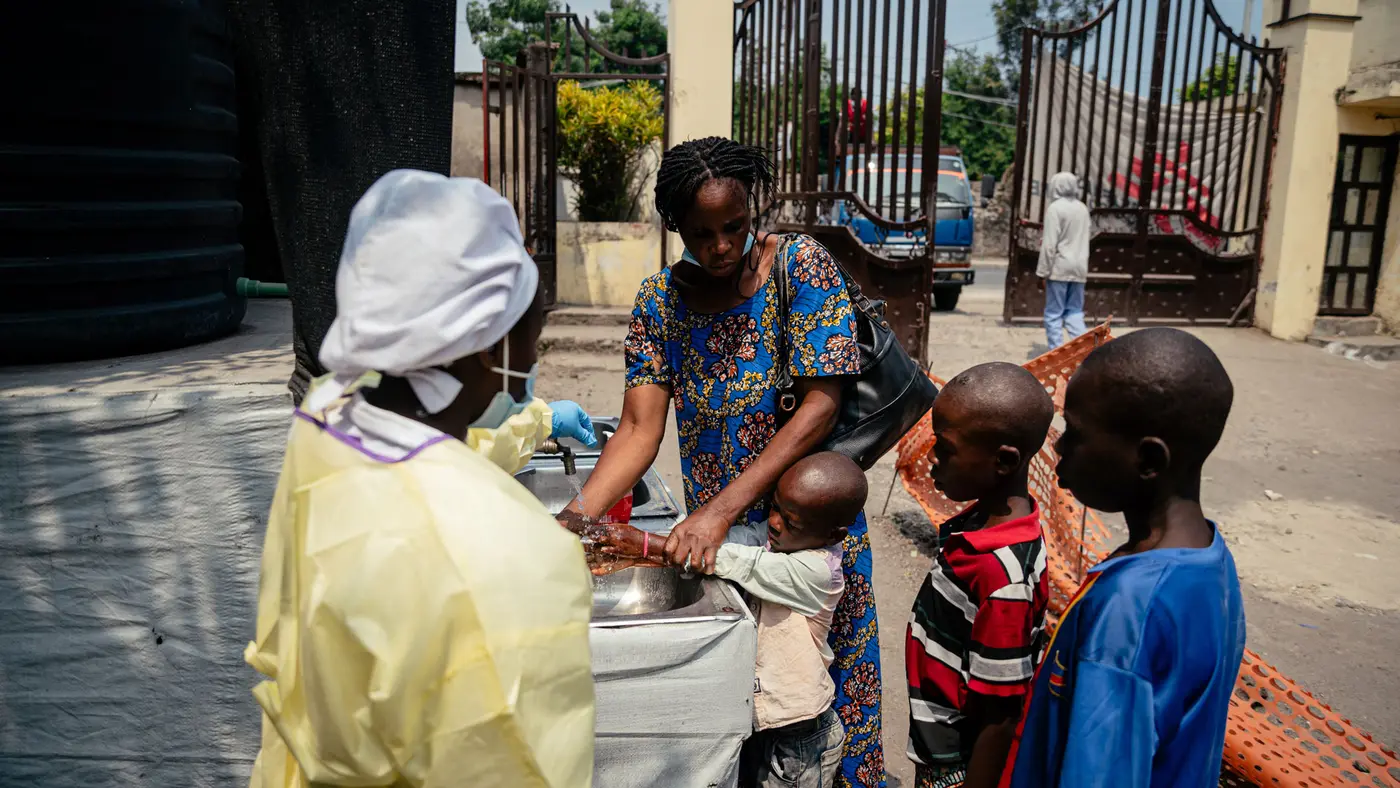
Ebola Outbreak: Children in Danger
Urgent: Children threatened by the Ebola outbreak can't wait. Help UNICEF protect children and families by rushing lifesaving aid now.
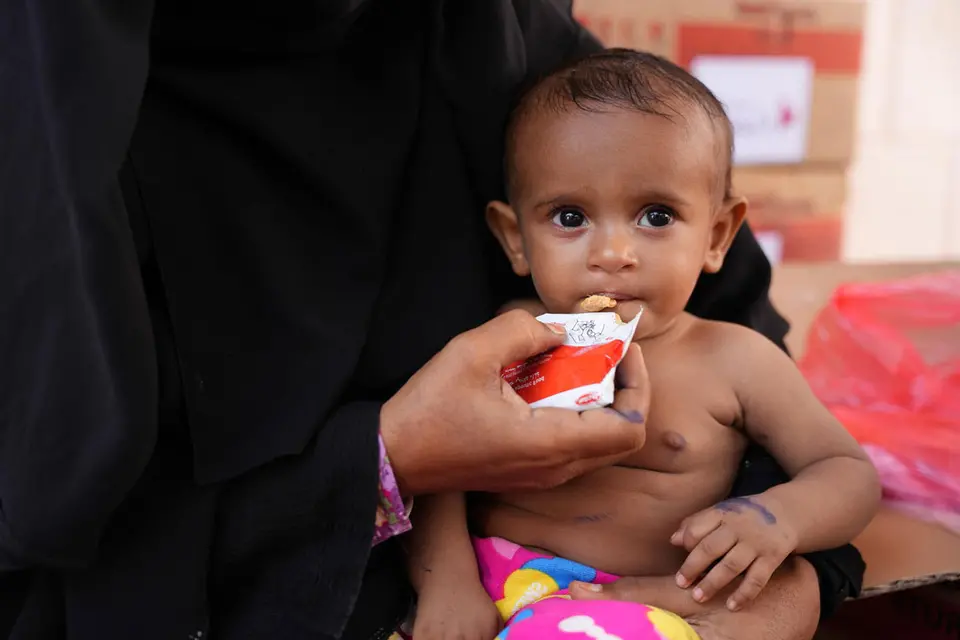
Children face grave dangers in the Democratic Republic of the Congo and neighboring Uganda, where an Ebola outbreak is rapidly spreading. Caused by the rare Bundibugyo Ebola strain, for which there is no approved vaccine or treatment, the disease is taking more lives in a region already marked by conflict, displacement and fragile health systems. Children are especially vulnerable to infection. Those who survive face separation from caregivers, stigma and trauma — in crisis zones that were already among UNICEF's most severely underfunded before this outbreak began. This is why your support matters now.
Make a Difference Now
Your gift today helps UNICEF deliver lifesaving support where it’s needed most.
Donate Now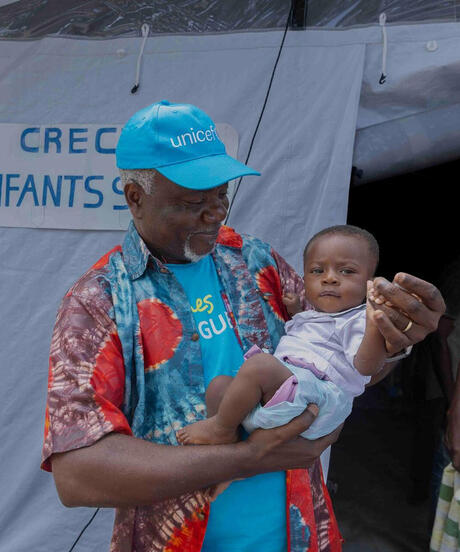
UNICEF is always there for children
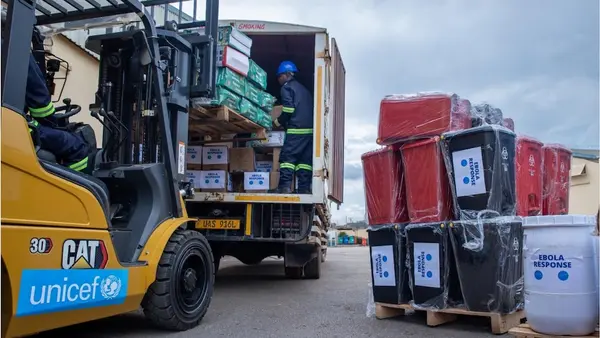
Every year, UNICEF responds to hundreds of emergencies in the world's worst places to be a child, including the DRC and Uganda. UNICEF’s work helping to bring multiple Ebola outbreaks in both countries under control is informing an effective rapid response to the current outbreak. UNICEF is airlifting infection prevention supplies, deploying health workers and earning the trust of local leaders and communities, which are all essential to stopping Ebola's spread. Your emergency support helps UNICEF do this crucial work while maintaining steadfast support for children most in need worldwide.
How Will My Donation Help Children in Crisis?
More Ways to Support UNICEF

Donate Monthly
Give Now

Give an Inspired Gift
Shop Now

Start a Fundraiser
Start Now

Donor Advised Funds
Learn More
Donation FAQ
What is the Ebola outbreak in DRC and Uganda?
The Ebola outbreak in the Democratic Republic of the Congo and Uganda is a rapidly escalating public health emergency. The World Health Organization has declared it a public health emergency of international concern — its highest level of global health alert. Concentrations of unexplained deaths, a high positivity rate among tested samples and limited understanding of transmission patterns indicate the outbreak is likely larger than detected. For the DRC, this is the country's 17th recorded Ebola outbreak, striking communities already living with conflict, displacement and limited access to essential services.
Why is the 2026 Ebola outbreak in DRC so difficult to contain?
Ebola spreads through direct contact with the bodily fluids of an infected person. Transmission is a risk in health care settings where infection prevention measures may not be adequate, and when unsafe burial practices are involved. The current outbreak is driven by the Bundibugyo strain of the Ebola virus, for which there is no approved vaccine or treatment. It is spreading across a remote, conflict-affected region marked by population displacement and weak health infrastructure, where mistrust of health workers can keep families from seeking care. Deaths among health care workers have also raised concerns over infection prevention measures in health facilities.
Why are children especially at risk during the Ebola outbreak?
When a parent is hospitalized with Ebola, children can lose their primary caregiver overnight — and the dangers don't stop there. Ebola can deprive babies who are breastfeeding their only source of nutrition. Schools close, health services are disrupted and malnutrition rises. Children from families touched by Ebola face stigma and isolation. Those left without caregivers need long-term protection and psychosocial support to heal and resume their lives.
What is UNICEF doing to respond to the Ebola outbreak in DRC and Uganda?
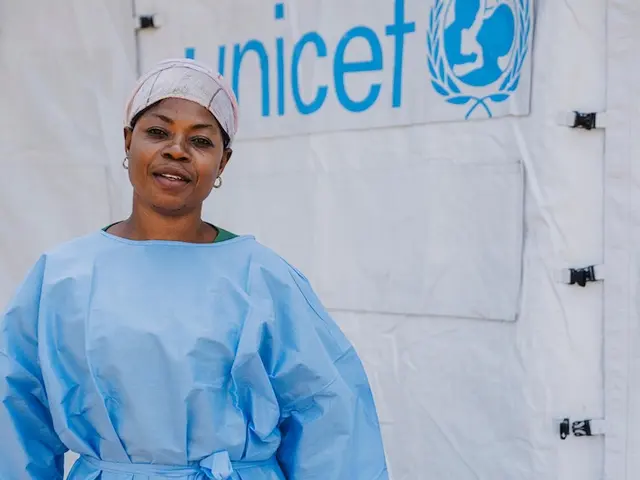
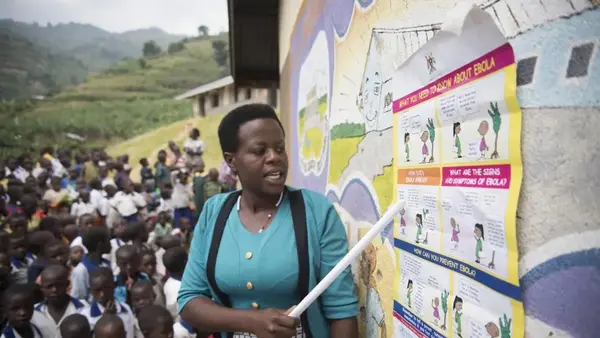
UNICEF has activated its highest level of emergency response, airlifting urgently needed supplies — personal protective equipment, medicines, hygiene and water purification supplies — to affected communities. Community health workers and decontamination teams are fanning out across areas where the virus is active. In Uganda, UNICEF is supporting health centers and conducting outreach across high-risk districts and border crossings. UNICEF also provides psychosocial support for children who have lost or become separated from caregivers, nutritional care for malnourished children and education to help families spot symptoms and seek care early. With no vaccine or approved treatment for the Bundibugyo strain, early detection is critical.
How does UNICEF build community trust during an Ebola outbreak — and why does it matter?
Building community trust is essential to stopping Ebola. UNICEF Regional Director Gilles Fagninou defines this as "working closely with local communities, community leaders, faith-based groups, women's associations, youth groups and frontline health workers to strengthen awareness, early detection and safe practices."
Why does UNICEF need flexible funding for its Ebola response?
Flexible funding is UNICEF's most critical tool for responding to an outbreak that can spread rapidly and unpredictably. UNICEF is working to protect people in Uganda who live along the 500-mile border with the DRC and prevent further spread into neighboring countries, including South Sudan, Burundi and Rwanda as well as Angola, the Central African Republic, Ethiopia, Kenya, the Republic of the Congo, Tanzania and Zambia. Flexible funding allows UNICEF to scale up operations, preposition supplies and reach children in hard-to-access, conflict-affected areas — without waiting for restricted funds to be re-authorized.
Why should I donate to UNICEF for Ebola relief?
UNICEF has responded to all 17 Ebola outbreaks in the DRC and multiple outbreaks in Uganda, building the experience, global reach and community trust needed to respond effectively. Operating in more than 190 countries and territories with the world's largest humanitarian warehouse, UNICEF goes beyond supply delivery to do the community engagement work that history has shown ultimately stops Ebola.
Can the Bundibugyo strain of Ebola be survived?
The Bundibugyo strain of Ebola can be survived. In the two previous outbreaks caused by this strain — in Uganda in 2007 and DRC in 2012 — between 30 and 50 percent of confirmed cases were fatal; a significant percentage of those who contracted the virus survived. That is why UNICEF prioritizes community education to help families recognize symptoms and seek help immediately.
Is there a vaccine for the Bundibugyo strain of Ebola?
There is no vaccine for the Bundibugyo strain driving this outbreak and no specific treatment. Early detection and community awareness are among UNICEF's most effective tools for saving more lives. Those who contract Ebola receive supportive care, such as fluids and fever and pain management. They also receive treatment of secondary infections to keep them stable while their immune system fights the virus. As the WHO Director-General has said: "Early supportive care in our treatment centers can make a real difference."
What is UNICEF's role in global health emergencies?
In disease outbreaks, UNICEF mobilizes emergency supplies, supports national governments and health systems, deploys community health workers and coordinates with partners including the World Health Organization and, for this outbreak, the Africa Centers for Disease Control and Prevention. UNICEF also works to maintain the nutrition, education and child protection services that outbreaks disrupt. As the WHO Director-General said after visiting the DRC: "The outbreak had a big head start, and we're still behind — but we are catching up."