UNICEF: Global Leader in Emergency Response
UNICEF delivers humanitarian relief in response to hundreds of conflict and climate disasters and other emergencies every year, delivering lifesaving support and protection and safeguarding children's rights while building resilience to future crises.
Updated July 2, 2026
Before, during and after an emergency, UNICEF is there to support and protect children, assist recovery
There have been an unprecedented number of humanitarian emergencies, natural and human-made, unfolding around the world, threatening more of the world's children than ever before.
Armed violence and displacement and prolonged conflict. Catastrophic floods and droughts. Disease outbreaks. Famine. Hurricanes, cyclones and other extreme weather disasters. Earthquakes.
As a global leader in emergency humanitarian relief, UNICEF is on the ground before, during and after emergencies, working to respond quickly and reach children and families who are most in need with lifesaving assistance, assist recovery and help build community resilience to future shocks.
Venezuela Earthquakes: Children Need Help Now
The Race to Save Lives: UNICEF Ramps Up Ebola Response
UNICEF's impact in 2025, responding to 414 emergencies in 101 places
In 2025 alone, UNICEF responded to 414 emergencies in 101 countries and territories, working alongside partners across all sectors to protect children and adolescents from harm and to safeguard their rights, with the following results:
- 36.2 million people were provided with safe water
- 38.7 million children were vaccinated for measles
- 98.8 million children benefited from early detection and treatment of wasting and other forms of malnutrition
- 9.1 million children accessed education
- 8.8 million children and families benefited from community-based mental health and psychosocial support services, as well as
- 10.9 million women and children were supported through interventions designed to prevent gender-based violence and support survivors of violence
- 74.2 million people accessed safe channels to report sexual exploitation and abuse by humanitarian, development, protection or other personnel who provide assistance to populations
- 900,000 households were provided with humanitarian cash assistance
Related: The Best Way to Provide Direct Relief in Emergencies: Donate to UNICEF
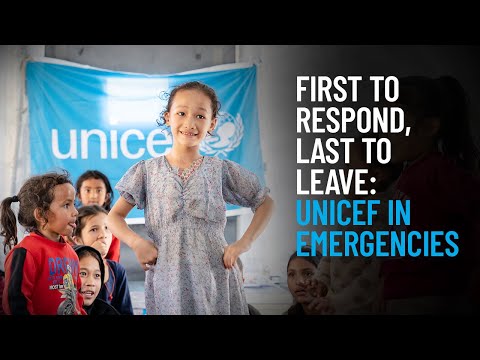
UNICEF leverages existing partnerships to mobilize a rapid response
Children who live in a conflict zone or area hit by disaster are more likely to be living in poverty. They are more vulnerable to malnutrition and disease, and they are more likely to be out of school.
With program offices in 157 countries, seven regional offices and global headquarters in eight cities, UNICEF leverages its vast network of partners to mobilize a rapid and efficient response when disaster strikes, reaching even the hardest-to-reach children and families.
Learn more about how UNICEF helps children in conflict

UNICEF can deliver emergency supplies anywhere in the world within 72 hours
UNICEF's supply and logistics operation, based in Copenhagen, can deliver emergency supplies anywhere in the world within 72 hours. Rapid response teams focus on providing essentials such as safe water, medicine and hygiene kits, nutrition and psychosocial support; identifying children who have become separated from caregivers and reuniting them; and establishing child-friendly spaces equipped with learning materials, art supplies and more.
UNICEF has even developed an innovative system for creating custom kits — called Kits That Fit — based on feedback from the people receiving them.
A UNICEF emergency response also involves recovery and rebuilding, where UNICEF partners with governments, local organizations and community leaders to strengthen preparedness and capacities for anticipatory action to reduce risks and mitigate potential impacts of future disasters.
In 2025, $1.44 billion in supplies were delivered to support humanitarian action in 67 countries.

UNICEF emergency relief efforts in countries around the world
Below, a look at a few specific emergency situations and crises where UNICEF is making a difference for children:
Child refugee and migrant crisis
There is a record number of displaced children in the world today, forced to flee their homes by armed conflict or gang violence, persecution, extreme poverty, hunger, drought and other threats to their health and safety. UNICEF acts to defend the rights of all vulnerable children on the move and to protect their futures — wherever they are, regardless of citizenship and at every step of their journey.
Climate change
UNICEF is responding to the climate crisis in three important ways: working to protect the health, safety, learning and opportunities of children, by adapting the critical social services they rely on and making them more resilient to immediate and expected climate impacts; by preparing children and young people to live in a climate-changed world, by strengthening climate education improving their capacities to adapt; and calling on leaders and decision-makers to prioritize youth in climate funding and resources.
Earthquakes
When a powerful earthquake hits, endangering lives and devastating communities, UNICEF will rush emergency supplies to meet urgent needs of affected children and families and otherwise support government-led earthquake relief efforts. UNICEF has helped rebuild communities post-quake for decades, including in Haiti, Mexico and the Philippines.
Extreme weather disasters
When vulnerable communities are threatened by extreme weather — which, year by year, has been occurring with greater frequency and intensity as a result of climate change — UNICEF is among the first on the ground, often prepositioning supplies and joining local efforts to support and protect displaced children and families.
Related: UNICEF responds as Hurricane Melissa puts children at risk

Food crises
UNICEF and partners are responding to food crises and related malnutrition crises in countries and regions around the world, from Haiti to Sudan to Yemen. Emergency relief measures include providing safe water, identifying and treating children with life-threatening severe acute malnutrition with ready-to-use therapeutic food (RUTF) and dispatching mobile health and nutrition teams to areas with the greatest needs, among other lifesaving interventions.
Dire needs in Democratic Republic of the Congo
There are enormous emergency needs in the Democratic Republic of the Congo, driven by overlapping crises including violent conflicts, climate-related disasters and widespread displacement. UNICEF DRC is focused on working with partners in the DRC to improve children’s lives and protect their rights to health, nutrition, education, protection and safe water and sanitation through a combination of strategies including community engagement, system strengthening and direct humanitarian interventions.
Learn more about UNICEF's ongoing emergency response in DRC
Gaza and Israel conflict
The humanitarian situation for children in Gaza and Israel remains dire, with over 1 million children affected. While calling for a sustained ceasefire, the release of all hostages and unimpeded humanitarian access, UNICEF worked with partners steadily from the beginning of the conflict to deliver lifesaving aid to children and families who were trapped in the war zone with little or no access to food, water, electricity, medicine or medical care after deadly attacks in Israel gave way to devastating retaliatory air strikes in Gaza. The humanitarian response continues as Palestinian children continue to suffer.
Read the latest on how UNICEF is aiding recovery efforts in Gaza
Sudan war
A brutal conflict in Sudan is threatening the lives and futures of millions of children in the country. Services are stretched thin and securing humanitarian access in some of the worst-affected areas is often difficult and dangerous. Alongside partners, UNICEF is reaching children with lifesaving support and protection wherever and whenever it can while needs remain extremely high.
Learn about how UNICEF is reaching children in Sudan
Syria crisis
Over a decade of civil conflict, a collapsed economy and devastated health and other critical systems continue to fuel a humanitarian crisis inside Syria. Millions of children remain in need of humanitarian aid and protection inside the country as refugees return from neighboring host countries. UNICEF supports needs in health, nutrition, education and child protection, addressing urgent as well as long-term needs.
Ukraine war
UNICEF is meeting urgent needs of children and families impacted by ongoing war in Ukraine in a number of ways: providing safe water, nutrition, health care and psychosocial support, helping children access education and strengthening child protection inside the country and in refugee-hosting countries.
Yemen crisis
Years of conflict and economic shocks and food insecurity have left millions of children in Yemen in desperate circumstances. UNICEF teams are on the ground screening and treating children for malnutrition; immunizing children to fight disease; improving access to safe water, sanitation and hygiene and strengthening child protection, among other emergency interventions.
UNICEF's Alliance for Children in Emergencies
UNICEF formed the Alliance for Children in Emergencies to bring together business investment, expertise and influence with UNICEF’s humanitarian expertise and reach to drive rapid response and ensure that essential services can continue, systems are reinforced and fewer children are at risk when the next emergency hits.
TOP PHOTO: Supplies are loaded onto a tourist boat for delivery to children and families on Fiji’s northern island of Vanua Levu who were impacted by Tropical Cyclone Yasa. UNICEF works with governments, civil society, NGOs and local partners to speed delivery of urgently needed supplies in the wake of natural disasters and other emergencies. © UNICEF/UN0384349/Stephen/Infinity Images