
Children in Haiti Need Help Now — UNICEF Is There
Broken schools, overwhelmed hospitals and communities under siege: Haiti's complex crisis
Haiti has plunged even deeper into catastrophe. Armed violence has displaced a record 1.4 million people, including 741,000 children — nearly triple 2024's figures. Armed groups now control 90 percent of the capital city of Port-au-Prince.
Nearly half the population — 5.7 million people, including 1.2 million children — faces acute food insecurity. Hurricane Melissa devastated the southeast region in October 2025, claiming young lives, damaging 4,400 schools and contaminating water supplies, which triggered new cholera outbreaks.
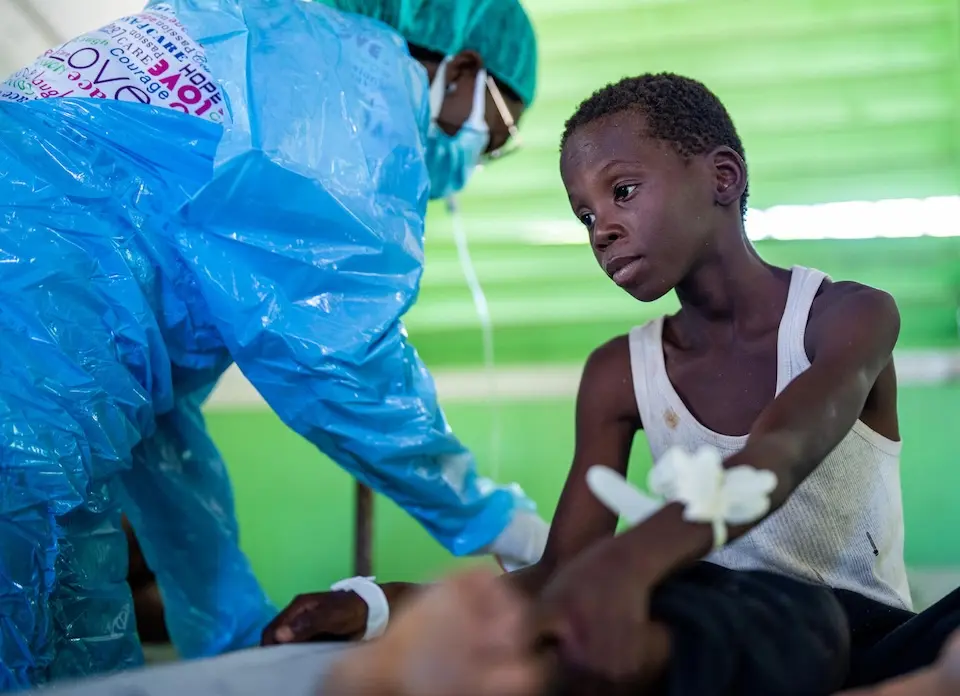
In an appeal for support for ongoing humanitarian action in the country, UNICEF provides a startling assessment of Haiti's ongoing complex crisis. The health care system remains under severe strain. Major disruptions are impeding children's education. A surge in gender-based violence is primarily affecting women and girls.
The forced return of over 24,700 children from neighboring countries last year has only added to the chaos.
A soaring number of children in Haiti are being recruited and used by armed groups
There have been thousands of verified grave violations against children, including killings and abductions, and the number of children recruited and used by armed groups tripled last year — a sign of growing reliance on the exploitation of children.
Often, children are forced to join the groups to support their families; some join after receiving direct threats to themselves or loved ones, while others are recruited after becoming separated from caregivers, seeing it as a means of survival.
Learn about UNICEF's support programs for children recruited by armed groups
UNICEF's response in Haiti focuses on saving lives, sustaining systems
Responding to Haiti's overlapping crises requires a multi-pronged approach. UNICEF works across humanitarian relief, development and peace building, delivering urgent lifesaving aid today while building the resilience and social cohesion communities need to recover and thrive long term.
UNICEF is appealing for donor funding to enable delivery of a comprehensive package of support to 1.7 million people in Haiti, including 1.2 million children, through integrated health, nutrition, education, WASH protection services and emergency cash assistance programs.
Read UNICEF's appeal for support for Haiti's children in 2026
Despite insecurity and other challenges, UNICEF is already reaching children in Haiti and improving lives — but more support is needed
Alongside its many partners, UNICEF is supporting children and families affected by violence in Haiti with psychosocial support, case management, referrals to health and protection services, education support and temporary learning spaces, as well as assistance for family tracing and reunification.
UNICEF is also actively working to prevent child recruitment, and to support the reintegration and rehabilitation of children and adolescents as they exit armed groups, while also protecting those at risk of joining, by reducing vulnerabilities, strengthening protective environments and supporting social inclusion.
Implementing and coordinating partners include Haiti's Ministry of Social Affairs and Works, the Haitian Institute of Social Welfare and Research, the Ministry of Justice, the Ministry of National Education and Vocational Training, the Minister (delegated) for Solidarity and Humanitarian Affairs, civil society organizations and other UN agencies.
Learn more about how UNICEF supports children in Haiti
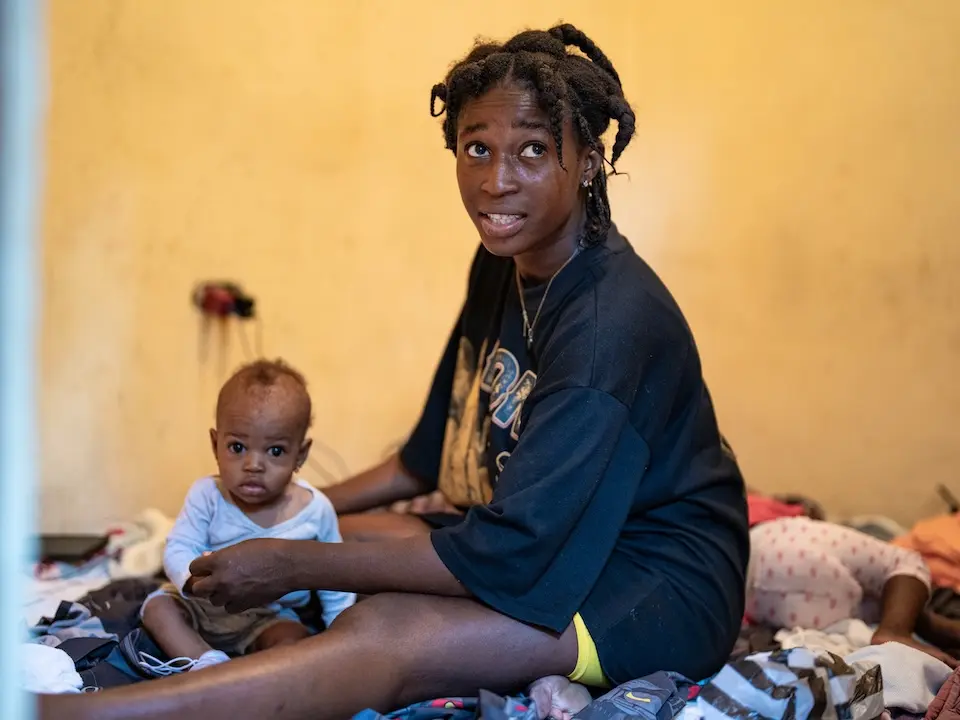
UNICEF Haiti program results and impact
Results achieved through UNICEF- and partner-supported interventions in 2025 show that, despite a very challenging operating environment, real impact is not only possible, it is already happening.
In health: Nearly 627,000 children and women accessed primary health care in UNICEF-supported facilities last year, including mobile clinics, with health professionals recruited and deployed. In 2026, the goal is to increase that number to more than 636,500.
In nutrition: Thanks to a newly adopted multi-sectoral nutrition plan and a new acute malnutrition management protocol, nearly half a million children under 5 were screened for wasting and over 60,000 were treated for severe acute malnutrition with UNICEF support in 2025. The goal for 2026 is to screen over 613,400 children and treat close to 130,000.
In WASH (water, sanitation and hygiene): UNICEF delivered safe water to over 178,000 people across Haiti in 2025, made sure that nearly 52,000 people benefited from proper sanitation and that over 131,800 people were reached with critical WASH supplies, the majority living in displacement sites. WASH services were improved at 129 schools, ensuring a healthier learning environment for 33,062 students.
The plan for 2026 includes supplying 672,000 people with a sufficient quantity and quality of water for drinking and domestic needs.
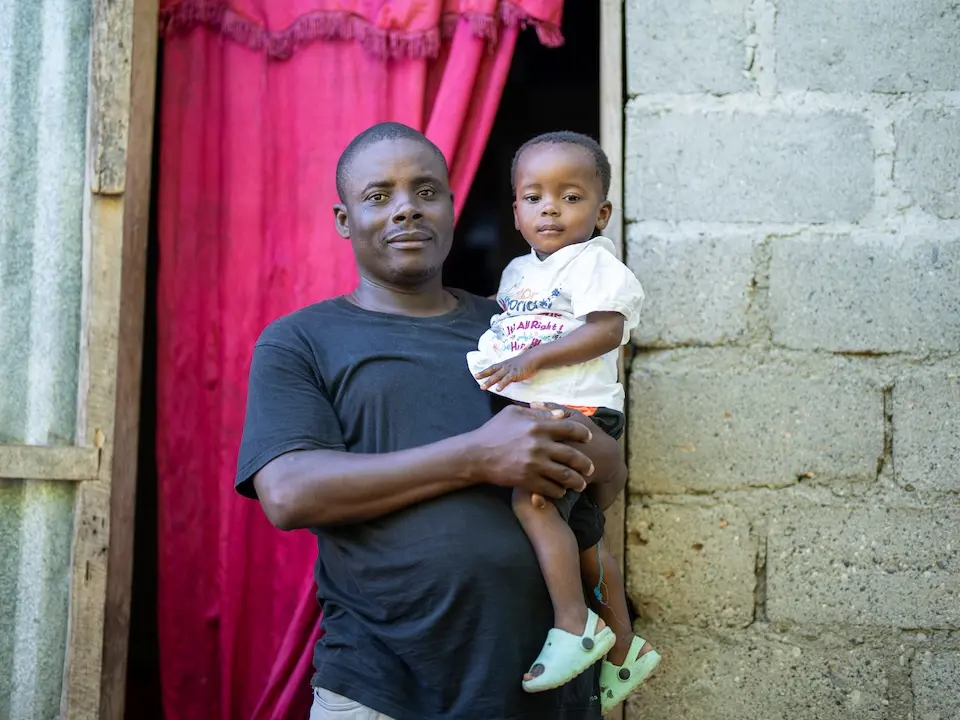
In child protection: Through UNICEF support, community-based mental health and psychosocial services were provided to over 115,770 children, adolescents and caregivers and over 33,480 women, girls and boys accessed gender-based violence risk mitigation, prevention and/or response interventions last year. Close to 52,000 children, adolescents, parents and community leaders were sensitized on the dangers of recruitment into armed groups.
Since January 2024, UNICEF and partners have been able to verify and support more than 500 children associated with armed groups with specialized protection and reintegration services across Haiti.
UNICEF continues to advocate for stronger child protection systems and for national authorities and other stakeholders to help reinforce family tracing and reunification support when doing so is in the child’s best interests and it can be done safely.
Every child recruited or used by armed groups must be released and supported so they can heal, return to learning and rebuild their future. — UNICEF Executive Director Catherine Russell
"Every child recruited or used by armed groups must be released and supported so they can heal, return to learning and rebuild their future,” UNICEF Executive Director Catherine Russell said in a statement released on Red Hand Day (Feb. 12, 2026). "Children associated with armed groups must not be treated as perpetrators. They must receive appropriate reintegration services and be protected from additional risks, stigma or retaliation.”
Communities have a critical role to play in keeping children safe, including through local and community-based child protection networks and safe, confidential reporting pathways that can connect at-risk children with support early.
In education: In 2025, more than 11,455 displaced children were reintegrated into school through UNICEF-supported programs; another 3,842 gained access to temporary learning spaces, enabling them to continue their education despite ongoing disruptions, while 22 schools were constructed or rehabilitated and 19 schools were relocated to ensure safer and more functional learning environments.
Over 200,000 students received psychosocial support, helping to mitigate impacts of trauma related to displacement, violence and repeated shocks — the result of UNICEF and partners working with Haiti's Educational Community Police force, a branch of the national police focused on school safety.
The plan for 2026 is to ensure access to formal or non-formal education, including early learning, for 590,000 children and to deliver individual learning materials to another 180,000 children.
Support children impacted by violence in Haiti and around the world
