Ending Child Poverty: Solutions That Work
Progress toward ending child poverty is possible — but fragile
An estimated 417 million children in low- and middle-income countries are living in extreme poverty. Millions of children in high-income countries are also suffering. And more children are at risk of falling into poverty, UNICEF warns, as global funding cuts, conflict, climate change and economic instability threaten access to crucial services.
UNICEF explores all of these trends in its 2025 State of the World's Children report, noting that progress toward ending child poverty is possible, but fragile, and making a case for continued investment in social protection systems and solutions.
Social protection: How UNICEF fights child poverty
With progress against child poverty decelerating in recent years, UNICEF has been sharpening its efforts to create a more equitable world where every child can realize their right to live free of poverty.
This involves working holistically with governments and other partners at all levels of intervention to help establish and maintain strong social protection systems — safety nets that leave no child vulnerable to economic hardship and social exclusion.
Across all regions, UNICEF has been helping countries shift from fragmented programs to inclusive, integrated ones capable of tackling child poverty at its roots and protecting children throughout their lives. UNICEF also supports data collection and analysis to inform strategy.
By making children living in poverty visible, and reforming policy solutions and legal frameworks to make them sensitive to children’s needs, efforts can reach the most vulnerable more efficiently through investments in what matters most: the survival, development and protection of children.
Cash assistance: an effective form of social protection
Evidence shows that comprehensive, predictable and adequate cash assistance for families with children is one of the most effective solutions to poverty and its impacts. Both universal and targeted programs have been shown to improve children's health and nutrition and increase school attendance and completion — especially for girls.
Cash assistance can also reduce the risk of child labor and child marriage as well as the likelihood of gender-based violence by improving household stability and reducing economic stress.
Research also disproves common myths, finding no evidence that cash transfers increase consumption of alcohol and tobacco, incentivize dependency, increase fertility or create inflation in the local economy.
In 2024, UNICEF-supported cash transfers reached 170 million children, helping families meet immediate needs and build long-term resilience.
Stories of impact
Here are a handful of examples of how cash assistance and other social protection programs in specific countries are already helping children and families survive, and thrive. The following stories are based on accounts featured in the SOWC 2025 report.
Finding safety through a career change in DR Congo
Astride, the eldest of nine children, grew up in Tshala, a mining town in the Democratic Republic of the Congo's Lualaba province. When she was young, her father operated machinery that crushed stone. But when tuberculosis paralyzed him, he was unable to continue working, and Astride’s mother Fanny and her children started working in the local unregulated copper mines.
In the DRC, it is not uncommon for children to work 12-hour days for as little as $2 per day. “I knew children should be in school, but I had no choice: either we worked in the mines, or we starved,” Fanny says.
Astride collected and washed copper scraps. The work was tough and risky; it meant exposure to toxic dust and chemicals, physical injury and even sexual abuse. “Working in a mine as a girl means living in constant fear because nothing is done to protect children, least of all girls,” Astride says.
But then para-social workers stepped in. With UNICEF support, these trained community members identify vulnerable families and connect them to essential services. Fanny joined a three-month mobile cash transfer program, receiving $40 per month. She used it to start a small plant nursery, and now earns an income by selling seedlings.
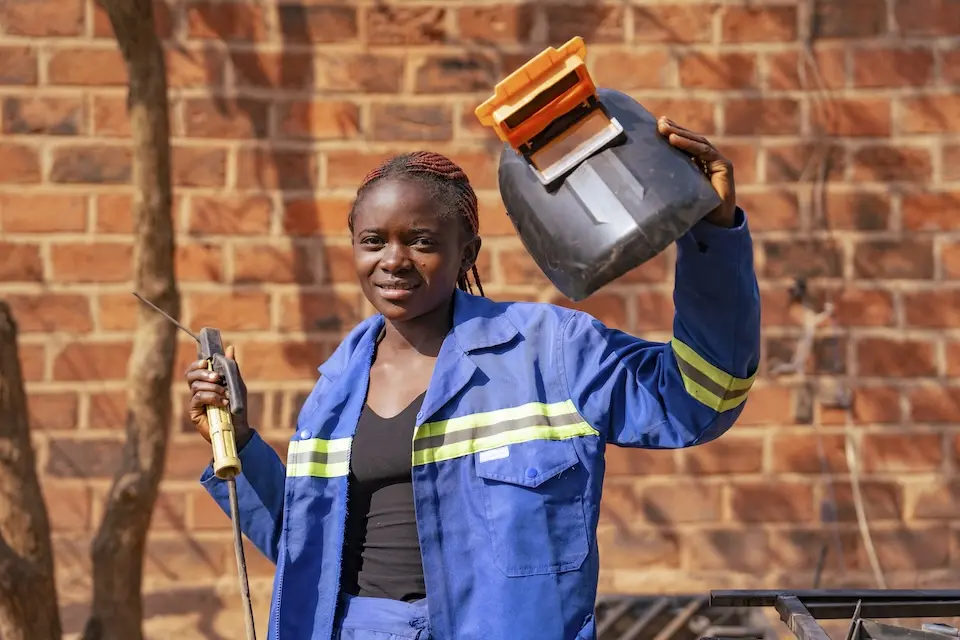
While her siblings returned to school, Astride chose a six-month welding course run by the Division of Social Affairs, through which she received a full tool kit. Today, she works in a local workshop under Papa Kamwila, a respected welder in Tshala. “I lost five years of schooling to the mines," Astride says, "but through welding I gained strength and independence."
Rebuilding after drought in Ethiopia
Derara, 7, plays on the sun-scorched ground in the Dubuluk camp for displaced persons in southern Ethiopia. His laughter rises above the stillness of the camp, which is lined with makeshift shelters.
A heavy sense of uncertainty lingers, but for Derara, a sense of normality is slowly returning. “I like it here because I have a lot of friends,” he says.
Derara’s mother, Kabale Molu Godana, watches him play. She recounts the painful memories of how drought gradually took away the family’s livelihood.
“We walked here penniless and slept on the roadside,” she recalls. “I carried Derara [then aged 3] most of the way. I had 25 cattle and all perished. Not even one survived. We left with nothing. I didn’t know what we’d find here, but we had no other choice.”
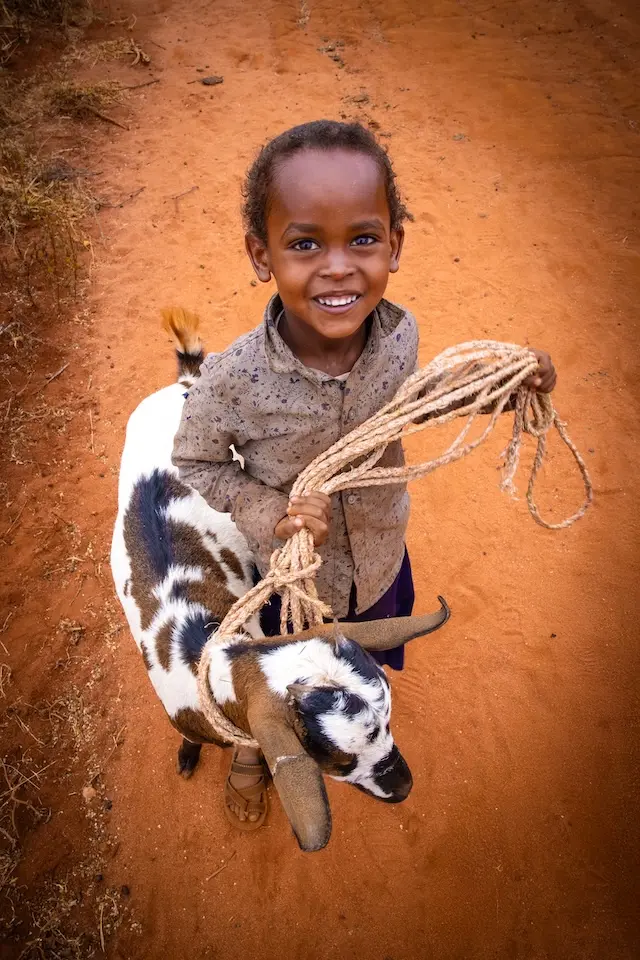
Cash assistance provided through the Ethiopia Crisis to Resilience program, a social protection program funded by the UK's Foreign, Commonwealth and Development Office and supported by UNICEF, made all the difference. Godana received two transfers of 10,000 birrs each (approximately $140 in total) over two months; she used the funds to buy a goat and chickens, and started selling eggs.
“I don’t want to rely on aid forever," Godana says. "If I can escape this poverty and help my children finish their education, then with God’s help, I will find happiness.”
Recovering from a war injury in Lebanon
Back in October 2024, Sawsan, then 6, was playing outside her home with friends when an airstrike hit her neighborhood in eastern Lebanon's Bekaa Valley.
“I found her on the ground, unconscious,” recalls her mother, Rima.
Shrapnel had struck Sawsan’s head. For two months, she lay in a hospital bed, surrounded by monitors and hooked up to IV lines. The injury stole her sight, hearing and voice and left her unable to walk or even swallow.
Meanwhile, her parents struggled to repair the damage to their lives. The airstrike displaced the family and Sawsan’s father lost his job.
Initial treatment costs were covered by the government and Sawsan was eventually released from the hospital, but she still needed rehabilitation at home, including speech, eye and hearing therapies. Having missed nearly an entire year of school, Sawsan also needed specialized educational support. Overwhelmed and under-resourced, the family struggled to meet her complex needs.
Then, a turning point: through UNICEF, Rima learned about a new program specifically designed to support war-wounded children in Lebanon. “That call changed everything,” Rima says. “They asked me to register Sawsan so that she could get the medical care she still needed. And so, we began again.”
With support from a program called Assistance & Care for War-Wounded and Affected Children (ACWA) — the acronym resembles an Arabic term meaning "to be stronger" — and through the work of dedicated doctors and specialists, Sawsan’s health began to improve.
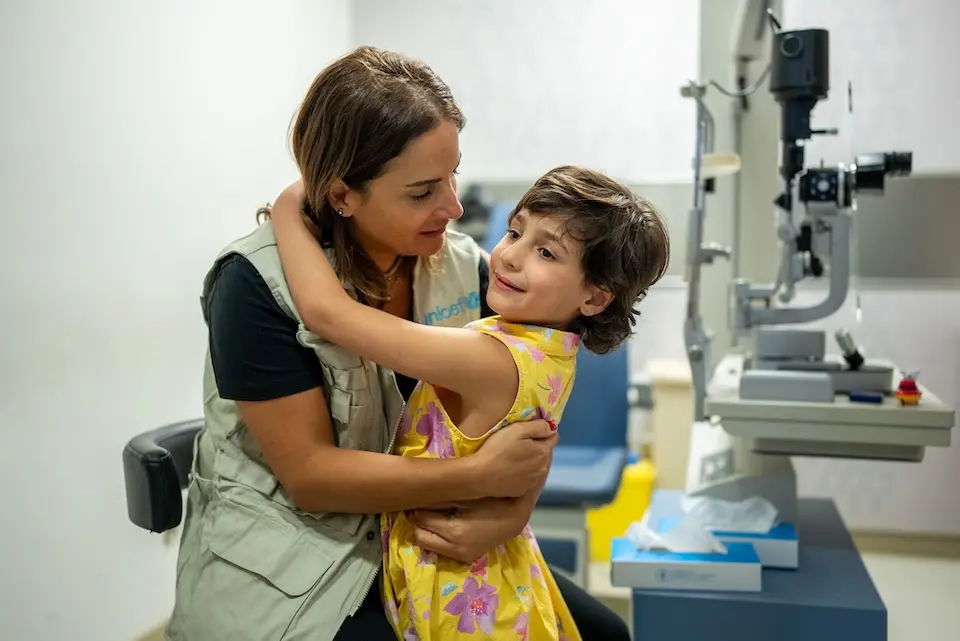
“She will never get back the months she lost,” Rima says, “but she has her laughter again. She has hope again. ACWA gave us that.”
Launched in March 2025, ACWA is funded by the European Union and implemented by Lebanon’s Ministry of Public Health in partnership with UNICEF.
Securing support in Peru
Hansel, 9, sketches roads and houses on the dirt floor of his home in Pampa Miraflores village, Ayacucho, Peru. The area is within the remote jungle region of Apurímac, Ene and Mantaro Rivers Valley, which many still associate with drug trafficking and terrorism that devastated the country in the 1980s.
“When I grow up, I want to be a civil engineer like my brother Merlyn," Hansel says. “I dream of building a house next to his, so my parents can live with us.”
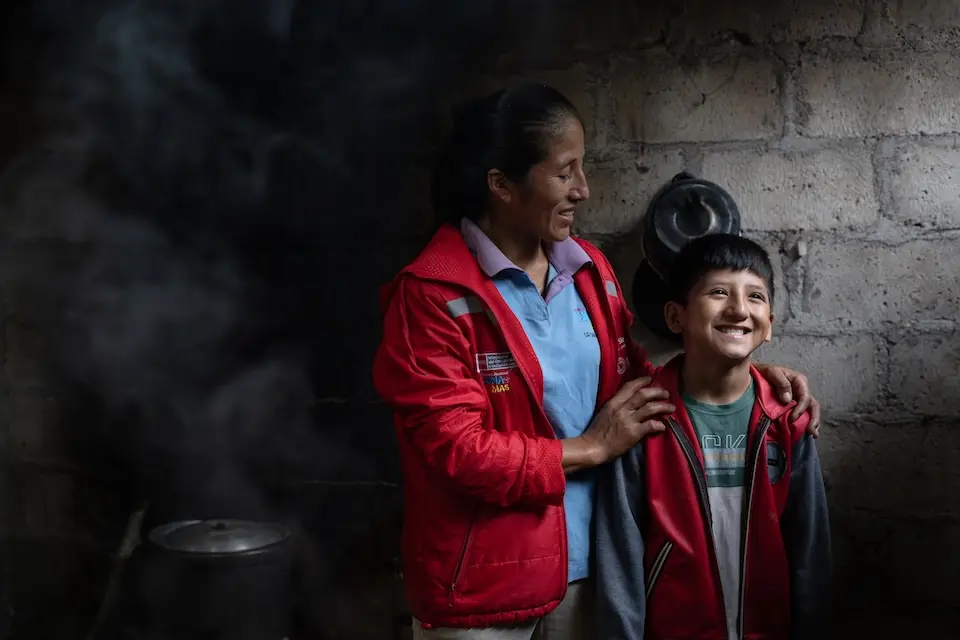
Hansel's brother Merlyn, 18, was the first student from the community to earn a place in a high-performance school; Peru has several, where outstanding students, including those from low-income families, are selected for special training. Merlyn then received a state scholarship to attend the National University of Engineering in Lima.
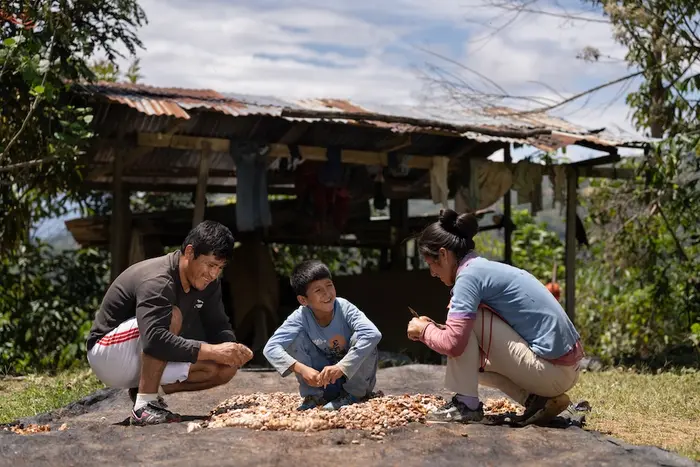
Most families in Pampa Miraflores rely on cocoa farming, and children often take part to help keep their families afloat. The boys’ mother, Nayci Zárate, earns a modest income as an early childhood educator and social worker, and her husband is a cocoa farmer.
Since Merlyn was 5, the family has received 200 soles, or about $58, every two months through the government-run, UNICEF-supported Juntos program. The cash assistance is provided as long as the children continue to attend school and receive regular health checkups.
“Sometimes we have nothing at home, and then the money arrives,” Zárate says. “We use it to buy food, notebooks or shoes.”
Merlyn shares his dreams for the future: “I want to finish my studies, help my family and my community. Instead of dirt roads, I want to see paved streets and better homes.”
Getting by in South Africa
Ompfuna, 10, rides her yellow scooter along a narrow footpath outside her house in Silvertown, a poor and congested township near Alexandra, South Africa. Her home is less than 20 miles away from the Jukskei River’s edge, and she’s careful not to ride too close to the steep bank.
“At Sandton, they have big areas to play," Ompfuna says. "Here we have small areas to play."
Sandton, Africa’s richest square mile, stands in stark contrast next to the congestion and squalor of Alexandra. The lack of playing areas isn’t Ompfuna’s only concern, though; the river next to her house is a constant threat. In heavy rains, the riverbank can overflow, causing flooding and landslides.
“When it starts raining, I can’t sleep,” says her father, Sam Nkhumeleni. “It’s scary,” Ompfuna adds.
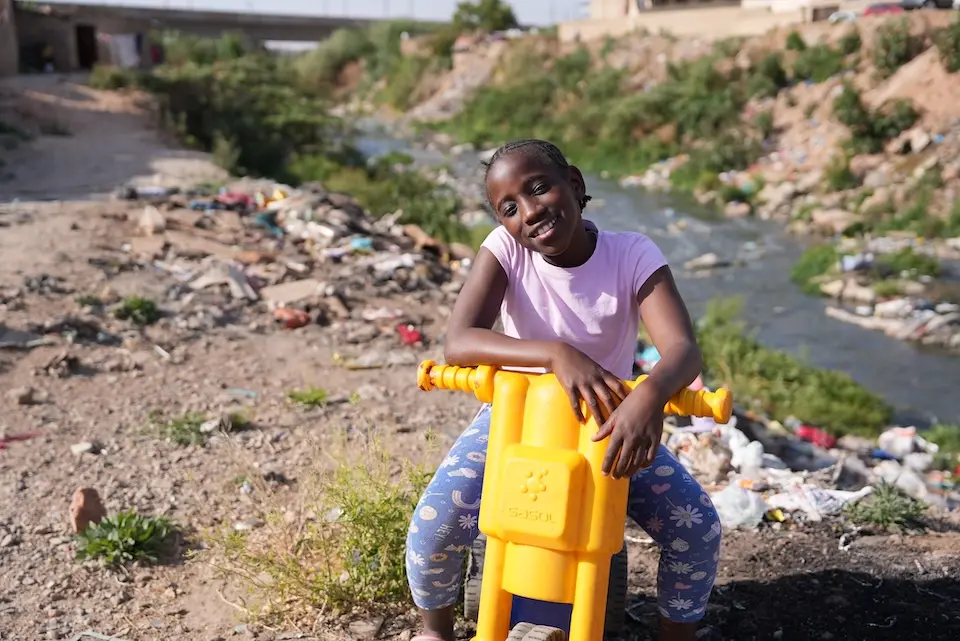
As a caddy at a country club, Nkhumeleni is surrounded by patrons who easily spend 5,000 rand (about $288) on lunch — about the same as his monthly salary. His income, plus the money his wife Portia earns as a domestic worker in Sandton, is nowhere near enough to cover their expenses. The family relies on the Child Support Grant they receive from the South African Social Security Agency to make ends meet.
“I want to make sure my kids all finish school and go to university so that one day they too can play golf and get caddies,” Nkhumeleni says.
Stitching a future in Tanzania
Squeezed into a narrow market stall in Kigoma, Tanzania, 17-year-old Antini is busy sewing clothes.
“I love fashion, it’s my calling now,” Antini says. “My dream is to have my own shop with 30 sewing machines, where I can also teach youth.”
This future is very different from the one she had envisioned for herself before her father died.
Antini’s mother, Koretha Mahepa, explains: “My late husband and I shared one dream: that all five of our daughters finish school. We always said education was the one thing no one can ever take away.’”
When her husband died, everything changed. Mahepa began subsistence farming and Antini, then aged 12, dropped out of school. Her two older sisters were already married, so Antini became the caretaker of her two younger sisters.
“I want my sisters to have a better future,” Antini says. “When Dad passed, I knew I had to step up to help my mother and siblings. Even though I wanted to learn, it felt impossible.”
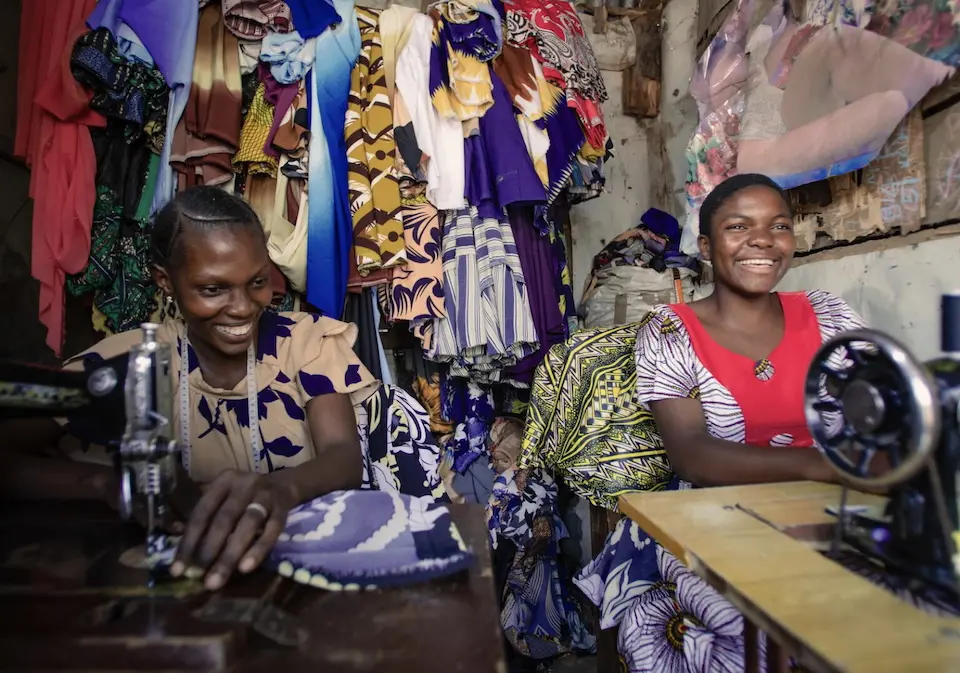
Then Antini’s uncle told her about a program called Ujana Salama, or “Safe Youth” in Swahili. Implemented by the Tanzania Social Action Fund, Ujana Salama is a cash-plus intervention — part of the government’s Productive Social Safety Net program.
Through Ujana Salama, Antini received an initial grant of $50. After developing a business plan, she received an additional $30, which she used to buy a sewing machine, a floral printed dress and a pair of sandals.
“My sewing machine changed my life. I can make clothes and provide for my family,” Antini explains. “One day, I hope to dress celebrities and have my own fashion show.”
Learn more about how social protection programs fit into UNICEF's mission for children, and how to help.