Unexploded Ordnance a Daily Threat for Ukraine's Children
Potentially 23 percent of Ukraine is littered with landmines and explosive remnants of war
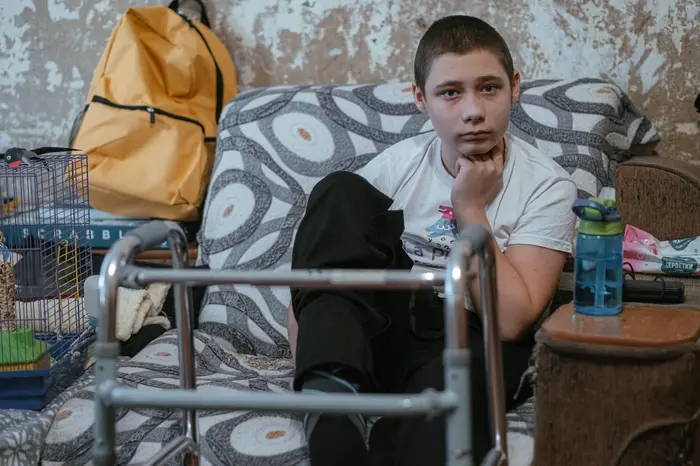
The pain and longing are visible in 13-year-old Nazar's eyes when he talks about how much he loves football, and how he and his friends used to play all the time.
Nazar recently became a teenager, but he couldn't celebrate the way he hoped, at home with family and friends. Instead, he spent his birthday in the hospital ward that has become his second home over the past few months.
Nazar remembers Nov. 4, 2024 as just a typical Monday morning. He had finished his online school lessons and decided to go for a walk with a friend, not far from his home. "It was beyond the highway,” recalls Nazar. “I don't even remember where exactly we were going.” His friend spotted a strange object on the ground and picked it up, then tossed it on the ground.
It was unexploded ordnance, a remnant of more than three years of full-scale war in Ukraine.
We received a call saying that he had called an ambulance, saying his legs were torn off. The ambulance [dispatcher] didn't believe him at first.” — Yevheniia, mother of 13-year-old Nazar
Nazar's legs and feet were injured in the blast that followed; his friend sustained injuries to his torso. Their mobile phones were thrown out of reach, but Nazar managed to crawl through the mud to grab his device and call for help.
"We received a call saying that he had called an ambulance, saying his legs were torn off. The ambulance [dispatcher] didn't believe him at first,” says Yevheniia, Nazar’s mother.
Video: The threat of danger with every footstep
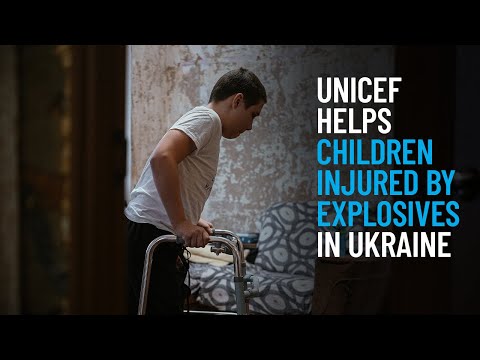
Nazar was taken to the nearest hospital in the town of Barvinkove, where he was given immediate assistance and then referred to a more specialized hospital in the city of Kharkiv, a three-hour drive away.
"The first month was difficult because we were not given any predictions. They said we had to monitor the condition of the soft tissues. If everything was fine, then it was fine, but if necrosis started, they would partially amputate," Yevheniia says.
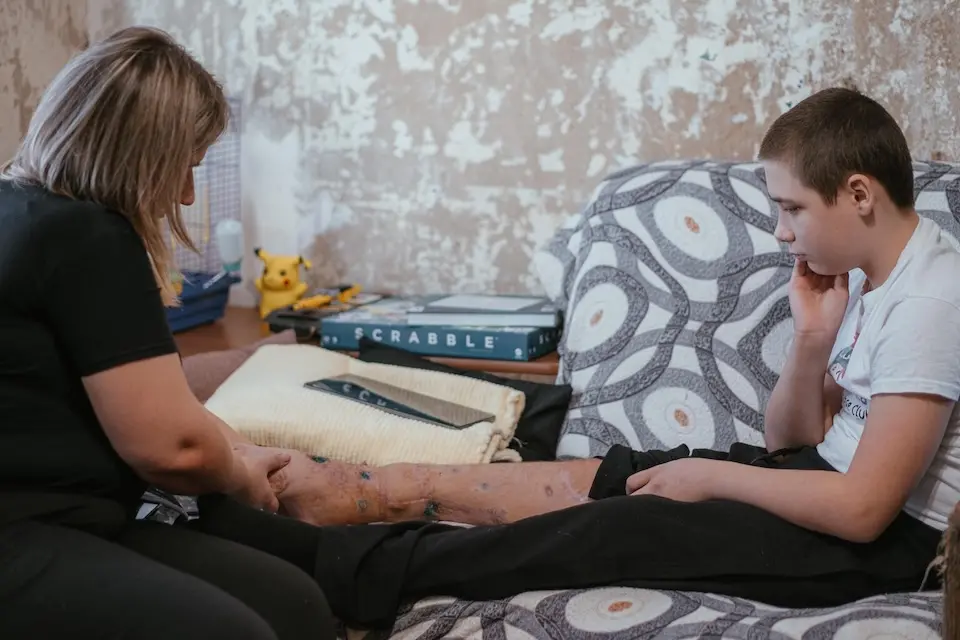
14 surgeries and a partially amputated foot
In the months that followed, Nazar had 14 surgeries to address fractures, deep shrapnel wounds and hemorrhagic shock. Part of his right foot was amputated. Since that horrific late November day, he has only been home twice, in between treatments.
"Rehabilitation has just started for us,” says Yevheniia. “The first surgery was when we arrived at the hospital. Then there were two more surgeries — skin grafts. Just two weeks ago, the plates were removed and the rehabilitation stage began.”
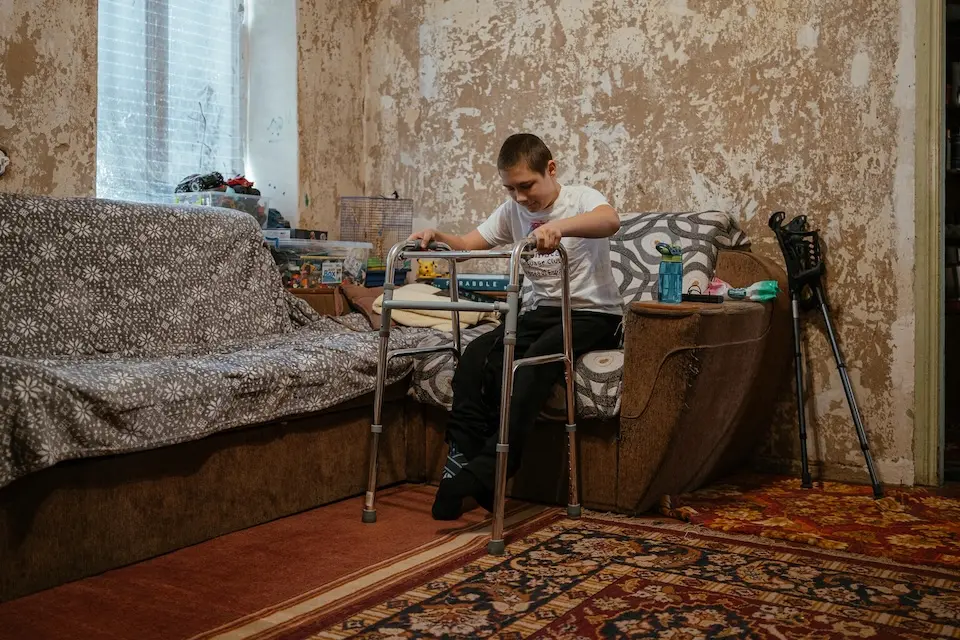
On his most recent trip home, Nazar arrived with crutches and a walker supplied by UNICEF and partners. After the injury, he could only sit or lie down but now, with the help of the walker, he is taking his first steps and learning to walk again.
His physical recovery is underway, but the mental scars will also require significant support and time to heal.
Related: Helping Children Cope With Trauma in Wartime Ukraine
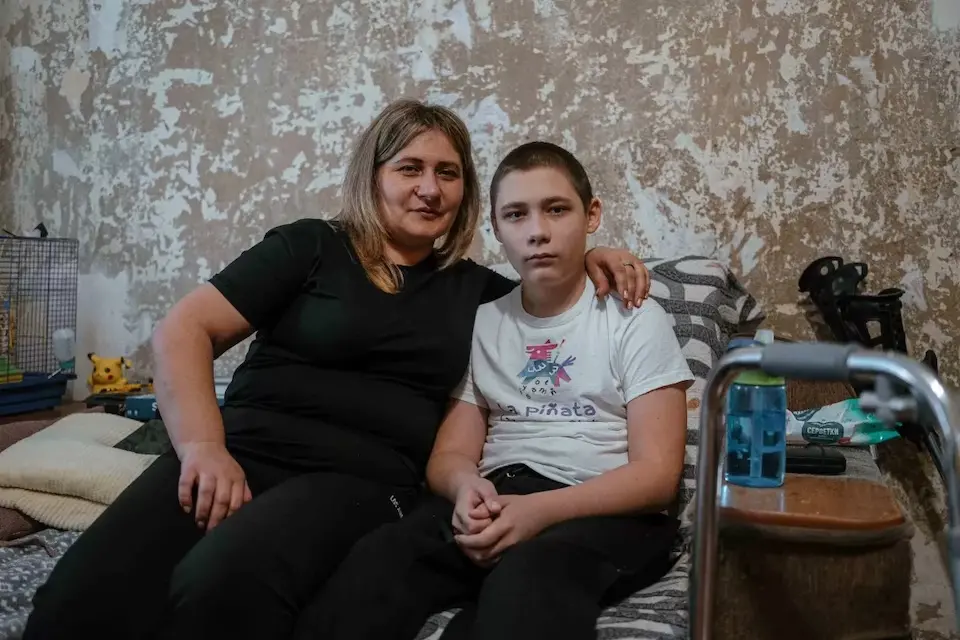
UNICEF and partners provide tailored support for survivors of explosive remnants of war
"When we first arrived to see Nazar, he was not really willing to talk,” says Olena Hunchenko, a case manager from the International Rescue Committee, a UNICEF partner. “Probably, it was a child's reaction to what had happened. During the next visits, Nazar became more open, talking about his studies and hobbies, even sharing some moments of the incident.”
Olena says she learned about Nazar’s injury from the news and then found Yevheniia’s contact information the same day and called to offer support. Cash assistance, mental health and psychosocial support and rehabilitation aids, including crutches and a walker, have been provided through a child-focused survivor assistance program supported by UNICEF and the IRC, with funding from the European Union. This support will enable Nazar’s recovery and support Yevheniia and the family to better cope with the additional needs that he has following the accident.
Before his injury, Nazar took lessons on mine safety and UXO at school, but he says he didn't think his village could be contaminated with explosive remnants of war and mines. However, his home in Nikopol is close to the front line and often impacted by shelling, leaving unexploded devices in locations where they pose high risk to civilians, in particular children.
Learn more about UNICEF's mine risk awareness training for children
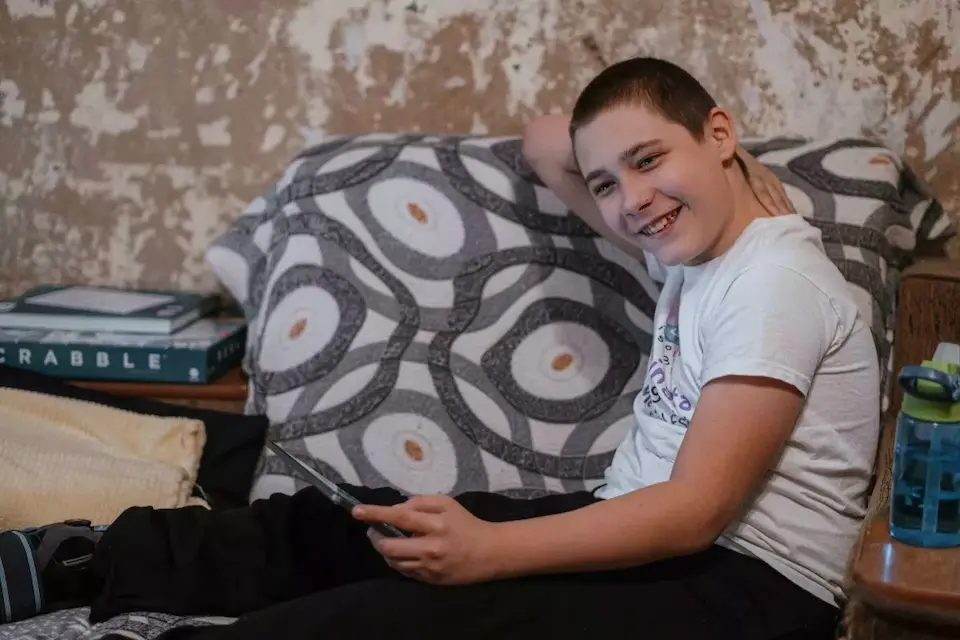
War-torn Ukraine is now the world's most heavily mine-contaminated country
An estimated 100 million people in more than 60 countries and territories live under the threat of landmines and explosive ordnance. According to the UN Mine Action Service (UNMAS), war-torn Ukraine is now the most heavily contaminated country in the world.
“The threat of explosive ordnance can be hidden anywhere — even in places that seem familiar or harmless, explains Svitlana Kisilova, Social Behavior Specialist at UNICEF Ukraine. "That’s why our education efforts focus on instilling clear and practical safety rules in children and young people: never approach or touch unknown objects, always tell a trusted adult right away, and report the danger by calling 101.”
Nazar has resumed his online studies and reads books on a new tablet that he received through the child-focused victim assistance program. He says he is particularly good at math.
The threat of explosive ordnance can be hidden anywhere — even in places that seem familiar or harmless. — Svitlana Kisilova, UNICEF Ukraine
In a few weeks, Yevheniia and Nazar will return to the hospital in Kharkiv to continue rehabilitation.
Unfortunately, Nazar is not the only child in Kharkiv region case manager Olena says she has supported after an injury. "I have many cases of injured children, more than 30," she says. "These are injuries from various unexploded explosive devices including from shelling in Kharkiv itself."
To support children who have suffered accidents caused by mines or other explosive weapons in Ukraine, the holistic child-focused victim assistance program was launched by UNICEF in 2024, in partnership with the IRC, with the support of the European Union's Directorate-General for Civil Protection and Humanitarian Aid (ECHO). Nazar is one of 570 children who have received critical assistance under this program to ensure tailored support for their long-term recovery.
Right now, the lives of the most vulnerable children hang in the balance as conflicts and crises jeopardize the care and protection that they deserve. Dependable, uninterrupted and effective foreign aid is critical to the well-being of millions of children. Please contact your members of Congress and urge them to support ongoing U.S. investments in foreign assistance.
This story is adapted from unicef.org