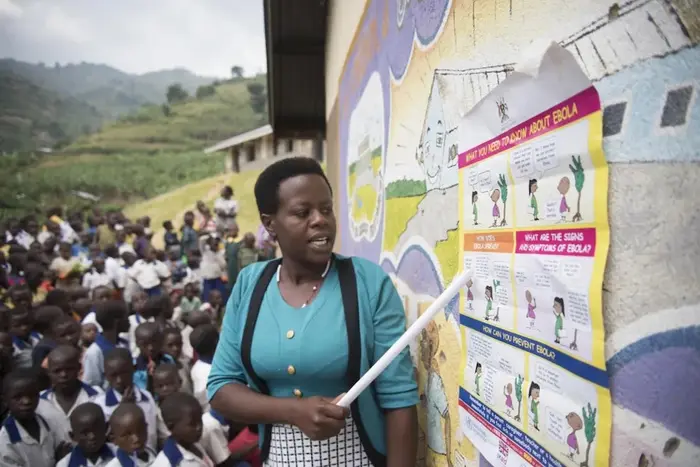
Supporting Community Response to Stop Ebola
Preparedness is key in the Ebola fight
The Democratic Republic of the Congo (DRC) is facing a large-scale epidemic of Ebola virus disease. The outbreak is evolving rapidly, with confirmed and probable cases reported across several health zones, alongside increasing pressure on already fragile health systems.
The situation is further compounded by insecurity, displacement, misinformation and low trust in health services. The strain causing the outbreak is Bundibugyo, which is less common than other Ebola strains, and there is currently no approved vaccine or treatment.
Reports of new Ebola cases in Uganda show that the risk of the disease spreading beyond the DRC remains very high.
The current outbreak was declared a public health emergency of international concern on May 17, 2026. As of May 24, there were 906 suspected cases and 223 suspected deaths in DRC. Of these, 112 cases and 11 deaths were laboratory-confirmed. In Uganda, there have been seven confirmed cases, including one confirmed death.
Due to limited testing capacity and underreporting, the true scale of the outbreak is likely much higher.
UNICEF has allocated emergency program funds to scale up urgent response activities in DRC and Uganda and to step up preparedness in at-risk neighboring nations, including three other priority countries — Burundi, Rwanda and South Sudan.
On May 23, the U.S. Government announced funding support for the multi-lateral Ebola response managed through the United Nations Office for the Coordination of Humanitarian Affairs (OCHA).
Read more about UNICEF's response to the Ebola outbreak in DRC and Uganda
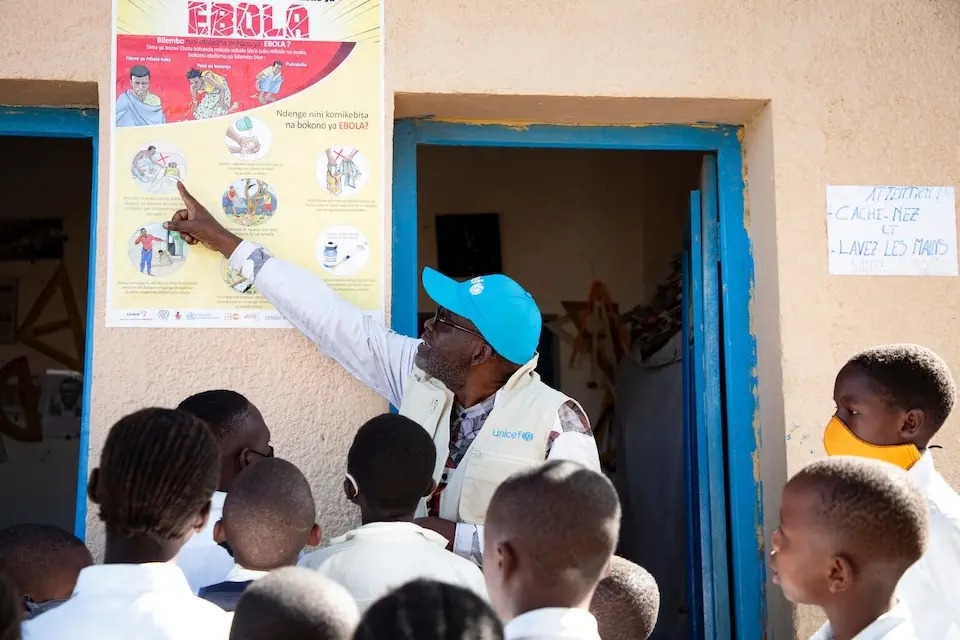
Outbreak response is underway in DRC amid fears Ebola could become endemic in the region
UNICEF has launched a six-month plan to support the government-led response to the current outbreak in DRC, centered in Ituri, North Kivu and South Kivu provinces. The efforts are part of a multi-country response and preparedness plan that also covers Uganda, South Sudan and other neighboring countries.
Priorities for UNICEF and partners are wide-ranging, spanning all major program areas: health, WASH (water, sanitation and hygiene), infection prevention and control, risk communication and community engagement, nutrition, child protection, mental and psychosocial support, and prevention of gender-based violence and sexual exploitation and abuse.
As part of the emergency outbreak response, UNICEF and partners are working to:
- strengthen community-based surveillance measures, active case finding and contact tracing, triage and isolation systems and pediatric Ebola care, while ensuring the continuity of essential health and nutrition services
- rehabilitate WASH infrastructure
- strengthen mechanisms for rapid disinfection
- scale up risk communication, social listening and community engagement to address misinformation, strengthen trust and promote prevention practices
- integrate gender-responsive programming
- strengthen prevention of sexual exploitation and abuse and gender-based violence risk mitigation
More funding is needed to support the response.
And while urgent action is required to arrest the DRC outbreak and ensure neighboring countries are prepared to respond, UNICEF remains concerned that Ebola could become endemic in the region. Short-term humanitarian action is not enough.
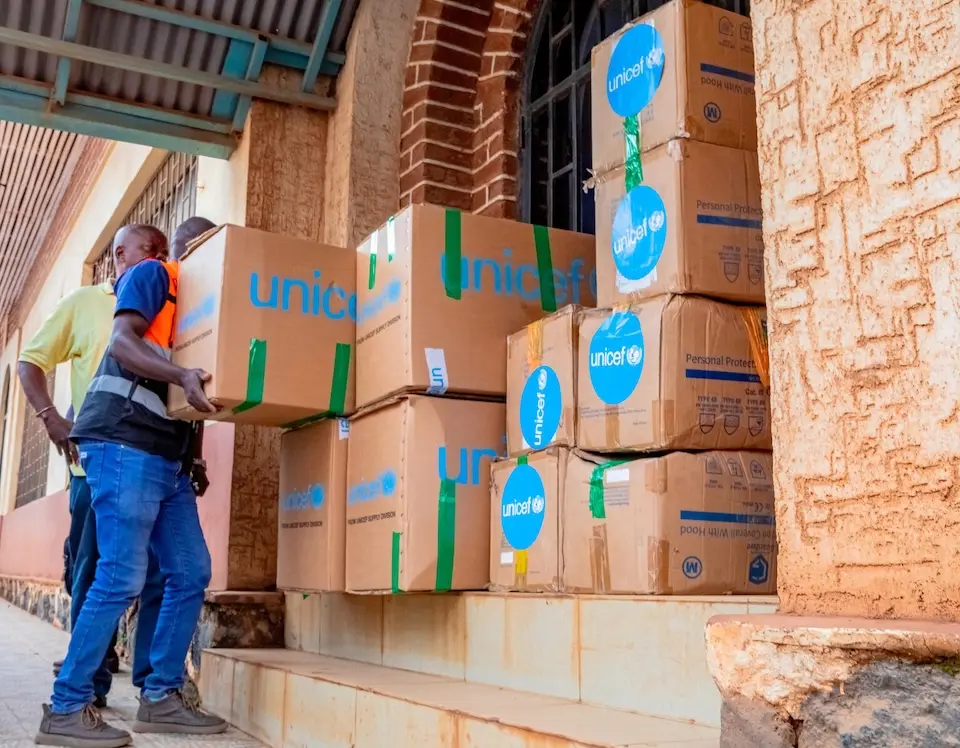
UNICEF: Ebola needs to be tackled like any other endemic disease
Uganda benefits from strong government leadership and extensive experience with Ebola outbreaks and other hemorrhagic diseases. Even so, without the investments in preparedness that were made in recent months, the case load could have been much worse.
UNICEF is calling for increased advocacy with governments and development partners to put into place longer-term plans and strategies to tackle Ebola in a similar vein to other endemic diseases, such as cholera. More sustained multi-year funding streams are needed to mitigate and respond to recurrent outbreaks.
Ramping up community engagement to mitigate Ebola risks
UNICEF continues to support Ebola vaccination and preparedness measures in priority districts in Uganda while ramping up community engagement. All of these activities are under-resourced.
There have also been increasing reports of tensions between Congolese refugees and Ugandan host communities that require additional conflict-mitigation measures, including engagement with both communities and governments.
Unlike Uganda, the other three priority countries — Burundi, Rwanda and South Sudan — do not have experience in dealing with Ebola outbreaks, and so will require a higher level of international support to fund key preparedness measures. Each operational environment is complex and challenging.
Ultimate goal: defeat Ebola and get to zero cases
Here is a closer look at three key areas of UNICEF's Ebola outbreak response:
Risk communication and community engagement
To better inform, protect and engage communities, UNICEF works with a broad swathe of influential community and religious leaders, Ebola survivors, psychosocial workers and mass media to bring crucial knowledge on symptoms, prevention and treatment to at-risk households and communities.
UNICEF listens and learns from continuing research and analysis of community feedback to better understand local needs, fears and concerns so that it can adapt the response accordingly, ensuring it is socially and culturally acceptable. There have been some changes to the burials process and decontamination is now conducted at night.
Infection prevention and control
Improved access to safe water, sanitation and hygiene (WASH) is key to preventing and controlling the spread of infectious disease.
Ebola response interventions include installing handwashing units in health facilities, schools and critical transit sites and distributing thermometers, chlorine and other supplies to treat water.
Psychosocial support
Providing mental health and psychosocial support is an important part of every emergency response. UNICEF is working with partners to ensure there are trained psychosocial workers on hand to assist children and families directly affected by the Ebola outbreak.
Child care centers have been set up next to Ebola treatment centers in Beni and Butembo, in DRC's North Kivu province, where Ebola survivors look after young children who have been separated from parents and caregivers, because they are undergoing treatment or have died from the disease.
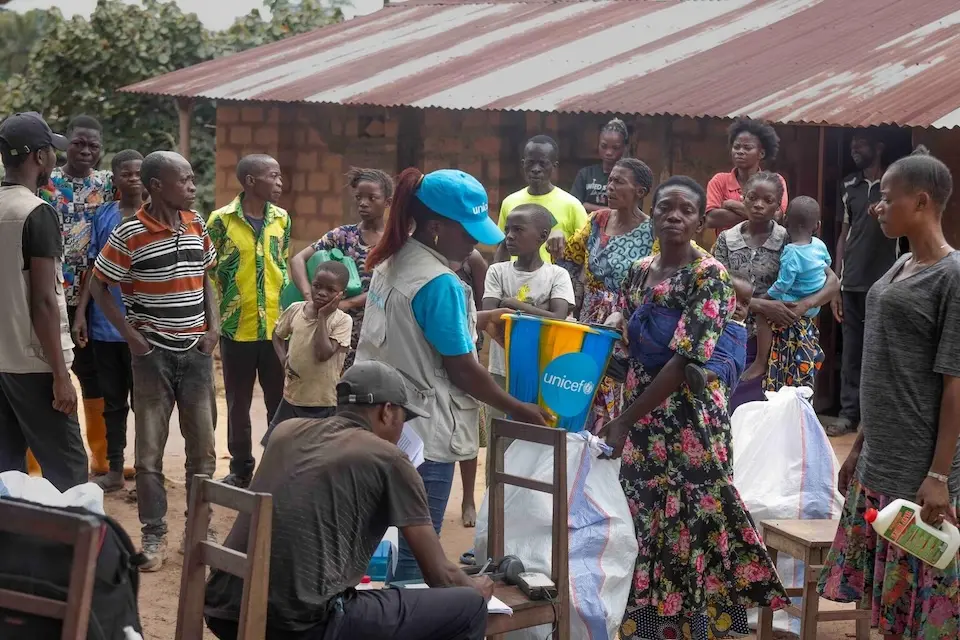
UNICEF USA has allocated $200,000 from its Equity Accelerator, part of the Every Child Fund, to support UNICEF DRC's humanitarian response. UNICEF estimates $40.5 million is needed to implement its six-month Ebola outbreak response plan.
Learn more about UNICEF emergency response