
International Day of Women and Girls in Science
Expanding opportunities for women and girls in science and technology
The International Day of Women and Girls in Science — established by the UN General Assembly in 2015 and observed on February 11, Marie Curie's birthday — was created to advocate for greater participation for women and girls in the fields of science, technology, engineering and mathematics (STEM).
The day is a chance to address gender gaps in STEM education, employment and advancement. Only around 35 percent of STEM students in higher education are female.
Each year, a new theme helps guide discussion. The theme for International Day of Women and Girls in Science 2026 — “From Vision to Impact: Redefining STEM by Closing the Gender Gap" — highlights the role of new and emerging technologies, such as artificial intelligence (AI), cybersecurity and sustainability, with an emphasis on practical solutions. These include promoting positive role models, addressing biases and fostering inclusive, family-friendly workplace cultures.
UNICEF supports women and girls in STEM by promoting mentorship, highlighting female role models and ensuring girls have equal access to STEM education, especially in developing regions.
Learn more about UNICEF skills-building programs for youth including Skills4Girls
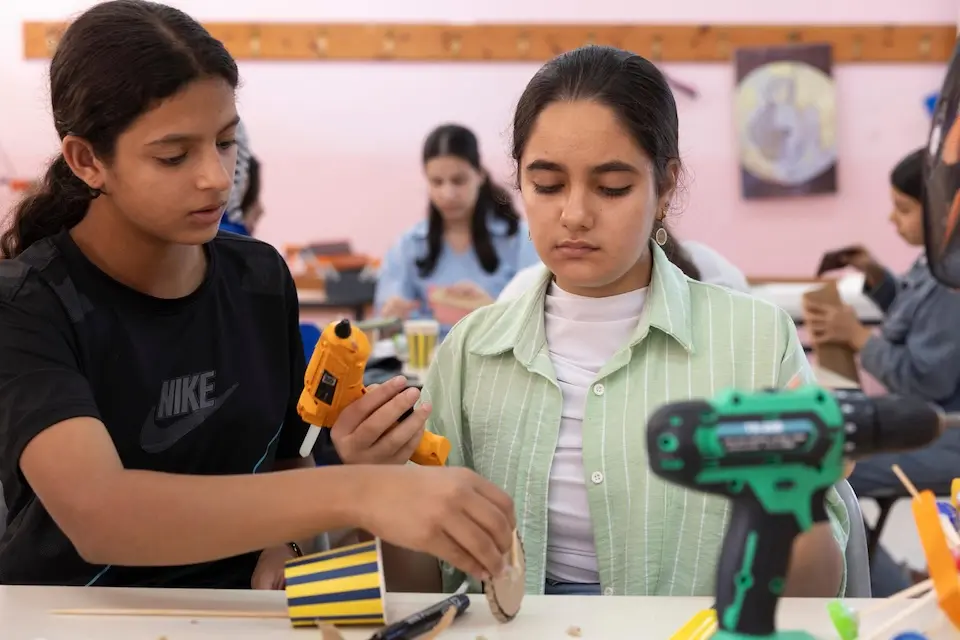
Empowering women worldwide to be leaders and innovators in STEM fields
In celebrating the critical role women and girls play in STEM fields, The International Day of Women and Girls in Science is a chance to:
- highlight the contributions of female scientists in research, technology and innovation
- advocate for equal access to education and career opportunities in STEM
- encourage young girls to pursue careers in scientific fields
- raise awareness of, and working to eliminate, biases and barriers that women face in STEM careers
- recognize that a more diverse and inclusive scientific community enhances creativity and leads to better, more well-rounded research
Why having more girls and women in STEM matters
Having more girls and women studying and working in STEM fields helps drive innovation and improve research quality. Studies show that diverse teams consistently outperform uniform ones by bringing unique life experiences and perspectives, fostering creativity and leading to more robust scientific advancements.
Including women in these fields is also crucial for tackling global challenges including complex issues such as climate change and disease prevention. Limiting their participation means missing out on vital talent and potential breakthroughs.
The active participation of women and girls in STEM fields breaks stereotypes, bridges the gender pay gap and ensures that critical solutions reflect the needs of the entire population, not just men. As the number of women in STEM grows, representation creates role models for the next generation, inspiring more girls to join scientific fields of study.

What International Day of Women and Girls in Science means for girls’ education and skills
International Day of Women and Girls in Science encourages girls to pursue STEM studies, aiming to bridge the gender gap in these fields. By showcasing the achievements of women scientists, the day provides young girls with mentors and examples to inspire their own education and career paths, fostering a sense of belonging.
Many events on and around the International Day of Women and Girls in Science include mentoring, workshops and educational programs that build practical skills in areas like artificial intelligence and engineering.
In many ways, the event serves as a catalyst for educational institutions and organizations to create more inclusive environments for girls in science.
Governments, institutions and schools around the world have been known to recognize the International Day of Women and Girls in Science by:
- convening public and private sector leaders and scientists to discuss policy and advancements
- organizing hands-on workshops, coding games and science experiments specifically designed to encourage young girls to pursue STEM careers
- highlighting research achievements of women in various scientific fields to increase visibility
- arranging mentoring sessions and inviting women in STEM to share their experiences and offer guidance to the next generation
- publishing profiles of pioneering women in science to break stereotypes
- hosting events to discuss institutional barriers and strategies for enhancing inclusivity
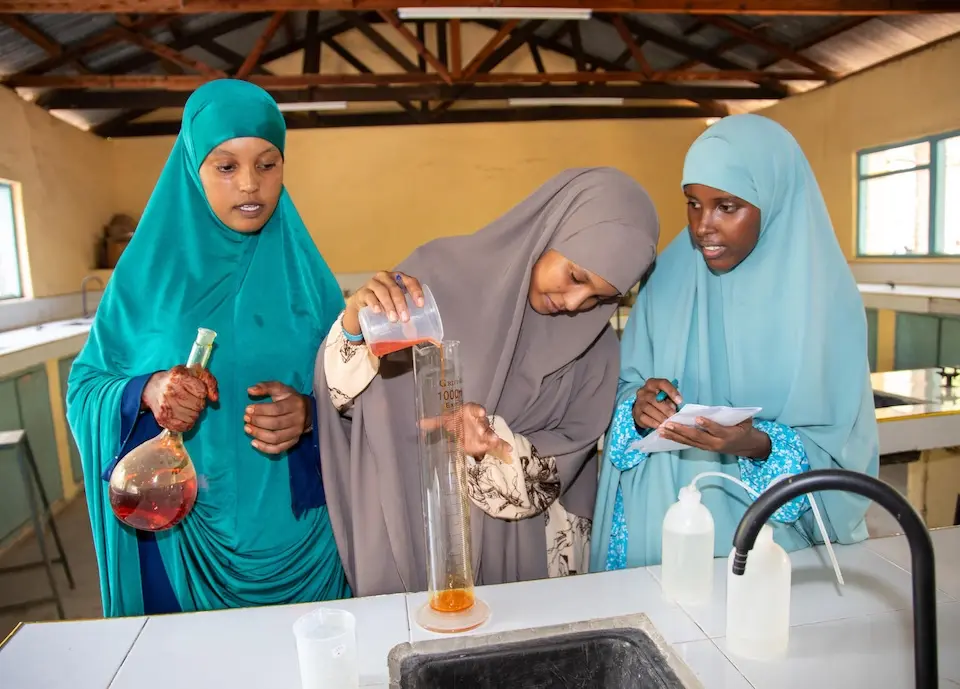
Learn more about UNICEF’s efforts to help girls and women in science
UNICEF works around the world to inspire and support more girls and women in science. As digital technology rapidly transforms the workforce, a global digital skills gap is forming, leaving many young people behind, especially girls and women.
Through a range of programming, including skills-based programs, educational support and mentorship, UNICEF is providing hope for a better future.
One example is UNICEF’s Skills4Girls, a global program that is closing the gap between the education girls traditionally receive and the digital skills to thrive in today’s economy. Skills4Girls programs train girls in STEM subjects, digital technologies and social entrepreneurship as well as life skills like problem solving, negotiation, self-esteem and communication.
Support from donors helps UNICEF continue these and other programs that are arming girls with knowledge, skills and opportunities to create the best lives for themselves, their families and their communities.
Frequently asked questions about women and girls in science and UNICEF
How does UNICEF support girls interested in science and technology?
Through a range of programming, including skills-based programs, educational support and mentorship, UNICEF works to expand access to STEM education and skills for all girls around the world.
Why is access to STEM education important for girls?
When girls have access to STEM education at a young age, they are more likely to work in STEM fields when they grow up. Learning these skills increases their exposure to and participation in science and technology, and creates future opportunities.
How does this day connect to UNICEF’s work year-round?
UNICEF works consistently to close the gender gap in STEM, empowering girls as agents of change in technology, climate action and innovation.
How can people learn more or stay engaged with UNICEF?
Stay informed on UNICEF programs and efforts around the world by visiting unicefusa.org.
