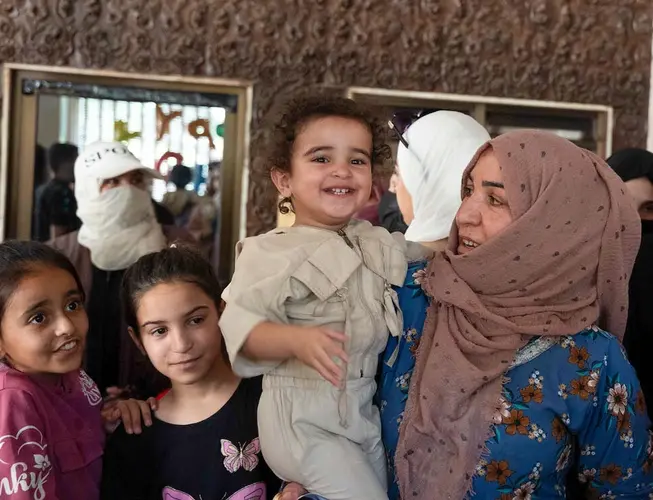
UNICEF Ramps Up Emergency Support for Children, Families Fleeing Violence in Southern Syria
Emergency mobile teams focus on health and nutrition support, disease prevention
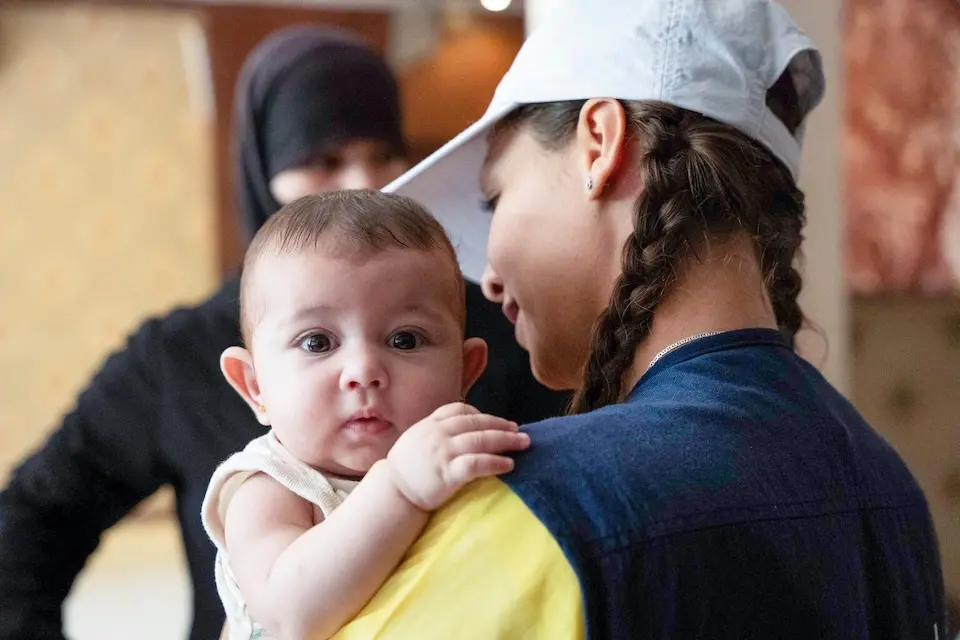
At a shelter in Sayyeda Zeinab, Rural Damascus, Syria, a nutrition worker from a UNICEF-supported mobile team holds 5-month-old Samar, preparing her for a weight check.
“We see dozens of children and mothers every day," the worker said. "In these crowded shelters, we do our best to ensure every child gets the care they need."
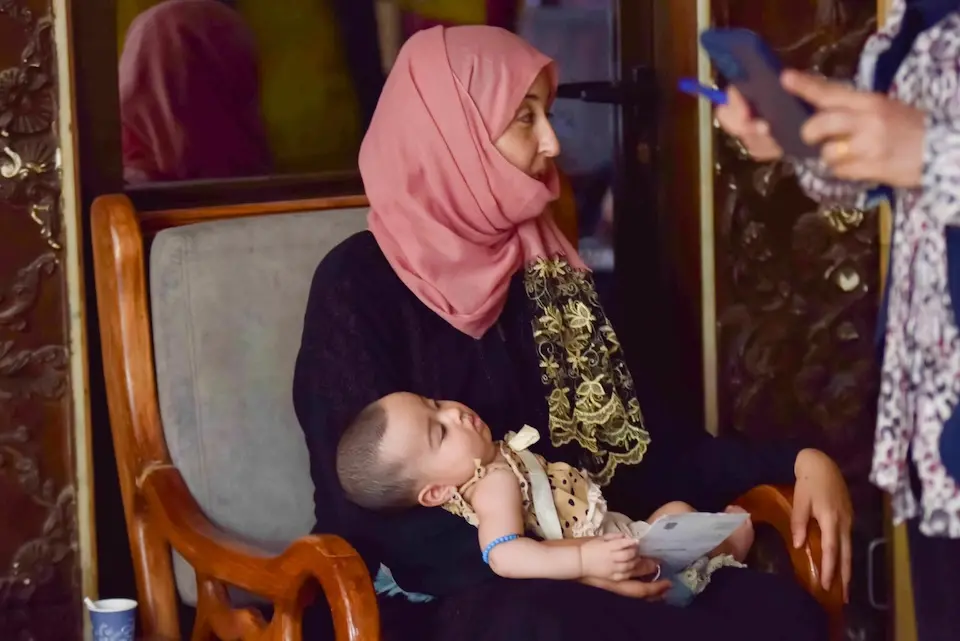
Recent violence in As-Sweida, the southernmost Syrian governorate located close to the border with Jordan, has resulted in widespread displacement and destruction to vital infrastructure.
More than 191,000 people — mainly women and children — have been forced to flee their homes in recent weeks as humanitarian needs surge at a staggering pace.
Water systems, power lines and fuel supplies have all suffered damage. Food, medicine and other essentials are becoming increasingly scarce, while insecurity continues to hinder access for humanitarian aid workers.
In response, UNICEF has deployed 14 mobile health and nutrition teams across affected areas to deliver lifesaving health and nutrition supplies, targeting an estimated 4,000 children and women in need.
UNICEF: Global Leader in Emergency Response
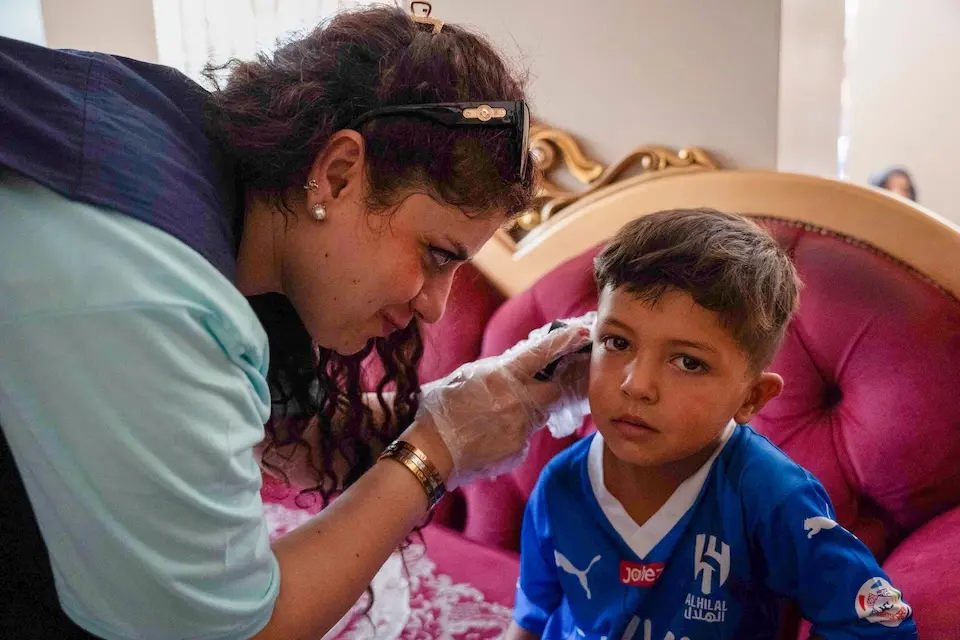
In Sayyeda Zeinab, hundreds of families have sought refuge. UNICEF and partners are in the temporary shelters providing nutrition and health support services. The mobile teams offer medical check-ups, medications, malnutrition screenings, dietary supplementation, maternal and child health support and awareness sessions on hygiene promotion, breastfeeding and optimal feeding practices. Top priorities are to support early detection and treatment of malnutrition and prevention of disease outbreaks.
“In situations like this, hygiene is one of the most important topics we focus on," said one health educator. "I talk with women and help find practical ways to maintain hygiene using the limited resources they have.”
Fleeing with nothing, needing every kind of support
“Most people fled with nothing, no basic supplies, no documents, not even essentials for their children; they need every kind of support," said Dr. Amwaj, a pediatrician with one of the teams. “We’re seeing a range of health issues, such as burns, injuries and seasonal illnesses like the flu, especially with so many people living in close quarters. Illness spreads quickly in these conditions.”
Other emergency relief measures in response to the surge in violence in As-Sweida include providing safe, clean water and fuel for water pumping stations that serve over 30,000 people. UNICEF also provided recreational materials, psychosocial support and assistance to reduce the risk of exposure to explosive ordnance — a common threat to children in many conflict-affected areas.
During the violence, which peaked over a week in mid July, spiking again in early August, at least 22 children were reportedly killed and 21 more injured; at least five health centers were reportedly struck, with two physicians killed and ambulances obstructed and attacked.
“To ensure an effective response, it is critical that both humanitarian actors and commercial goods have unhindered access to the most affected communities,” UNICEF Syria Deputy Representative Zeinab Adam said. “This will enable the immediate provision of basic social services, including food, water and other essential supplies to those in urgent need. Facilitating this access is not only vital for lifesaving interventions but also for restoring a minimum level of stability and protection in these communities.”
UNICEF remains on the ground, committed to reaching every child in need, and will continue to advocate and provide the needed support until all children in As-Sweida and across Syria are safe, supported and able to thrive.
Learn more about how UNICEF supports children in Syria