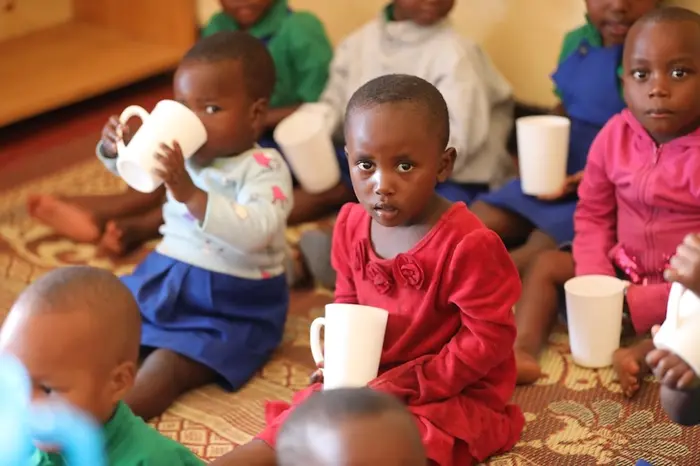
Market-Based Early Childhood Development Centers Empower Families in Rwanda
Across Rwanda’s border towns and busy markets, many mothers must balance the demands of owning a business with parenting young children. For women who cross into neighboring countries like Uganda and the Democratic Republic of Congo (DRC) to work or sell goods, childcare that is safe and easily accessible has been scarce. Mothers often bring their young children to work in busy environments that are not suitable for children’s safety or development.
Through innovative Early Childhood Development (ECD) programs, UNICEF, in collaboration with the Government of Rwanda, and support from donors like the Bainum Family Foundation, has been expanding childcare access to working families across the country. The programs help children grow and learn in safe environments and empower mothers to work and support their families.
Local Solutions: Rwanda’s market-based ECD innovation
In border towns like Rusizi, Gicumbi and Nyagatare, many women cross the border daily for work as vendors or retailers. This often leaves them with little time to care for their young children. UNICEF Rwanda and partners have established cross-border ECD centers in these towns to help mothers continue their business, while their children are cared for in a nurturing and safe environment.
Market-based ECD centers help families break the cycle of children missing school to take care of their little siblings or young children spending time in unsafe environments. Mothers who have enrolled children in the newly established ECD centers have seen increased productivity and profits in their businesses while their young children grow and learn in safe environments.
Learn more: UNICEF’s Early Childhood Development model
Stories from the field: mothers, markets and child development
At the Kagitumba border crossing between Rwanda and Uganda, the local ECD center has been a turning point for mothers like Laurencie Nyirandinabo, a banana vendor who frequently crosses the border.
“The market is always busy with many bicycles. I was always worried they might hit my son, Asiimwe,” says Laurencie. “Having him at the ECD center allows me to focus on my banana business without worrying about his safety.”
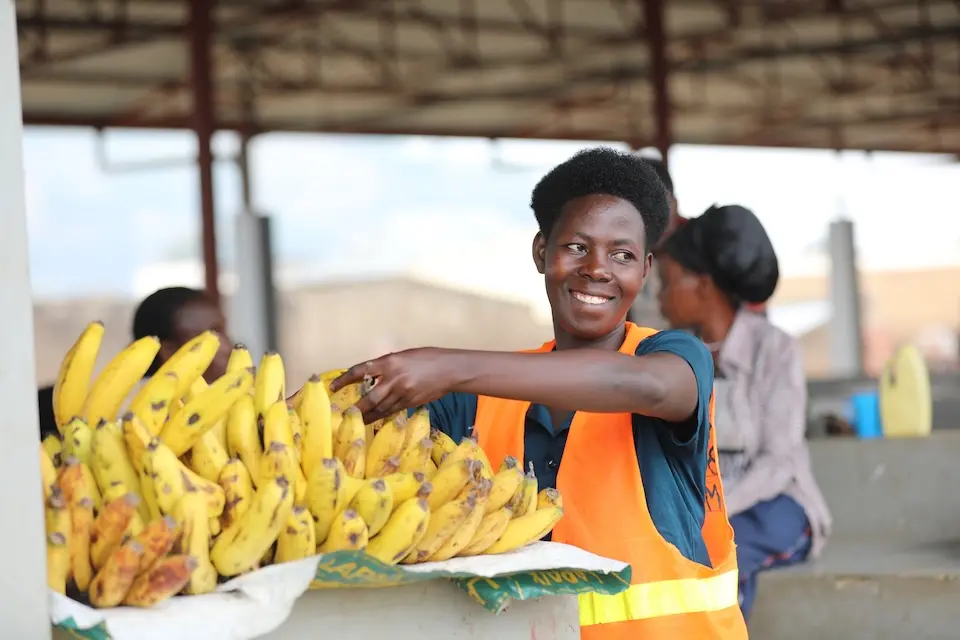
In busy markets like Musanze, Kimironko and Gakenke, where mothers spend long hours selling goods to support their families, the market-based ECD centers allow them to focus on their work. Cared for by trained caregivers, children at the centers receive an integrated package of ECD services, including early learning and stimulation, nutrition, water, sanitation and hygiene (WASH), health and protection services, which enable them to grow and develop in all areas of life.
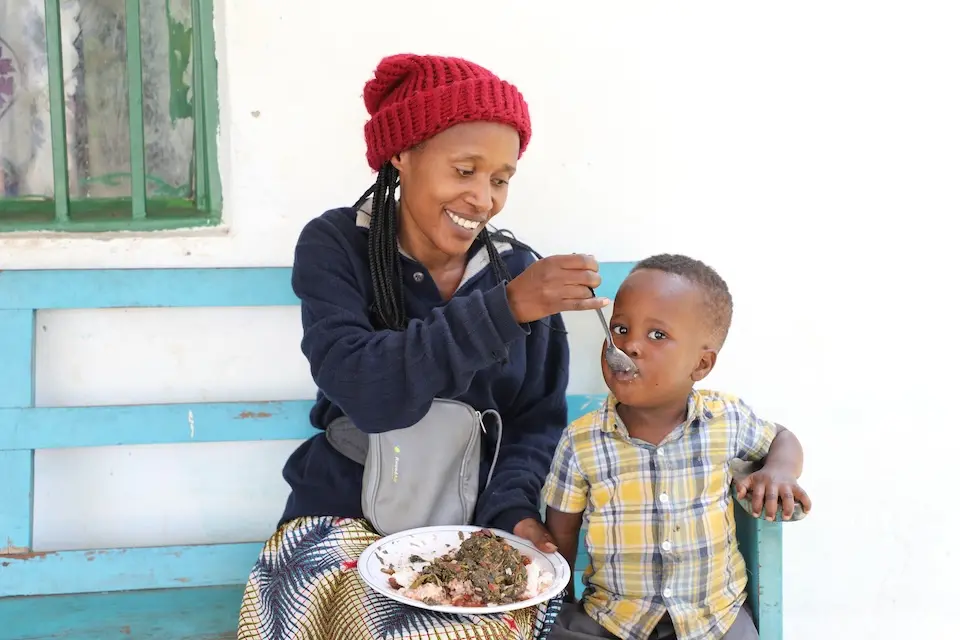
Rosette Niyidukunda, a vegetable and fruit vendor in the Musanze market, faced the challenge of balancing work while caring for her son, Shimwa. Before the ECD center opened, her son would often get lost in the busy market, leading him to miss valuable learning opportunities.
“Since the ECD center opened, my son has developed significantly,” explains Rosette. “Previously, he couldn’t communicate his needs… but now he can express himself clearly. It’s good to know he’s thriving in a safe environment, allowing me to work with peace of mind.”
Nutrition, play and inclusive learning in everyday life
Inside the ECD centers, trained caregivers engage children like Asiimwe and Shimwa in activities that teach numeracy, literacy and social skills. These early learning experiences will help children, including children with disabilities, enter primary school well-prepared and ready to succeed.
Drocelle Mukankwaya, a hardworking tailor in Gakenke market, used to bring her young daughter, Bertine, to the market. The chaotic environment was not ideal for a child, but Drocelle had no other option until the ECD center opened. Now, Bertine enjoys a setting that promotes her learning and well-being.
"Bertine enjoys the structured activities, and the nutritious meals provided at the ECD center," Drocelle says. "She's learning so much and is eager to tell me about her day when I pick her up. It's heartwarming to see her thrive."
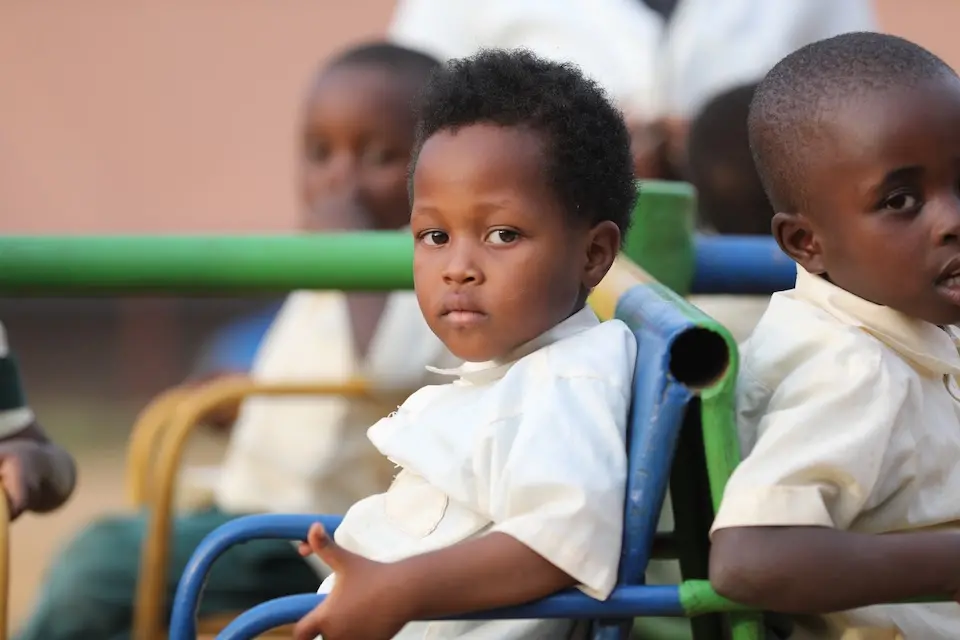
Building sustainable local ECD caregiving services and resources
In addition to direct care for children, these ECD programs offer numerous services to reach parents such as teaching hygiene lessons and providing nutrition to pregnant women and mothers. The program also equips caregivers with professional skills for childcare through workshops on parenting, health and nutrition, enhancing the quality of the care received by children.
Laurence Mukashyaka, a caregiver at the Gakenke market-based ECD center, has benefited significantly from the training workshops offered by UNICEF on the delivery of integrated ECD services. She now feels better equipped to support children's development and well-being and to support parents in improving their knowledge and skills on positive parenting.
"The workshops have taught me so much about child nutrition and development," Laurence reflects. "I now feel more confident in providing the best care for children here at the ECD center. I'm grateful to the Government of Rwanda and UNICEF for their support."
Learn more about how UNICEF supports child health and nutrition around the world
How partnerships drive lasting change for children in Rwanda
Over the last 12 years, UNICEF has worked with the Government of Rwanda to make significant strides in early childhood development. Together, more than 900 ECD centers have been established across the country with UNICEF support, especially in remote and underserved areas. These centers provide quality early education and care for over 75,000 children, staffed by more than 4,000 trained caregivers who ensure children are safe and engaged in play, receiving regular health checkups and nutritious meals. Moreover, sessions on positive parenting have reached more than 120,000 parents, enhancing their skills in responsive caregiving.
Thanks to the Bainum Family Foundation's support, UNICEF has opened eight ECD centers in Rwanda. These ECD centers will continue to serve more than 650 children each year, through a comprehensive package of services, including early learning, brain stimulation, hygiene and sanitation, protection, health and nutrition to pregnant women as well as mothers and children ages 7 to 36 months. Support from donors like the Bainum Family Foundation allow UNICEF to empower mothers and create a foundation for Rwandan children’s future success and well-being.