Mental Health Crisis for Children in Gaza
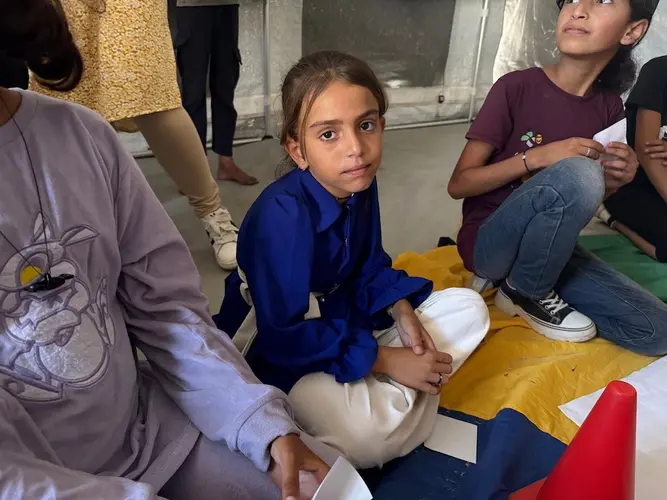
Ten-year-old Waed remembers vividly the terrifying day she and her family were forced to flee Khan Younis under fire, running past tanks to find shelter in a school. “That memory is stuck in my head,” she says.
Waed speaks softly as she describes a technique she learned at a UNICEF-supported mental health and psychosocial support activity. It's called the “TV method” — she visualizes a difficult memory and then imagines breaking it like a screen.
She tries to use every coping mechanism she’s learned, but the fear she felt on the day her family fled their home is hard to shake.
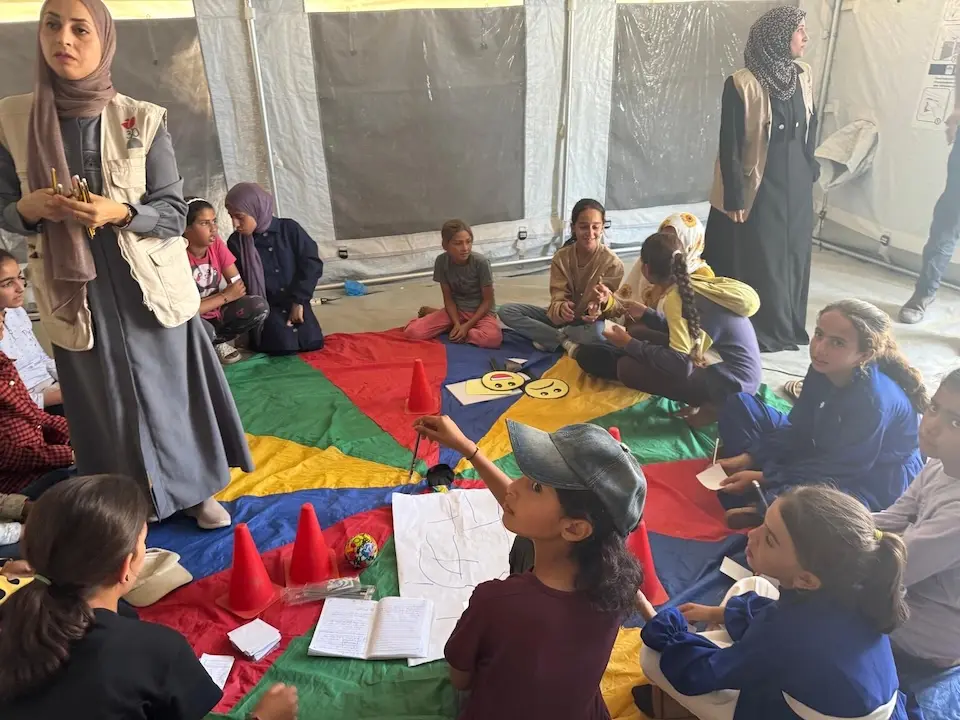
UNICEF-supported activities help children cope with the psychological impact of conflict
For almost two years, children in Gaza have opened their eyes every morning to another day of displacement, loss and lack of access to basic services. The threat of violence is always there, the trauma compounding.
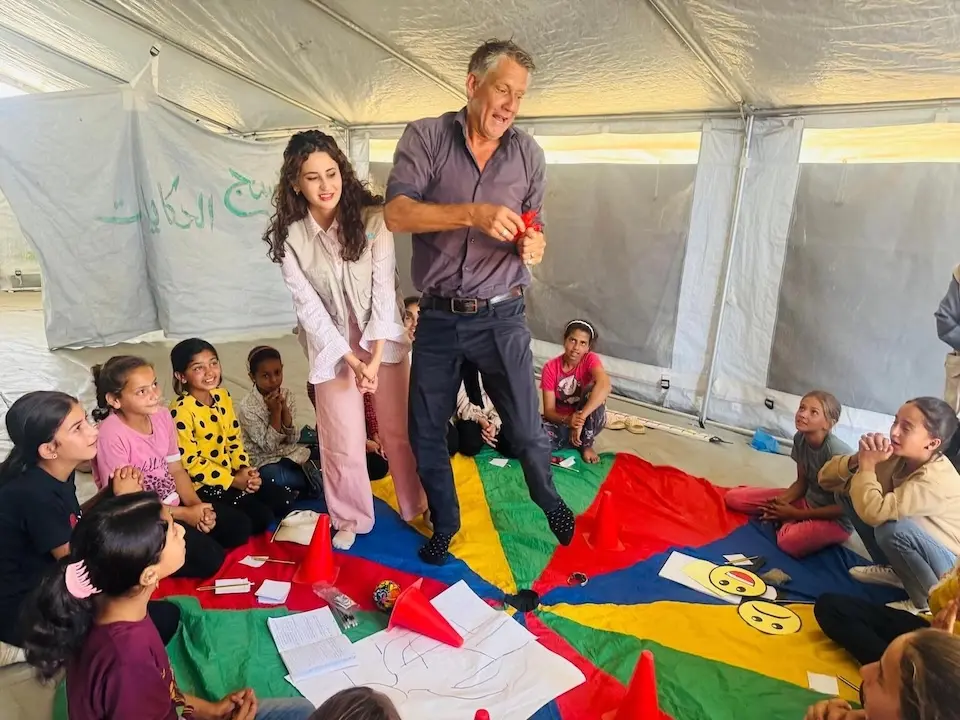
In humanitarian tents, children gather to share their fears and sorrows, and to comfort one another. UNICEF-trained counselors share strategies that help kids cope with anxiety, grief and despair. Recreational kits provided by UNICEF contain supplies for stress-relieving games and activities.
Thirteen-year-old Raja learned to visualize a safe space by closing her eyes and imagining herself in her home, now destroyed. Sometimes she pictures herself enjoying a warm meal of rice and meat — something she hasn’t had in over four months due to the severe food shortages in Gaza. “It’s a meal we used to eat together as a family,” she said quietly. “Now, I can only imagine it.”
Raja admits the exercise wasn’t easy at first. Revisiting a place she never thought she’d lose is painful. “That home doesn’t exist anymore,” she says, her voice heavy with grief. “And that breaks my heart.”
Related: Helping Gaza's Children Cope With Trauma
Watch the video: The constant threat of bombardment takes a heavy toll
Families are fragmented, psychosocial distress is widespread
"We do a lot of trauma work in Gaza, and the professionals there remind me that you don’t call it P.T.S.D. in Gaza because there’s nothing post — there’s always new traumas coming," UNICEF spokesperson James Elder recently told The New Yorker. "They give children skills to deal with nightmares at night."
A girl Elder met described how she’d pretend she was in her grandfather’s garden and try to smell the basil to help her with nightmares. "But as the child psychologist would say, they’re not just nightmares," Elder says. "They’re also a reality."
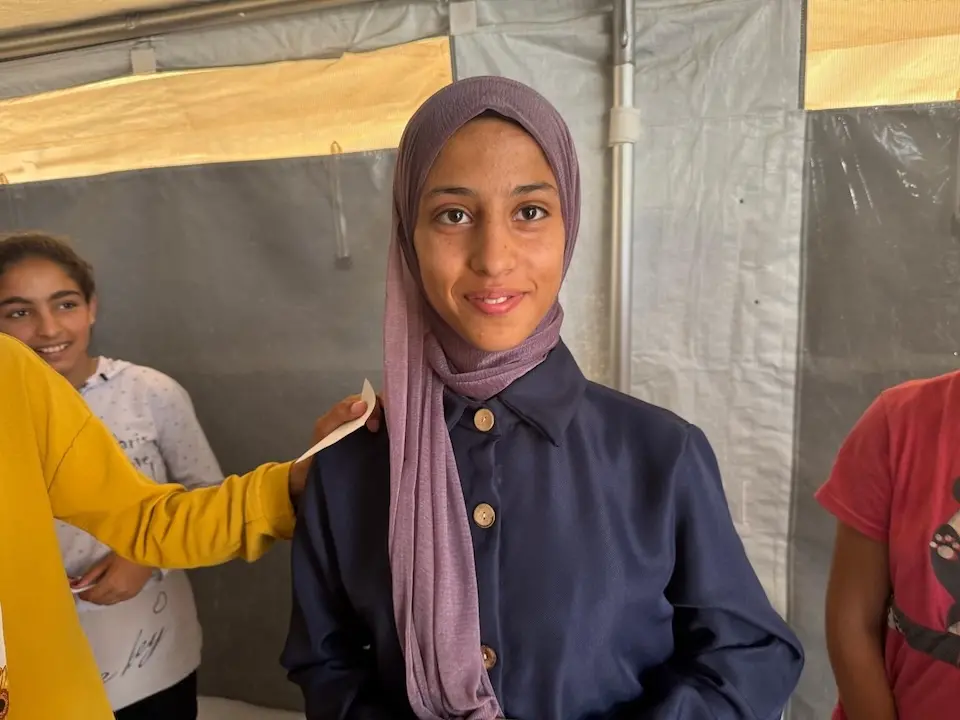
Every child in the Gaza Strip needs mental health support
In October 2023, UNICEF Executive Director Catherine Russell was already sounding the alarm on the devastating physical and emotional harm caused by the ongoing conflict and deepening humanitarian crisis.
"Children in both Israel and the State of Palestine are experiencing terrible trauma — the consequences of which could last a lifetime," Russell said, urging the United Nations Security Council to pass a resolution reminding parties of their obligations under international law and calling for a ceasefire, along with unrestricted humanitarian access and the safe and immediate release of all abducted children.
By April 2024, as the bombing, displacement and deprivation continued, UNICEF estimated that 100 percent of children in Gaza were in need of mental health and psychosocial support. "There’s nowhere else in the world where UNICEF has ever said that every single child needs mental-health support," said Elder.
Related: Children Trapped in Gaza Face Generational Trauma
The consequences of trauma can last a lifetime
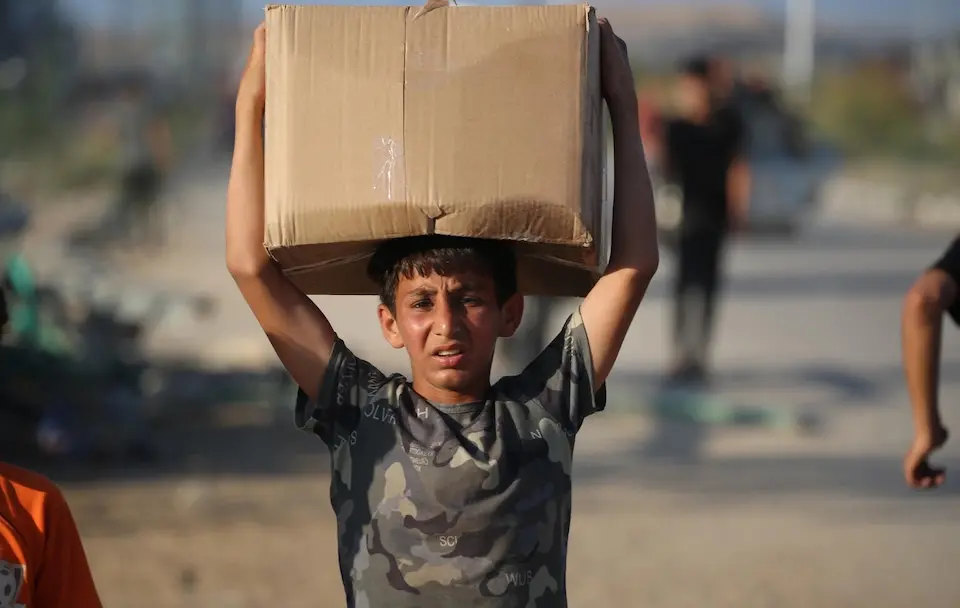
With Gaza's health system and public services on the brink of collapse, extreme food insecurity and critical water shortages, the level of stress on children and their parents continues to rise. Roughly 82 percent of Gaza's territory is under displacement orders. The number of children admitted for severe acute malnutrition (SAM), the most deadly form of malnutrition, rose by 50 percent from April to May.
In May, 24,572 children (14,027 girls) and 6,687 caregivers (5,338 women) participated in UNICEF-supported activities promoting mental health. Of these, 3,299 children (2,004 girls) received individual and group mental health support from trained specialists and non-specialists.
Related: How War Trauma Affects Children's Brains
Despite the challenges, UNICEF is positively impacting children in Gaza and the West Bank
UNICEF continues to reach Palestinian children with lifesaving and life-changing support. But much more help is needed. UNICEF faces a critical funding gap of $490.6 million as humanitarian needs escalate.
Right now, the lives of the most vulnerable children hang in the balance as conflicts and crises jeopardize the care and protection that they deserve. Dependable, uninterrupted and effective foreign aid is critical to the well-being of millions of children. Please contact your members of Congress and urge them to support ongoing U.S. investments in foreign assistance.